October 1, 2026
at
6:15 am
EST
MIN READ
DeFi Yield Farming: A Beginner's Guide (2026)
Yield farming refers to traders performing activities in DeFi in exchange for ‘yield’. These activities range from providing liquidity on a Decentralized Exchange (DEX), to offering collateral for a lending protocol. In return, a yield farmer seeks to earn interest payments from platform fees and other rewards such as governance tokens.
Yield farming often involves depositing crypto assets like WBTC (wrapped Bitcoin), ETH and stablecoins into DeFi protocols. New products like real-world assets (RWAs), tokenized treasuries, and flatcoins (stablecoins that accrue interest from underlying assets) allow holders to earn income on assets like US treasury bills (T-bills), and gold. This has led some traders to liken yield farming to interest-bearing bank accounts.
These opportunities aren’t without risks though. Unlike TradFi, DeFi is governed by smart contract code deployed on blockchains, introducing risks such as malicious code, protocol hacks, and composability risks, where a vulnerability in one underlying asset can cascade through multiple connected protocols.
SUMMARY
- Yield farming involves depositing crypto assets into DeFi protocols to aid platform operations. In exchange, users receive rewards, such as a share of platform revenue or governance tokens.
- There are several different types of yield farming platforms, which appeal to users with varying levels of risk tolerance.
- Money markets, Liquid Staking Token (LST) protocols, Liquid Restaking Token (LRT) protocols, and decentralized exchanges (DEXs) rank among the most popular yield farming platforms by Total Value Locked (TVL).
- You can use Arkham to track deposits into DEXs and study the yield farming strategies top on-chain traders use.
WHAT IS DEFI YIELD FARMING?
‘Yield Farming’ is a phrase born out of the Summer of 2020 - DeFi Summer.
At that time, many new ‘DeFi’ protocols were being created and experimenting with new token distribution methods, as well as new ways of attracting users - one of which was yield farming.
The core idea is that a trader will provide their assets to a protocol - e.g. by depositing native ETH into a smart contract protocol. This increases the TVL (Total Value Locked) of the protocol, increasing its adoption and benefiting usage metrics, and in return the protocol emits a token to the trader who can then choose to hold the token, or swap it back to ETH. A protocol that does this is known as a ‘farm’. The trader can later withdraw their assets from the farm and look for other new farming opportunities once they believe the farm no longer provides sufficient yield.
During 2020 and 2021, a popular practice for protocols was ‘Liquidity Mining’. A new project would want traders to be able to swap into and out of its native token, but would not have sufficient capital to provide liquidity for its own protocol token. This led to the ‘Pool1/Pool2’ system. Pool1 is the process described in the previous paragraph, where traders receive tokens for temporarily depositing an asset in a smart contract. Pool2 is where traders pair the farmed token with ETH, deposit the pair as liquidity on a DEX, then deposit the Liquidity Provider (LP) token in the farm to receive a separate stream of farmed tokens. This is typically viewed as a higher-risk higher-reward strategy, as farmers take on significant directional risk with exposure to the asset they are farming. As such, this practice became vastly less popular from 2021 onwards, but the term ‘yield farming’ has persisted.
Today, ‘Yield Farmers’ are traders who aim to receive yield on their asset holdings by using them in DeFi, encompassing a broader and more sophisticated range of strategies than the core ones described above. The inflationary token emissions of the 2021 era have largely been replaced by sustainable yield sources and looping strategies. Modern farmers frequently deploy capital into Liquid Restaking Tokens (LRTs) to simultaneously secure multiple networks and compound rewards. They also use yield tokenization platforms (like Pendle) to strip assets into principal and yield tokens, allowing them to lock in fixed interest rates or speculate on future yields.
Rather than directly buying coins, making directional trades, or chasing governance tokens, yield farmers tend to employ strategies that allow them to retain the value of their underlying holdings while generating as much additional yield as possible from genuine economic activity, such as borrower interest, DEX trading fees, and real-world asset yields.
HOW DOES YIELD FARMING COMPARE TO TRADITIONAL INVESTMENT METHODS?
Yield farming essentially offers a form of access to traditional-style investment methods like market-making and money markets in a decentralized environment with crypto.
While traditional investments often involve middlemen, in DeFi, smart contracts act as the middlemen. Using smart contracts as the intermediary should (in theory) improve efficiency as users do not need to deal with a bureaucratic organization and can directly undertake financial services through a simple UI and web app.
Ideally, once a developer deploys a smart contract, they have no say over who uses it, or when they use it. While this can vary in practice, as a developer may be able to maintain a backdoor, or use governance procedures to alter the actions of a smart contract, this principle is what underpins decentralized smart contracts and DeFi more broadly.
Yield farming essentially offers a form of access to traditional-style investment methods like market-making (actively quoting both sides of the market) and money markets (exchange market where participants can lend and borrow short-term, high-quality debt securities) in a decentralized environment with crypto.
While traditional investments often involve middlemen, in DeFi, smart contracts act as the middlemen. Using smart contracts as the intermediary should (in theory) improve efficiency as users do not need to deal with a bureaucratic organization and can directly undertake financial services through a simple UI and web app.
Ideally, once a developer deploys a smart contract, they have no say over who uses it, or when they use it. While this can vary in practice, as a developer may be able to maintain a backdoor, use governance procedures to alter the actions of a smart contract, or use modular smart contract plugins (like "hooks") to enforce compliance or risk controls, this decentralization principle is what underpins decentralized smart contracts and DeFi more broadly.
HOW DOES DEFI YIELD FARMING WORK?
DeFi protocols facilitate peer-to-peer (P2P) interactions between depositors (yield farmers) and platform users, using permissionless infrastructure. Permissionless means anyone can use these systems without intermediary authorization.
Protocols rely on traders with capital to deposit assets to support platform operations, like token swaps and leverage trading. This opens opportunities for yield farming; users who interact with the platform are charged a fee, and depositors (yield farmers) earn a share of the platform’s revenue.
For example, when users swap from one token to another, they need DEXs to facilitate the trade.
Yet DEXs themselves generally do not provide the liquidity required to support trading. Instead, they require third party Liquidity Providers (LPs) to provide assets to a ‘pool’ that traders can swap against. In exchange, LPs receive a share in protocol fees relative to their liquidity contribution.
DEFI YIELD FARMING PLATFORMS
Yield farming strategies and platforms vary depending on the assets held and a user’s risk tolerance. If a yield farmer prefers holding stablecoins such as USDC and USDT, they’ll likely consider different platforms and strategies compared to farmers holding more volatile assets like ETH and BTC. Here's an overview of some of the most common types of protocols for yield farming and how they operate.
DECENTRALIZED EXCHANGES (DEXs)
Decentralized Exchanges (DEXs) allow users to swap from one crypto asset to another on-chain. When a user performs a swap, they pay swap fees, and a percentage of swap fees go to liquidity providers (LPs). However, it is worth noting that not all DEXs offer yield farming opportunities. For example, platforms like the Arkham DEX focus entirely on on-chain intelligence and token execution rather than liquidity provision and farming.
Here are the steps to providing liquidity on a yield-generating DEX:
- Select a trading pair (i.e. ETH/USD, BTC/ETH, etc.)
- Deposit tokens into the liquidity pool. While older protocols required a strict 50/50 ratio, most modern DEXs allow LPs to deploy "concentrated liquidity" across specific price ranges. In return, depositors receive LP tokens or an NFT, representing their position.
- Deposit the LP tokens into the associated “farm” or auto-compounding vault to earn rewards in the form of trading fees and potentially other incentives (for example, governance tokens).
RISKS OF PROVIDING LIQUIDITY TO A DEX
Providing liquidity to DEXs was one of the top use cases for DeFi in its early stages. Over time, however, the market has become more aware of the various risks associated with providing liquidity to a DEX, challenging the idea that providing liquidity is a straightforward, risk-free passive yield generator.
These risks include:
- Impermanent Loss (IL): While most early DEXs used the Constant Product Market Maker (CPMM) formula of x*y=k, modern concentrated liquidity models can actually amplify this risk. As traders swap to/from the assets in the pool, LPs end up with different amounts of assets from when they first deposited, and can even be left holding 100% of the less valuable asset if the price exits their selected range.
- Inflationary rewards: Emissioned incentive rewards are commonly farmed and then swapped. The heavy sell pressure dilutes the value of earned rewards over time.
- Unreliable interest rates: New farms advertising high APY may attract large amounts of new LPs. This can dilute the rewards, lowering the overall APY from when the farm was first created/discovered. Additionally, the shift toward sustainable yield models means APY is heavily dependent on actual trading volume, which can fluctuate wildly.
MONEY MARKETS
DeFi Money markets, akin to their traditional counterparts, are platforms for holding capital that is not currently being deployed by traders - referred to as ‘idle’ capital. In 2026, these platforms (e.g. Aave, Morpho, Compound) have evolved from simple monolithic pools into sophisticated architectures that isolate risk between different asset classes, allowing them to safely support a much wider variety of collateral.
Money Markets (aka Lending Markets) allow users to supply crypto assets as collateral and earn interest on their deposits. Once deposited, users can let their idle funds sit and earn interest, or take out a loan against their deposits.
These markets serve several purposes:
- Earn Interest on Idle Assets (Lend Assets): By depositing crypto assets, users can earn interest on them while they aren’t in use. This allows them to generate a form of passive income without actively trading. Today, this extends far beyond crypto-native tokens; users can now earn yield from tokenized real-world assets (RWAs), private credit, and institutional securities lending natively on-chain.
- Take Out a Crypto Loan (Lend assets and borrow against them): For users that need liquidity but don't want to sell their crypto holdings, they can use them as collateral to secure a loan. This way, users can access funds without having to sell their assets. Modern yield farmers frequently use this mechanic for "leveraged looping" - depositing a Liquid Staking or Restaking Token (LRT) as collateral to borrow stablecoins, buying more of the underlying asset, and repeating the process to multiply their staking and restaking rewards.
- Short Assets (Borrow assets and swap to a stablecoin): Money Markets also enable users to borrow assets which users can then sell or exchange for stablecoins. This strategy allows users to profit from the potential decline in the value of the borrowed assets. For example, the user borrows 1 ETH, sells this for $3,000 and waits for ETH’s price to decline to $2,800, then pays back the 1 ETH loan and pockets $200. If instead of declining ETH’s price goes up, they don’t make money. (Note: Advanced farmers often automate this process using AI-driven solvers and automated vaults that manage their health factors to prevent liquidation).
LIQUID STAKING TOKENS (LSTs) AND LIQUID RESTAKING TOKENS (LRTs)
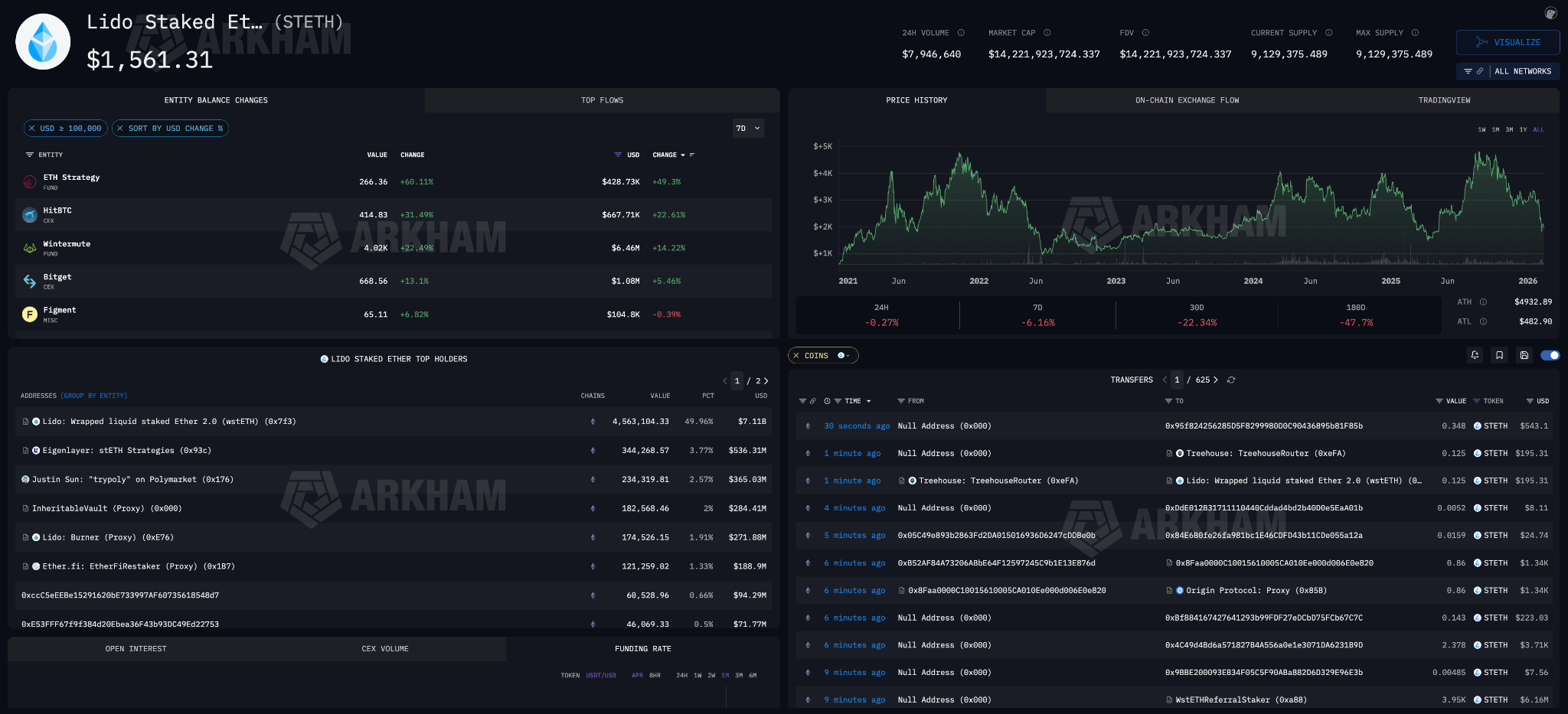
Liquid Staking Tokens (LSTs) allow users to stake native gas tokens (like ETH, SOL, AVAX) and earn validator rewards from blockchain networks. This lets anyone earn interest on layer 1 (L1) tokens, without the setup and overhead costs of operating a validator.
On top of this, LSTs are “liquid” in nature, meaning they can be transferred or used for activities like lending to money markets or providing liquidity on a DEX.
At first, Liquid staking experienced slow growth, but as LST providers began to expand to different ecosystems, and more integrations were created, the market for LSTs started to pick up, eventually reaching an all-time high Total Value Locked (TVL) of $89 billion in late 2025.
By mid-2026, however, the pure LST market cooled - dropping to a two-year low of $30 billion TVL in June 2026
LRT platforms take the liquid staking concept a step further by using already-staked assets to secure additional decentralized services (like bridges, oracle networks, or data availability layers). While this generates higher yields by stacking multiple reward streams, it introduces compounded slashing risks; if any of those secondary networks fail or act maliciously, the restaked capital is penalized. TVL for LRT peaked in December 2024 at nearly $18 billion; it has since slipped to $3.8 billion.
LEVERAGE TRADING LIQUIDITY POOLS (LPs)
Leverage trading involves borrowing money to make bigger trades.
For example, to perform a trade with 10x leverage, a trader might deposit $100 to purchase $1,000 worth of an asset. Using leverage will increase profits on successful trades, but will also magnify losses on trades that don’t work out, increasing the risk of total loss of capital.
The most common use of leverage trading in crypto is in derivatives, which include futures, perpetuals, options, and more. Derivatives trading allows users to speculate on the price of a particular cryptocurrency without owning it.
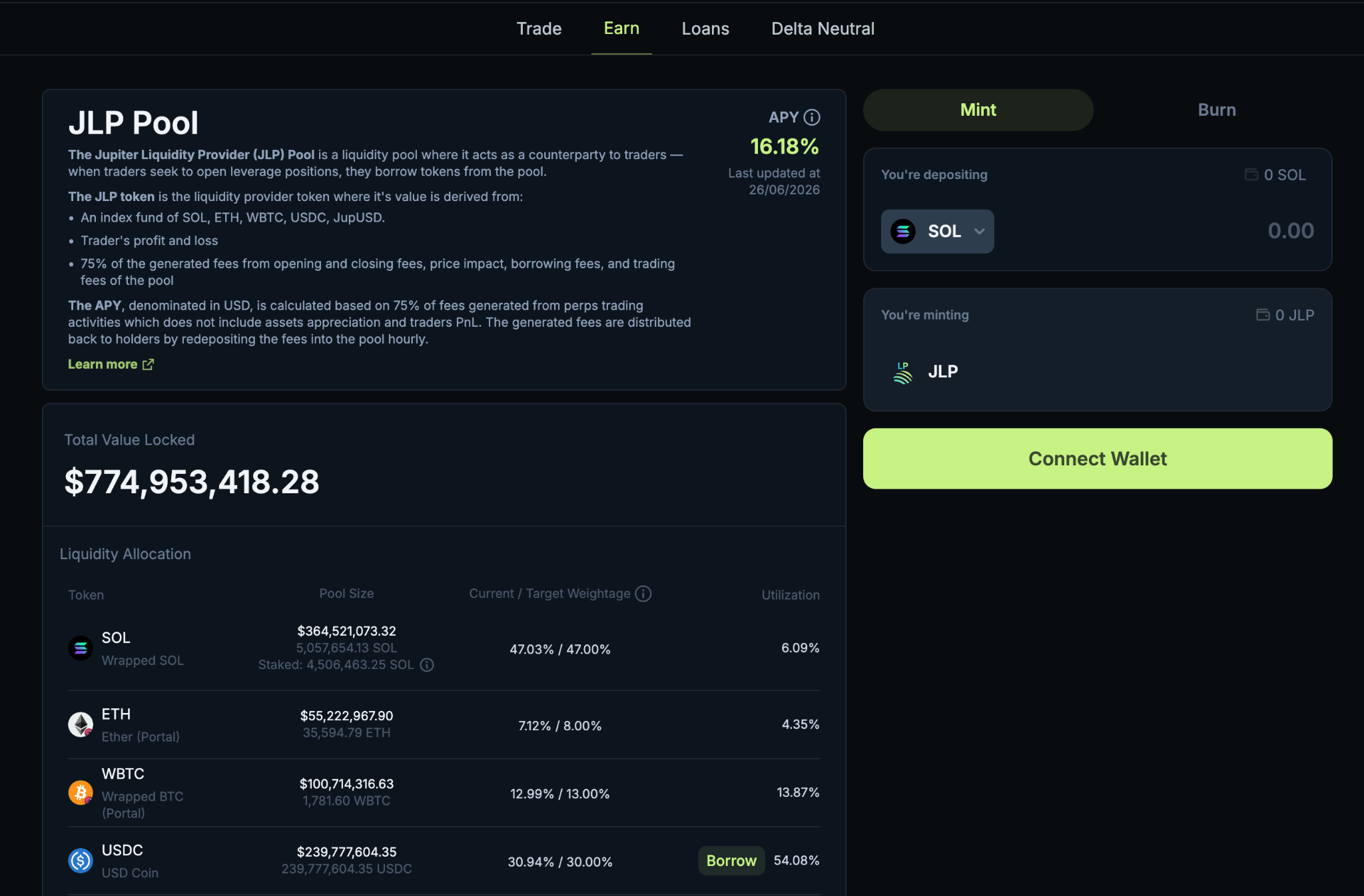
For traders to use margin, DeFi leverage trading platforms require liquidity providers. The provided liquidity is used to issue loans to traders and potentially serves as exit liquidity when traders make successful trades. In 2026, this landscape has evolved from static liquidity pools to highly sophisticated, automated structures (such as GMX Liquidity Vaults or Hyperliquid's protocol-native HLP) that allow retail users to participate in complex market-making strategies at production scale.
Here’s how it works: let’s say a trader wants to short ETH and bet on its price declining. When setting up the position, they may wish for more exposure to price movements, so they would enable margin. When a trader enables margin, they essentially take out a loan from the liquidity pool.
If ETH drops, and the user closes their position, profits are taken directly from the liquidity pool. But, if ETH rises, then the user would need to deposit more collateral to avoid liquidation, which would increase the supply of the liquidity pool. (Note: Modern LPs don't just act as a passive counterparty to traders; they also actively earn yield through spread capture, funding rate payments, and by absorbing liquidated positions at a discount).
Leverage trading liquidity pools were historically restricted to a curated list of whitelisted assets made available for trading. While early protocols generally only supported blue-chip assets (i.e. ETH, BTC, and USDC) for trading, platforms today have expanded to include hundreds of synthetic markets, long-tail altcoins, and even tokenized traditional commodities like gold, silver, and oil.
While becoming a leverage trading LP introduces the risk of becoming first-loss capital, it decreases the chances of impermanent loss that traditional liquidity pools experience. Furthermore, the industry shift toward isolated, market-specific pools (rather than a single unified pool for the entire platform) allows modern yield farmers to control their risk exposure on a per-asset basis.
GOVERNANCE TOKEN STAKING
DeFi apps with governance tokens allow holders to stake tokens for rewards and platform perks. These perks range from boosted yields on the platform to voting power in protocol decisions.
For instance, Curve, an EVM-based DEX, lets users stake (or rather, "vote-lock") its governance token (CRV) for boosted interest rates on LP deposits and CRV rewards. This created the popular "veToken" (vote-escrowed) model, where users lock their tokens for extended periods (often up to 4 years) to gain maximum voting power.
Staking interest rates depend heavily on the protocol, the project’s available token supply, and incentive emissions campaigns. However, by 2026, the focus has shifted away from purely inflationary rewards toward "real yield" - meaning users who lock governance tokens now expect to earn a share of the protocol's actual generated revenue (like swap fees or stablecoin borrow interest) rather than just newly minted tokens.
To better understand a protocol’s platform or project details, users can review their documentation and tokenomics.
YIELD AGGREGATORS AND YIELD TOKENIZATION
Yield aggregators use DEX liquidity pools and money markets to create automated strategies that leverage multiple pools. This creates new yield farming strategies and “1-click” deposit vaults which should require lower maintenance compared to more active strategies. Modern aggregators also feature advanced cross-chain routing, automatically deploying a user's capital to whichever Layer-2 network currently offers the highest risk-adjusted return.
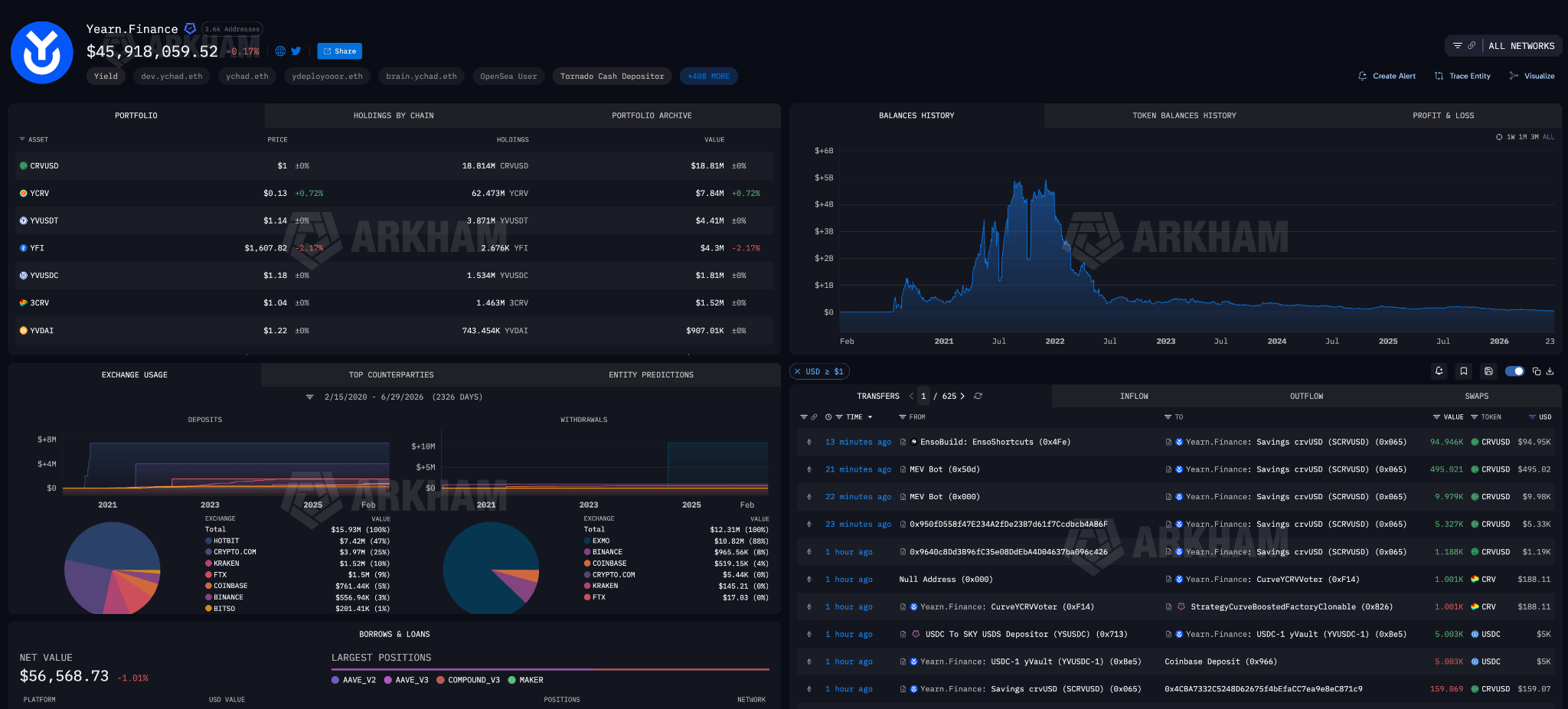
Some of the most popular traditional yield aggregators include:
It is also important to distinguish aggregators from a newer, massive category in 2026: Yield Tokenization.
Pendle Finance: While historically grouped with aggregators, Pendle is a yield derivatives platform. It allows users to take a yield-bearing asset (like an LST or LRT) and split it into a Principal Token (PT) and a Yield Token (YT). This allows farmers to either lock in a fixed interest rate (by buying the PT) or heavily leverage their exposure to future yields (by buying the YT), a strategy that has become a staple of advanced farming.
REAL WORLD ASSETS (RWAs)
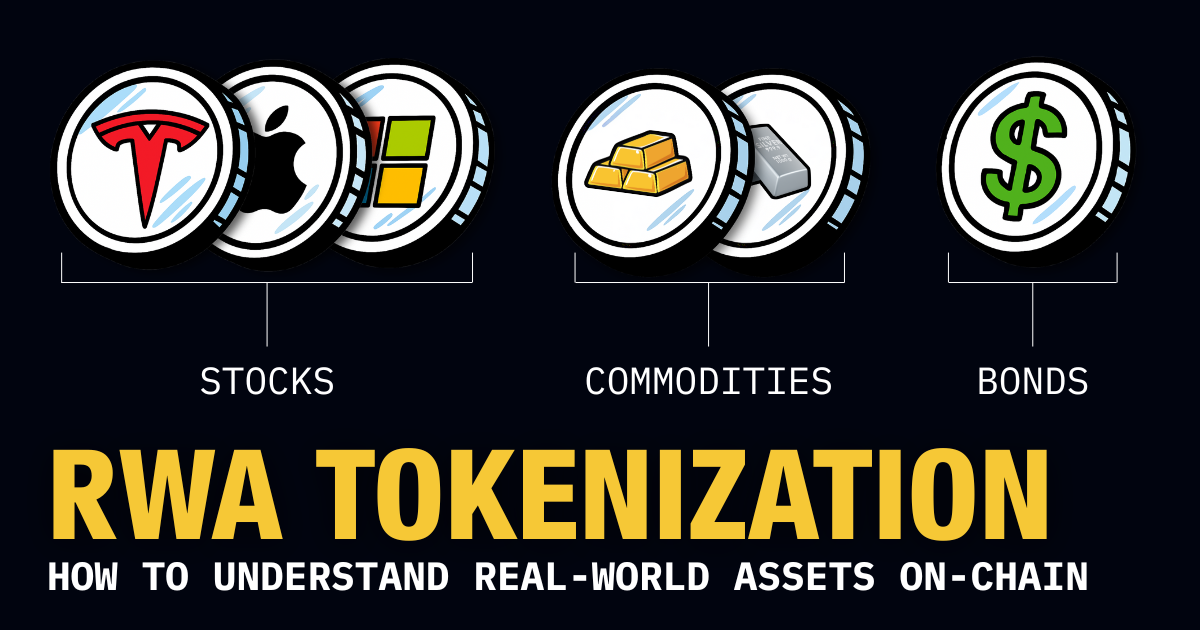
Real-world assets (RWAs) are DeFi products that collateralize assets like gold, U.S. Treasuries, and real estate to represent them on-chain. While early iterations of these tokens were sometimes called "flatcoins," the industry today categorizes them into two distinct groups: Tokenized Treasuries (which require KYC/AML onboarding) and Yield-Bearing Stablecoins (which trade freely).
In practice, the assets are commonly held in a trust or with a partner institution and then tokenized to account for them on-chain. Onboarding these traditional assets onto public blockchains should reduce transaction times of acquiring the underlying asset, and can offer steadily yielding interest rates to DeFi users.
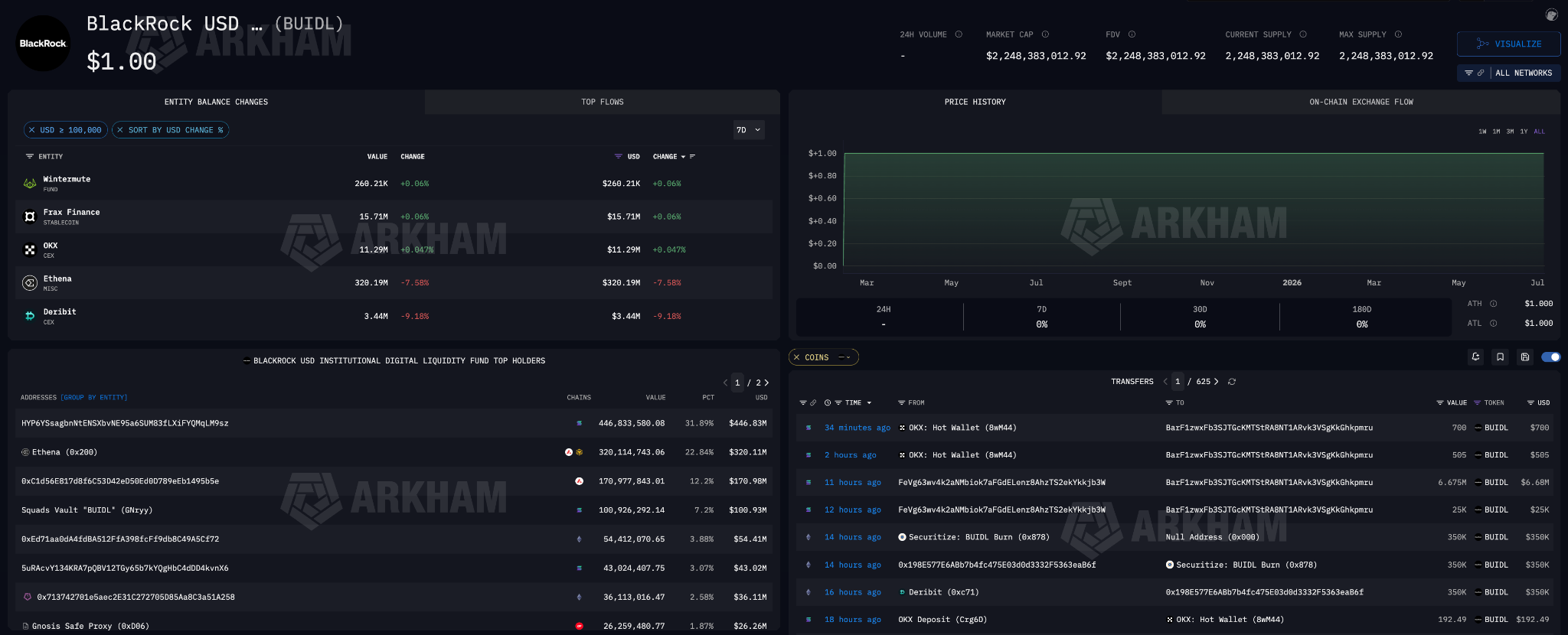
By mid-2026, the Tokenized Treasury market is dominated by institutional players. The largest by Total Value Locked is Circle's USYC (representing the Hashnote Short Duration Yield Fund), which holds over $3.1 billion in assets. It is closely followed by BlackRock's USD Institutional Digital Liquidity Fund (BUIDL) at roughly $2.2 billion. These tokens are generally only available to institutional and accredited investors.
Other notable yield-bearing assets include:
- Ondo U.S. Dollar Yield / USDY (Ondo): $2.16 billion Total Value.
- iBENJI (Franklin Templeton): $1.59 billion Total Value.
- Janus Henderson Anemoy Treasury Fund / JTRSY (Centrifuge): $880.86 million Total Value.
Since most of these assets on the market are backed by US treasury bills, notes, and bonds, they typically yield anywhere between 3.5-4.5% APY in 2026, tracking closely with the Federal Funds Rate.
One of the largest yield-bearing stablecoin models is Savings USDS (sUSDS) - the 2024 upgraded version of MakerDAO's Savings DAI. sUSDS is a yield-generating wrapper around the USDS stablecoin. Following the protocol's rebrand to Sky, sUSDS has exploded in adoption, holding over $5.5 billion in supply and providing holders with a yield of around 3.6% APY.
DEFI YIELD FARMING: OPPORTUNITIES
DeFi yield farming introduces new asset classes and investment methods, offering the following advantages:
- Passive Income: With protocols like yield aggregators and RWA providers, DeFi yields are becoming more stable, allowing users to earn interest from sustainable real-world economic activity without significant manual management.
- Diversification: DeFi offers users a way to diversify their holdings with cryptocurrencies and institutional-grade tokenized assets, earning interest rates that rival traditional banks.
- Self-custody: With yield farming, users hold the private keys to the wallet with their crypto, guarding against risks like platform bankruptcy, as witnessed with Celsius.
- Globalization: DeFi allows for tokenization, enabling developers to represent global assets like national currencies, U.S. Treasuries, and real estate, as crypto tokens.
DEFI YIELD FARMING: RISKS
Though innovative, the DeFi market is still in its early stages, making it more susceptible to certain risks - like being hacked by The Lazarus Group - compared to conventional investment methods. In addition, when users yield farm, they control the custody of their crypto, meaning it’s their responsibility to ensure the safety of their holdings. Common yield farming risks include:
- Volatile Yields: DeFi yield farming returns can fluctuate due to market conditions, changes in protocol incentives, or shifts in user behavior.
- Counterparty Risks: Since DeFi platforms operate without intermediaries, users risk interacting with unknown or unreliable counterparties (smart contract developers), potentially exposing them to scams or fraudulent activities.
- Depeg Risks: Some DeFi tokens (such as synthetic stablecoins or liquid restaking tokens) aim to maintain a stable value, but they can deviate from their peg due to various factors. These factors include insufficient liquidity or market manipulation, resulting in a loss of value for investors.
- Smart Contract Risks: Smart contracts, while designed to automate transactions and eliminate intermediaries, are still susceptible to bugs or vulnerabilities, which can lead to loss of funds.
- Composability Risks: Because modern yield farming frequently involves looping assets across multiple interconnected protocols, a vulnerability or exploit in one underlying layer can cascade throughout the entire system.
HOW TO RESEARCH YIELD FARMING OPPORTUNITIES
Arkham provides an all-in-one crypto ecosystem and intelligence platform to track crypto holdings and transactions of people and entities. These dashboards and advanced tools can inform yield farming decisions in the following ways:
- Stablecoin Watch – Track stablecoins with the most trading activity, to inform yield farming strategies.
- Track Top On-Chain Traders – Use the holdings of top traders to inform yield farming strategies.
- Set Custom Alerts – Configure real-time alerts using a range of different filters to monitor whale activity and on-chain fund flows, allowing you to react instantly to new yield opportunities.
FIND A YIELD FARMING OPPORTUNITY
Arkham Intel for Research
Before deploying your capital, use on-chain intelligence to identify where the liquidity is and what strategies top yield farmers are executing.
Track Whale Depositors: Search for top-performing on-chain entities or whale wallets on Arkham to see which money markets they’re currently using. If major market makers and funds are heavily supplying a specific asset, it often signals their trust in the pool
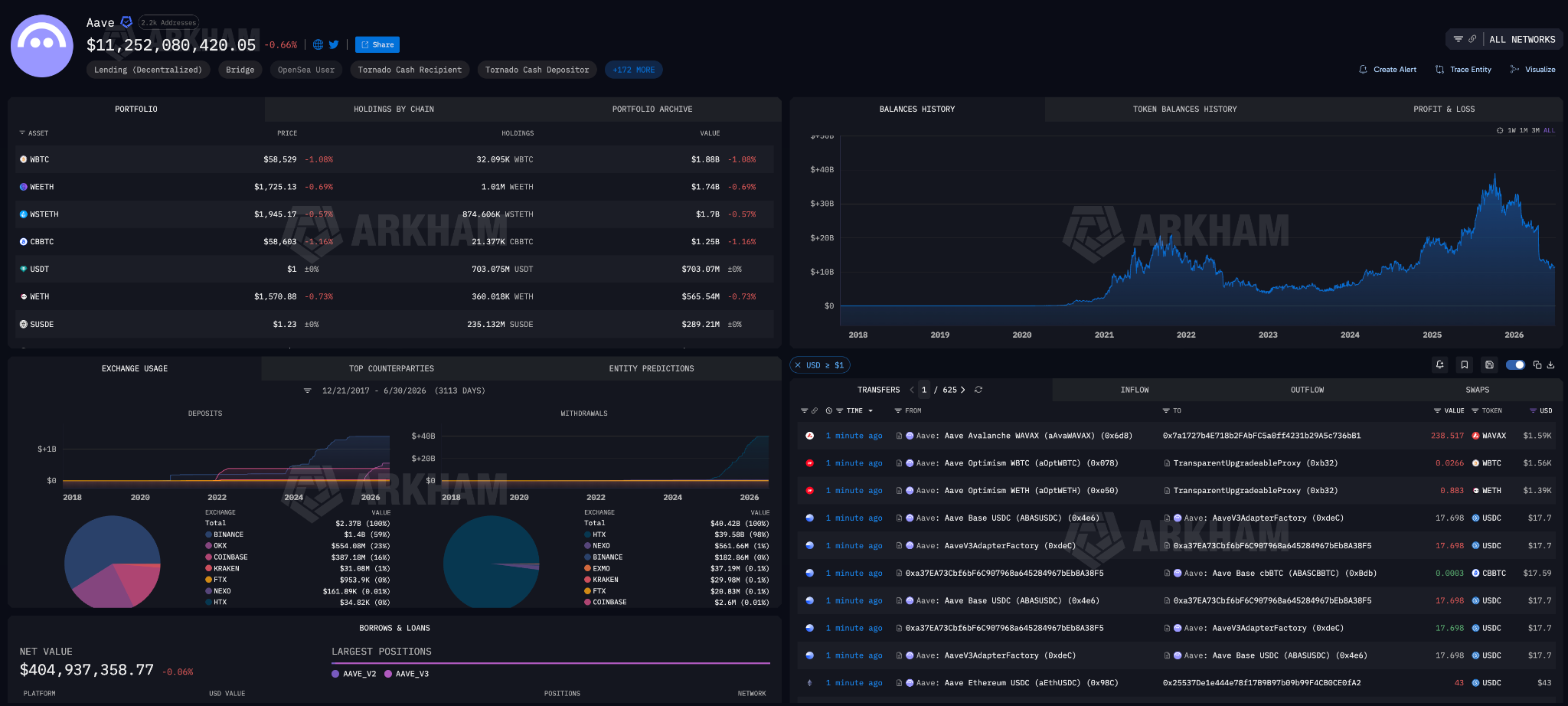
- Monitor Asset Supply Flows: Use Arkham's entity pages to monitor large-scale inflows and outflows from protocol smart contracts. Aave is an example of a platform you can track depositors and receive stablecoin yield on. Sky Money is another alternative.
CONCLUSION
By mid-2026, the decentralized finance ecosystem has evolved from the initial booms of 2020 and the rebuilding phase of 2024. While the institutional adoption of Tokenized Treasuries and sophisticated yield tokenization have brought billions in new capital, the DeFi market is still maturing when compared to the multi-trillion-dollar scale of traditional global securities.
The peak of the 2025 bull market saw DeFi TVL hit $165 billion. This is less than the all-time peak of nearly $174 billion in November 2021.
Yield farming remains an alternative investment method for cryptocurrency holders, having shifted largely from inflationary token rewards to sustainable, real-world economic yield. However, as strategies become more advanced, traders must rigorously examine the risks before deploying capital.
Before executing any yield farming strategy, traders should bear in mind the following core risks:
- Smart Contract & Composability Risks: Modern yield farming frequently involves looping assets across multiple interconnected protocols (such as using Liquid Restaking Tokens as collateral in money markets). A vulnerability, depeg, or exploit in just one underlying smart contract can cascade through the system and result in a total loss of funds.
- Self-Custody and Security Threats: Users remain their own banks, which requires flawless self-custody practices. While the ecosystem has matured, bad actors have too; highly sophisticated phishing scams and fake DeFi frontends actively attempt to trick users into signing malicious transactions.
- Persistent UX Complexity: While innovations like wallet abstraction have streamlined basic interactions, the user experience (UX) in advanced DeFi remains complex. Navigating cross-chain routing, managing dynamic margin health factors, and understanding derivatives like Principal/Yield tokens still require a steep learning curve - and unlike centralized finance (CeFi), there is no customer support desk to call when a transaction goes wrong.
To stay ahead of yield farming trends in this highly competitive environment, traders can use analytics tools like Arkham to drive their research. By leveraging Arkham’s data, tags, labels and real-time alerts, traders can monitor smart money flows, track institutional deposits, and analyze the on-chain activities of sophisticated users to inform their own market movements.

.png)










.jpeg)

.png)








.png)







.jpg)
.jpeg)






.png)

.jpg)

.png)
.png)

.png)
.png)
.png)
.png)


.png)
.png)







.png)
.png)