June 9, 2026
at
4:55 am
EST
MIN READ
A Beginner’s Guide To Meme Coins (2026)
What Are Memecoins?
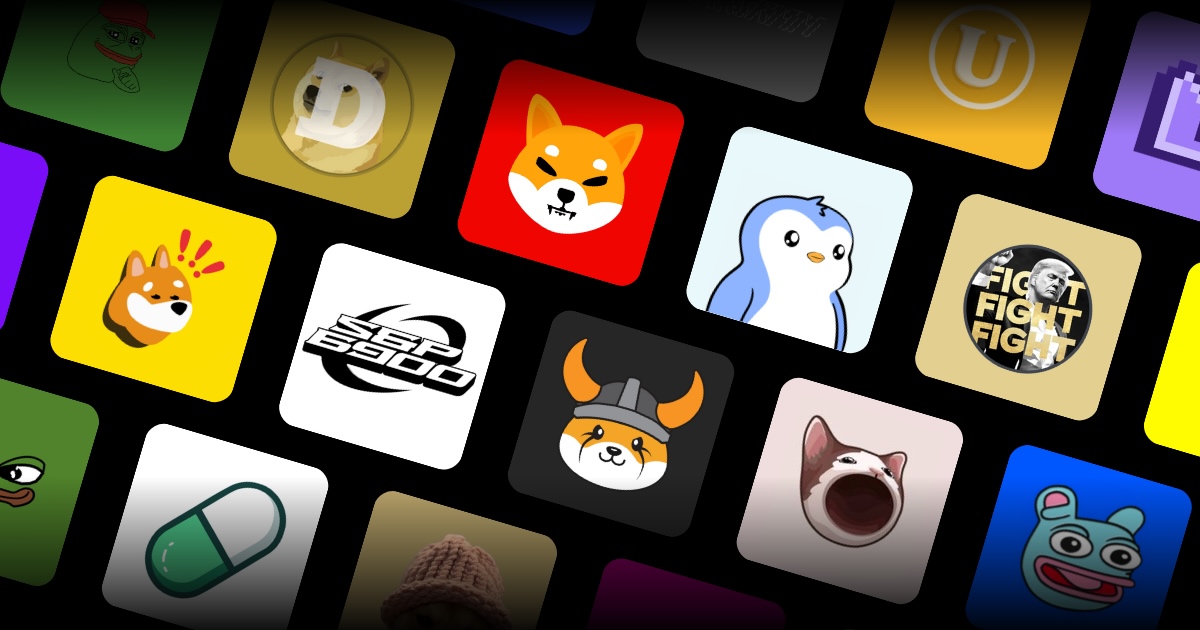
A memecoin is a token that trades based on an underlying idea, concept, or meme. Unlike the usual governance tokens or yield tokens, memecoins do not possess any fundamental utility. Simply put, memecoins are a vessel for attention. Memecoins represent a way for traders to put money behind an idea, joke, cultural moment, or personality, with the expectation that someone else will eventually pay more for that same bet than they did.
Memecoins thrive on their backstory and momentum. When a meme resonates broadly enough, be it a photo of a dog with a hat, a political figure, or a viral trend, a token can rapidly surge in market capitalization within just hours. That speed is both the appeal and the danger in memecoin investing.

Memecoins are highly volatile, primarily traded by retail participants, and prone to dramatic price swings in both directions. They thrive during periods of high speculative appetite in crypto markets, and often fade just as quickly. The traits that separate winners from the thousands of memecoins that launch and die daily are largely a matter of timing, community, and virality.
Where to Trade Them?
Before buying a memecoin, the first decision is whether to trade on a centralized exchange (CEX) or a decentralized exchange (DEX). These aren't just different platforms, they're fundamentally different experiences.
On a CEX, the memecoins available have already been vetted, listed, and given market-maker support. This means reduced slippage, fiat on-ramps, and a familiar interface. The tradeoff: the early discovery phase is over. By the time a token appears on Binance or Coinbase, it already has a significant market cap and the biggest early gains are likely behind it. For traders looking for the 100x returns that many memecoin traders seek, this might not provide the ideal environment for such opportunities. That said, for traders who want a straightforward, KYC-backed environment without having to manage Web3 wallets, a CEX remains a sensible starting point.

DEX trading is the more crypto-native route. Traders buy tokens that may be just seconds old, without any intermediary, using self-custody wallets. The benefits include early access, full ownership of assets, and publicly visible on-chain activity. However, those benefits come with significant risks. Rug pulls, honeypots, and MEV front-running are common, and there's no customer support when something goes wrong.

For traders who want to use a DEX without going in blind, the Arkham DEX is built directly into Arkham Intel. It's currently the only Solana DEX that integrates live on-chain intelligence at the point of trade. Using Arkham's tagging system, which covers over 200 types of entity labels across hundreds of thousands of addresses, traders can check whether a token's deployer or major holders have a history of scams or rug pulls before executing a swap.

The Arkham Visualizer lets users map out token holder distribution, making it possible to spot whether a single entity controls most of the supply. The DEX Leaderboard also shows the most profitable traders on the platform by Total PNL and ROI, which can be used to set custom alerts and follow whale wallet movements in real time.
For a more detailed breakdown of where to trade memecoins and which venues suit which strategies, see Arkham's dedicated guide: Where To Trade Meme Coins.
Other popular DEX options for Solana memecoin trading include Raydium, Orca, as well as Pump.fun's native interface. For Ethereum-based tokens, Uniswap remains the default, with Dexscreener widely used across chains as a price-tracking and discovery tool.
Solana Memecoins vs Other Chains
Solana has become the default home for memecoin activity. Between October 2024 and January 2025, Solana accounted for roughly 94.9% of all memecoin trading volume globally, far ahead of Ethereum at 3.4% and BNB Chain at 0.5%, according to data from Coinledger.
Its dominance is largely shaped by the fast-paced nature of the Solana blockchain. Solana transactions settle in under half a second and average fees run between $0.001 and $0.01, a stark contrast to Ethereum mainnet, where gas fees during busy periods can easily exceed $50. That cost difference matters enormously when traders are making dozens of small speculative trades. Pump.fun, the dominant memecoin launchpad on Solana, made over $535M in total platform revenue in the year 2025 alone, according to data from Token Terminal. With the proliferation of memecoin launchpads across all chains, almost anyone can launch a token of their own in minutes with no technical knowledge required.

That said, Solana isn't the only arena. Ethereum still houses notable memecoins with longer histories, such as PEPE and SHIB, which both carry deep liquidity and multi-billion dollar market caps despite market conditions. Additionally, BNB Chain has seen a rise in memecoin trading activity with the support and integration with Binance’s broader ecosystem. Other chains like Base, Avalanche, and Sui also see their own memecoin communities, but pale in comparison to the likes of Solana, Ethereum, and BNB Chain.
How to Find Memecoins Early?
Many successful memecoin traders attempt to identify tokens before they gain broader market attention. Getting in after the narrative breaks publicly means most of the upside has already been captured, thereby increasing the risk significantly.
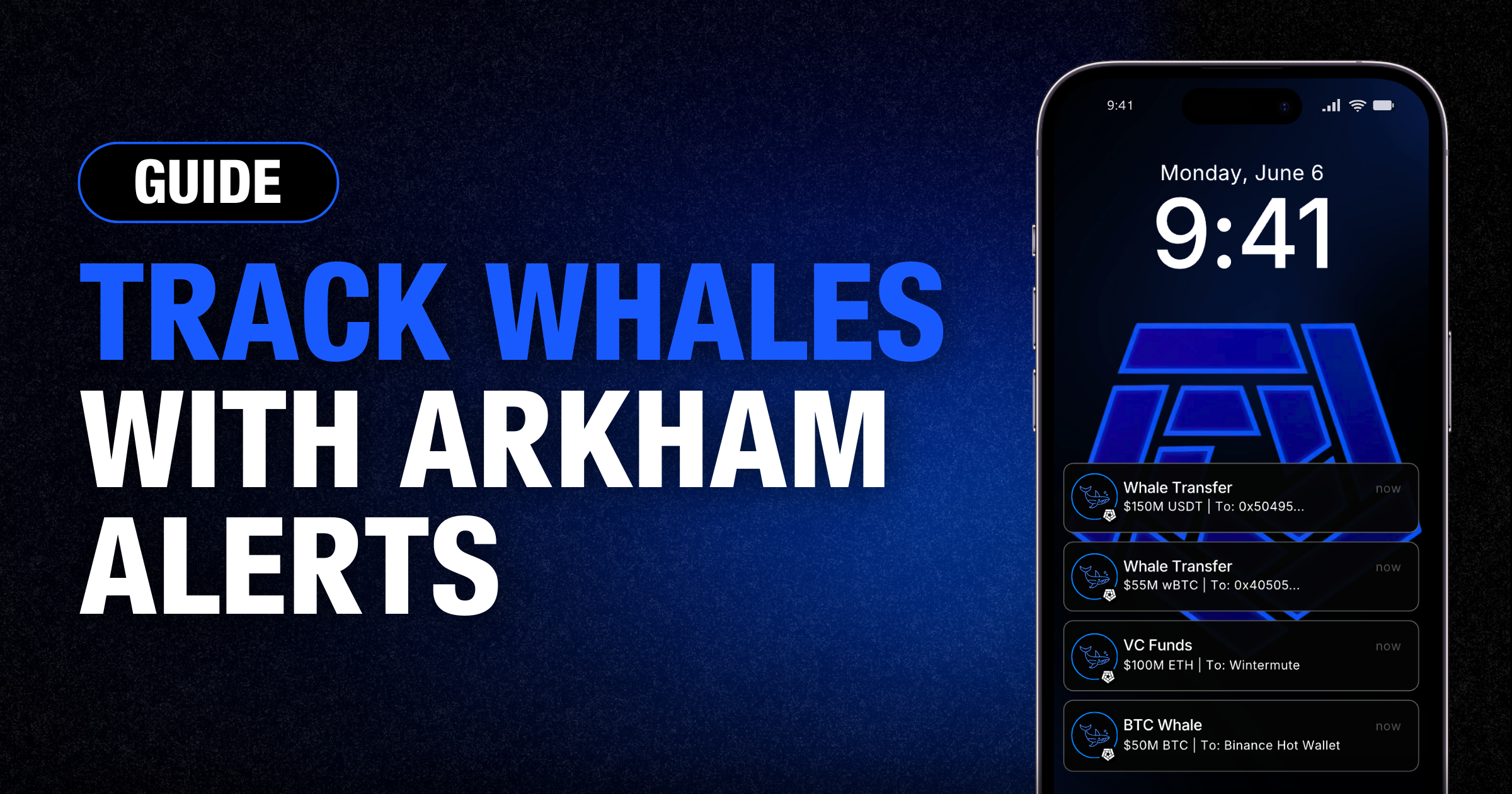
The most common approach among experienced traders is tracking wallets of notable traders. The strategy lies in a simple belief: if a wallet was among the earliest buyers of a previously successful memecoin, there's a reasonable possibility that they would be early to new memecoin winners as well. On Arkham, users can look up profitable memecoin traders using the DEX Leaderboard feature to discover top traders over various time periods. These addresses can be added to a custom Arkham Dashboard watchlist, which triggers real-time alerts when those wallets buy into new tokens.

Social listening is the other major vector. Many memecoin launches gain traction first in private Telegram groups, Discord servers, and on Crypto Twitter, often well before they become mainstream. Following active traders and wallets on these platforms and cross-referencing their on-chain activity via Arkham gives a more complete picture than trading off pure price data.
It should be noted that a large proportion of newly launched tokens fail or are outright scams within their first 24 hours. Being early to a token often comes with a higher hit rate of bad launches. Most seasoned memecoin traders accept that they'll absorb many losses for every big winner, and size their positions accordingly.
Top Memecoins 2026
As tracked by Arkham, some of the top memecoins by market cap currently include Dogecoin (DOGE), Shiba Inu (SHIB), Pepe (PEPE), 币安人生 (币安人生 ), Bonk (BONK), Official Trump (TRUMP), and several others.
As the “original” memecoin, DOGE remains the most dominant by a wide margin, exceeding the combined market capitalization of the next biggest five. It has the longest history, the broadest public recognition, and was formally classified as a digital commodity by a joint SEC/CFTC framework in March 2026.
SHIB is the most prominent Ethereum-based memecoin, having expanded from a simple token into an ecosystem that includes a Layer 2 (Shibarium) and its own DEX. Close behind, PEPE, is a frog-themed token based on a popular internet meme, having reached a peak valuation of $11 billion in 2024.
On Solana, BONK was the chain's first major homegrown memecoin and remains tightly woven into the Solana ecosystem. Dogwifhat (WIF) and Popcat (POPCAT) are other established Solana names with strong community followings. TRUMP launched in January 2025 as an official Solana-based memecoin associated with Donald Trump, just days before his U.S. presidential inauguration. The token rose rapidly, reaching an all-time high valuation of over $27 billion.

Risks of Trading Memecoins
Memecoins carry a specific set of risks that distinguish them from other crypto assets.
Information asymmetry is the most structurally significant. Early insiders, developers, and well-connected traders often know the supply distribution, the marketing plan, and the exit targets before the public does. When a token starts rallying and retail buyers pile in, the smart money is often already looking for its exit. This dynamic naturally sets uninformed traders up for failure.
Rug pulls occur when a memecoin’s team abandons the project, after it has achieved some level of success. This can occur in the form of a hard rug pull, where the team outright sells a large portion of their tokens, draining the money deposited by buyers and leaving them holding a worthless token. Soft rug pulls are also common, where the team seems to be active for a few weeks to months, before they gradually withdraw from the project, pocketing the returns made while they were active.

Smart contract risk is more relevant for newer tokens launched with unaudited code. Contract bugs can make tokens impossible to sell, allow certain addresses to mint unlimited supply, or grant admin keys that can be exploited.
Scam tokens are a type of token that have some form of malicious code built into them. They can appear legitimate while containing code that prevents selling, allowing the deployer to keep minting while buyers can only buy but never sell. This is also known as a honeypot.
How to Analyze a Memecoin
For newly launched memecoins, the first priority is checking for scam code. Honeypot detectors can flag tokens with sell restrictions or suspicious contract mechanics before you put any capital in. Beyond that, on Arkham, you can examine which wallets received the earliest token allocations and whether those wallets are tagged as known scammers, connected to previous rug pulls, or controlling most of the supply.

For existing tokens with some price history, on-chain holder analysis becomes the key tool. Who are the top holders, whether they are accumulating or distributing, whether any large early wallets recently moved tokens to an exchange, are all key questions to ask. On Arkham, you can monitor the specific holdings and activities of wallet addresses and set alerts for movements that might signal an impending sale. Dexscreener provides price charts and liquidity data across DEX pools, which can be combined with Arkham's holder-level data for a more complete view.
Across both stages, liquidity depth matters. A token with $50,000 in liquidity can be moved dramatically by a single trade. Checking the pool's depth against average trade size tells you how much exit slippage to expect.
Tools for Analyzing a Memecoin
Arkham Intel serves as a primary tool for on-chain wallet analysis. Track top holders, monitor fund flows, set alerts on specific wallets, and cross-reference token launches with known entities. The Arkham Visualizer also maps holder distribution into a node graph, making supply concentration immediately visible.

Dexscreener provides live price charts, volume, and liquidity data across DEX trading pairs on multiple chains. It is efficient for tracking new launches and identifying high momentum tokens, but does not distinguish between legitimate and fraudulent tokens.
Honeypot.is and other smart contract checkers that scan tokens for code that would prevent selling or allow unlimited minting are also useful tools in memecoin trading, protecting traders from the dreaded rug pull experience.
DOGE: A Case Study
Dogecoin was launched in December 2013 by software developers Billy Markus and Jackson Palmer as a joke. It was a fork of Litecoin that used the Shiba Inu "Doge" meme as its mascot. The dog in question was Kabosu, a Japanese Shiba Inu whose photo had become one of the most recognizable images on the internet.

Despite its origins, DOGE developed a loyal community and became the default tipping currency on Reddit and later on X (formerly Twitter). Its all-time high of roughly $0.73 was achieved in May 2021, at the peak of the retail-driven bull market, driven in large part by Elon Musk's repeated endorsements and his appearance on Saturday Night Live. At that peak, DOGE's market cap briefly exceeded $80 billion, a figure that would have been unthinkable for a coin originally built as a joke.
Arkham's DOGE token page allows traders to examine the current holder composition of Dogecoin. With its large size and long history, it is no surprise that the top holders remain centralized exchanges holding DOGE for their users.

Key questions to ask when analyzing DOGE via Arkham: Are major custodian addresses (exchanges, institutional holders) accumulating or reducing exposure? Have any historically significant whale wallets, those that have held large DOGE positions through previous cycles, started moving coins to exchanges, which typically signals intent to sell? Are new large wallets appearing, suggesting fresh institutional interest?
Arkham's alert system can be configured to notify users the moment any watched DOGE wallet executes a transfer above a set threshold. Combined with the platform's entity tagging (which identifies whether a wallet belongs to an exchange, fund, or known individual), this creates a real-time picture of whether money is flowing into or out of DOGE at scale.
Conclusion
Memecoins sit at the most speculative end of an already speculative asset class like crypto. They can generate outsized returns for traders who get in early enough and exit before sentiment turns, and they can wipe out positions just as fast for those who don't. The variables that determine a memecoin's trajectory live on-chain: in top holders, when these holders are moving funds, and what the smart money is doing before the broader market catches on.
Tools like Arkham exist precisely to narrow that information gap. Whether you're assessing a newly launched Solana token on the Arkham DEX or monitoring DOGE whale activity before a major price move, having on-chain visibility turns speculation into something slightly more tractable.

.png)


.png)






.jpeg)



.jpg)

.jpeg)





.png)
.jpg)


.png)
.png)

.png)
.png)
.png)
.png)
.png)
.png)


.png)
.png)
.png)
.png)