July 20, 2026
at
5:35 am
EST
MIN READ
Blockchains: How Many There Are, The Different Types, Bridges, Mixers And More
Since Bitcoin was initially created in 2009, the blockchain ecosystem has grown and evolved significantly. What originally started as a single blockchain network for peer to peer payments has since expanded into a sprawling landscape with thousands of chains, each with their own distinct architecture, purpose, and trade-offs.
For anyone newer to crypto, navigating this complex landscape can be quite challenging. Terms like “Layer 2”, “bridge”, and “consensus mechanism” are seen frequently and are typically used without explanation. This article will help readers new to crypto understand what blockchains are, what those terms mean, and how they relate to one another.
Summary
- Blockchains are decentralized digital ledgers that record transactions that occur upon it in a way that is transparent, tamper-resistant, and decentralized (not controlled by a single entity).
- Thousands of blockchains exist today, each uniquely designed with different priorities in mind.
- Some common priorities that different blockchains are built around include speed, security, and low transaction fees.
- Because no single chain can satisfy all of these requirements simultaneously, a broader ecosystem of tools and protocols has developed to close the gaps between different chains.
Glossary
Node: A node is a computer that participates in a blockchain network by keeping its own copy of the ledger (all transactions that have occurred on a blockchain) and validating transactions. There are thousands of nodes in a blockchain network all maintaining an identical copy of the ledger. The large number of nodes makes it so that no single point of failure can bring the network down and that no single party can edit the ledger.
Consensus Mechanism: A consensus mechanism refers to the set of rules that participants in a blockchain network follow to agree upon which transactions that occur are valid. Consensus mechanisms allow networks of anonymous strangers to reach agreement without a centralized authority. The two most commonly used consensus mechanisms are Proof of Work and Proof of Stake. In Proof of Work, computers compete to solve increasingly harder computational puzzles in order to validate transactions. In Proof of Stake, validators commit crypto as collateral in exchange for the right to participate in validation.
Layer 1 (L1): Layer 1 refers to the base layer of a blockchain network. A Layer 1 handles its own security, consensus, and transaction settlements directly on its own, without relying on another chain. Bitcoin and Ethereum are both Layer 1 blockchains. Layer 1s form the foundational infrastructure upon which other systems are built.
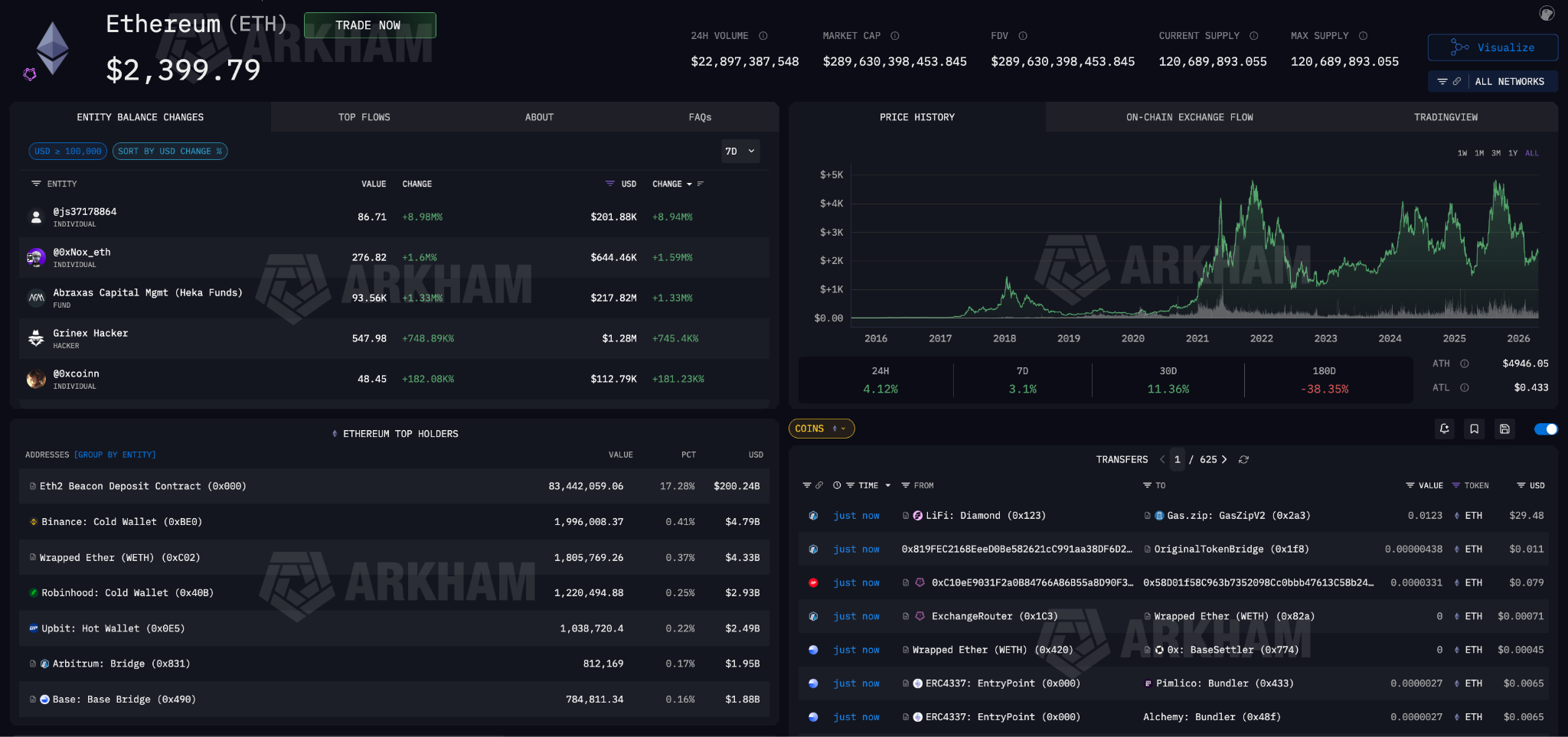
Layer 2 (L2): A Layer 2 is a secondary network that is built on top of a Layer 1 blockchain. Doing this allows a blockchain network to increase throughput and reduce transaction fee costs, helping a blockchain scale. Layer 2s help process transactions off of the main chain and periodically settle the results back to the Layer 1. This allows a Layer 2 to inherit the security of the Layer 1 while freeing up blockspace on the Layer 1. Arbitrum and Optimism are two prominent examples of Layer 2 networks built on top of the Ethereum Layer 1.
Layer 0 (L0): Layer 1s aren’t able to directly communicate with each other, which is where Layer 0s come in. A Layer 0 is infrastructure that sits beneath the Layer 1 that allows multiple different Layer 1s to communicate. This enables the seamless transfer of data and assets across isolated blockchains. Polkadot, Cosmos, and LayerZero are three examples of Layer 0 networks.
Bridge: Bridges are protocols that allow the transfer of assets and data between two separate blockchains. Bridges differ from Layer 0s in that they can connect Layer 1s to Layer 2s, and function more as a single connector between two points than an underlying network connecting many points together at once. Bridges allow users to lock an asset on a source chain and then issue a representative receipt token on the destination chain. Bridges are essential to cross-chain activity, but historically have been among the most vulnerable points in the blockchain ecosystem.
Mixer: A mixer is a service that helps users obscure the origin and destination of funds by pooling multiple transactions together. While mixers help support financial privacy for legitimate users, mixers historically have also been used to conceal the movement of illicit funds. As a result, mixers remain a subject of regulatory scrutiny. In 2022, the US Department of the Treasury blacklisted Tornado Cash, a well-known mixer operating on Ethereum.
Mainnet: Mainnet is the live, production version of a blockchain where transactions carry real economic value. This is distinct from a testnet, which is a development environment used by builders to test their applications without risking real assets. Mainnet is also sometimes used as a term to refer to a Layer 1.
Interoperability: Interoperability is the capacity of different blockchain networks to communicate, share data, and transfer value between each other. Greater interoperability reduces friction for users performing transactions across chains and is widely considered as a requirement for greater mainstream adoption.
Smart Contract: A smart contract is self-executing code that is deployed on a blockchain and automatically runs when specified conditions are met. Smart contracts eliminate the need for intermediaries in a wide range of applications, such as financial transactions or governance systems. Ethereum was the first major blockchain to support smart contracts, which significantly expanded what blockchains could be used for.
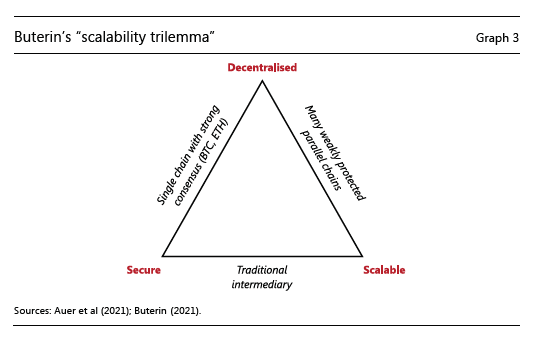
The Trilemma: The Trilemma is a foundational concept in blockchain design first introduced by Vitalik Buterin, an Ethereum co-founder. The Trilemma states that a blockchain can only optimize for two of the three properties at once: security, scalability, and decentralization. Prioritizing two of the three typically directly conflicts with the third property. This dynamic is a large reason why so many different blockchains exist today.
Gas Fees: Gas fees are the transaction cost paid by a user to perform a transaction or run a smart contract on a blockchain. Gas fees compensate validators for the computational resources required to process the operation. On blockchains, fees fluctuate with demand and have at times spiked to levels that make small transactions economically impractical.
Fork: A fork is a change to a blockchain’s underlying protocol. A soft fork introduces changes that are backward compatible with the existing network. A hard fork introduces changes that are not, resulting in a permanent divergence and potentially the creation of a brand new chain separate from the original. One of the most famous hard forks was Bitcoin Cash, which aimed to keep Bitcoin as a medium of exchange instead of a store of value.
What is a Blockchain?
A blockchain is a type of database that distributes identical copies of its records across a large network of computers. No single entity owns or controls the ledger. Blockchain transactions are grouped into blocks, and each block contains a reference to the block before it. By using these references, one can determine the correct order of blocks on a blockchain.
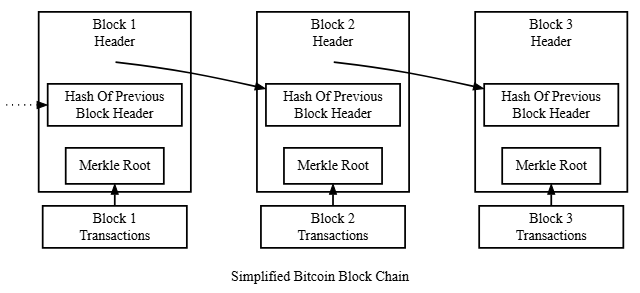
Once a block has been added and confirmed, editing the block would require rewriting every subsequent block across the majority of the network simultaneously, which becomes computationally prohibitive at scale. This requirement helps keep blockchains tamper-resistant.
The combination of decentralization, transparency, and immutability makes blockchains particularly well-suited for applications where trust between parties cannot be inherently assumed and where a record of activity that can be audited by individual participants is valuable.
How Do Blockchains Work?
When a user performs a transaction on a blockchain, this transaction is broadcast to the network, where nodes independently verify the validity of the transaction. Valid transactions are grouped with other valid transactions into a candidate block. The consensus mechanism then decides which candidate block gets to be officially added to the blockchain.
Under Proof of Work, miners compete to solve a computationally intensive problem. The first miner to solve it earns the right to add the next block and is rewarded with some cryptocurrency for doing so. Under Proof of Stake, validators are selected to propose and attest to blocks proportional to the amount of crypto that a validator has staked in the network. Dishonest behavior is discouraged by the potential penalty of a validator’s stake being confiscated. Once a block is confirmed and added to the chain, the transactions that are contained within it are considered settled.
How Many Blockchains Are There?
There are over 1,000 active public blockchains, and the number is larger when including private and enterprise deployments. When accounting for Layer 2s and application-specific chains, the number grows even larger. However, despite the large number of blockchains in existence, activity and value on blockchains is concentrated to a small handful of existing chains. A relatively smaller number of networks such as Bitcoin, Ethereum, Solana, and BNB Chain account for the vast majority of transactions and value held on-chain.
Why Are There So Many?
The large number of blockchains in existence stems from Vitalik Buterin’s trilemma of scalability (speed), security, and decentralization. No chain has been able to successfully prioritize all three of these factors without making sacrifices in one of the three. Different blockchains have made different design choices on how they navigate these trade-offs, and different use cases for different blockchains call for different priorities between the three. Bitcoin, for example, prioritizes security and decentralization first and chooses to sacrifice in terms of scalability (speed). Solana on the other hand, accepts increased centralization in exchange for higher speed.
What Are The Different Types?
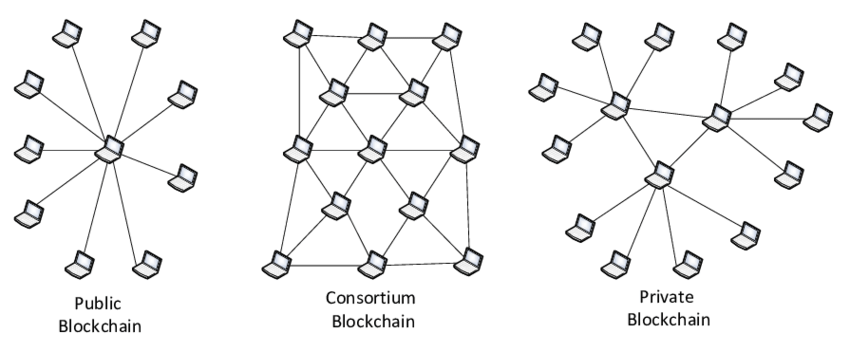
Blockchains can be categorized into three primary types: public, private, and consortium. Public blockchains are permissionless which means that anyone can read the ledger, submit transactions, or participate in validation. Bitcoin and Ethereum are two examples of public blockchains. Private blockchains are controlled by a single organization that restricts participation to approved users and parties. As a result, private blockchains are more suitable for enterprise use cases where confidentiality and security are important. Consortium blockchains are governed collectively by a defined group of organizations instead of a single entity, and sit in between public and private blockchains in terms of openness.
How Do They Interact With Each Other?
In their default state, blockchains are isolated systems with no innate ability to communicate with other blockchains. Bitcoin has no awareness of what occurs on Ethereum and vice versa. Each network maintains its own state and validates its own transactions independently.
Cross-chain interaction requires infrastructure built specifically for this purpose. Bridges are the most common solution, allowing users to transfer assets between networks that would otherwise have no connection. The standard approach locks an asset on the originating chain and issues a receipt token for it on the destination chain. When the user wishes to redeem their receipt token, they can reverse the process to reclaim the original asset.
Bridges have proven to be high-value targets for exploits. In 2022 alone, bridge hacks resulted in over $1.3 billion in losses, with major incidents including the $615 million Ronin bridge exploit and the $325 million Wormhole hack. Because large volumes of assets pass through bridge contracts, a vulnerability in the underlying code can result in big losses.
Some ecosystems approach interoperability at a structural level. Polkadot connects a network of chains through a central Relay Chain that coordinates communication and shared security. Cosmos enables independent blockchains to exchange data and assets using a standardized protocol called Inter-Blockchain Communication. In both cases, interoperability is a design feature of the ecosystem rather than something added after the fact.
What is Interoperability?
Interoperability refers to the capacity of separate blockchain networks to communicate and transact with one another. Because most chains today have a very limited capability of doing so, interoperability is widely regarded as one of the industry’s most important unsolved problems.
The current state of the ecosystem is fragmented. Different blockchains are built with different coding languages. Assets and data on one chain are not automatically usable on another. Moving value across chains requires deliberate steps, introduces costs, and comes with a security risk. Each bridge protocol, cross-chain messaging layer, and interoperability-focused network represents an attempt to help solve this issue.
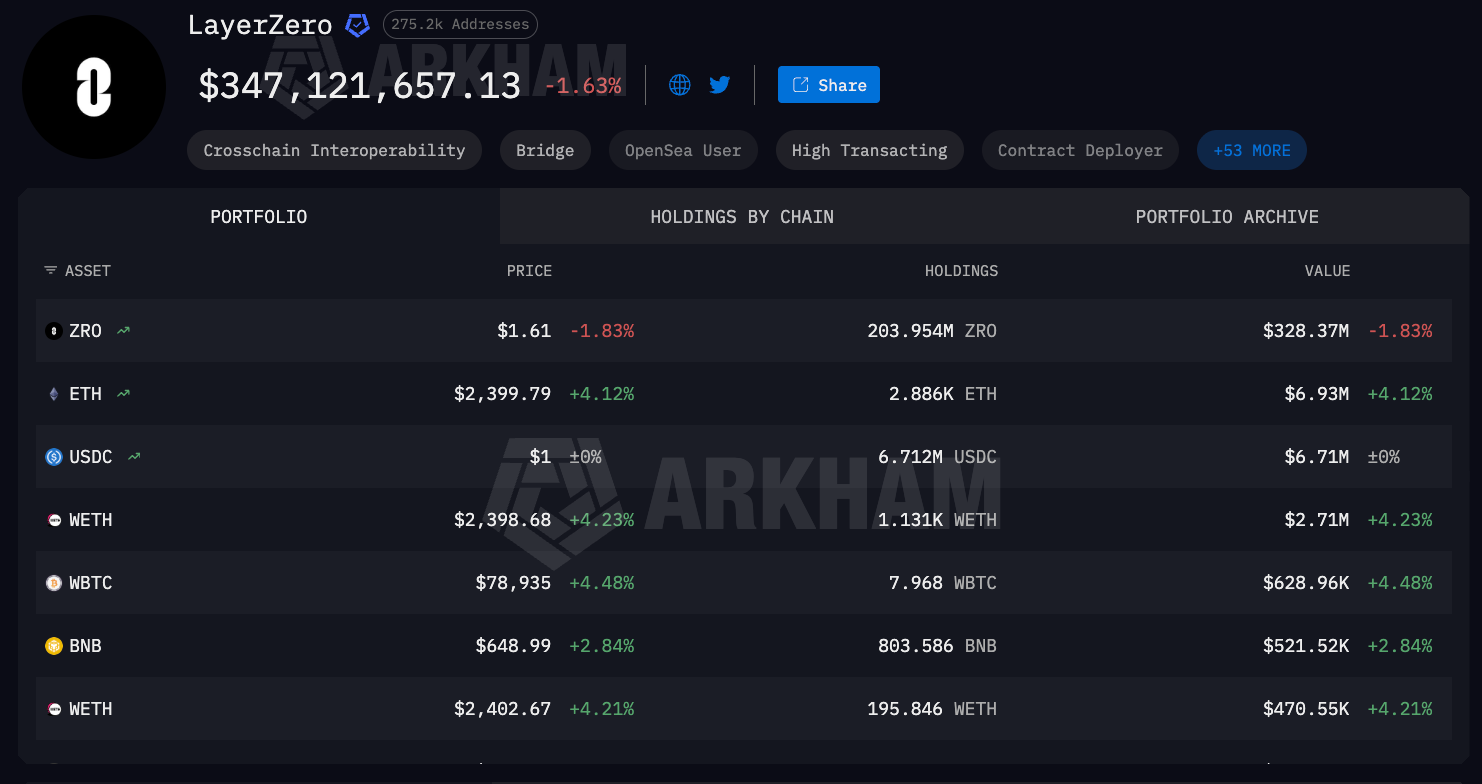
The long-term goal shared by much of the industry is an ecosystem that functions like the modern internet, where underlying infrastructure is largely invisible to the user and assets can move freely between networks. Achieving that vision however, requires better technical solutions as well as broader standardization and coordination across projects with competing interests. Progress has been made towards this vision, but full interoperability across the full crypto blockchain ecosystem remains a work in progress.
Conclusion
The complexity of the blockchain ecosystem reflects a genuine engineering challenge. There is no universally optimal design for a decentralized network. Every choice within the blockchain trilemma involves trade-offs, and these trade-offs explain why thousands of distinct chains have been built.
The tools that connect them (bridges, cross-chain protocols, and interoperability frameworks) exist because the ecosystem's fragmentation creates real problems for users. They represent imperfect solutions to a problem that has yet to be properly solved.
However, it is impossible to deny the amount of progress that has been made over the years in allowing different blockchains to communicate with one another. Friction between separate blockchains has been reduced with each passing year, and it seems likely that one day users will be able to perform transactions and move assets freely across the blockchain ecosystem.

.png)










.png)






.jpeg)




.jpg)

.jpeg)






.png)

.jpg)


.png)
.png)


.png)

.png)
.png)
.png)


.png)
.png)




.png)
.png)
.png)
.png)