June 19, 2026
at
9:45 am
EST
MIN READ
Binance vs. Coinbase: Which Exchange is Bigger, Better, More Affordable and More Secure?

When it comes to crypto centralized exchanges, two companies account for an outsized share of the world's crypto activity. Binance processes the highest trading volumes globally, while Coinbase dominates the regulatory front, holding more regulatory licenses in the United States than any of its competitors and is the only publicly listed major crypto exchange.
Together, they have shaped how hundreds of millions of people access digital assets. This piece puts the two platforms side by side across every dimension: on-chain holdings, custody architecture, fees, compliance history, institutional services, security incidents, and ecosystem breadth.
Note: Holdings of BTC, ETH and all other cryptocurrencies are constantly fluctuating. Please refer directly to Arkham Intel for the most accurate data.
Summary

Total On-Chain Holdings
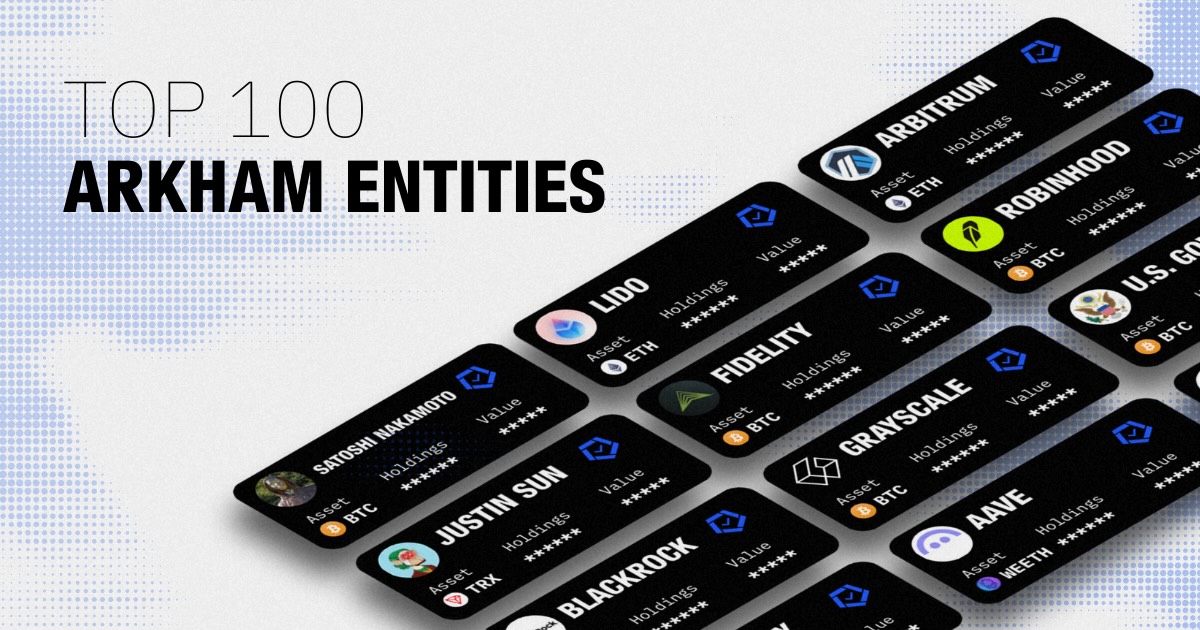
According to Arkham Intel data, Binance and Coinbase are the two largest crypto-holding entities in the world. In June 2026, Binance holds approximately $127 billion in on-chain assets, while Coinbase has approximately $86 billion, placing them first and second respectively on Arkham's global entity rankings. No other exchange comes close. To see the top 100 Arkham entities, click here.
You can interact directly with Binance and Coinbase’s entity pages on Arkham Intel in the windows below:
BTC Holdings Compared
On the surface, Coinbase holds 970K BTC while Binance holds 665K BTC. However, the truth is much more nuanced as Binance’s holdings primarily reflect individual user holdings while the majority of Coinbase’s Bitcoin is held in custody for institutional clients and ETF products, reflecting its dominance in the institutional space. In fact, the BTC held by Coinbase, most of it is held in custody for BlackRock’s iShares Bitcoin Trust (IBIT). Coinbase’s large Bitcoin balance is only second to Satoshi Nakamoto himself, with a balance of almost 1.1M coins.
ETH Holdings Compared
Much like Bitcoin, Coinbase’s ETH holdings stand higher at 4.2M tokens while Binance holds 4M tokens, largely in part due to Coinbase’s role as a primary custodian for spot ETH ETF products. Additionally, Coinbase Institutional is the largest institutional ETH staking provider, which also supports staking operations for spot ETH ETFs.
Stablecoin Holdings Compared
Stablecoins represent a large share of both exchanges' on-chain footprints, but for Binance, this is where the bulk of their holdings lie. Binance holds a notable amount in both USDT and USDC, with 42B USDT and 9B USDC. Notably, they also hold 3B USD1, the stablecoin issued by Donald Trump’s World Liberty Financial. Coinbase, on the other hand, primarily holds their stablecoins in USDC, due to their commercial relationship with Circle, holding over 11B USDC. Its USDT holdings are much lower, sitting at $378M worth.
Other Crypto Holdings Compared
Binance's broader asset base spans hundreds of tokens across BNB Chain and multiple other networks. As such, the remaining tokens held in Binance custody collectively account for roughly 19.7% of Binance's on-chain footprint. Coinbase’s narrower asset range as well as their focus on institutional support leaves only 6.65% of their total assets for other crypto tokens.
Custodial Strategy Compared
The two exchanges take measurably different approaches to how they store customer funds, and the difference shows up clearly in on-chain data.
Binance operates with a relatively small number of large, identifiable wallets. This concentration makes its on-chain movements easier to track and verify, which is useful for proof-of-reserves purposes, but creates a potentially larger attack surface if any individual wallet is compromised.
Coinbase, by contrast, distributes holdings across a very large number of smaller wallets. Arkham has identified thousands of distinct Coinbase-linked addresses, many of which hold comparatively modest balances. This architecture is consistent with institutional custody norms, which segregate client assets at the wallet level to reduce single-point-of-failure risk. This also makes it easier to attribute holdings to specific clients, particularly for regulated products like ETFs.
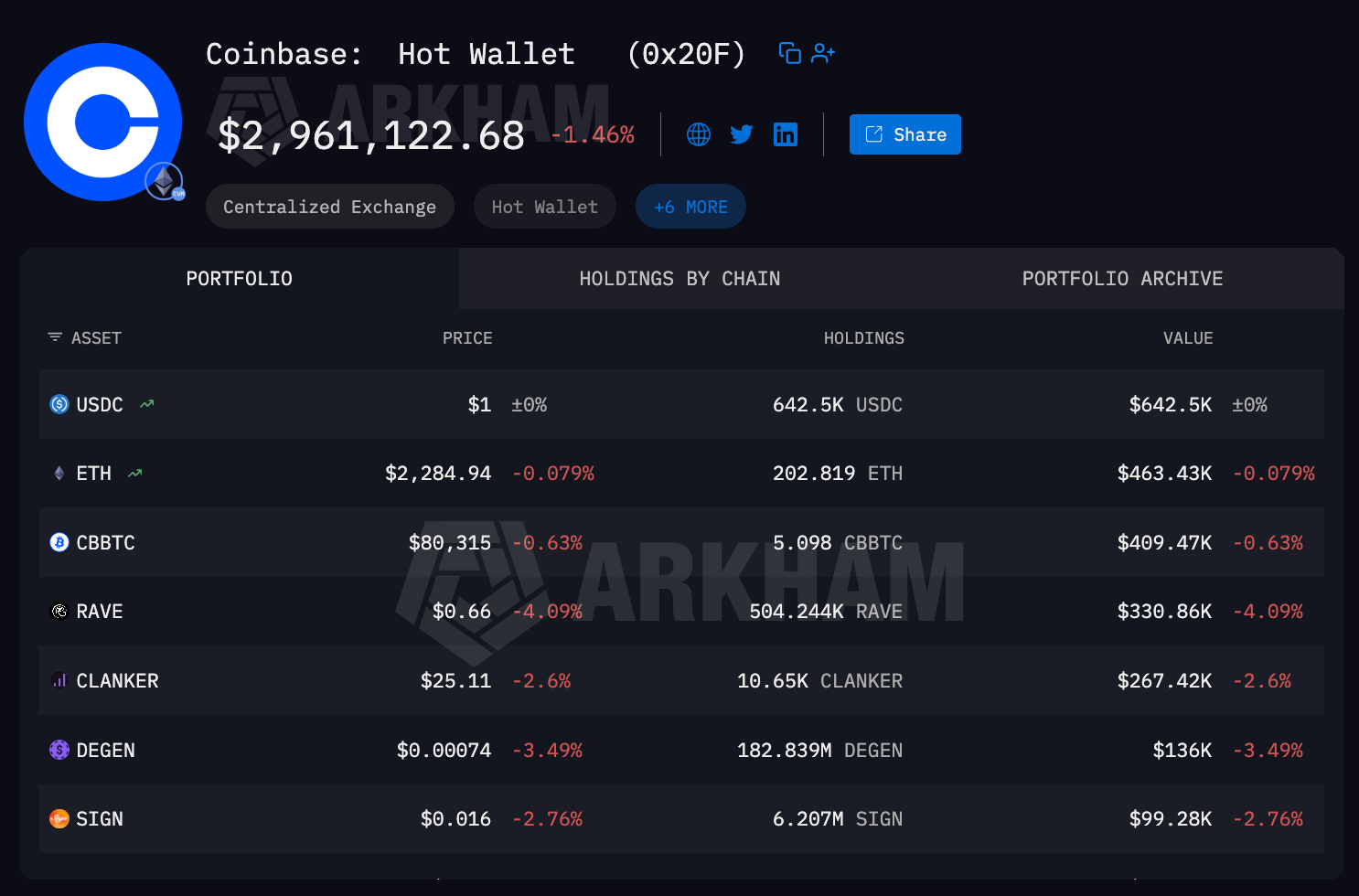
Coinbase holds approximately 98% of customer funds in cold storage and encrypts sensitive user data, mandating two-factor authentication and offering address whitelisting. Binance's SAFU (Secure Asset Fund for Users) serves as an emergency insurance reserve, with the exchange also publishing monthly Merkle-tree verified proof-of-reserves reports.

Trading Volume Compared
Binance remains the dominant force in global crypto trading by almost every volume metric. In 2025, Binance made up 42.09% of the spot trading market share, significantly higher than the remaining centralized exchanges, which were largely clustered in the 6-8% market share range, Coinbase included. The derivatives market was no different, with Binance making up 34.74% of the derivatives trading scene. Despite being the clear leader, however, it should be noted that Binance’s spot and derivatives market share is down significantly from its 2023 share of 53.7% and 52.3% respectively.
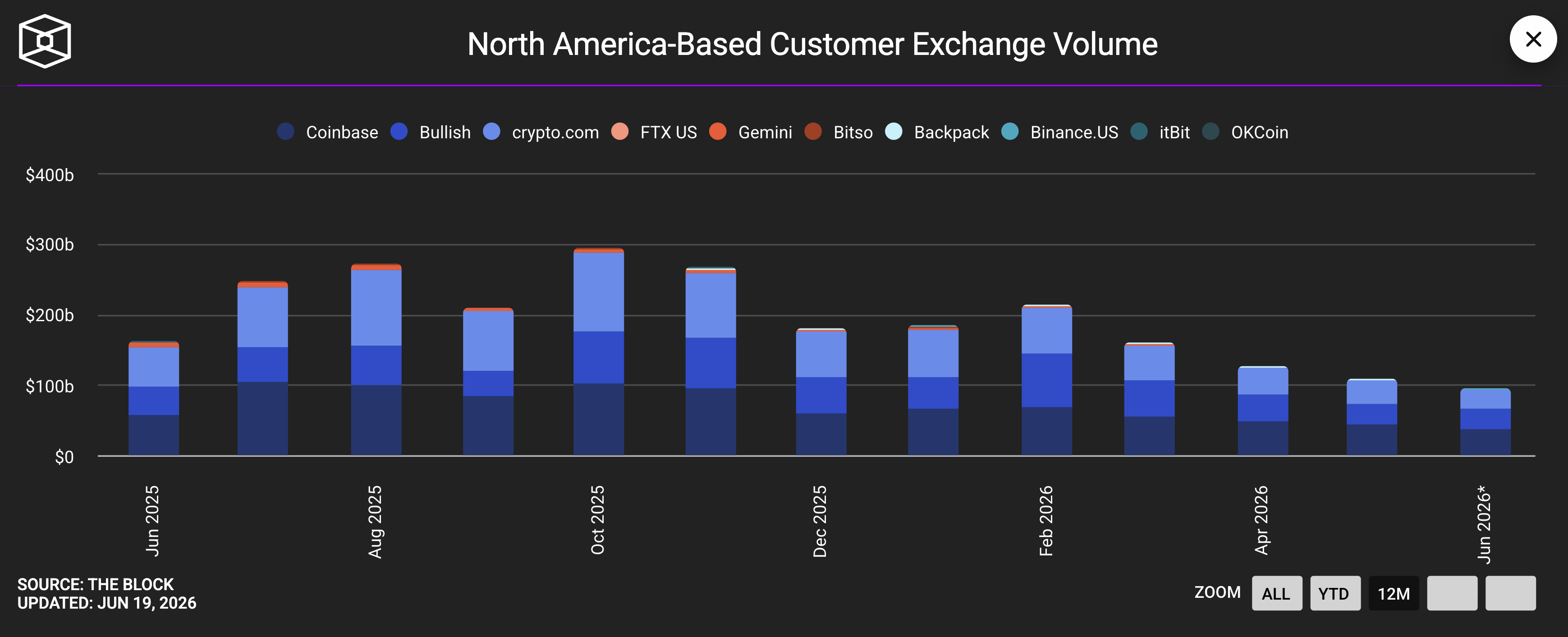
Coinbase leads in the United States for spot volume but trails significantly in global terms, particularly in derivatives. Due to their compliant stance, Coinbase’s derivatives product range has been slow to roll out, with perpetuals, the most popular crypto derivative product, being offered to U.S. traders only in mid-2025. As such, it comes as no surprise that Coinbase has largely lagged in this department. While Coinbase’s derivatives market share is growing, its spot volume market share remains largely stable within the 6-8% range.
Fees Compared
Fee structures are where the difference between the two platforms is most practically felt.
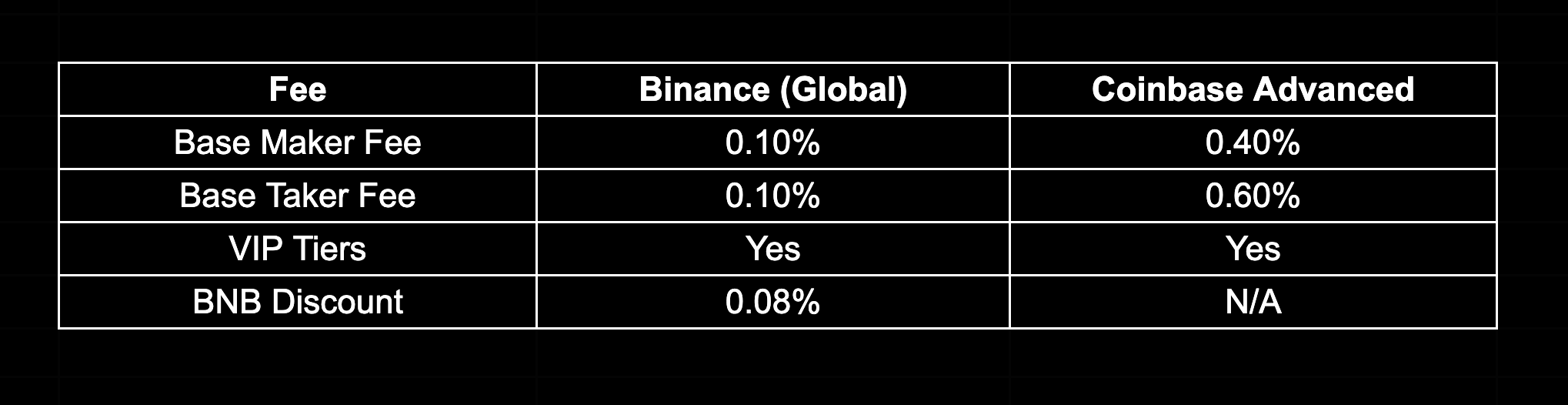
Binance charges a flat 0.10% fee on standard spot trades, reduced to 0.075% when paid in BNB. High-volume traders also qualify for additional discounts through a VIP tier system, which can reduce maker and taker fees to 0.011% and 0.023% respectively.
Coinbase's pricing is less straightforward. Its simple consumer interface (sometimes called “Simple”) tends to charge higher fees as a trade off for convenience. It charges a variable transaction fee based on the method of purchase: bank transfer, credit card, or stablecoins, plus an additional spread. This spread is sometimes referred to as a hidden cost, which many new users tend to overlook. Their more advanced interface, Coinbase Advanced, uses the more common maker-taker model with a base rate starting at 0.4% and 0.6% for maker and taker fees respectively. Similar to Binance, these fees drop with higher 30-day trading volumes, getting as low as 0% and 0.04% on maker and taker fees respectively.
For U.S. users, Binance.US recently made a significant change to its pricing model. Binance.US announced spot trading fees of 0% maker and 0.02% taker on all pairs, available to every user on the platform with no portfolio minimums and no volume tiers, making them the cheapest exchange in the U.S.
Compliance and Regulatory Situation
Binance spent its early years operating with minimal jurisdictional commitment, which enabled rapid growth but accumulated significant regulatory liability and scrutiny from regulatory bodies. This culminated in the 2023 DoJ settlement, which resulted in $4.3 billion in fines and CZ's personal guilty plea. The settlement was also the most significant regulatory action taken against a crypto company to date. Following the settlement, Binance has since pursued formal licensing in multiple jurisdictions, including the UAE, France, and several other European markets, and has implemented mandatory KYC globally.
Coinbase has faced its own regulatory friction, primarily from the SEC's multi-year investigation into whether the tokens listed on its platform constituted unregistered securities. The 2025 resolution of that litigation removed a major overhang from the company's stock and cleared the path for broader institutional business. As a NASDAQ-listed company, Coinbase files regular audited reports with the SEC and operates under New York State's BitLicense, among other approvals. Coinbase currently carries regulatory approvals in over 100 countries and all 50 U.S. states.
Institutional Usage
Coinbase Prime is the dominant institutional custody solution in the U.S. crypto market. Coinbase Custody Trust Company, LLC is chartered as a limited purpose trust company by the New York State Department of Financial Services to engage in virtual currency business. As of June 30, 2025, Coinbase Prime had $245 billion in institutional assets under custody.
The depth of Coinbase's institutional footprint is visible on-chain. Arkham Intel tracks all inflows and outflows out of the majority of spot crypto ETFs via on-chain data, with movements of millions of dollars in BTC and ETH in and out of Coinbase Prime wallets, a pattern consistent with ETF creations and redemptions.
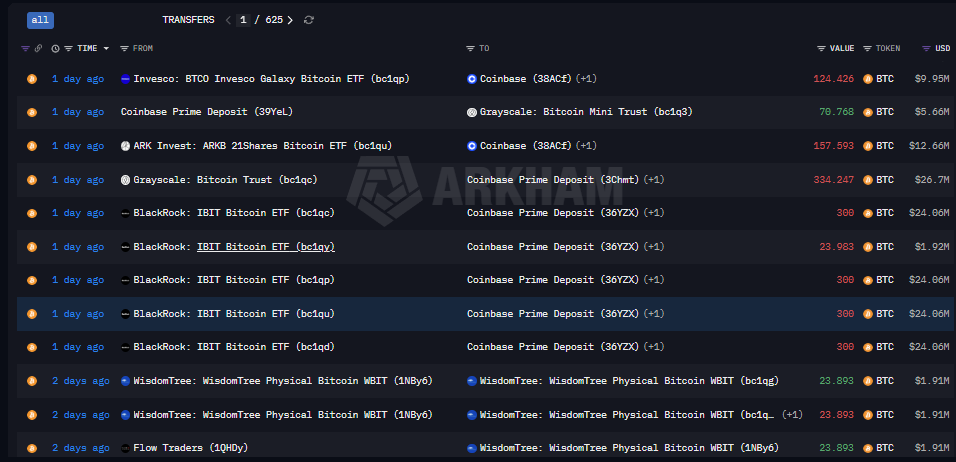
The custody concentration is striking: across the 11 spot BTC ETFs trading in the U.S. markets, 8 of them use Coinbase as their custodian. By assets under management (AUM), this number looks even more impressive, with 84.5% of the total spot BTC ETF market held under Coinbase’s custody.
Binance's institutional offering, Ceffu (formerly Binance Custody), targets non-U.S. institutional clients. It provides MPC wallet technology, segregated custody, and prime services for asset managers and trading firms operating outside the American regulatory perimeter. Given Binance's restricted U.S. access, Ceffu does not compete directly with Coinbase Prime for U.S.-domiciled institutions. Notable clients utilizing Ceffu’s services include Kucoin, HashGlobal, Amber Group, DWF Labs, and more. Ceffu also secures several prominent DeFi protocols including Ethena, BounceBit, Resolv, and more.
Security: History of Hacks and Exploits
Naturally, with the size and history of Binance and Coinbase, neither exchange has been able to completely avoid major security incidents.
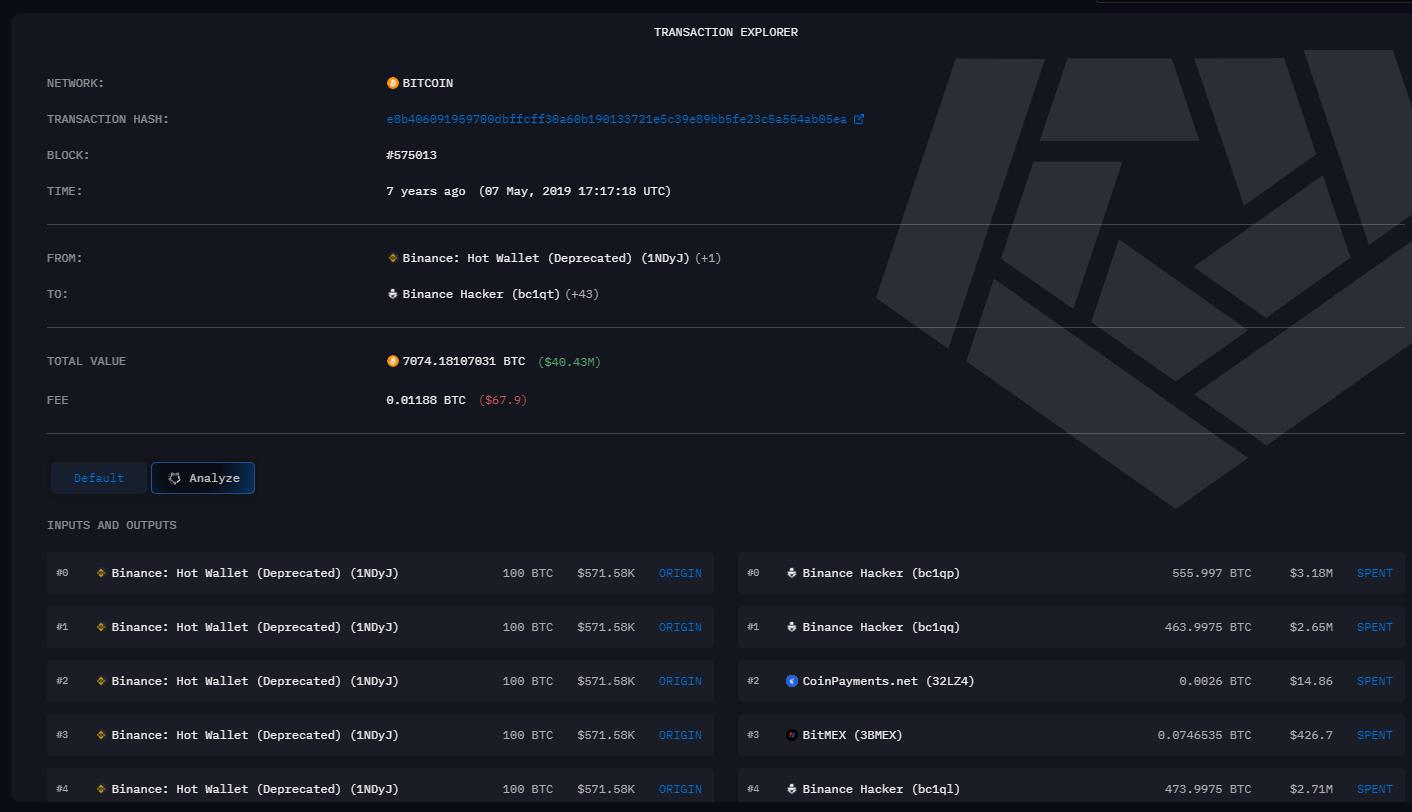
Binance's most significant direct exchange compromise occurred in May 2019. Hackers employed phishing techniques, viruses, and other attack vectors to steal 7,000 BTC, worth $40.6 million, from a Binance BTC hot wallet in a single transaction. Binance covered all losses using its SAFU fund and suspended deposits and withdrawals during the investigation. In October 2022, the BNB Chain cross-chain bridge was exploited for approximately $566 million in assets, though this was a blockchain infrastructure incident rather than a breach of the exchange's custody directly. Track the BNB Bridge Exploiter entity here.
Coinbase's most significant incident was not a funds theft but a data breach. In May 2025, Coinbase disclosed that cybercriminals had bribed overseas customer support contractors to access internal systems and extract user information, with the breach occurring six months earlier. Although less than 1% of Coinbase's monthly active users had their records accessed, the estimated remediation costs ranged from $180 million to $400 million, due to losses arising from social engineering attacks on affected users.
Ecosystem and Other Products
Binance
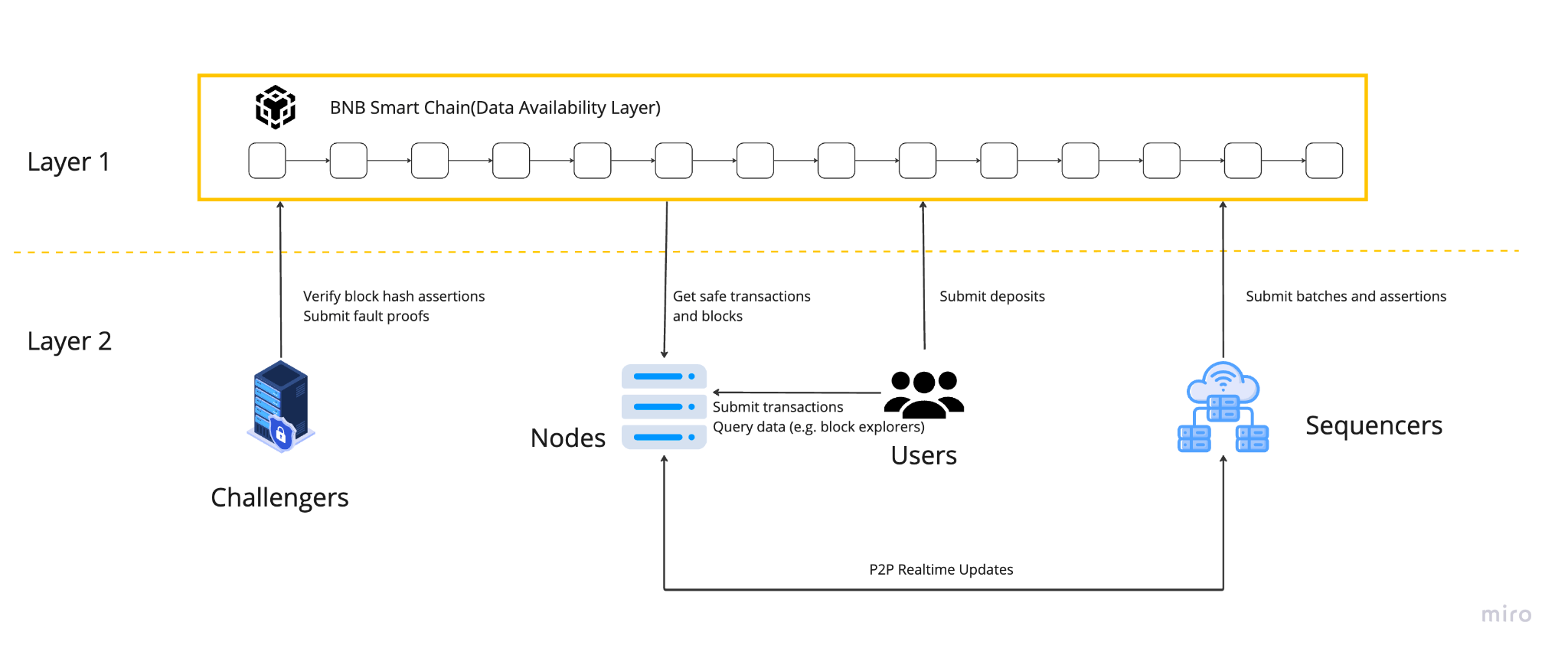
Beyond its exchange operations, Binance operates one of the most complete ecosystems in the industry. BNB Chain (formerly Binance Smart Chain) is a major EVM-compatible L1 blockchain hosting thousands of decentralized applications. In 2023, Binance launched opBNB, the BNB Chain’s L2 scaling solution powered by the Optimism stack. In the same year, Binance launched BNB Greenfield, their data availability layer, and the Binance Wallet was rolled out, giving users direct access to on-chain activity.
Central to the entire Binance ecosystem is BNB, the native token originally issued in Binance’s 2017 ICO. BNB functions as a fee discount mechanism on the exchange, as well as a utility token on the BNB Chain as its gas token. It also allows holders to participate in token sales for new project launches on the Binance Launchpad. One of the main drivers in BNB's value is tied to a quarterly burn mechanism that reduces its supply over time.
Coinbase
Coinbase's on-chain ecosystem is Base, an Ethereum L2 network launched in 2023. Base has grown quickly into the largest L2 by total value locked (TVL), at $4.60B, and is positioning itself as infrastructure for consumer-facing crypto applications and payments. Like Binance, Coinbase has their own Base app (formerly Coinbase Wallet), a non-custodial wallet supporting over 500 tokens and NFTs.
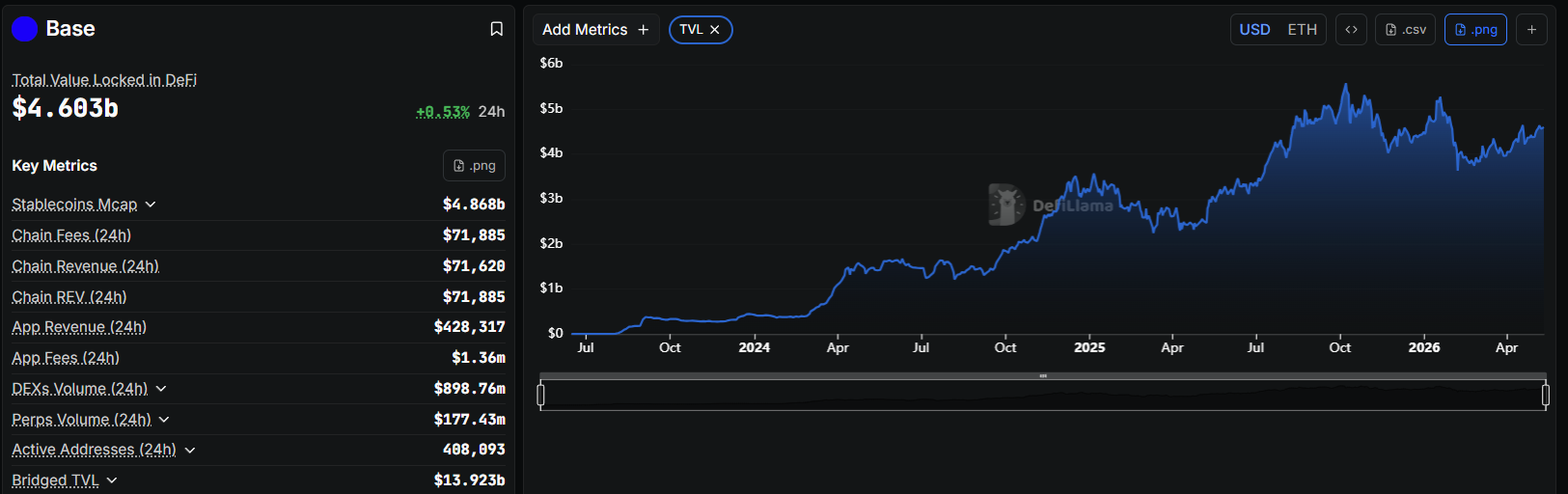
In 2024, Coinbase introduced cbBTC, a wrapped Bitcoin product on the Base network, allowing BTC holders to use their assets within Base's DeFi ecosystem. Coinbase also offers staking services across multiple proof-of-stake assets, and perhaps more importantly, serves as the staking operator for several U.S. spot Ethereum ETFs. Unlike Binance, Coinbase has no native exchange token.
Which Is Better for You?
Best for U.S. users: Coinbase. It operates with full U.S. regulatory approval across all states, offers clear consumer protections, publishes audited financials as a public company, and is available through all standard brokerage infrastructure. While Binance.US operates within the U.S., it has a notably more limited product range.
Best for non-U.S. users: Binance. The global platform offers a significantly wider range of assets, lower base fees, access to derivatives markets, and more active ecosystem products through BNB Chain.
Best for institutions: Coinbase Prime, by a significant margin in the U.S. market. Its charter as a New York trust company, its role as custodian for the majority of spot BTC and ETH ETFs, and its full prime brokerage infrastructure make it the default choice for regulated U.S. institutions. However, for non-U.S. institutions, Binance's Ceffu product may be more competitive.
Best for active traders: Binance, particularly for those outside the U.S. Its fee structure, derivatives access, broader asset selection, and higher liquidity on most pairs give it a structural edge for high-frequency or high-volume trading.
Best for long-term holders: While both platforms offer custody solutions, neither is a substitute for self-custody for significant long-term holdings. Between the two, Coinbase's cold storage architecture and public accountability make it the more conservative choice for large balances.
A Brief History of Binance
Changpeng Zhao, widely known in the cryptocurrency space as CZ, co-founded Binance, alongside He Yi, in July 2017 following a successful initial coin offering (ICO) that raised approximately $15 million. Born in Jiangsu and raised in Canada, CZ had previously built trading systems for major financial institutions, having worked at Blockchain.com and as CTO of OKCoin (now OKX) before turning his attention to launching his own exchange.

Within just six months of its launch, Binance quickly rose to become the world's largest exchange platform by trading volume, a pace of growth unmatched in the cryptocurrency industry. The platform's initial success was attributed to its low fees, vast selection of trading pairs, and an aggressive global expansion strategy that often tried to circumvent regulatory restrictions rather than to comply directly.
Naturally, this strategy came with its own growing legal concerns. On November 21, 2023, CZ resigned as CEO of Binance as part of a settlement agreement with the U.S. Department of Justice (DoJ) and the Commodity Futures Trading Commission (CFTC). The settlement involved Binance pleading guilty to violations of the Bank Secrecy Act and sanctions laws, with the company agreeing to pay $4.3 billion in fines. CZ personally pleaded guilty to failing to maintain an effective anti-money laundering program and was sentenced to four months in federal custody. Richard Teng, a former regulator from Singapore's financial authority, assumed the CEO role and has since led a compliance-forward repositioning of the exchange.
Despite its history of legal troubles, Binance retained its market position as the leading centralized exchange. In 2025, the exchange confirmed approximately $162.8 billion in user assets via Proof-of-Reserves, with over $34T in value traded over all Binance products.

A Brief History of Coinbase
In 2012, Brian Armstrong quit his job at Airbnb and co-founded Coinbase with Fred Ehrsam, a former Goldman Sachs trader, under the Y Combinator program. Coinbase sought to bring crypto trading access to millions of Americans and global crypto enthusiasts. The exchange officially launched in October 2012, introducing its services for buying and selling BTC using bank transfers.

Where Binance optimized for speed and volume, Coinbase built for trust and regulatory legitimacy. Early institutional backing from notable venture capital firms Union Square Ventures and Andreessen Horowitz gave Coinbase credibility in traditional finance circles, and years of engagement with U.S. regulators laid the groundwork for its reputation as a compliant and regulated exchange.
In April 2021, Armstrong led Coinbase to go public through a historic direct listing on the Nasdaq, reaching a peak valuation of more than $110 billion, which also made it the first large crypto exchange to list on a major stock exchange. This public status imposed quarterly disclosure requirements, audited financials, and ongoing regulatory accountability that most of its competitors do not face.
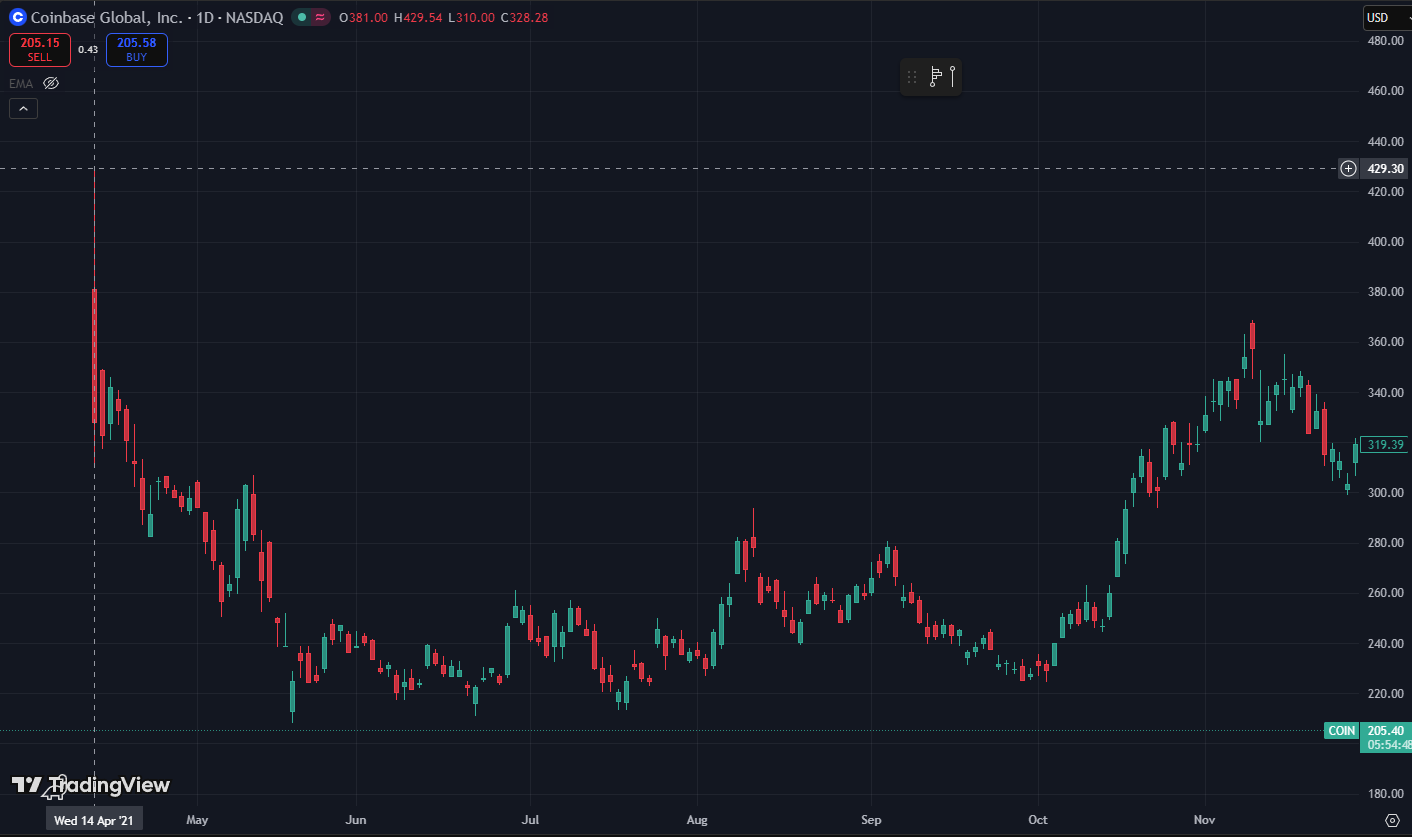
The exchange subsequently spearheaded a multi-year legal battle with the U.S. Securities and Exchange Commission over whether certain assets on its platform constituted unregistered securities. Following the landmark 2025 resolution of its SEC litigation, which saw the dismissal of numerous charges, the company has shifted its focus to the global stage, focusing on international growth, including regulatory approvals under the EU's MiCA framework.
Conclusion
Binance and Coinbase often look like close competitors in the centralized exchange space, but in reality, they are two very different companies that reached dominance in their own markets by serving different needs.
Binance optimized for scale, speed, and global reach, building an ecosystem that extends well beyond the exchange itself. Coinbase optimized for trust, regulatory clarity, and institutional credibility, becoming the infrastructure layer for the regulated U.S. crypto market. While Binance leads the retail and non-U.S. markets, Coinbase leads in the institutional space as seen with their overwhelming dominance in servicing the spot crypto ETFs.

.png)

.jpg)


.jpeg)




.png)








.png)

.jpg)





.png)
.png)


.png)

.png)


.png)
.png)


.png)
.png)





.png)
.png)
.png)
.png)




.png)