September 4, 2026
at
5:10 am
EST
MIN READ
What Is A Blockchain Explorer?

While blockchains tout themselves as “public ledgers”, the reality is that raw blockchain data is not something that the average human is able to easily read. Raw blockchain data contains all sorts of dense technical information that is hard for humans to comprehend. For example, addresses are long strings of random numbers and letters, and blockchain transactions are encoded. When seeing blocks filled with address strings and blockchain transactions, it’s hard for even experienced users to grasp exactly what they might be looking at.
The solution to these confusing strings of characters is a web-based interface called a “blockchain explorer”. The function of a blockchain explorer is to turn what is hard to read technical information into something that is more easily readable for humans by offering a searchable and readable interface for users. By using a blockchain explorer users can view, search, and analyze data on-chain. Users can look up transactions, click into wallets, view balances, and analyze smart contracts. Additionally, since different blockchains often have different architecture, different blockchains may require unique blockchain explorers catered towards a specific chain.
How Do They Work?
Blockchain explorers function by either running or connecting the full nodes of a blockchain network. This allows explorers to obtain a complete copy of the blockchain. Explorers index new blockchain data by scanning the chain for new blocks being produced. They then store this data into databases that are optimized for quick searching. The interface of the explorer presents this data into a more human-friendly readable format for users to look at through the web interface. Most blockchains will also offer metadata and analytics features such as token labels, wallet labelling, balance charts, and contract verification. More sophisticated blockchain explorers may offer features such as behavior analysis and cross-chain tracking.
Bitcoin Explorers
Bitcoin blockchain explorers are different from the majority of blockchain explorers today due to the architecture of Bitcoin. Bitcoin revolves around UTXOs (Unspent Transaction Output), whereas the majority of blockchains today are account-based.
Common features of Bitcoin blockchain explorers include:
- Viewing Bitcoin blocks, transactions, and transaction fees
- Monitoring Bitcoin mining activity and hash rate
- Viewing the current state of the mempool
- Tracking on-chain wallet balances
Popular Bitcoin blockchain explorers include Arkham Intelligence, Blockchain.com, Mempool.space, Blockstream.info, and Bitaps.com.
Ethereum Explorers
Because Ethereum is a smart contract chain, Ethereum blockchain explorers must support viewing smart contracts, tokens, and decentralized applications. Because of this, Ethereum blockchain explorers are generally more complex than Bitcoin blockchain explorers.
Common features of Ethereum blockchain explorers include:
- Viewing Ethereum blocks, wallets, and transactions
- ERC-20, ERC-721 (NFT), and ERC-1155 token support
- Smart contract source code and verification
- Internal transactions and contract calls
- Gas usage and fee analytics
The dominant Ethereum explorer is Etherscan, which also supports other Ethereum Layer 2 networks such as Arbitrum, Optimum, and Base. Etherscan also offers advanced features such as a token flow visualizer, wallet transaction analytics, smart contract debugging, and address name tags.
Solana Explorers
As Solana is a smart contract chain similar to Ethereum, many of the features that Ethereum blockchain explorers offer can also be found in Solana blockchain explorers. However, because Solana has a unique account-based model as well as higher throughput blockchain, there are some differences between the two.
Common features of Solana blockchain explorers include:
- Transaction history and fees
- Wallet activity and tracking
- Fast transaction finality tracking
- Program (smart contract) interaction logs
- Validator performance and stake distribution
- Token and NFT metadata
Popular Solana explorers include Arkham Intelligence, Solscan, Solana Explorer, and SolanaFM.
Blockchain Explorer Use Cases
Blockchain explorers have a wide variety of use cases for all sorts of users. Some of the most common use cases revolve around monitoring wallets and verifying if transactions went through. Security researchers rely heavily on blockchain explorers to identify suspicious activity on-chain, trace the flow of funds, and monitor actions taken by compromised wallets. DeFi power users and analysts might use a blockchain explorer to take an in depth look at protocol usage and how other whales might be interacting with certain DeFi protocols. Smart contract developers might use a blockchain explorer to test their smart contracts and to monitor for any errors.
How To Use Arkham
Arkham is an advanced blockchain explorer that combines traditional blockchain explorer features with advanced entity labeling and analytics. This allows Arkham users to gather quality insights that they would not be able to on other blockchain explorers.
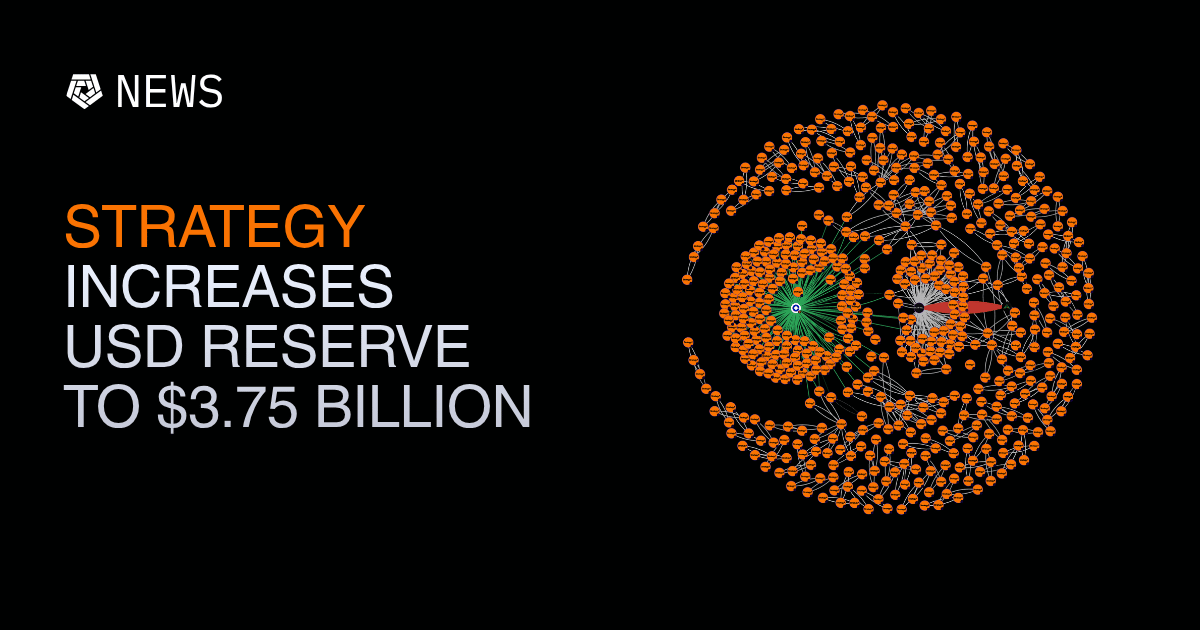
Arkham is unique among blockchain explorer tools because it de-anonymizes blockchain addresses and groups these addresses into one entity. For example, the de-anonymized entity for Strategy (formerly MicroStrategy) consists of 1.4k different BTC addresses. Users can use the Arkham blockchain explorer to track the entire Strategy entity’s transactions.
Using Arkham is a simple and straightforward process:
- Look up an address or transaction that you are interested in. Arkham supports a wide range of popular blockchains, allowing you to search multiple chains with ease.
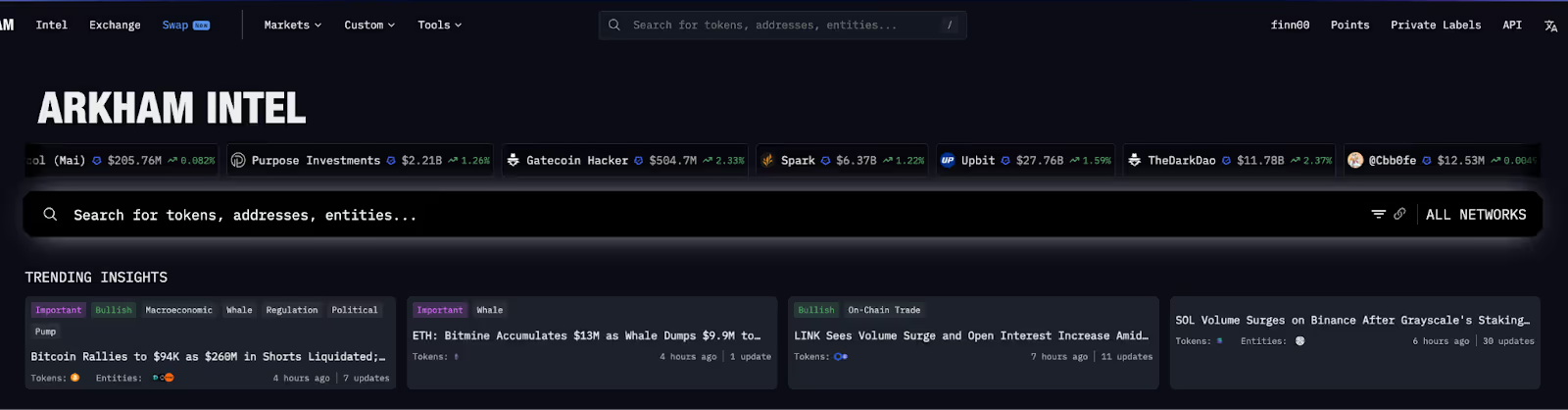
- View the entity that Arkham attributes the wallet or transaction to. Arkham links addresses to known entities such as exchanges, funds, or protocols.
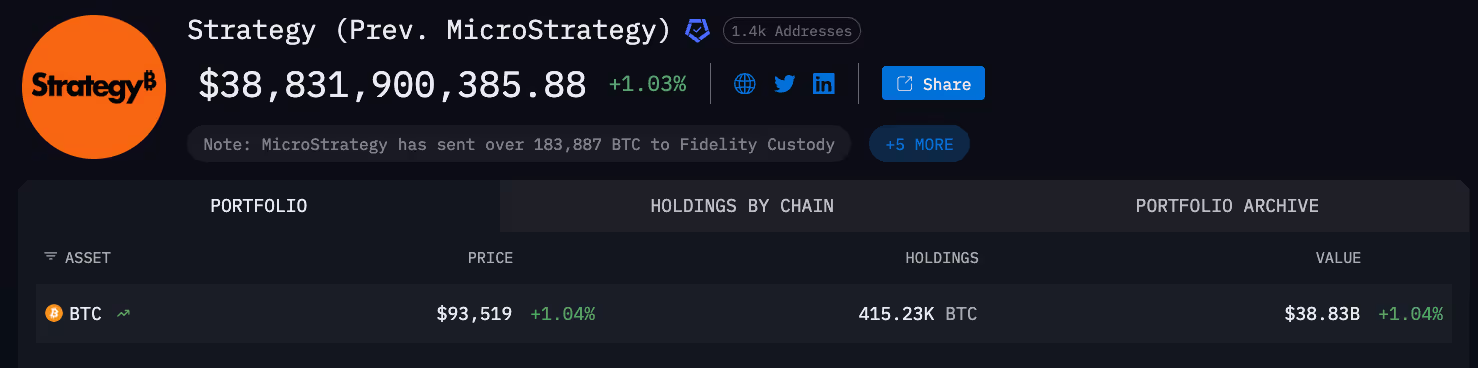
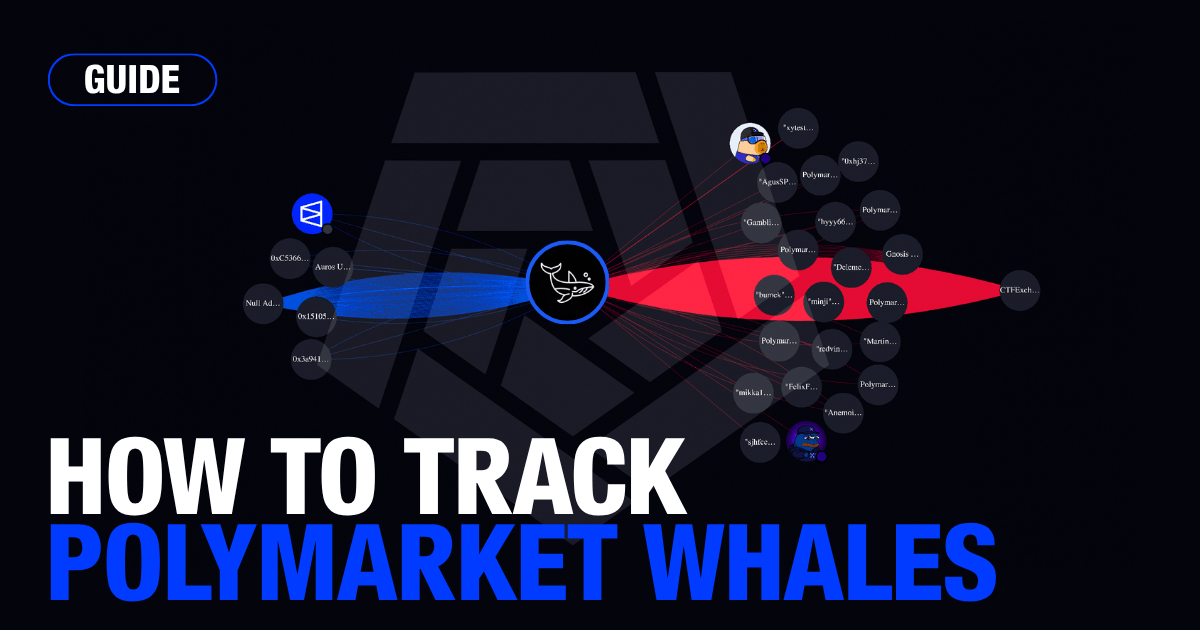
- Analyze the flow of transactions. Arkham provides visual graphs that allows users to easily comprehend how funds move between different wallets and entities over time.
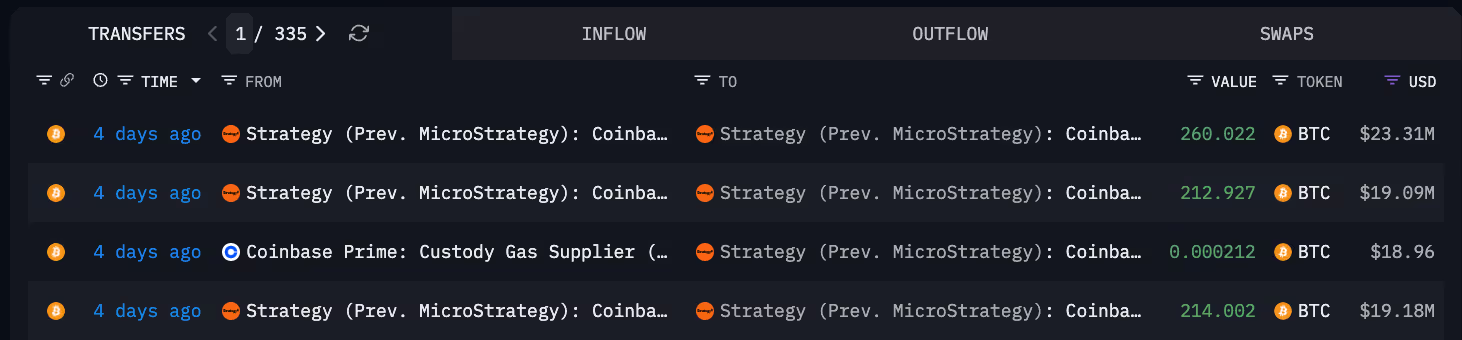
- Track wallet balances and history. Arkham’s features empower users to monitor token holdings and historical balances with little hassle.
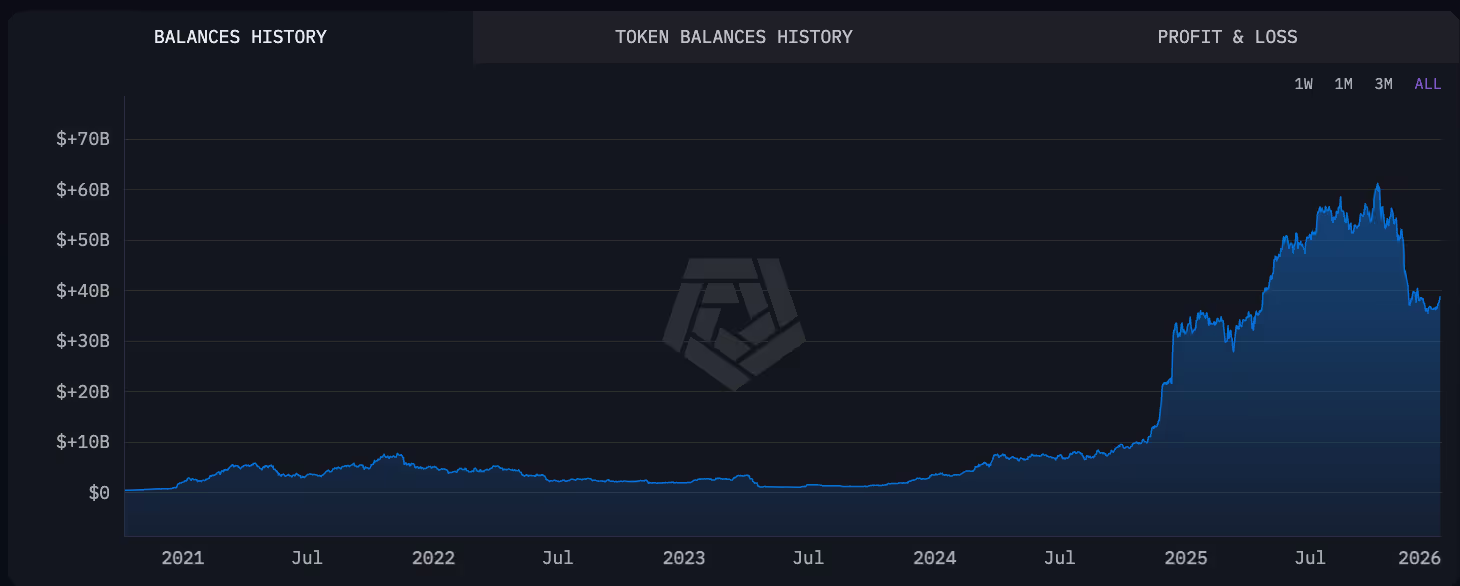
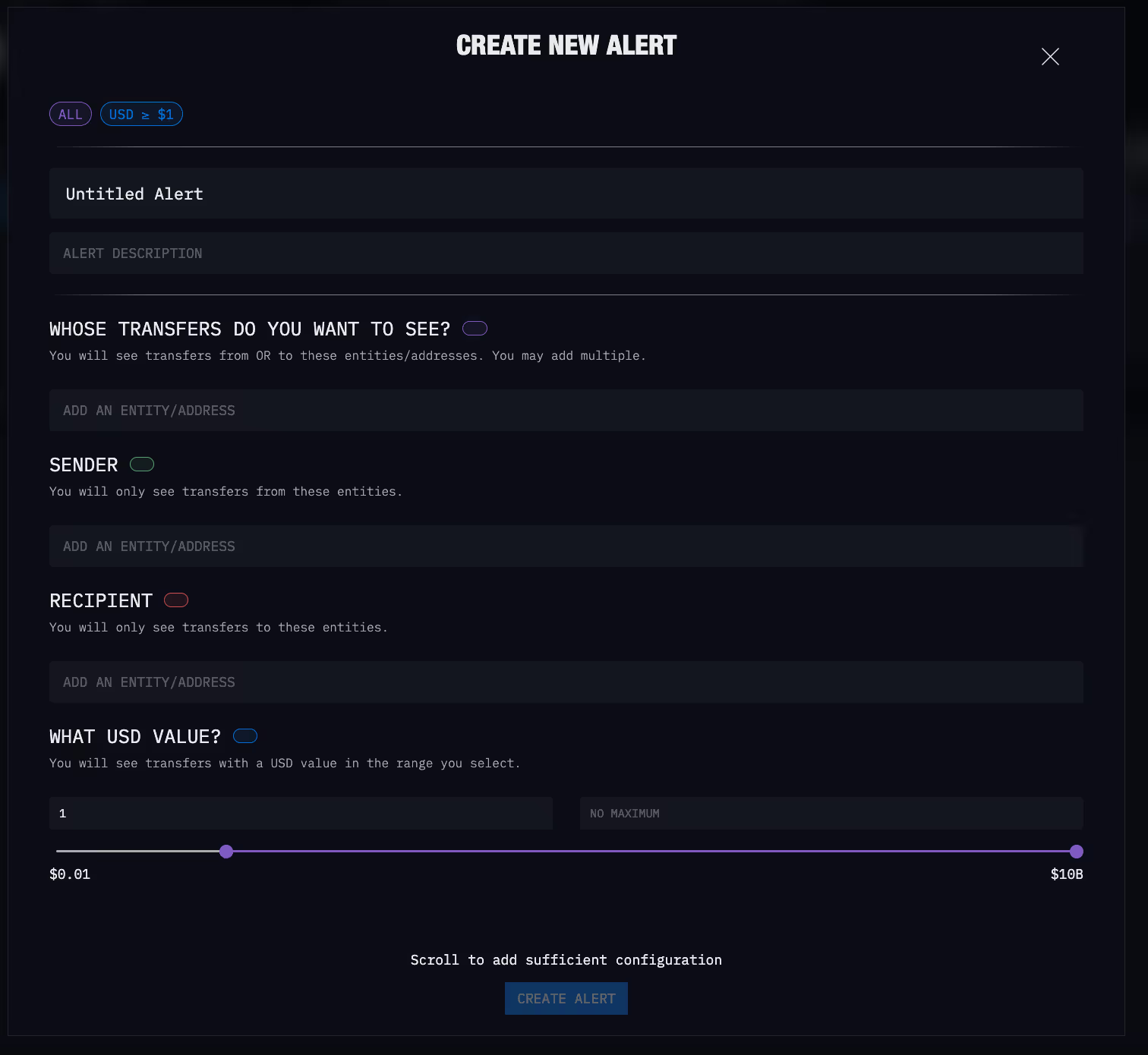
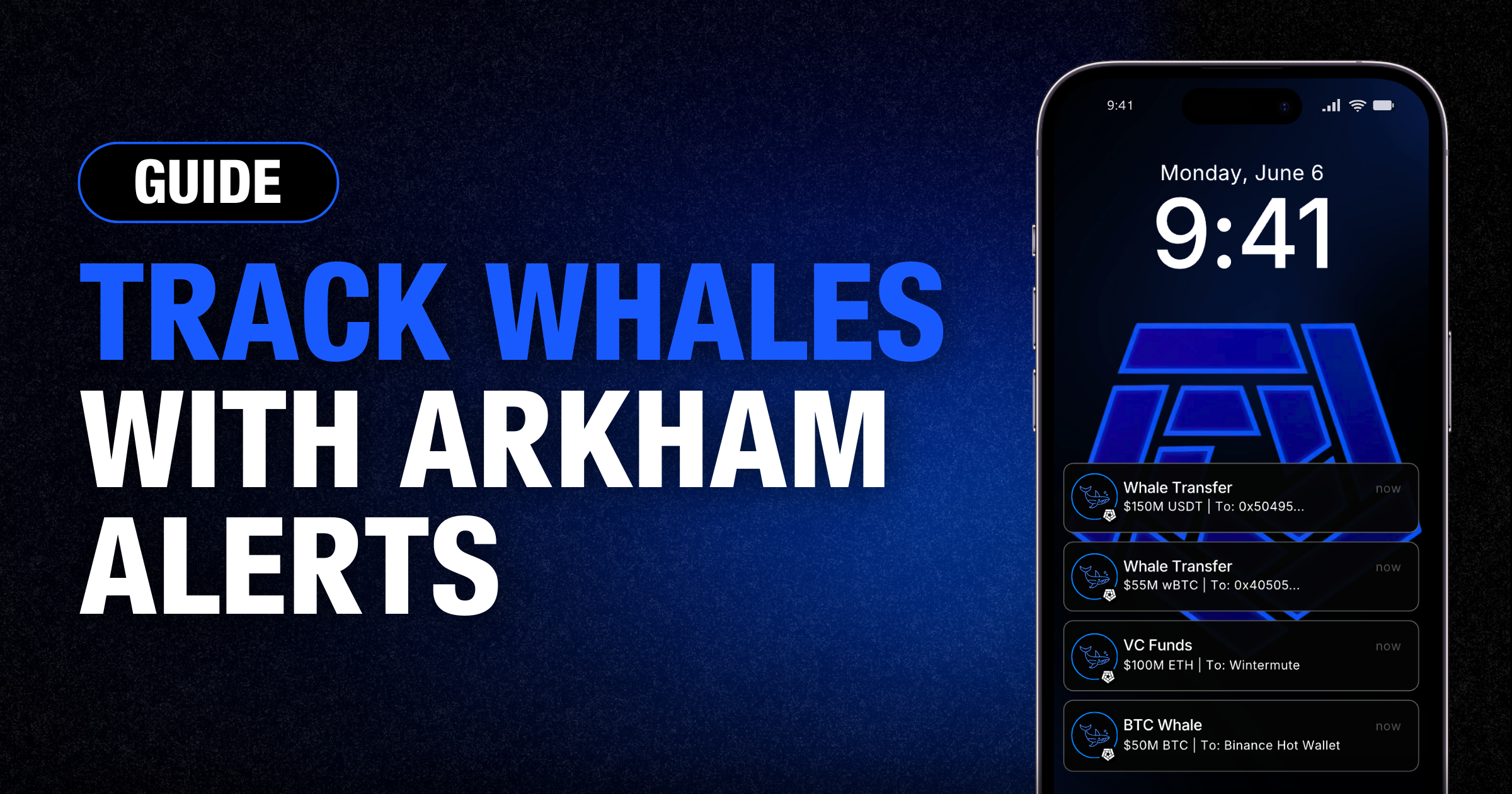
- Set alerts. Arkham allows users to customize what triggers alerts based on address, transaction size, etc. Users can receive real-time notifications via email, webhooks, or Telegram for a wide variety of on-chain actions.
Conclusion
Blockchain explorers are incredibly useful tools for transparency in decentralized systems, due to their ability to make on-chain information more easily accessible to all users. Using a blockchain explorer, users can more easily verify, analyze and understand what is occurring on a blockchain for themselves. While most users only use blockchain explorers to look up transactions and wallet balances, blockchain explorers offer a wide variety of features that advanced blockchain users such as smart contract developers, DeFi power users, and security researchers rely on to do their jobs properly.
As blockchains continue to evolve and grow, blockchain explorers will continue to play a pivotal role by bridging the gap between the technical information and data present on decentralized networks and users. Modern on-chain activity involves an infinite amount of addresses, smart contracts, protocols, and bridges. This is where Arkham excels, providing users with additional context by linking wallets to real-world entities and visualizing transactions flows on-chain. As the on-chain ecosystem continues to grow and onboard new users, a tool that can show who is doing what will become increasingly more important.

.png)





.jpeg)




.jpg)

.jpeg)

.png)


.png)
.jpg)

.png)
.png)

.png)

.png)
.png)
.png)
.png)
.png)


.png)
.png)
.png)
.png)



.png)