August 24, 2026
at
4:50 am
EST
MIN READ
Trading Systems: Automations, Algorithms, Copy Trading, and Crypto Trading Bots
.png)
SUMMARY
- A trading system is a set of rules that removes hard, in-the-moment decisions from trading and is built to prioritize testability and repeatability.
- Algorithmic trading is a specific type of automated trading. Automated systems simply execute pre-set instructions, while algorithmic systems go further, continuously analyzing live market data to make ongoing decisions rather than just following a static trigger.
- Copy trading and quant trading sit at opposite ends of the spectrum. Copy trading replaces your judgment with another trader's, quant systems replace it with statistical patterns tested against historical data.
- Crypto trading systems and tools built with the Arkham API allow traders to act upon real blockchain activity rather than price alone.
A trading system is a series of repeatable trading steps/analysis that traders typically use to remove discretionary decision making from their entries/exits.
Trading systems help users eliminate emotion and trade with greater consistency. This is important because many traders find themselves running into the problem of emotional trading sooner or later. The market doesn’t care about feelings, but traders’ feelings often fluctuate with the market and their trading performance. As an open position sinks underwater, traders often get an uneasy feeling of anxiety as they look at the unrealized loss. When a trade is going fantastically well, the profitable position feels good to think about. These emotional swings make it hard for traders to make rational decisions, and many traders find themselves closing out underwater positions prematurely and round tripping profitable trades.
Trading systems solve this by taking the decision out of the moment. When the time comes to close out a trade, it’s easier to just follow instructions instead of second-guessing decisions. This article will cover what trading systems are, how they’re built, and the main types of different trading systems.
WHAT IS A TRADING SYSTEM?
A trading system is a set of rules that removes hard decisions out of the moment. Instead of deciding when to close out a trade when price is moving away from you, a trading system’s predefined rules allows traders to attempt to make more rational decisions. However, a trading system is not necessarily designed to win every single trade. The goal of a trading system is for it to be both testable and repeatable, and to win consistently over time. That consistency of a trading system allows a trader to analyze its track record over time, identify what’s causing the losing trades, and then adjust the system to improve profitability moving forward.
HOW TO BUILD A TRADING SYSTEM
A trading system is built by figuring out four important components: what triggers the entering of a trade, what triggers the exiting of a trade, how much capital should be invested into a trade, and which assets the trading system should cover. Once these components have been properly defined, the next step in the process is automation. It’s not feasible for traders to sit in front of a screen 24/7 manually executing the actions of a trading system.
This is where APIs (application programming interfaces) prove useful. APIs function by allowing two different pieces of software to communicate with each other. In a trading system, exchanges allow third party programs to use an API to gather price data and place orders, without a human user manually clicking buttons. When your trading system’s requirements to enter a trade are met, the API allows that trade to be automatically executed on the exchange. This is much more efficient than a human trader manually executing a trade on an exchange after getting a notification from the trading system.

For many years, most traders could not run an automated trading system because doing so required coding knowledge. Because AI coding tools have arrived, this barrier has mostly disappeared. Today, non-coding traders can instruct an AI coding tool to build out a script connected to an exchange API. Traders will still need to come up with the rules to their trading systems, but the technical infrastructure that connects a trading system to an exchange has become much more accessible to many traders.
AUTOMATED TRADING SYSTEMS
An automated trading system is one that automatically executes trades according to pre-defined rules on a user’s behalf. This saves a trader from having to manually enter in a trade themselves, which is both time-consuming and requires hands-on attention.
This category of trading system is a broad one. The category simply means that a computer or piece of software is performing the trades without manual input. This does not necessarily mean that the automation is always hugely sophisticated. Things like a stop-loss order that closes a trade at a set price qualifies as a form of automation. A recurring dollar cost average buy order that performs a buy once a week also qualifies as a form of automation. Neither of these tools are very complex.
The appeal of an automated trading system is very simple. The automated aspects remove both hesitation and revenge trading, which are two factors that tend to have poor results. Hesitation can cause a trader to not exit their trade at the ideal price, and revenge trading can cause traders to double down on losses, which tends to dig users deeper into their hole. Machines on the other hand, simply do what they are told and are immune to these factors. A well-designed automated trading system will be able to profit more as a result.
ALGORITHMIC TRADING SYSTEMS
Algorithmic trading systems are a form of automated trading system that use code to analyze market data. The code’s logic can vary widely in terms of complexity. Some algorithmic trading systems are simple and use simple metrics such as moving average crosses (a momentum indicator that triggers when a short-term moving average crosses over or under a longer-term moving average) to decide trades. More complex algorithmic trading systems will take into account dozens of different variables at once in order to execute a trade.
Algorithmic trading systems differ from simple automated trading systems in that simple automated ones follow static pre-set instructions regardless of price movement, while algorithmic systems continually analyze the market orderbooks across different exchanges for arbitrage and other profitable opportunities.
COPY TRADING
Copy trading as a system revolves around copying the trades of another trader, but scaled to one’s account size. Whereas algorithmic trading replaces judgement with code logic, copy trading replaces judgement with someone else’s judgement. Copy trading is choosing to trust someone’s trading decisions enough to automatically copy every action they take.
Many crypto exchanges allow users to browse a leaderboard of top traders on an exchange and follow their trades in real time. Unsurprisingly, this comes with some clear downsides. While a trader may have been profitable in the past, there is no guarantee that a trader will continue to be profitable in the future. If the trader you’re following makes a string of poor trades and zeroes out their account, copy trading will cause the same to happen to you. Additionally, if the trader you’re copying decides to switch to a different exchange, your system will be dead in the water.
CRYPTO TRADING BOTS
Crypto trading bots are software programs that connect to an exchange’s API and place trades automatically based on a system that you’ve built. Trading bots have been popular in the crypto industry due to the 24/7 nature of crypto markets. While humans will naturally need to step away from markets to sleep and recharge, bots can monitor hundreds of different assets at once without ever needing to take a break.
Common types of crypto trading bots include:
- Dollar-cost averaging bots that buy in regular clips over a set period of time, smoothing out the average entry cost of a buy over time.
- Arbitrage bots that scan multiple different exchanges at once for the same asset trading at different prices, and execute both sides of the trade before the gap closes.
- Trend-following bots that aim to catch sustained moves in one direction and exit the trade quickly when momentum is lost, rather than attempting to catch the exact bottom or top.
- Trading bots that perform on-chain analysis and trigger when a tracked wallet performs certain actions, such as a fund moving a large position to a different wallet.
Like any automated system, the weakness of crypto trading bots is that they are only as good as the rules they follow. When market conditions shift and those rules can't account for the change, performance declines quickly.
QUANT TRADING SYSTEM
A quant trading system is a strategy that is built entirely using statistical analysis of historical data. The quant approach starts by searching for patterns that hold up across thousands of past occurrences, and using the identified patterns as a profitable edge to trade around.
This differs from a regular algorithmic trading system in an important way. A basic algorithm may follow a rule that a trader already believed in, such as a moving average crossover. A quant system on the other hand, works backwards. The strategy is created based on what already exists in the data, and from existing assumptions about the market.
The process of testing a strategy against historical data before using real money is called backtesting, and it is a very important foundation of all quant trading systems. However, extensive backtesting can actually be detrimental to performance. A model can be tuned so precisely to past data that it performs well in testing, but poorly in live market conditions when novel market conditions occur. This phenomenon is known as overfitting, and it presents a big risk in quant trading. A strategy that looks perfect on paper is worth very little if it isn’t able to perform outside of testing.
ARKHAM API
Part of building a good crypto trading system is not just having access to current price data, but also having visibility on who is moving significant funds around on-chain. This visibility can be achieved by incorporating a blockchain data API like the Arkham API into a trading system.
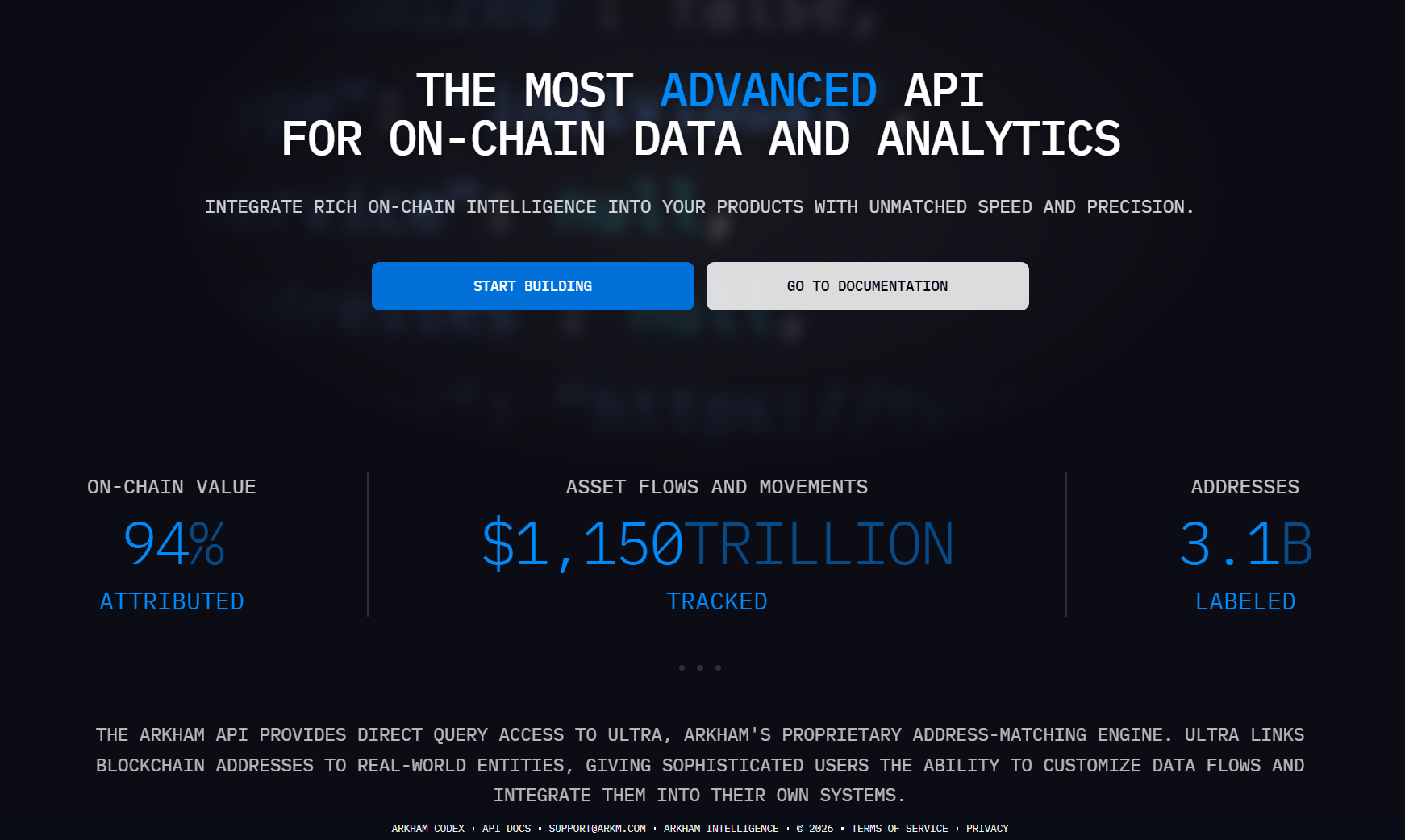
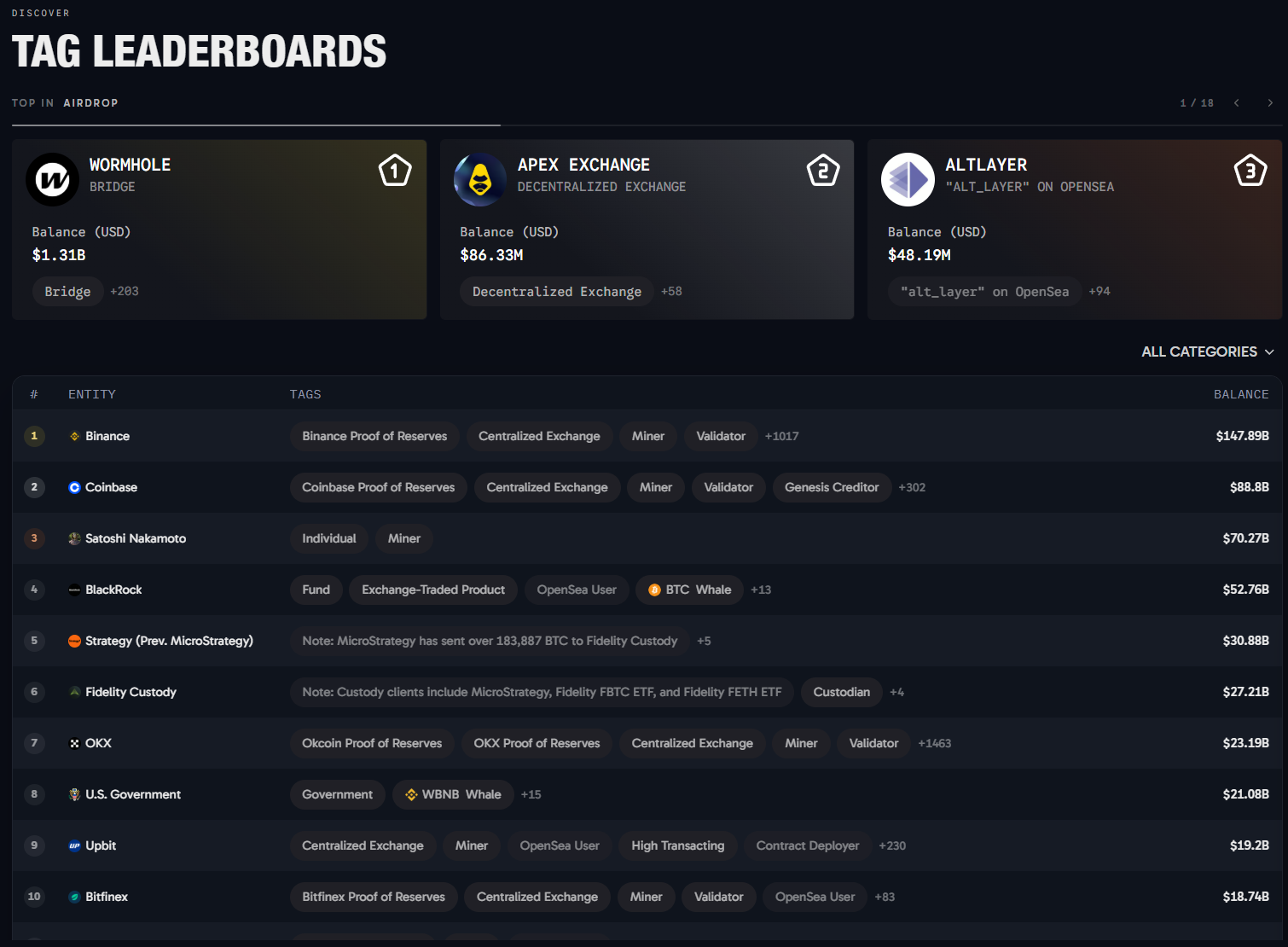
The Arkham API is designed to give developers real-time blockchain data across major chains, combined with Arkham’s huge database of identified on-chain wallets and entities. By itself, a wallet address is just a meaningless string of characters. With Arkham’s labeling, that string of characters can be identified as belonging to a notable fund, market maker, or exchange. This turns an anonymous transaction into an identifiable and informational one.
Setting up the Arkham API is quite simple. Once you have an API key, an AI coding assistant can write up the connecting code, help you install it, and reference Arkham’s API documentation to assist you in calling the correct endpoints. The only manual step left is pasting a single install command the AI assistant gives you, there is no longer any need to write code or configure anything yourself.
For a full guide on setting up the Arkham API, check out the documentation here.
Some useful things that Arkham API users have built include:
Trading signal bots: Flags when historically successful wallets interact with new contracts, signaling a potential opportunity worth investigating.

Compliance screening bots: Checks a wallet against Arkham’s Risk Scores, allowing users to determine an address’s exposure to sanctioned wallets, mixers, etc.
On-chain analytics bots: Tracks the balance history of Arkham-labeled ETF custody wallets to see institutional inflows and outflows in real time, removing reliance on delayed reports.
CONCLUSION
Every trading system covered in this article, from simple stop-loss orders to sophisticated quant models, are designed to help traders remain consistent when the market is actively working against their judgement. Automation, algorithms, copy trading, and bots are all different ways of making decisions in advance so that traders aren’t negotiating with their nerves in the middle of a trade.
None of these systems can guarantee profit, and neither can they remove risk entirely. Instead, these systems promote consistency and a track record that can be analyzed over time, which is something trading using a gut feeling can not offer. This is true regardless of whether your rules were built using your own testing, copying someone else's trades, or from scouring historical data for recurring patterns.
Much of the technical barrier that has historically existed to building these systems has disappeared as well. With the rise of AI coding agents and APIs like Arkham’s, connecting a strategy to real market data and on-chain activity has never been easier. What separates the good trading systems from the bad ones is the same as it’s always been. Careful selection of trading system rules and proper testing continue to play important roles in building profitable trading systems.

.png)










.png)





.jpg)










.png)
.png)




.png)


.png)



.png)
.png)

.png)
.png)









.png)
.png)
.png)

.png)





.png)





.png)