June 24, 2026
at
11:10 am
EST
MIN READ
Crypto Compliance Solution: How to Find Risk Scores for Any Address/Entity
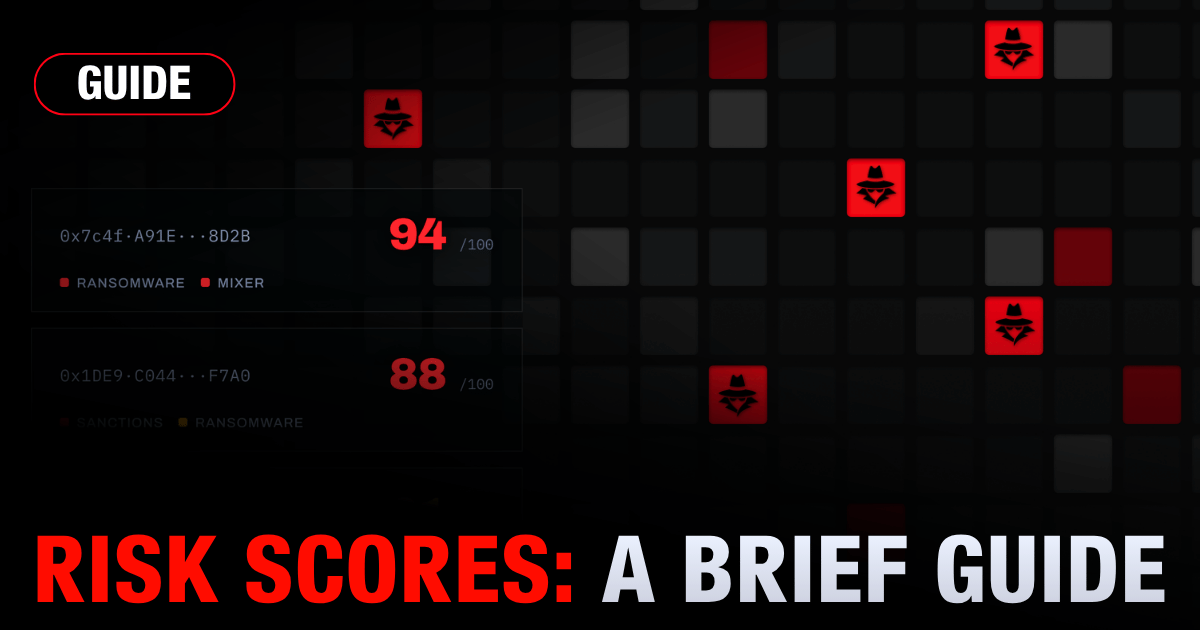
Crypto ecosystems are evolving, and regulations across the world are crystallizing along with them. Compliance teams need reliable data to keep up with the pace of integration and they need to monitor transactions and identify suspicious actors. To meet this demand, we just launched Risk Scores on the Arkham API. This upgrade gives businesses an automated, real time method to assess on-chain risk of a specific address or entity.
In this article, we explain how Risk Scores work, how teams should integrate it, and what it can be used for.
Summary
- Crypto compliance is an operational requirement for modern finance platforms, requiring transaction monitoring and intelligence.
- Arkham has upgraded the Arkham API with Risk Scores, which assign a 0 to 100 rating to assess an address or entity's exposure to illicit activity.
- The feature goes beyond traditional compliance tools by utilizing Arkham’s catalogue of 7.1 billion address tags and 837,000 entity profiles.
- Clients can use Risk Scores as a paid API add-on to evaluate counterparty risk, flag risky depositors, and build custom Anti-Money Laundering workflows.
The State of Crypto Compliance
Crypto compliance is now a requirement for businesses operating in the digital asset space. Frameworks like Anti-Money Laundering (AML) and Know Your Customer (KYC) are standard practice. However, the transparent yet pseudo-anonymous nature of public blockchains introduces unique challenges.
A user might pass identity verification during onboarding but later receive funds from a compromised source or interact with an illicit smart contract. Transaction monitoring and blockchain intelligence are necessary to close this gap. Compliance teams must actively trace fund movements with sanctioned addresses or known criminal entities to remain compliant.
However, assessing these risks manually is time-consuming and prone to error, creating a need for automated intelligence.
Introducing Arkham Risk Scores
Arkham’s solution to this is a paid upgrade to the current API called Risk Scores. The compliance tool provides a number between 0 and 100 assessing the exposure of any address or entity to illicit activity on-chain.
Risk Scores grade these addresses and entities according to how connected they are to known or suspected illicit operations. The system assesses all funds sent from and received by the specific address or entity in question. It then calculates the final score using a weighted average of exposure across several risk themes.

Inside the Risk Briefing
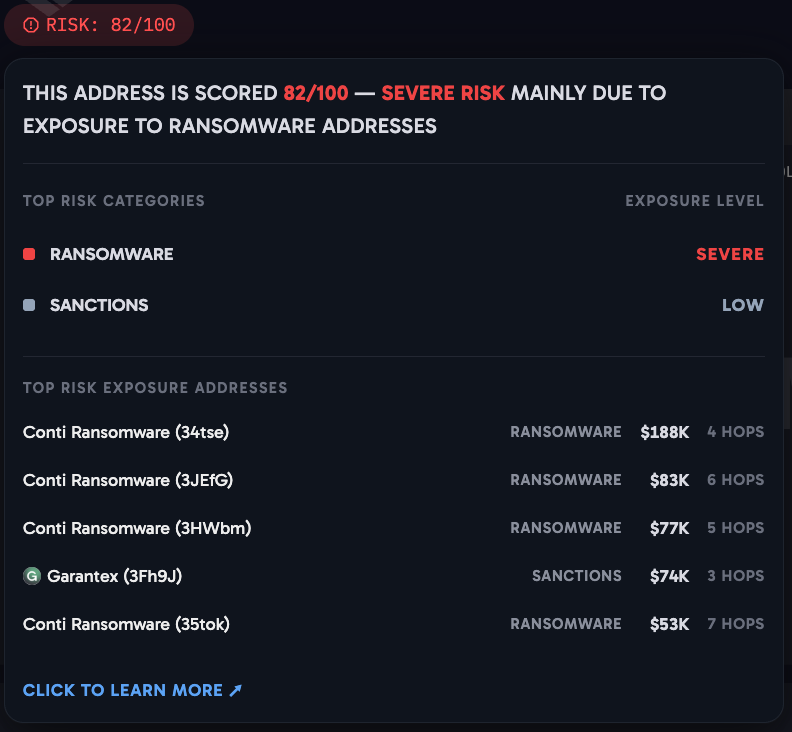
Every Risk Score returned by the API comes with a Risk Briefing. This briefing delivers actionable context for compliance teams to understand exactly why a specific score was generated. It includes the following data points:
- Reasoning behind the score
- Categories assigned to the source address or entity
- Risky connected addresses to the source address or entity
Blockchain Data Catalogue
Arkham Risk Scores go a step beyond traditional compliance tools by leveraging our huge pre-existing database. The assessments are powered by Arkham’s 7.1 billion address tags and 837,000 entity profiles.
The Arkham Intel database is the largest collection of labels and entities in the blockchain analytics market. It is built by Arkham’s proprietary ULTRA AI engine in combination with a team of in-house sleuths and analysts.
How Businesses Use Arkham Risk Scores
By integrating the Risk Scores upgrade into your existing systems, businesses can automate necessary compliance and security procedures at scale. Our clients already use Risk Scores to:
- Evaluate Counterparty Risk
- Automatically Flag Risky Depositors
- Build Custom Compliance, Monitoring, and AML Workflows
Conclusion
Effective crypto compliance requires continuous monitoring and immediate access to the highest quality on-chain intelligence. By integrating Arkham Risk Scores, platforms can automate their risk assessments and protect their operations from illicit exposure. Risk scoring is available as a paid add-on to an Arkham API subscription. To activate the add-on on your account, reach out to our team today.

.png)




.png)










.png)




.jpg)






.png)
.png)



.png)


.png)


.png)
.png)


.png)
.png)








.png)
.png)
.png)

.png)



.png)





.png)