September 22, 2026
at
8:30 am
EST
MIN READ
What Is Blockchain Security And How To Improve It

Blockchain security is the combination of cryptography, network design, and economic incentives that a distributed ledger uses to stop bad actors from rewriting its history or stealing what sits on top of it. Most chains are built with strong defenses from day one. Yet the past decade of exploits, from bridge hacks worth hundreds of millions to quiet 51% attacks on smaller networks, shows that secure by design is not the same as secure forever. The gap between the two is usually filled by human error: a rushed smart contract upgrade, an over-centralized set of validators, or a private key generated with a flawed algorithm.
This article looks at what keeps a blockchain safe, where that protection tends to break down, and what builders and investors can do to close the remaining gaps.
Summary
- Blockchain security rests on three pillars working together: cryptographic proof, distributed consensus, and economic cost.
- Most large-scale losses in crypto do not come from breaking the blockchain itself. They come from weaker points around it, such as bridges, validator keys, and smart contract code.
- The blockchain trilemma describes a practical tradeoff between decentralization, security, and scalability, and no chain has fully escaped it.
- A security audit, performed before code is deployed, remains one of the cheapest ways to prevent a costly exploit.
What Is Blockchain Security?
Think of a blockchain less like a vault and more like a courtroom with thousands of independent witnesses. No single witness can rewrite what happened, because every other witness holds a matching copy of the record and would immediately object if one version tried to contradict the rest. Blockchain security is the set of rules that keeps those witnesses honest: how they agree on what counts as true, how they are punished for lying, and how the mathematics behind each entry makes tampering visible almost instantly.
In more formal terms, blockchain security covers the protocols, cryptographic techniques, and governance choices that protect a network's data integrity, prevent unauthorized changes to transaction history, and defend the assets built on top of it, including wallets, exchanges, and smart contracts.
How Does Blockchain Security Work?
A blockchain does not rely on a single layer of security to protect it. It layers several independent checks so that beating one block does not mean beating the entire network.
Cryptographic hashing links each block to the one before it. Changing even a single character in an old transaction produces a completely different hash, which breaks the chain of references that follows it. An attacker would need to redo the mathematical work for every subsequent block, not just the one they want to alter.
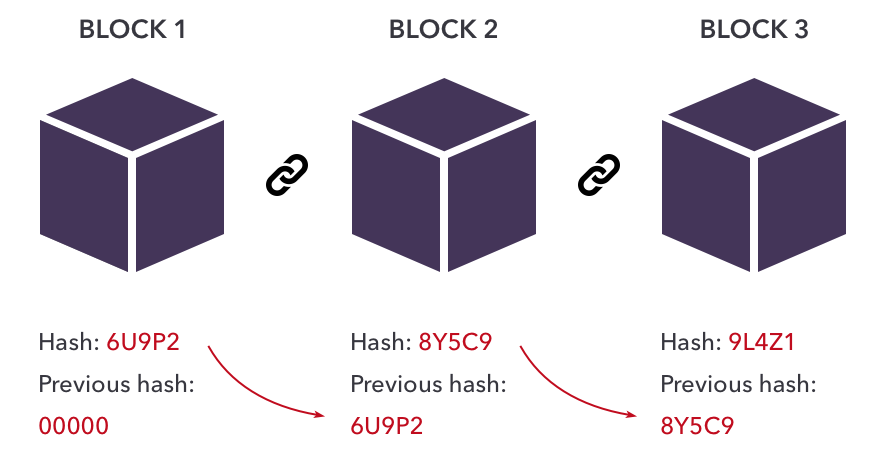
Consensus mechanisms decide which version of the ledger the network treats as real. Proof of Work asks miners to compete using computing power, while Proof of Stake requires validators to lock up capital as a bond of good behavior. Either way, the goal is the same: to make it costly to propose a false version of events and cheap to detect one.
Distribution refers to distributing the accurate copy of the ledger to as many computers and devices as possible. Falsifying a record would require convincing, hacking, or outcomputing a majority of these participants at once, not just one central server or a handful of trusted devices.
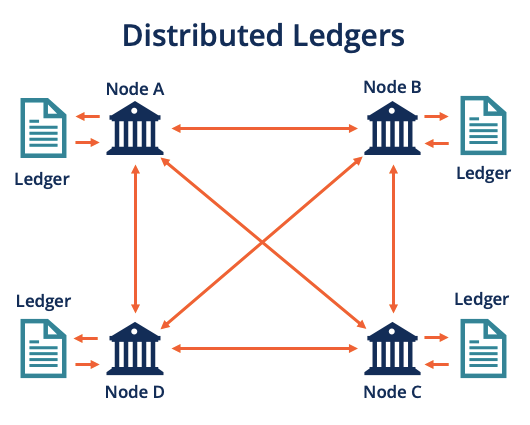
Lastly, digital signatures confirm that only the holder of a private key can move the funds tied to it. This is the layer where most real-world theft actually happens, since a stolen or poorly generated key gives an attacker the same authority as the legitimate owner, without touching the blockchain's underlying code at all.
What Makes Blockchains Inherently Secure?
Public blockchains carry a built-in resistance to tampering that comes from spreading trust across many independent participants rather than concentrating it in one institution. This is commonly referred to as decentralization, a common selling point for blockchains.
Picture a shared spreadsheet copied onto ten thousand separate laptops, where every laptop refuses to accept a new entry unless it matches what most of the other laptops already have. A single altered copy gets outvoted and ignored. This is roughly how blockchain consensus functions, except the "laptops" are nodes scattered across data centers and homes worldwide, and the "vote" is enforced through math rather than a show of hands.
This structure gives blockchains a few natural advantages: no single point of failure to attack, records that grow harder to alter the older they get, and rules that are visible to anyone, letting independent researchers audit activity in real time rather than trusting a private ledger they cannot see.
That transparency has practical value beyond theory. Arkham’s tracing work on the LuBian mining pool is a useful illustration. The firm identified in August 2025 that 127,426 bitcoin, worth roughly 3.5 billion dollars at the time of the theft in December 2020, had been stolen from the Chinese mining operation years earlier and never publicly reported. The reason the theft could be reconstructed at all, half a decade later, is that every movement of those coins remained permanently visible on Bitcoin's public ledger, waiting for someone to connect the pieces.
What Are the Security Vulnerabilities of Blockchains?
However, this inherent security does not mean invulnerability. Most large losses trace back to weak points that function alongside the blockchain rather than within its core consensus mechanisms.
Bridges and cross-chain infrastructure are a frequent target because they concentrate large pools of assets under the control of a small group of validators. The Ronin Network bridge, which connected the popular game, Axie Infinity, to Ethereum, lost roughly $624 million in March 2022 after attackers linked to the Lazarus Group compromised enough validator private keys to approve fraudulent withdrawals. Only five of nine signatures were needed to move funds, and the attacker gained control of a majority of them through social engineering rather than by breaking any cryptography. Even four years on, the Ronin bridge hack remains the third largest exploit of all time.

Smart contract bugs can also undo months of engineering with a single line of faulty logic. Code that looks correct on the surface can still hide a dead function, an unchecked value, or a misconfigured threshold that only becomes obvious once someone tries to exploit it. In 2021, Poly Network lost $611 million as a result of a smart contract bug relating to their smart contract’s access control logic, making it one of the largest exploits of all time.
Consensus-level attacks, while rarer on large networks, remain possible on smaller ones. In August 2020, Ethereum Classic suffered three separate attacks in which a miner rented enough hash power to briefly control the majority of the network, reorganized recent blocks, and double spent roughly 9 million dollars worth of ETC, according to an analysis published by Coinbase's security team. The network's relatively small hash rate at the time made renting a controlling share of it comparatively affordable.

What Is the Blockchain Trilemma?
The blockchain trilemma is a framework, popularized by Ethereum co-founder Vitalik Buterin, describing the difficulty of maximizing decentralization, security, and scalability all at the same time. Push hard on any two, and the third tends to give way.
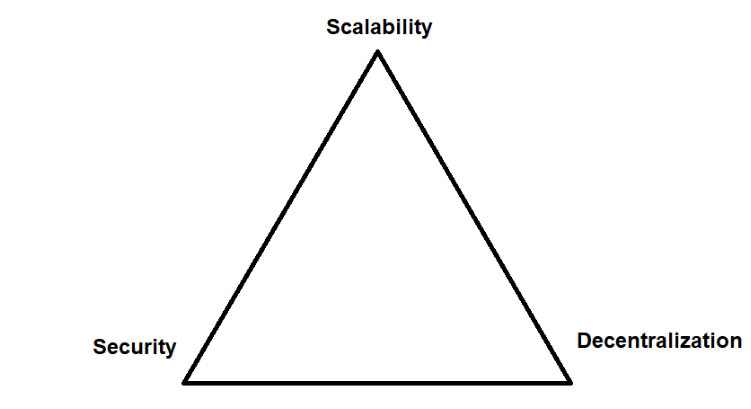
A network that spreads validation across millions of participants and hardens itself against attack often processes transactions more slowly, since reaching agreement among that many parties takes time. A network that speeds things up with a smaller, faster set of validators typically becomes easier to compromise, since fewer parties need to be corrupted or coordinated against. Bitcoin has historically leaned toward decentralization and security at the cost of throughput. Many newer chains have leaned the other way, accepting a smaller validator set for speed, a tradeoff that shows up directly in how much it would cost an attacker to seize control.
No one chain has fully solved this balance, although many may claim to. Newer technological developments such as Layer 2 networks, sharding, and newer consensus designs attempt to loosen the tradeoff, seeking a fine balance between the three.
Which Chains Have the Highest Security?
Security is easier to rank in relative terms than in absolute ones, since no chain publishes a single official score. Still, a few factors consistently separate the more resilient networks from the rest.
Bitcoin and Ethereum tend to sit at the top of most comparisons because of the sheer scale of resources needed to attack them. Bitcoin's proof of work network would require an attacker to acquire more computing hardware than the rest of the world's miners combined, an expense running into the billions of dollars, before a 51% attack becomes even theoretically possible. Ethereum's move to proof of stake means an attacker would instead need to acquire, and be willing to lose, a comparable share of the tens of millions of ETH currently staked, since malicious behavior triggers automatic penalties known as slashing.

Smaller chains, including newer Layer 1 networks and many Layer 2 rollups, generally carry more concentrated validator sets, which shortens the distance between secure in theory and compromised in practice. This is not automatically a flaw, since younger networks often accept the tradeoff in exchange for speed or lower fees, but it does mean assets held on them typically carry a different risk profile than assets on more established chains.
What Is a Blockchain Security Audit?
A blockchain security audit is a structured review of a project's smart contracts, code, and infrastructure, carried out before or shortly after launch, with the goal of finding flaws before an attacker does.
Auditors comb through source code line by line, run automated tools that flag common patterns of unsafe code, and simulate attacks against a test version of the contract to see how it behaves under pressure. Good audits also review the human side of security, including who controls admin keys and what happens if a single team member's device is compromised.

The value of this process is best illustrated by its absence. After Ronin's 2022 bridge hack, the team behind it committed to a full audit before reopening the bridge and later moved toward infrastructure with a track record of independent review.
Conclusion
Blockchain security is not a fixed property a network either has or lacks. It is closer to an ongoing balancing act between mathematics, incentives, and human judgment, one that shifts every time a project adds a new bridge, upgrades a contract, or grows large enough to become worth attacking.
The core cryptography behind most major chains has held up well against direct assaults. The losses that make headlines almost always trace back to the layers built around that cryptography: validator keys, contract code, and the people responsible for both. Closing that gap starts with treating an audit as a routine cost of building rather than a reaction to an incident, and with recognizing that decentralization, security, and scalability will likely keep pulling against each other for as long as blockchains exist.

.png)




.png)











.jpeg)





.jpg)


.jpeg)
















.png)

.jpg)






.png)

.png)



.png)

.png)
.png)
.png)


.png)
.png)









.png)
.png)
.png)

.png)