April 9, 2026
at
11:30 am
EST
MIN READ
BITA: Everything We Know About BlackRock's New Bitcoin Income ETF
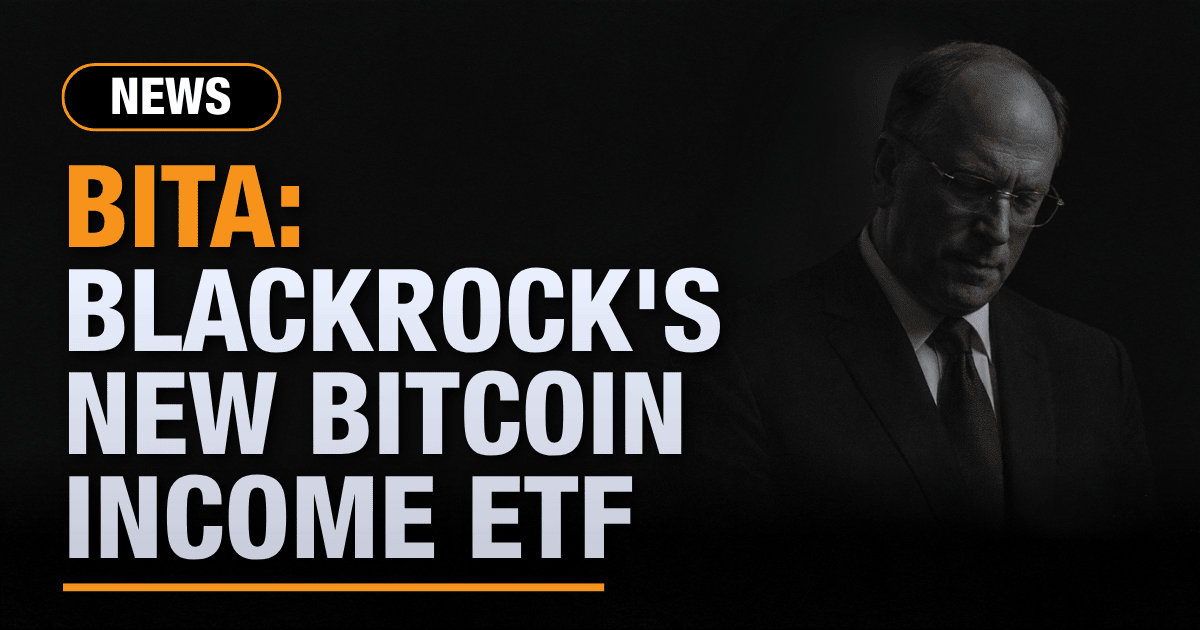
BlackRock has accelerated preparations for the launch of its iShares Bitcoin Premium Income ETF, which will trade under the ticker BITA.
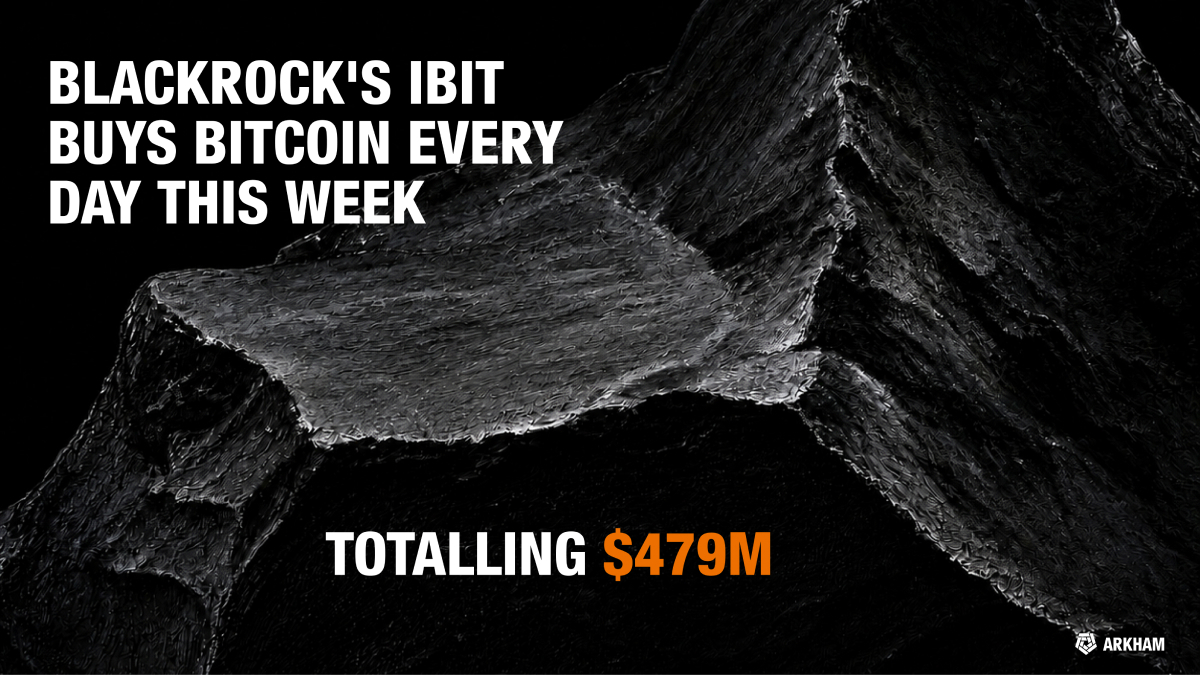
The world’s largest asset manager – overseeing roughly $12.5 trillion in total assets – has filed for the product following the success of its spot Bitcoin ETF, IBIT. Since launching in January 2024, IBIT has become one of the most successful ETF launches in history, accumulating over $50B in AUM and establishing itself as the dominant spot Bitcoin ETF on the market.
An amended S-1 SEC filing dated 1st April 2026 shows BlackRock refining the structure of its new income fund. No official launch date is set but ETF expert Eric Balchunas has predicted “weeks not months”.
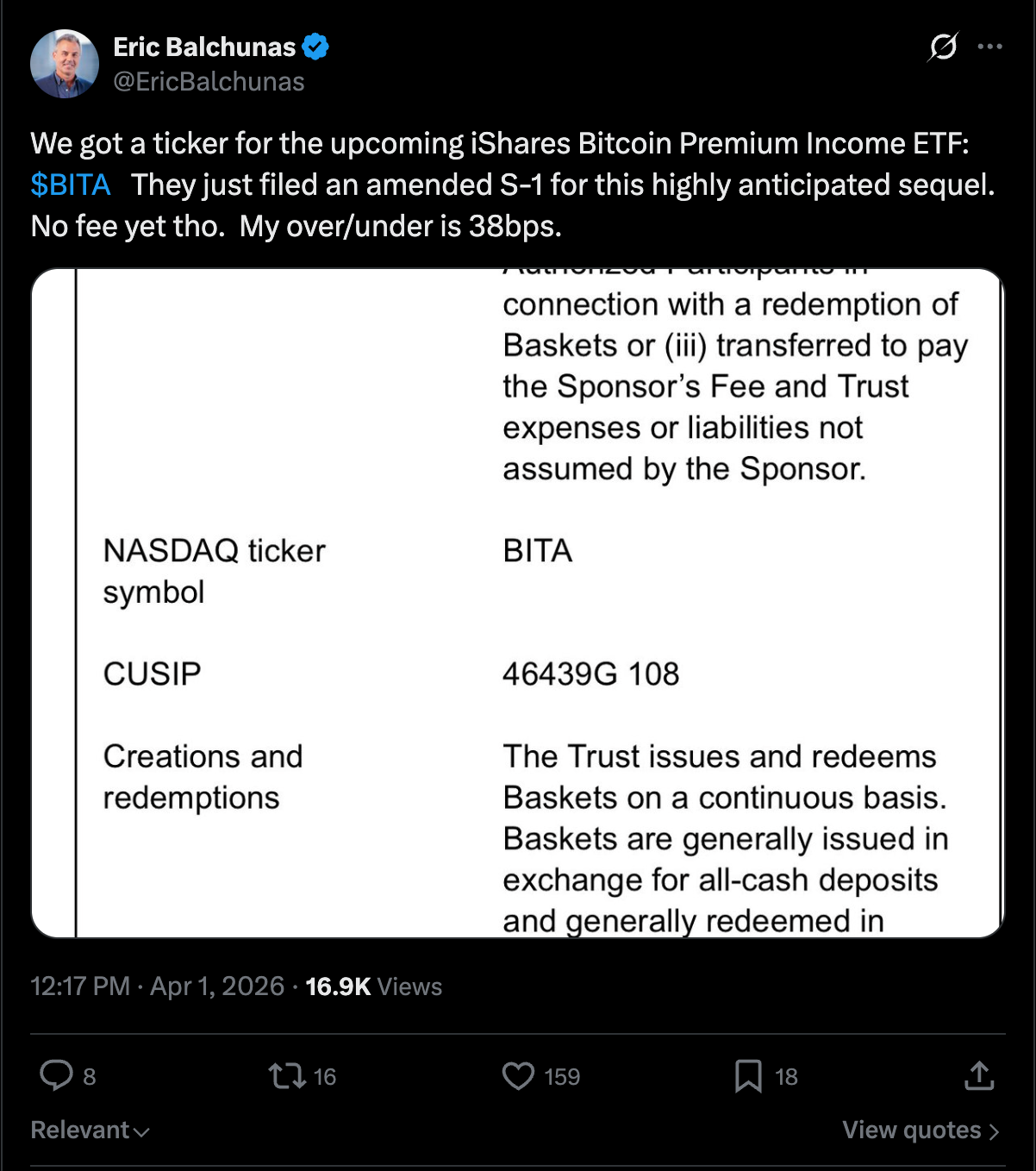
It follows the launch of ETHB, BlackRock’s Ethereum Staking ETF. ETHB currently has over $435M in AUM after just over a month of trading.
How The Covered Call ETF Works
The BITA ETF is designed to transform Bitcoin from a passive asset into an income-generating asset. The ETF will employ a covered-call strategy – common in traditional equity markets – that will work as follows:
- Underlying holdings: The ETF will hold a combination of Bitcoin, cash, and shares in BlackRock's spot Bitcoin ETF, IBIT. This hybrid structure gives it flexibility to manage exposure while maintaining a close connection to the spot BTC price.
- Custody: Coinbase will serve as the institutional custodian of the fund's Bitcoin holdings, the same custodian used for IBIT.
- Selling call options: BlackRock will actively sell (write) call options – primarily on IBIT shares, and occasionally on indices that track spot Bitcoin ETPs. These options give a counterparty the right to buy the underlying asset at a specified strike price on a specific date.
- Collecting premiums: Each time an option is sold, the fund collects a premium from the buyer. These premiums are the core source of income for BITA holders and will be distributed regularly.
- Income in sideways markets: This strategy is particularly effective during periods of low or flat price action. Even if Bitcoin moves sideways, the fund continues to collect option premiums, providing a steady income stream regardless of price direction.
- The trade-off is capped upside: The inherent cost of a covered-call strategy is that if Bitcoin's price rises above the strike price of the sold option, the fund is obligated to sell at the lower strike price. This means BITA holders may miss out on significant upside during sharp rallies. In essence, the fund converts Bitcoin's volatility into cash flow, trading some potential price appreciation for regular income.
BITA will not be the first BTC covered-call ETF to launch. A few options already exist, including BTCI (NEOS Bitcoin High Income ETF), YBTC (Roundhill Bitcoin Covered Call Strategy ETF), and BAGY (Amplify Bitcoin Max Income Covered Call ETF).
BTCI, YBTC and BAGY have respective distribution rates (annualized percentage return generated by an investment) of 27.8%, 37.29%, and 41.8%.
Irrespective of the distribution rate, all three of these ETFs have underperformed spot BTC in terms of price over the last six months. It is important to consider both the distribution rate and the price of the investment when looking at the performance of income ETFs.
BITA has a structural advantage over these other covered-call ETFs: it has access to the deepest liquidity pool of any Bitcoin ETP as BlackRock’s IBIT holds over $50 billion in BTC. The sheer volume of options activity on IBIT gives BlackRock a more efficient market for executing its covered-call strategy.
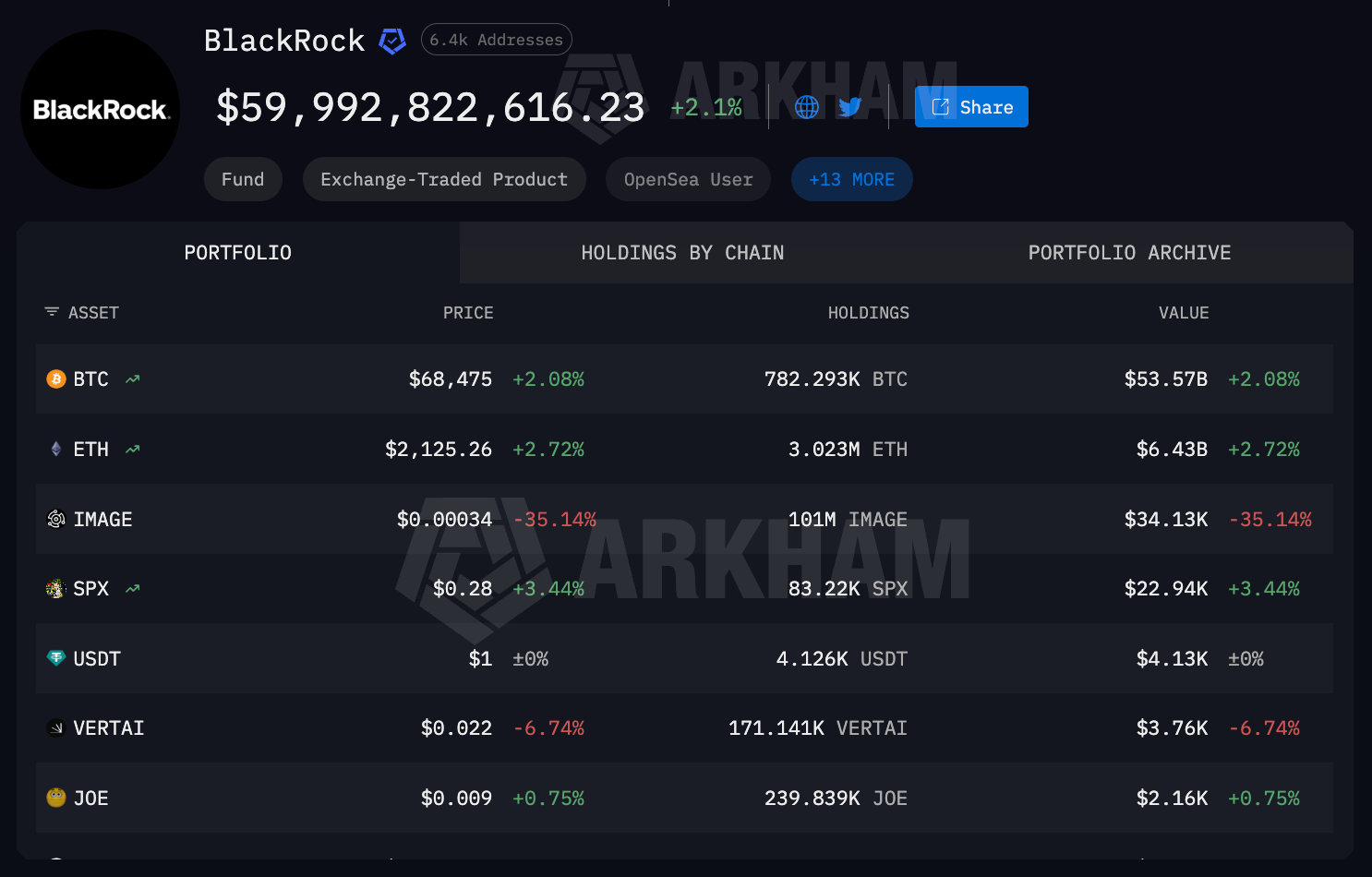
Tracking BITA on Arkham
Just like existing ETFs, investors can track BITA’s holdings in real-time via the Arkham Intel Platform. BlackRock is currently the 4th largest entity on Arkham, with over $58 billion in on-chain holdings as of April 2026.
Traders should note that because of T+1 settlement in traditional finance, on-chain evidence of BlackRock's BTC purchases typically appears one business day after the initial trade. Monitoring BlackRock’s entity page allows users to observe these massive movements of capital as they settle on the blockchain.
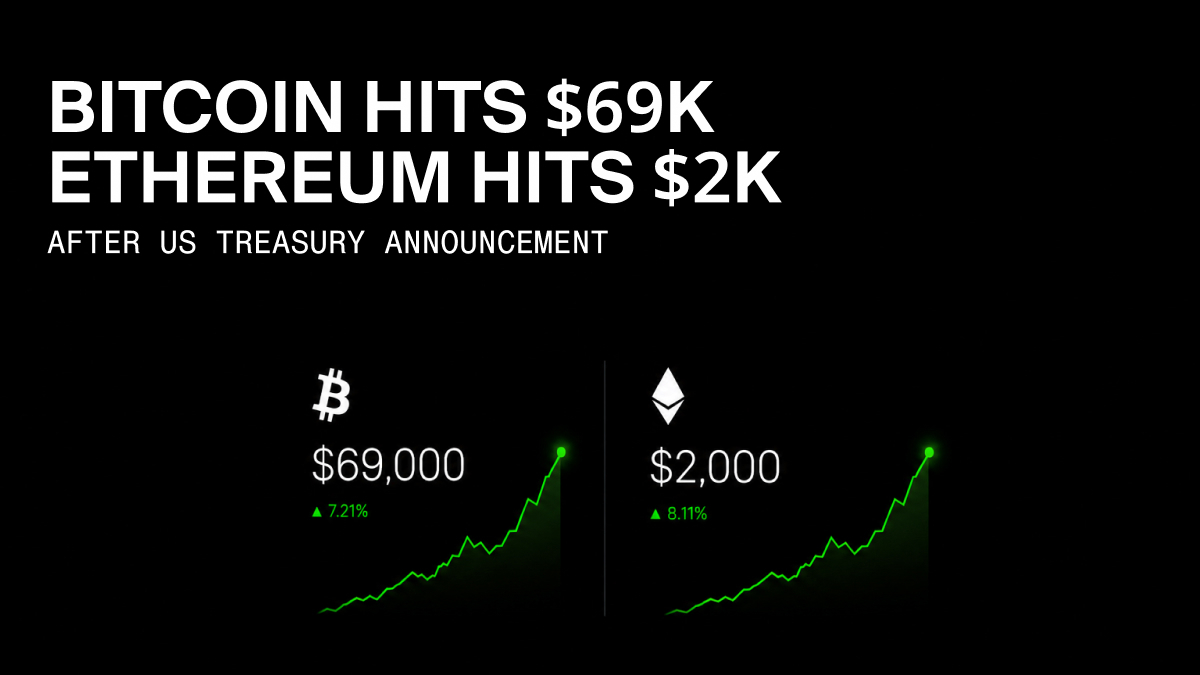
Despite a "crypto winter" that has seen Bitcoin’s price hovering in the mid-$60K region, institutional integration into crypto is expanding. The launch of BITA will be a pivotal moment where the volatility of Bitcoin is harnessed by the world’s largest asset manager to generate income for its investors.

.png)










.jpeg)





.jpg)


.jpeg)







.png)










.png)

.jpg)




.png)
.png)




.png)


.png)
.png)
.png)


.png)
.png)









.png)
.png)
.png)

.png)





.png)