February 23, 2026
at
11:55 am
EST
MIN READ
How Much Bitcoin Does Tesla Hold?
.webp)
In early 2021, Elon Musk directed Tesla to purchase $1.5 billion worth of Bitcoin. It was one of the largest and highest-profile corporate allocations to crypto at the time, completed on the 1st February. The announcement immediately moved markets and signaled that a major public company was willing to hold Bitcoin as a treasury asset.
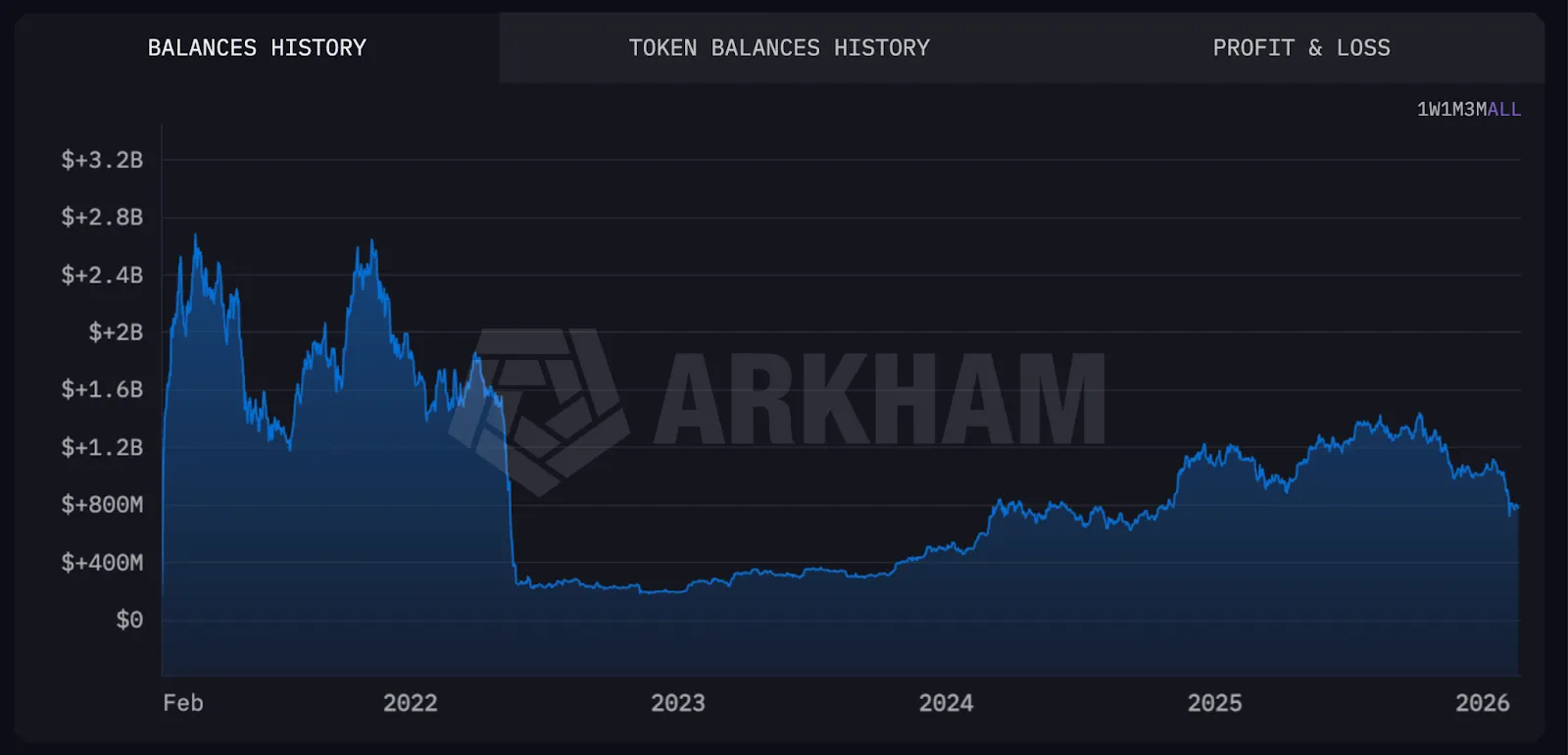
After 2 weeks, Tesla’s Bitcoin was worth well over $2 billion - and after 3 weeks, it was worth $2.5 billion. Since then, the company has reduced its position, navigated multiple market crashes, and held through one of the most turbulent periods in Bitcoin’s history.
This piece explains when Tesla bought Bitcoin, why it made the allocation, how it managed the position through the LUNA and FTX collapses, how much it still holds, and why the move mattered.
Summary
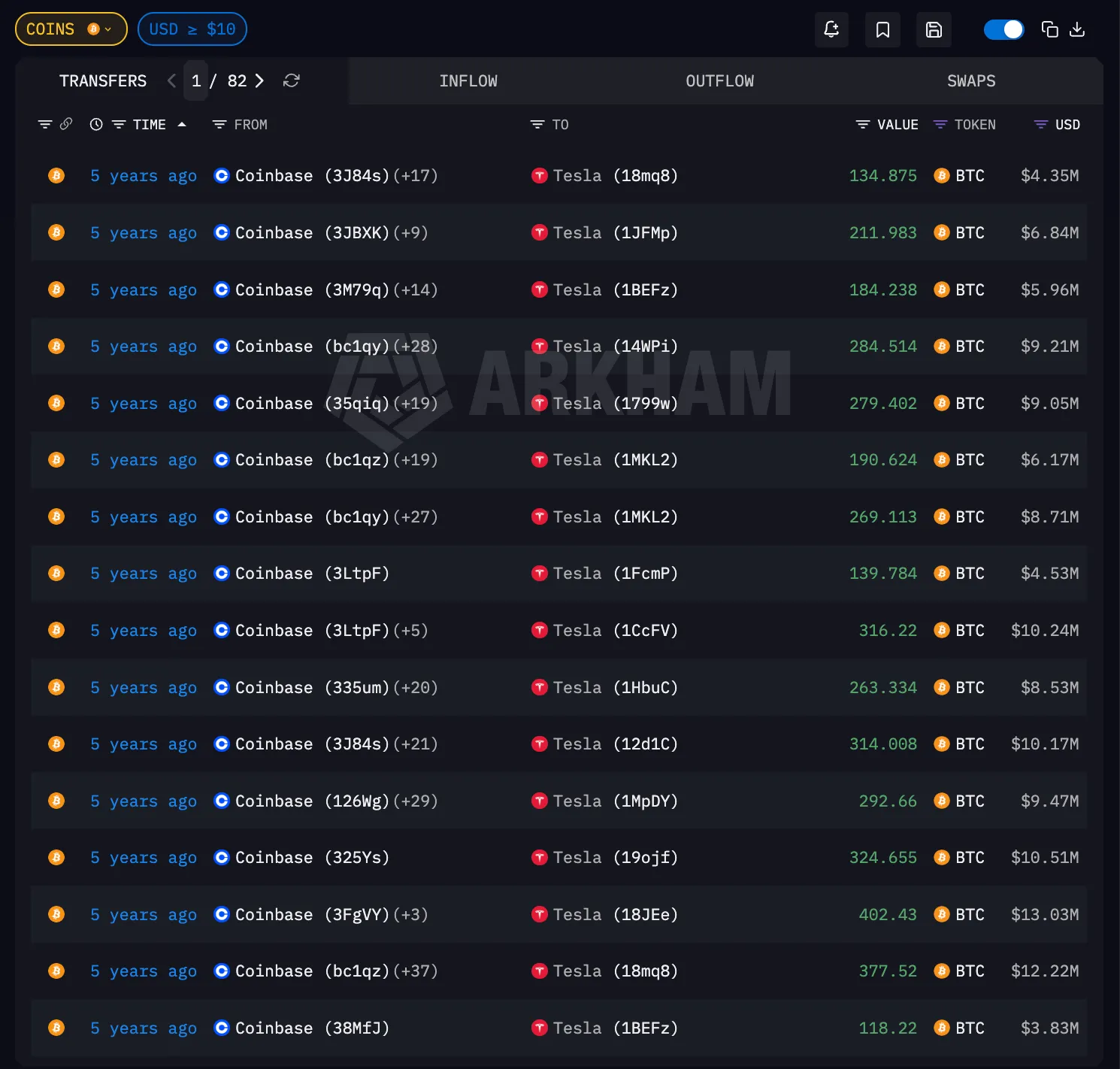
Tesla purchased $1.5 billion of Bitcoin in early 2021. In March and April of that year, it sold 4,670 BTC at a profit. During the May 2022 LUNA collapse, Tesla moved most of its remaining holdings to Coinbase (and presumably selling it), totalling 30.69K BTC. This left only 8.43K BTC worth around $250M.
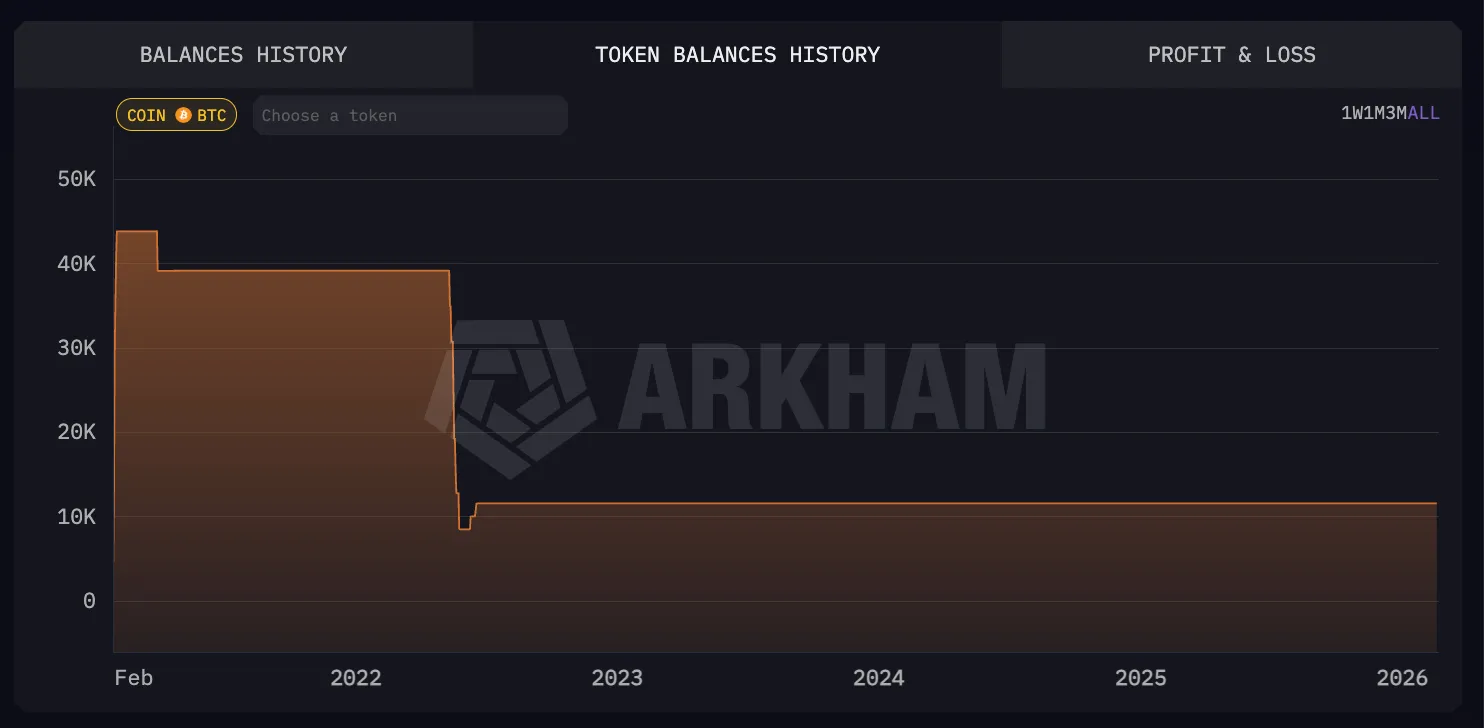
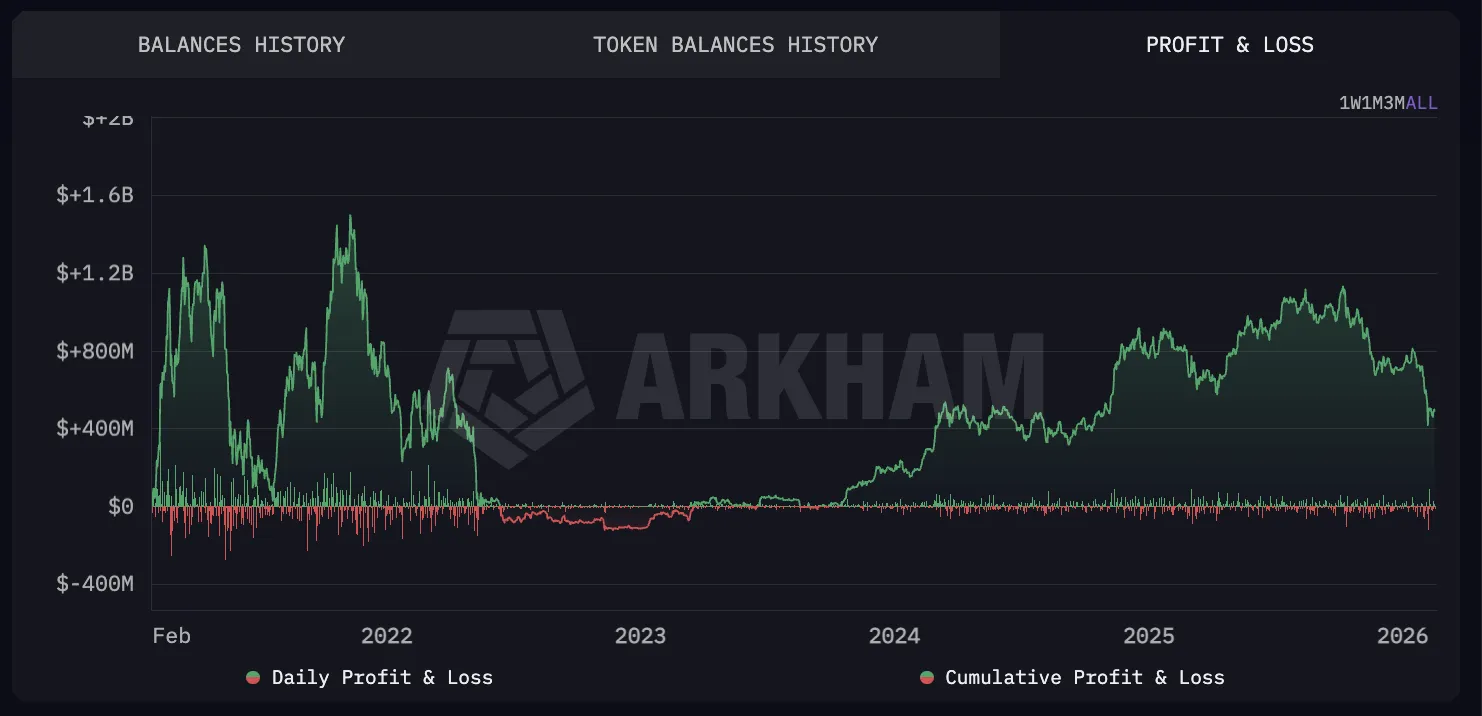
After selling the majority of its holdings, Tesla was barely break-even on its entire BTC investment. By mid-2022, the company had re-acquired BTC from Coinbase (it is possible that some of the May transfers were not sold) to hold roughly 11,500 BTC. It has not re-acquired or sold Bitcoin since. It did not sell during the FTX collapse, despite Bitcoin’s price halving again - and Tesla being down over $100M for a while during the closing months of 2022.
When Did Tesla Buy Bitcoin?
Tesla disclosed its Bitcoin purchase in February 2021, stating that it had acquired $1.5 billion worth of BTC. At the time, this made Tesla one of the first major public corporations to add Bitcoin to its balance sheet in a meaningful size.
The decision followed months of public commentary from Elon Musk about Bitcoin and Dogecoin. The disclosure pushed Bitcoin higher and strengthened the narrative that institutions were beginning to treat Bitcoin as a legitimate treasury asset.
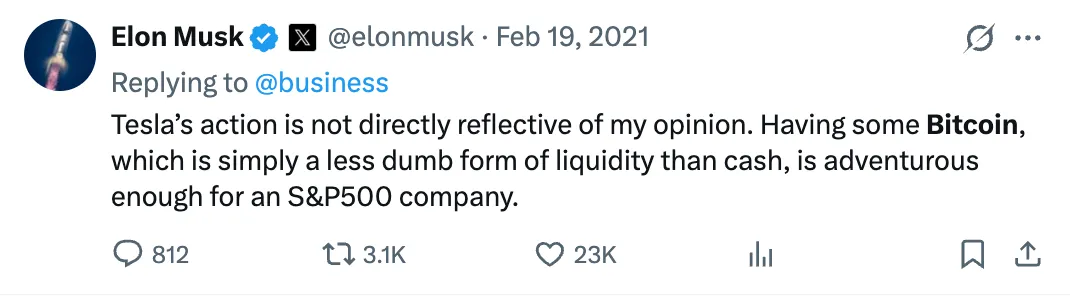
Tesla framed the move as part of a strategy to manage excess cash during a period of aggressive monetary expansion and inflation concerns.
Why Did Tesla Buy Bitcoin?
Tesla stated that the allocation was intended to provide flexibility in managing cash and potentially improve returns. The company also cited diversification benefits and the possibility of accepting Bitcoin as payment.
Shortly after the purchase, Tesla briefly allowed customers to buy vehicles with Bitcoin. That program was later suspended, with the company citing concerns about the environmental impact of Bitcoin mining. Even so, the treasury allocation itself was consistent with a broader trend in 2021, when several companies explored holding Bitcoin as a balance sheet asset.
What Happened After the Initial Purchase?
At the end of January 2021, Tesla bought 43,770 Bitcoin for $1.5 Billion at an average price of ~$34,270. Bitcoin’s price surged in the immediate weeks following their purchase - almost doubling the value of their purchased Bitcoin.
In March and April 2021, the company sold 4,670 BTC for ~$260.2M. Musk explained that the sale was meant to demonstrate Bitcoin’s liquidity and show that a large corporate position could be exited without destabilizing the market. The sale generated a profit of ~$100.2M. Tesla rode out the remainder of the 2021 bull market holding almost 40,000 BTC. At the peak of the bull market on 7th November 2021, Tesla was up another $1.5B in pure profit.
The next major turning point came in May 2022 during the collapse of the Terra ecosystem. As LUNA and UST imploded and markets fell sharply, Tesla moved 30.69K BTC to Coinbase to sell - the majority of its remaining Bitcoin. By that point, all of their earlier paper gains had disappeared, leaving the company close to its original cost basis. After the sale, Tesla retained roughly 20 percent of its initial holdings.
In June 2022, on-chain movements suggested either additional purchases or transfers from Coinbase custody. It is possible that not all of the 30.69K BTC had actually been sold. Following those adjustments, Tesla appeared to hold approximately 11,500 BTC. That figure has remained largely unchanged since.
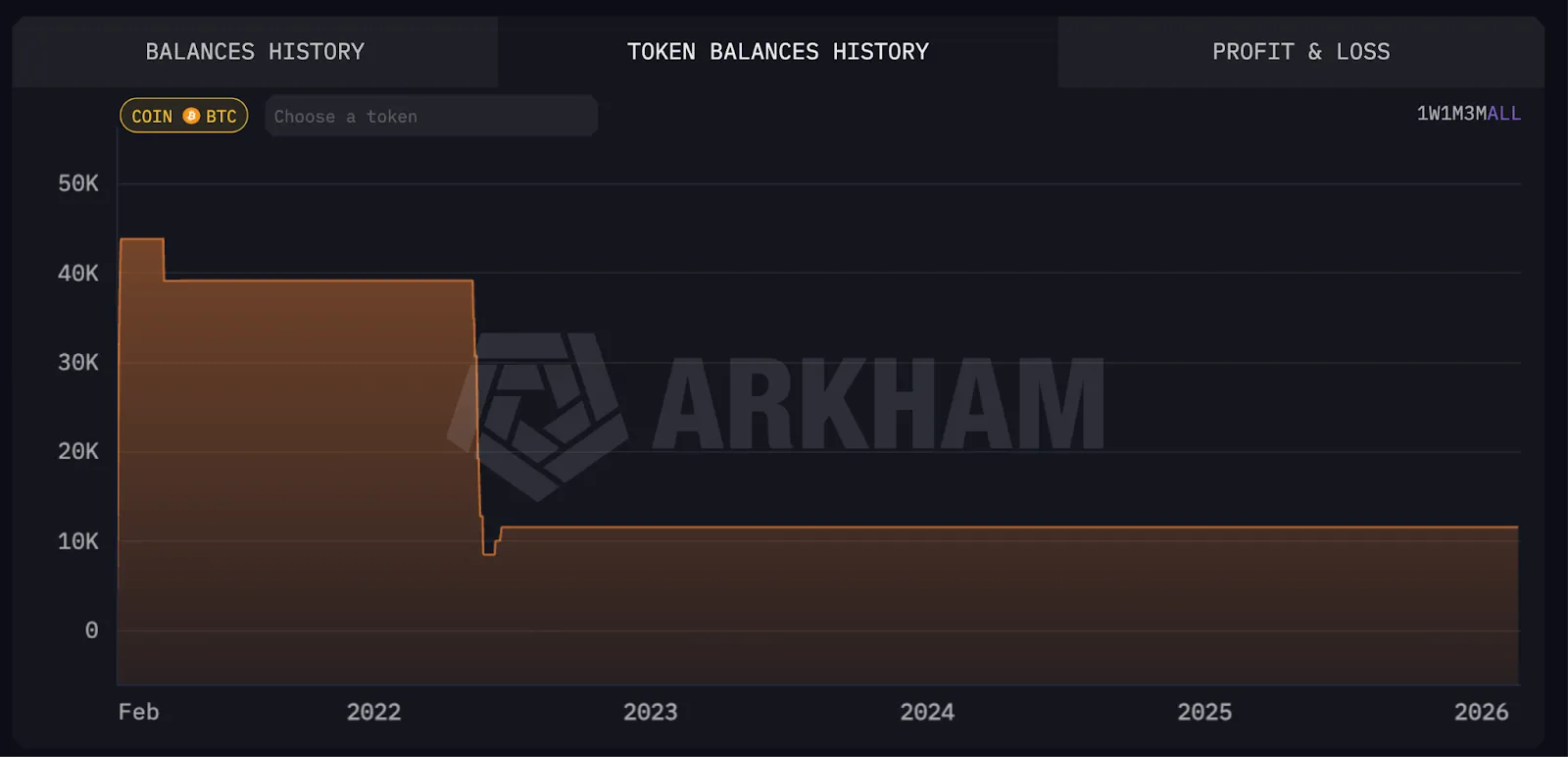
Later in 2022, Bitcoin fell another 50 percent amid industry failures, including the collapse of FTX. Despite the volatility, Tesla did not sell additional Bitcoin. The company maintained its reduced position through the remainder of the bear market - despite being $100M in the red in December 2022.
Bitcoin’s price recovered and hit new highs in the 2024-2025 cycle - but since Tesla’s holdings have never been worth more than what they were during 2021.
Elon Musk’s Influence
Elon Musk’s public comments have repeatedly influenced crypto markets. Statements about Bitcoin’s energy usage, acceptance for payments, and broader adoption often coincided with short-term price swings.
Tesla accepting - then suspending - Bitcoin vehicle payments, combined with Musk’s emphasis on renewable-powered mining, had a visible impact on sentiment. Wallet clusters associated with SpaceX have also shown transaction patterns similar to Tesla’s, sometimes with a slight delay, suggesting coordinated treasury management across Musk-led entities.
At peak valuation, Tesla and SpaceX together held more than $4.2 billion in Bitcoin. As the market retraced, that combined valuation declined - they now hold roughly $1.3 billion..
Why the Purchase Mattered
Tesla’s allocation was one of the earliest large-scale treasury moves by an S&P 500 company. It helped legitimize the idea of Bitcoin as a corporate reserve asset and accelerated discussions among other firms about digital asset exposure.
The early sale of 4,670 BTC demonstrated that Bitcoin markets could absorb institutional-scale transactions. The decision to reduce exposure during the LUNA collapse showed how a corporate treasury might respond under systemic stress by prioritizing liquidity and risk reduction.
At the same time, Tesla’s decision to retain approximately 11,500 BTC through the rest of the bear market indicated that the company was not abandoning Bitcoin entirely. Even if Musk wanted to limit risk, both of his companies remained exposed to Bitcoin.
Conclusion
Tesla’s BTC acquisition was one of the most high profile Bitcoin trades any company has ever taken. The company invested $1.5 billion in early 2021, took partial profits the same year, reduced its position significantly during the LUNA collapse, and retained roughly 11,500 BTC through a $100M drawdown in the broader bear market.
Despite significant drawdowns since Bitcoin’s ATH, Tesla remains one of the largest publicly known corporate holders of Bitcoin, and its position continues to serve as a high-profile case study in how public companies can manage digital assets on their balance sheets.

.png)








.jpeg)





.jpg)


.jpeg)




.png)








.png)

.jpg)



.png)
.png)



.png)

.png)

.png)
.png)

.png)
.png)






.png)
.png)
.png)
.png)




.png)