January 19, 2026
at
10:25 am
EST
MIN READ
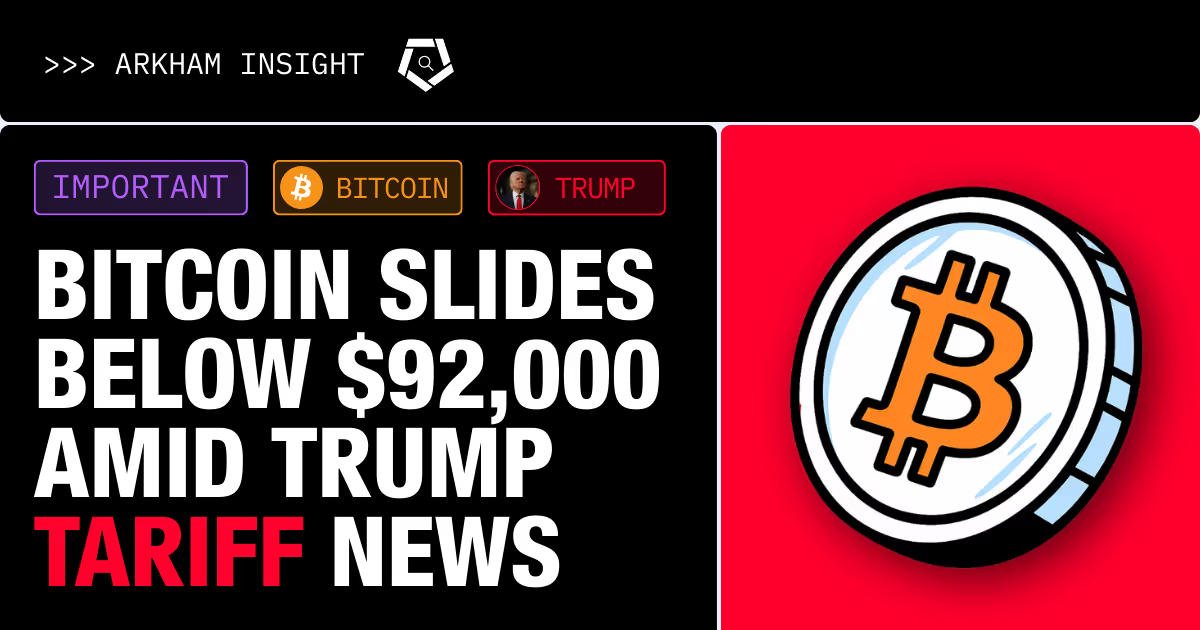
Bitcoin Slides Below $92,000 Amid Trump Tariff News
Note: This is an AI generated insight from Arkham's proprietary AI: ULTRA. The content has been edited and verified by one of Arkham’s Editors before being published. To access the insight directly, go to the Insights page on the Arkham Intel Platform.
Macroeconomic Headwinds and Market Reaction
The most significant driver of the current market sentiment appears to be the news of President Donald Trump's plans to impose tariffs on European goods. This announcement, which occurred around the time BTC fell below $92K, has introduced considerable economic uncertainty, prompting a flight from risk assets like BTC. This macro event has directly influenced the observed market downturn, overshadowing earlier positive news such as Steak 'n Shake's $10 million BTC purchase, which, while a positive adoption signal, was not strong enough to counteract the broader bearish shift.
Derivatives Market Bearishness
Following the macroeconomic news, the derivatives market for BTC has shown clear signs of bearish sentiment. The funding rate for BTC-PERPETUAL on Deribit and BTC/USDT on Bybit both turned significantly negative. This indicates that short position holders are paying long position holders, reflecting a strong bearish bias among traders. Concurrently, the open interest for BTC/USDT on Binance experienced a negative rate of change, suggesting that traders are closing out positions, likely in response to the increased market volatility and negative outlook.
Increased Volatility and Trading Activity
The market's reaction to the tariff news also manifested in heightened volatility and trading activity. A large volume surge on Binance for BTC indicates a significant increase in activity, likely as market participants adjusted their positions. This period also saw fluctuations in BTC options implied volatility (IV) on Deribit, with both positive and negative outliers. These movements in options IV suggest increased demand for options, driven by uncertainty and hedging strategies as traders sought to manage risk in a rapidly changing market environment.

.png)









.png)







.jpeg)




.jpg)

.jpeg)










.png)

.jpg)



.png)

.png)



.png)

.png)
.png)
.png)


.png)
.png)







.png)
.png)
.png)

.png)