June 4, 2026
at
11:45 am
EST
MIN READ
Crypto Liquidation: What Is It And How Can You Avoid It?
The cryptocurrency market is known for its volatility, with prices capable of moving violently in either direction within minutes. For traders using leverage to amplify their positions, these rapid price swings create both opportunity and substantial risk. While leverage can multiply gains, it is a double-edged sword. Leverage introduces the possibility of liquidation: a forced closure of positions that can wipe out an entire account in a single moment.
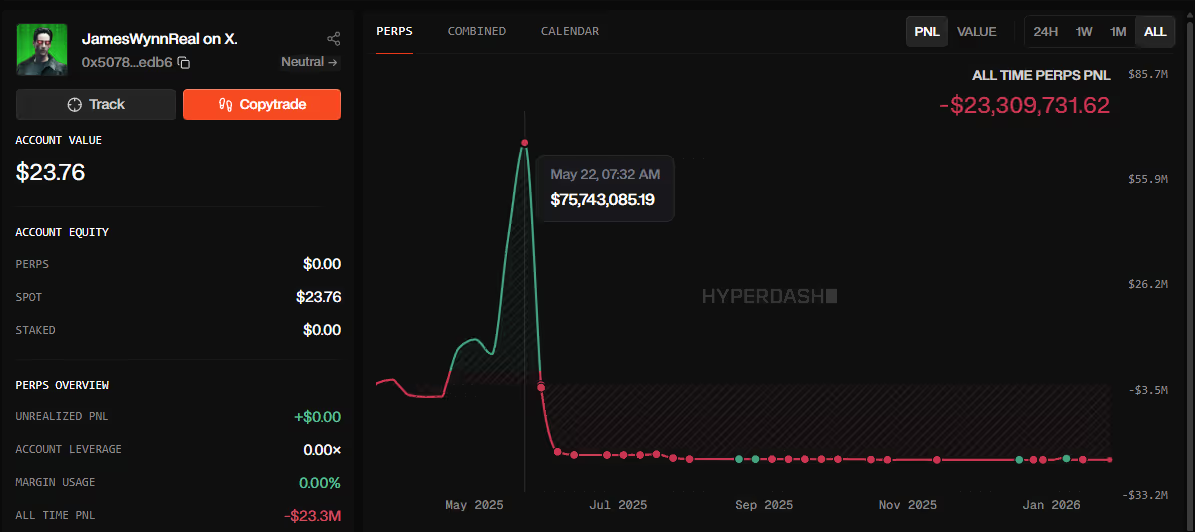
Understanding liquidations is essential for anyone participating in leveraged crypto trading. This phenomenon affects thousands of traders daily, from beginners testing small positions to experienced market participants managing substantial portfolios. The mechanics of liquidation, while straightforward in principle, involve nuances that every trader should grasp before employing leverage in their trading.
Summary
- Liquidation is the forced closure of leveraged positions when a trader’s margin falls below the exchange requirements.
- Higher leverage can increase profits, but it also increases liquidation risk, as smaller price moves can wipe out collateral quickly.
- Using lower leverage, stop-loss orders, proper position sizing, and margin control help to prevent liquidation.
- Emotional discipline and post-liquidation analysis are crucial for long-term success in leveraged trading.
What is Liquidation?
In trading, liquidation refers to the automatic closure of a leveraged position when a trader can no longer meet their margin requirements. When traders put on a leveraged trade, they borrow funds from the exchange to increase their position size beyond what they possess. In doing so, they must maintain a minimum amount of collateral relative to their borrowed amount. If the market moves against their position and their collateral value drops below this minimum threshold, the exchange intervenes, protecting both themselves and the leveraged trader.
The liquidation mechanism serves as a safety valve. Without it, traders could theoretically lose more money than they deposited or more than they had intended to risk, creating debts to the exchange. By forcibly closing positions before account equity turns negative, liquidation prevents this scenario. However, this protection comes at a cost. Traders typically lose most if not all of their margin when liquidated, with a liquidation fee also paid to the exchange for taking on the risk of liquidating the position. On some venues or products, extreme volatility and slippage can lead to losses that exceed the posted margin, but many major platforms attempt to mitigate this with insurance funds and auto-deleveraging.
Different exchanges set their own liquidation thresholds, known as maintenance margin requirements. These thresholds determine how close to total loss a position can drift before automatic closure. Higher leverage ratios mean tighter thresholds and faster liquidation when prices move unfavorably. Most exchanges usually also have different maintenance margin requirements for different assets to cater to their respective volatility.
What Are the Mechanics Behind Liquidation?
When a trader opens a leveraged position, they deposit the collateral required to back their borrowed funds. The exchange monitors the position's mark price against the trader's margin balance. Mark price typically represents a weighted average of prices across multiple exchanges, designed to prevent price manipulation on a single venue and ensure fair liquidation triggers.
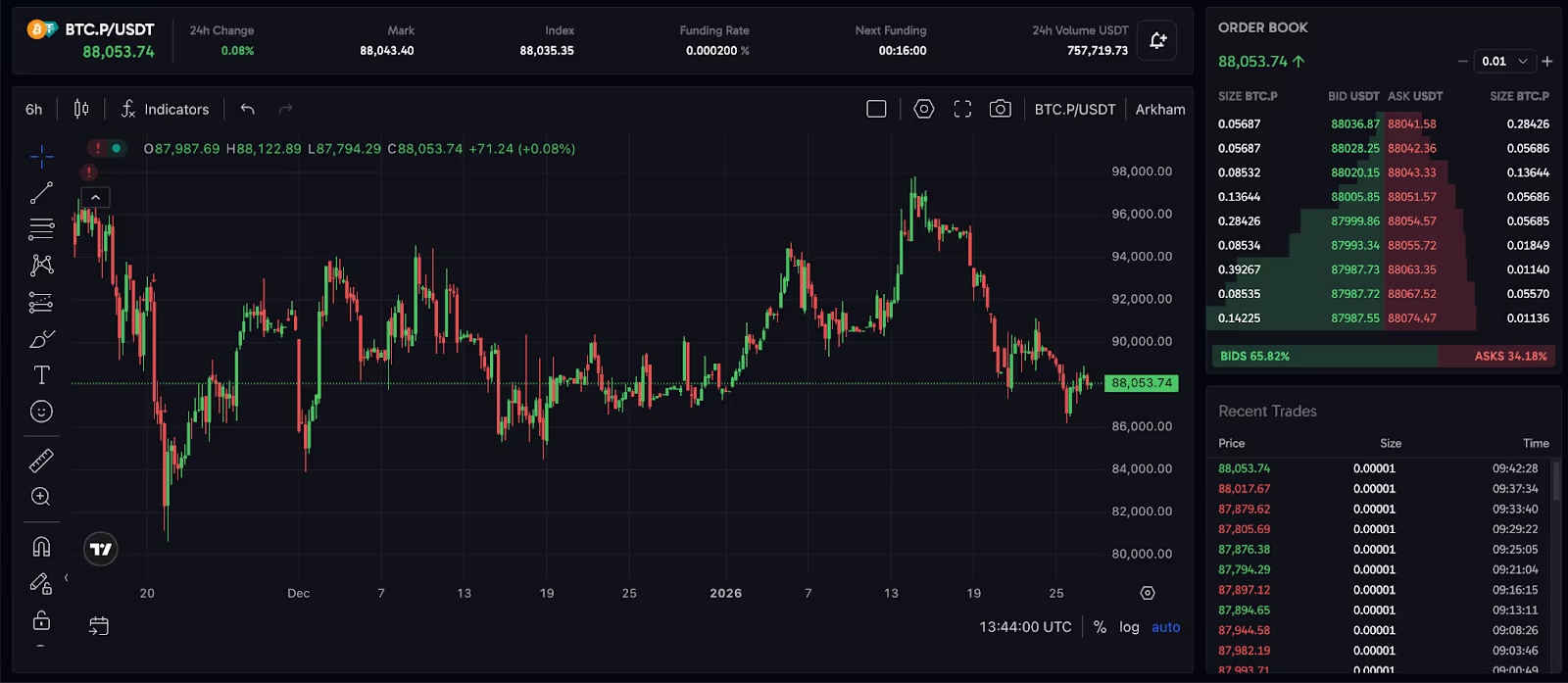
As the market moves, the position's unrealized profit or loss fluctuates. In traditional markets, when the margin reaches the maintenance margin level, the exchange issues a margin call, requiring the trader to deposit additional collateral to back their positions. In the crypto market however, most crypto exchanges often trigger liquidation immediately upon hitting the threshold or liquidation price due to the volatile nature of the asset class.
The liquidation engine will then attempt to close the position at the best available market price. Some exchanges will close a position partially to bring margin above the maintenance margin requirements, preventing a trader from fully being stopped out on a short term move. Any remaining funds, net of liquidation fees, will be returned to the trader. In the scenario where the liquidation engine is unable to successfully close the position before the losses exceed the trader’s initial margin, an insurance fund will usually cover the losses. Most exchanges also have an auto-deleveraging mechanism, which protects against exchange insolvency in volatile market conditions.
Funding rates and fees also factor into liquidation calculations. Perpetual futures contracts, which tend to be the primary leverage instrument in crypto markets, charge periodic funding rates between long and short holders. These ongoing costs can slowly erode margin over time, bringing traders closer to liquidation even without significant price movement.
Cross vs Isolated Margin
Exchanges generally offer two primary margin modes that impact a trader’s liquidation risk: cross margin and isolated margin.
Cross margin utilizes the entire account balance as collateral for all open positions. This approach provides maximum flexibility, allowing profitable positions to support losing ones and prevents premature liquidation of individual trades. If one position moves against a trader, the entire account balance can help to maintain it. However, this flexibility carries significant risk, which is that a single catastrophic position can liquidate the entire account, wiping out all funds including margins held for other trades.
Isolated margin restricts collateral to individual positions. Each trade has its own designated margin, and liquidation of one position leaves other positions and remaining funds untouched. This compartmentalization limits potential losses to the margin allocated for specific trades. Traders can precisely control risk exposure for each position, making isolated margin particularly useful when testing new strategies or taking speculative positions alongside core holdings. Importantly, this assumes that the exchange will not liquidate a traders’ broader account holdings should losses exceed the isolated margin of a single position. Traders should always carefully read the exchange’s terms and trading rules in order to properly understand applicable risks.
The choice between these modes depends on trading strategy and risk tolerance. Conservative traders often prefer isolated margin to contain potential damage, while more active traders managing multiple positions might select cross margin for its efficiency and flexibility. Some sophisticated traders mix both approaches, using isolated margin for high-risk trades while maintaining cross margin positions for their primary strategy.
How Can Traders Prevent Liquidation?
Avoiding liquidation requires discipline, planning, and active risk management. Several strategies can help traders maintain their positions through market volatility.
Lower leverage ratios provide the most straightforward protection against liquidation risk. While 20x to 50x leverage may provide attractive potential returns, such extreme leverage leaves little room for adverse price action. Using 2x to 5x leverage gives positions breathing room to withstand normal market fluctuations. Although this conservative approach reduces potential profits, it also significantly reduces the risk of liquidation.
The use of appropriate stop-loss orders can also allow traders to exit positions on their own terms before liquidation. Rather than letting the exchange close positions at the worst possible moment, stop-losses enable controlled exits at predetermined levels. These orders, however, should account for normal volatility to prevent being stopped out prematurely.
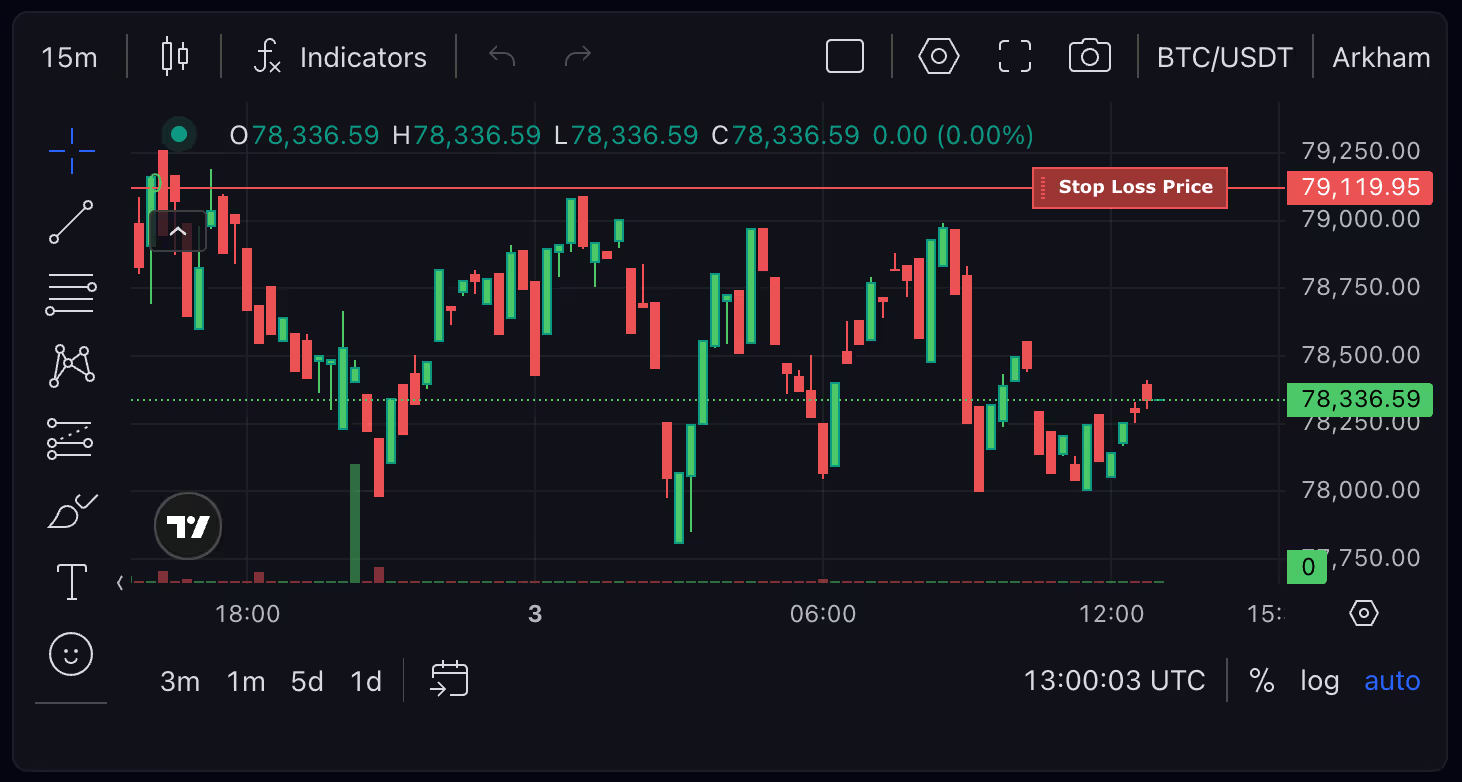
Monitoring positions consistently can also help to mitigate liquidation risks. Market conditions can deteriorate rapidly in crypto markets, particularly during key news events or during low-liquidity periods. Traders should regularly check their margin ratios and be prepared to add collateral or reduce position sizes when approaching dangerous levels.
Position sizing relative to account balance, forms a key element of risk management, which influences liquidation risk considerably. Risking only a small percentage of capital per trade ensures that even full liquidation of a position leaves the account intact to trade again. Many professional traders risk no more than one to two percent of their total capital on any single position.
The Psychology of Liquidation
Beyond grasping the technical aspects of trading, its psychological angles can sometimes also prove equally challenging to manage. The fear of liquidation can lead to premature exits from profitable positions, while denial about deteriorating positions can prevent necessary adjustments.
After losing significant capital to liquidations, traders often rush to recover their losses by entering new leveraged positions without proper analysis. This emotional response, known as revenge trading, typically compounds losses rather than recovering them. Taking time to process the liquidation, analyze what went wrong, and regain emotional equilibrium generally yields better outcomes than an immediate re-entry.
Overconfidence can make traders complacent about liquidation risk. After successfully managing several leveraged positions, traders might convince themselves they have mastered the market, gradually increasing leverage or neglecting risk management. This pattern often precedes significant liquidations.
Understanding that liquidation is a normal part of leveraged trading helps traders to maintain a level-headed perspective. Even experienced traders face liquidation occasionally. Treating these events as learning opportunities rather than as failures enables growth as a trader.
What to Do If You Have Been Liquidated?
Recovery from liquidation begins with honest assessment of trading strategy and risk management. Reviewing the liquidated trade to understand what went wrong provides valuable lessons. Be it overly high leverage, poor position sizing, lack of stop-loss orders, or adverse market conditions, documenting the reasons for a liquidated trade helps to prevent the same mistake in the future.
Taking a break before returning to trading allows emotions to settle. The frustration and disappointment following liquidation can easily cloud judgment, making clear analysis difficult. Stepping away for hours or days provides necessary perspective.
Re-evaluating risk management strategies should follow any liquidation. If your current trading strategy led to a liquidation, your risk strategy likely requires adjustment. This might mean reducing maximum leverage, implementing stricter stop-losses, or decreasing position sizes relative to account balance.
Starting fresh with a smaller account or paper trading can help rebuild confidence and test revised strategies without risking significant capital. Proving that new approaches work in live market conditions before scaling up reduces the chance of repeated liquidations.
What Are the Biggest Crypto Liquidations in History?
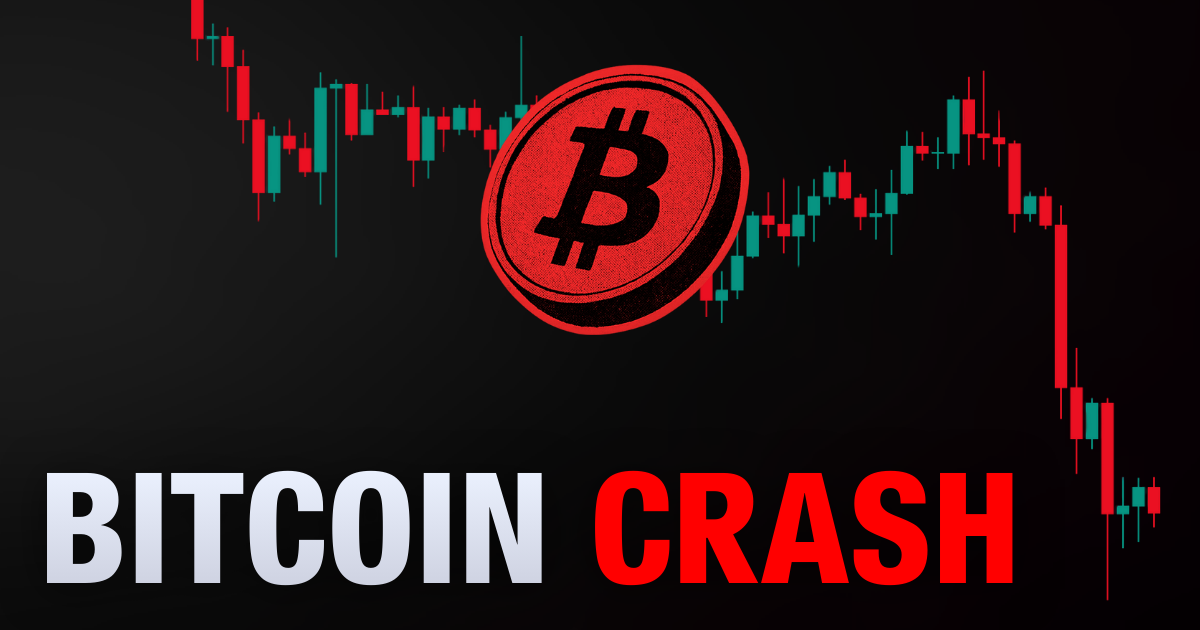
Known for its volatility and high leverage, the crypto market is no stranger to huge liquidation events. This is compounded by the increasing size of the crypto market, which led us to the largest crypto liquidation to date just months ago on the infamous market crash on October 10, 2025. In a single day’s move, $19.16B in positions were liquidated on the announcement of 100% tariffs on China by US President Donald Trump.
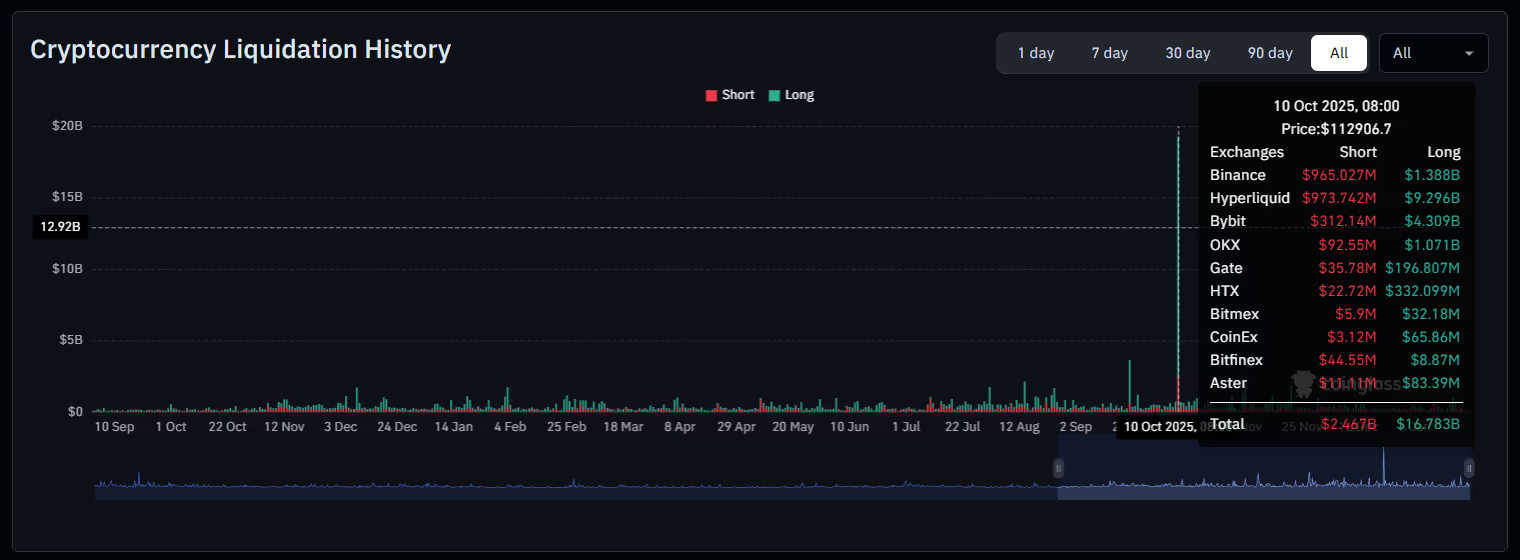
Several of the largest liquidation events also occurred in 2021, most notably in the April to May 2021 period, after a strong rally in the earlier half of the year. The overheated rally reversed quickly from US news regarding Anti-Money Laundering (AML) laws and Elon Musk’s announcement that Tesla would stop accepting Bitcoin for payments, liquidating $9.94B and $9.01B in positions respectively.
Surprisingly, historically significant events such as the LUNA death spiral and the FTX collapse failed to break the top 10 largest single-day liquidation events in crypto. This is largely due to the time it took for the respective events to play out, with the LUNA collapse unfolding over a week, while the contagion of FTX’s demise took even longer to play out. As a result, the negative price action was spread out across prolonged periods rather than a single day sell-off.
Conclusion
Liquidation represents one of the most significant risks in leveraged cryptocurrency trading. While the mechanism can protect traders from owing more than their deposits, it can quickly eliminate trading capital when positions move unfavorably. Understanding how liquidation works, the differences between margin types, and strategies for prevention provides the foundation for safer leveraged trading.
Success in leveraged markets requires more than identifying profitable trades. It demands rigorous risk management, emotional discipline, and respect for market volatility. By using appropriate leverage levels, implementing stop-losses, monitoring positions actively, and learning from past liquidations, traders can reduce their exposure to this costly event while still participating in leveraged opportunities.

.png)


.png)





.png)



.jpg)




.png)
.png)


.png)

.png)



.png)
.png)


.png)
.png)






.png)
.png)
.png)
.png)




.png)






.png)