January 23, 2026
at
10:30 am
EST
MIN READ
The Total Value of Tokenized U.S. Treasuries is Now More Than $10B
The total value of tokenized U.S. Treasuries has exceeded $10 billion for the first time ever after a strong week of interest in the innovative real-world asset instruments. Total value is up nearly 7% in the last seven days, according to data from RWA.xyz.
Tokenized U.S. Treasuries are digitally wrapped versions of the asset that has for many years underpined the modern economy: U.S. Government Debt.
When an institution, or less commonly, an individual, buys a tokenized U.S. Treasury, the money they invest is then used to buy actual U.S. Treasury bills or short-term loans backed by treasuries. The investor in return receives a yield-bearing token.
Circle’s USYC is the largest (by market cap) tokenized U.S. Treasury product and it offers a yield of 3.01% (at the time of writing).
The table below shows the top five tokenized U.S. Treasury products, ranked by market cap:
Tokenized U.S. Treasuries products are targeted mainly at institutional and whale investors with large sums of money to invest. Indeed, BlackRock’s BUIDL requires a minimum investment of $5 million and many of the other products have screening processes.
Other products, like Ondo’s USDY are targeted towards retail investors based outside the U.S. USDY currently has over 17k holders.
These products offer a few key benefits to holders:
- Like stablecoins, they are extremely liquid. However, stablecoins by themselves do not offer holders any yield whereas tokenized treasuries do.
- They can be traded and redeemed at any time, 24/7, as they exist on-chain.
- They are backed by the U.S. Government, and managed by well-established investment management firms like BlackRock.
- They can be used as collateral in DeFi.
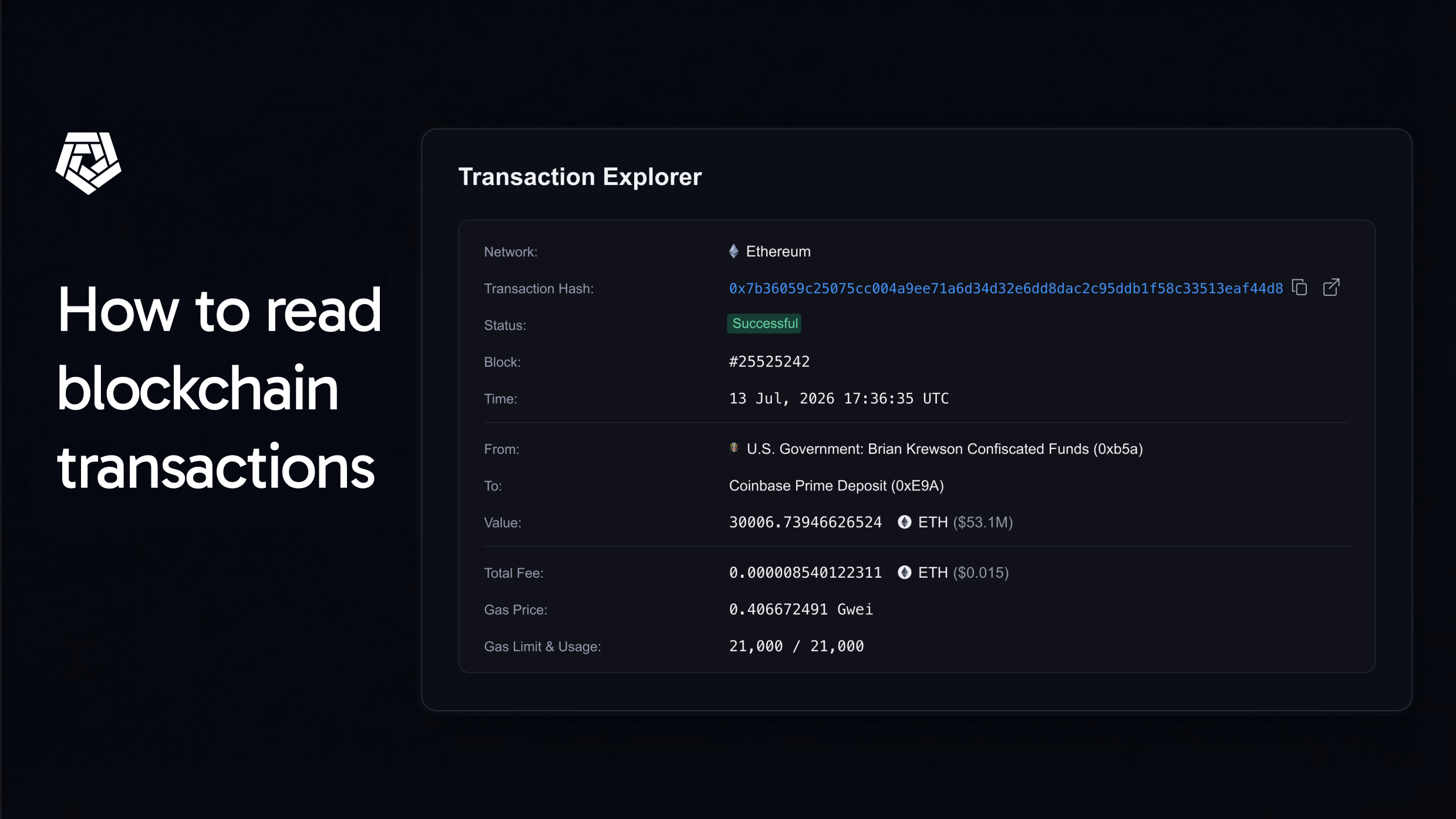
Another benefit of tokenized treasuries is that they live on-chain and can therefore be tracked using a blockchain explorer. Using Arkham, users can track many of these products including BlackRock’s BUIDL product.
The screenshot below is from the ‘Top Holders’ section of BUIDL’s token page on the Arkham Intel Platform. The table shows Ethena as the top holder, holding 57% of the supply, equating to $605 million.
Ethena holds BUIDL as backing for its USDtb stablecoin.

.png)







.jpeg)

.png)








.png)





.jpg)
.jpeg)







.png)

.jpg)

.png)
.png)

.png)
.png)
.png)
.png)

.png)
.png)





.png)