July 28, 2026
at
9:30 am
EST
MIN READ
Tokenized Stocks: What’s The Point?
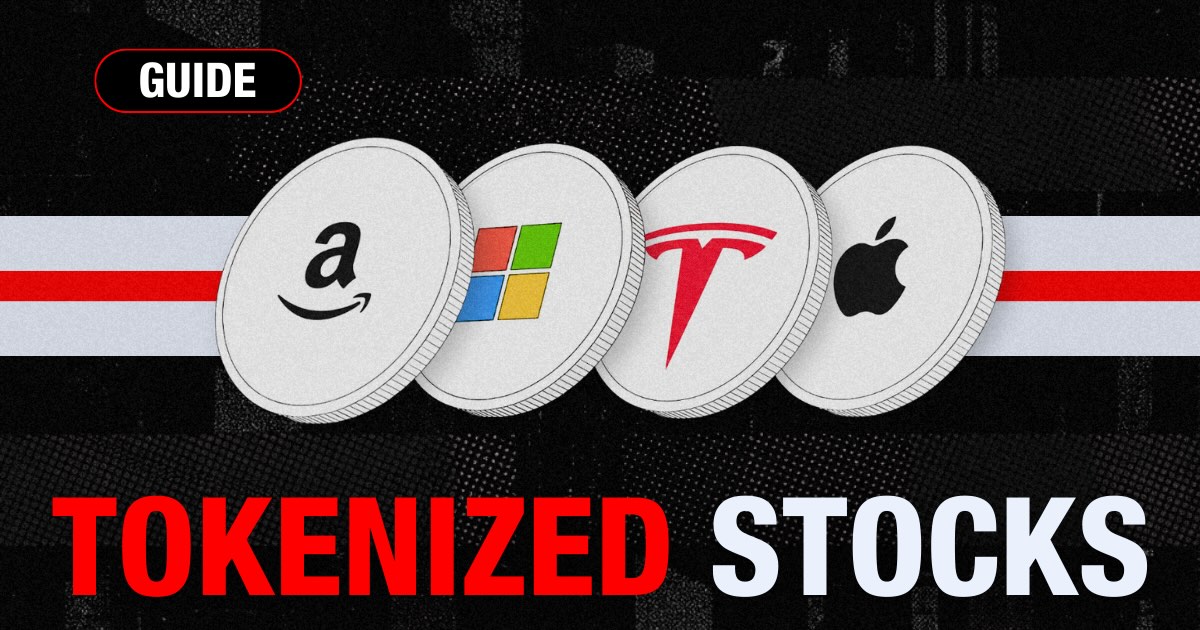
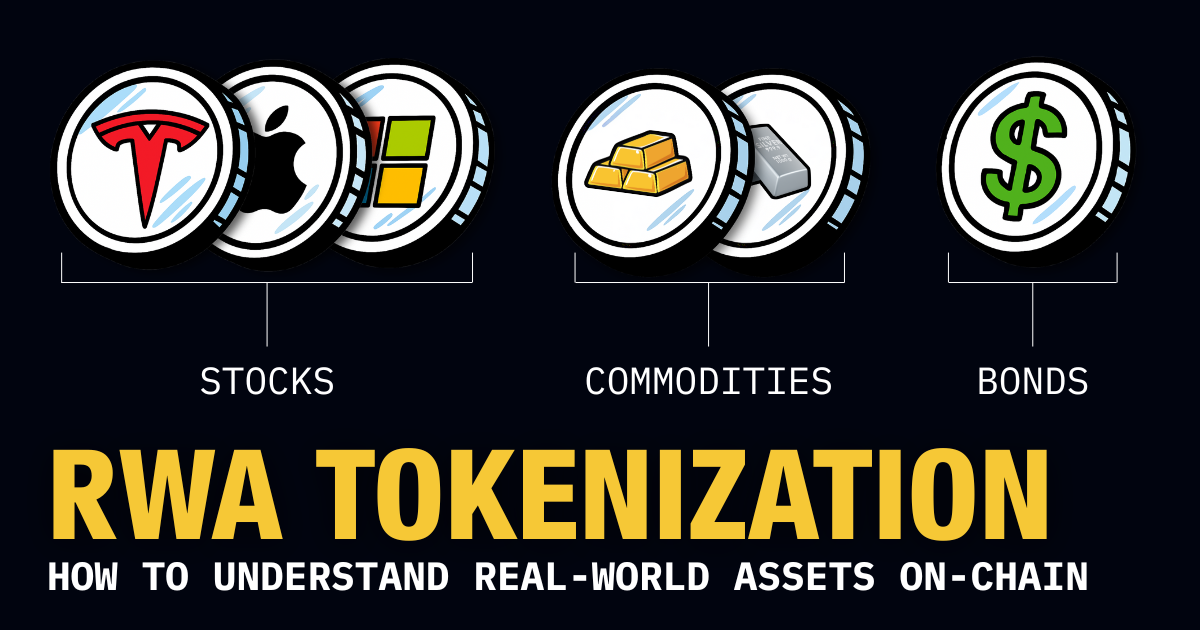
Tokenization refers to the process of turning real-world assets into digital tokens on a blockchain. Holding a token represents ownership, access, or a claim to something in the real world.
Tokenized stocks are an example of this. They represent a claim on a share of a stock, but exist on-chain. The actual stock is held by a third party custodian on your behalf. Tokenized stocks sit at the intersection of traditional finance and crypto, combining equity markets with blockchain infrastructure. As financial institutions and DeFi platforms experiment with on-chain representations of real-world financial assets, tokenized stocks are quickly emerging as one of the premier applications.
Summary
- Tokenized stocks allow investors to gain exposure to publicly traded companies by bringing stocks on-chain.
- These tokens have benefits such as fractional ownership, faster settlement, global access, and integration with decentralized finance (DeFi).
- Although they offer significant advantages, tokenized stocks also have regulatory, tax, and custody complexities as well.
- Currently, tokenized stocks and other digital assets are not well defined in legal frameworks, which causes much of these issues - even though tokenization generally doesn’t remove securities-law obligations.
What are Tokenized Stocks?
Tokenized stocks are blockchain tokens that represent economic exposure to traditional stocks, such as a share of Google or Apple. Some tokenized stock products are backed fully by a real underlying share held by a regular custodian or broker. Others represent only synthetic price exposure or a contractual claim.
There are several different types of tokenized stocks, depending on the structure that was used to set them up. The first is straightforward, ownership of the token grants full ownership rights to the underlying share. Currently, due to legal and regulatory reasons, this is uncommon.
Other tokenized stocks might grant a contractual claim on a share. This means that you don’t have full ownership rights to the stock, you own a legal promise that binds your token to a real share that someone else holds. In this scenario, you may have access to the dividends of the stock, but you wouldn’t have voting rights or direct shareholder protections.
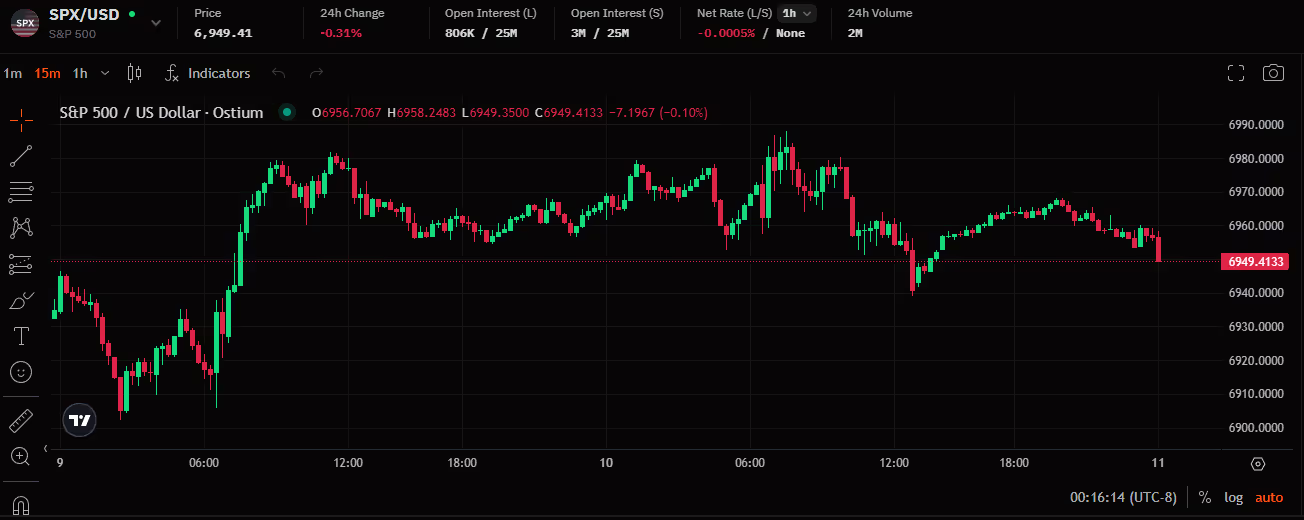
Lastly, some tokenized stocks only give you synthetic price exposure. This form of tokenized stock is intended to track the price of a stock (subject to fees, funding, and price dislocations). As the price moves up and down, so will the token. Holding this type of tokenized stock doesn’t give you ownership or any rights to the stock.
How Do They Work?
Tokenized stocks start with custody of the shares. A regulated entity (more on this below) begins the process by purchasing and holding real shares of a stock with a licensed broker or custodian. This entity then mints corresponding tokens on-chain. These on-chain tokens can then be traded on supported platforms or protocols, with its on-chain price intended to track the underlying stock. These tokens can later be redeemed for cash or the underlying share, depending on the product. Throughout this whole process, smart contracts manage issuance, transfers, and corporate actions such as dividends and splits.
Who Offers Tokenized Stocks?
A wide variety of crypto-native and traditional finance platforms have started to offer tokenized stocks. Let’s go over some of the different types of players in this space.
Centralized crypto exchanges like Binance used to offer custodial tokenized stocks. This meant that exchanges bought real shares through a broker, using a custodian to hold the shares, and then users traded these tokenized stocks on their exchange. However, this approach came with regulatory scrutiny, and Binance shut down this product in 2021. Binance and other exchanges have been considering bringing back tokenized stock offerings to their platforms, but legal and regulatory hurdles such as pending US crypto market structure legislation remain in the way.
Fintech platforms also offer tokenized stocks, and have been doing so in a more compliant way. These platforms have been using licensed broker-dealers to hold their stock shares, and the tokens they offer represent claims that are defined by formal legal agreements. Furthermore, fintech platforms often choose to limit their tokenized stock offering to specific jurisdictions and whitelisted users. Unlike the custodial tokenized stocks that exchanges offer, these tokens do exist on-chain and many can be used in DeFi. As a result, fintech platforms’ tokenized stocks are designed more towards long-term integration with financial institutions. While this is closer to “real” finance, it is important to note that fintech platforms do not offer direct share ownership.
DeFi-native tokenized stocks exist, but the structure and setup of each platform’s offering will vary significantly. Previously, the now defunct Mirror Protocol on Luna offered synthetic stocks that tracked the price of a stock using oracles. No real shares were involved, and holders of these synthetic tokens had no legal claim to any shares. This setup ended up failing due to regulatory pressure and dependence upon an oracle. On-chain RWA (Real-World Asset) protocols are currently popular, offering tokenized equities that are integrated into DeFi lending. These equities are typically backed by custodial assets off-chain, and there tends to be an emphasis on proof of reserves and redemption mechanisms. These RWA protocols allow stocks to behave like on-chain crypto assets while complying with regulatory securities law.
Institutional tokenization platforms are likely to arise in the future as well. This model utilizes private blockchains to either issue shares directly or mirror it, and tokens would simply become a settlement layer. Some large banks are currently experimenting with on-chain equity settlement, asset managers are exploring tokenized funds, and stock exchanges are looking into blockchain-based clearing. It is important to keep in mind that the tokens in these setups would most likely never touch public DeFi. These systems are designed purely for efficient processing, they are not designed to democratize finance.
What Benefits Do They Have For Retail Investors?
Some of the benefits of tokenized stocks are uniquely suited towards retail investors. For example, tokenized stocks can lower barriers to investing with lower minimum investment sizes and lower fees. Fractional ownership would allow investors to buy smaller portions of high-priced stock without needing to own full shares. Global reach would also significantly benefit investors who reside in regions with limited brokerage access. This would allow these investors better access to assets such as U.S. equities.
The integration of tokenized stocks into DeFi could also benefit retail investors. Retail would be able to use their tokenized stocks as collateral in DeFi lending protocols, trade tokenized stocks alongside cryptocurrency assets on decentralized exchanges, or utilize their tokenized stocks in on-chain yield strategies.
What Benefits Do They Have For Institutions?
Tokenized stocks have a variety of structural and operational advantages over their traditional counterparts for institutions.
One of the biggest advantages is faster settlement. Traditional stocks can only be traded during market hours and can have transaction delays of a day or more before the transaction is processed. On-chain settlement has no such delays, and the quick turnaround has the added benefit of reducing counterparty risk. This is especially useful for market makers and prime brokers.
Another major benefit is the existence of a blockchain to serve as a single, shared source of truth. Currently, different parties in the traditional finance system all maintain separate ledgers of their own. Brokers have a record, clearinghouses have a record, custodians have a record, banks have a record, etc. If all of these parties agreed to use a blockchain as a shared, immutable ledger this would lead to less reconciliation work, fewer data discrepancies, faster dispute resolution, and lower operational costs.
Tokenized stocks also allow for better market surveillance and risk monitoring, both of which are very important for institutions. With tokenized stocks, institutions can analyze holder concentration, liquidity, leverage, and abnormal on-chain activity. This leads to better risk detection and improved proactive compliance.
Tax Implications For Tokenized Stocks
Tax implications for tokenized stocks will vary greatly by jurisdiction and specific token structure. However, in many cases, capital gains taxes will only apply when tokens are sold or exchanged. Swapping tokenized stocks for crypto could be considered a taxable event. Borrowing against tokenized stocks will generally not incur a taxable event. Dividends for tokenized stocks may be taxed as income, similar to dividends from traditional stocks.
Because tokenized stocks exist as both securities and digital assets, it can be hard to classify exactly where tokenized stocks belong in the tax framework. Investors should contact tax professionals familiar with both crypto and equities in their legal jurisdiction to be sure what the tax implications for tokenized stocks will be for them.
Tracking Tokenized Stocks On-Chain
One of the advantages to tokenized stocks is the transparency that being on a blockchain offers. Investors have the capability to track token supply, on-chain tokenized stock holders, and transfers using a blockchain explorer. Investors can independently verify backing and issuance data when tokenized stock offerings provide proof-of-reserves. Dividend and redemption related smart contract activity can also be monitored on-chain. This level of transparency is rarely available in the traditional finance world – clear issuance records, real-time movement, and visible liquidity are things that tokenized stocks offer that their traditional counterparts often do not. However, with that being said, tokenized stocks still depend on off-chain custodians that investors may not have full visibility into.
Conclusion
Tokenized stocks represent an important step and use case for merging traditional finance with blockchain technology. Tokenized stocks offer significant benefits for both retail investors and larger institutions. These benefits revolve around greater accessibility, programmability, and efficiency. Deeper DeFi integrations of tokenized stocks would allow for use cases that traditional stocks are not capable of offering.
However, regulatory uncertainty and custody risk remain as big obstacles to mainstream adoption of tokenized stocks. As adoption grows and legislators continue to define the legal frameworks within which tokenized stocks exist, tokenized stocks have the potential to evolve from a niche on-chain experiment into a core feature of the finance world.

.png)


.jpeg)





.png)









.png)





.jpg)






.png)
.png)



.png)

.png)


.png)
.png)


.png)
.png)








.png)
.png)
.png)
.png)




.png)





.png)