January 12, 2026
at
9:00 am
EST
MIN READ
Everything We Know About The Clarity Act Going Through Congress
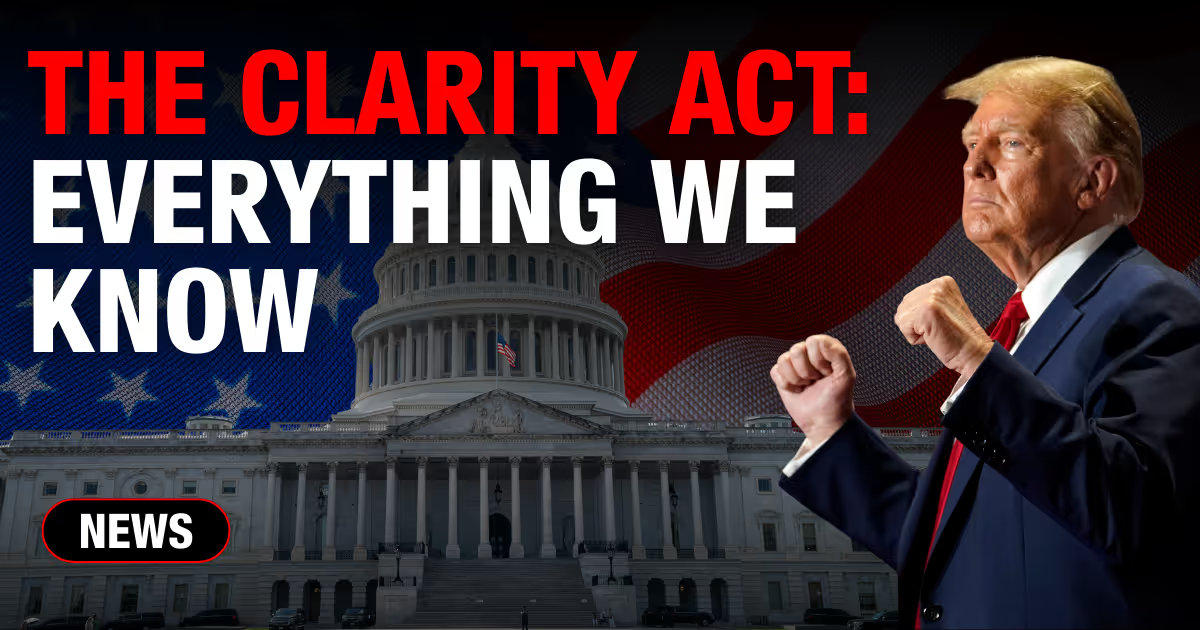
The Digital Asset Market Clarity Act is a crypto market structure bill, championed by Donald Trump, that is currently being reviewed and amended – before moving to a full floor vote – in the U.S. Senate. It was passed with bipartisan support with a vote of 294-134 by the House of Representatives in July.
Thursday 15th January is turning out to be an important day for the Clarity Act as the Senate Banking Committee will meet during a markup session to discuss the bill. During this session, the bill can be tightened up or rewritten. Indeed, US-based crypto exchange Coinbase has threatened to pull support for the bill if rules around stablecoin rewards are tightened.
Proponents of the Clarity Act say it will help to protect consumers, encourage innovation in the crypto industry, provide incentives to investors and builders, and maintain the US’s lead in crypto. In this article we will explain some of the key features of the Clarity Act.
Commodities, securities, stablecoins
The aptly named Clarity Act’s key feature is that it creates a clear framework for the various different types of digital assets. The bill will differentiate between commodities, investment contracts (securities), and stablecoins.
Importantly, digital assets defined as commodities will have oversight from the CFTC (Commodity Futures Trading Commission). The US Senate just approved crypto-friendly Michael Selig to lead the CFTC.
Securities, on the other hand, will have oversight from the SEC (Securities and Exchange Commission). The current SEC Chair is Paul Atkins who is seen as pro-crypto. He took over the job from Gary Gensler who was criticised for villainising the crypto industry.
Building on the GENIUS Act, the Clarity Act also establishes joint regulatory oversight over stablecoins, which will be defined as something separate from commodities and securities.
Maturity Test
One of the key innovations of the Clarity Act is a new “maturity test” that will replace the Howey Test. The Howey Test is used to decide whether something is a security or a commodity. The new maturity test is designed specifically for digital assets and achieves the same goal of deciding whether something is a digital security or a digital commodity.
Digital assets which pass the maturity test go from having to conform to SEC security rules, to having to conform to CFTC commodity rules.
The test is based on typical blockchain technology features such as transparency, open-source, usage, and decentralization. Digital assets that are decentralized, transparent, open-source and have adequate usage (like BTC and ETH) will be classified as commodities.
Consumer protection
The bill introduces various new measures designed to protect consumers. Key among these is a customer funds segregation stipulation. This requires exchanges and brokers to separate customer funds from their own operational assets. This policy is directly linked to the FTX collapse where customer funds and operational expenses were being mixed across multiple entities.

The bill also protects consumers by requiring more risk management from exchanges and brokers whilst also requiring them to conform to Anti-Money Laundering (AML) rules.
Fostering Innovation
The bill is likely to foster innovation simply through establishing clear guidelines, rules and providing some much-needed clarity after years of confusion over how to treat digital assets. The clear roles played by the SEC and CFTC will help foster innovation by preventing regulatory overreach.
The bill also has a specific cut-out for Decentralized Finance (DeFi). Developers creating truly decentralized products and services will not have to register their activities, or conform to as many rules as centralized entities. This should encourage the development of genuine DeFi protocols.
Conclusion
The bill represents a shift toward a data-driven regulatory environment for crypto. The bill moves the industry away from ambiguous legal arguments and toward verifiable, on-chain proof. Decentralization and transparency will have legal definitions with significant implications, and blockchain intelligence will become a critical tool. Many believe this will help to foster even more innovation in the industry as it continues to move into the mainstream.
The Senate Banking Committee is currently finalizing its amendments to the bill. White House crypto czar, David Sacks, has suggested that the bill is on track for a final floor vote and passage in January 2026.

.png)


















.png)

.png)






.jpg)














.png)
.png)





.png)



.png)



.png)

.png)


.png)
.png)











.png)
.png)
.png)

.png)





.png)








.png)