August 3, 2026
at
6:25 am
EST
MIN READ
How To Track Polymarket Whales
Polymarket is one of the world’s leading prediction market platforms. It has a typical monthly trading volume of around $8B-$10B.
Polymarket’s contracts exist on the blockchain network Polygon, an Ethereum Layer-2. As Polygon is a public blockchain, all Polymarket’s trading data is publicly accessible.
Arkham Intel features a suite of tools to help traders gain an edge when it comes to trading on Polymarket (and other prediction markets). The new Prediction Markets dashboard lets you track whales and top traders, deanonymize wallets, and visualize market moves in real time. Arkham's Polymarket Profitable Trader tag is listed in Predictbook's repo of top prediction market analytics tools.
Here is how you can use Arkham to track Polymarket whales, reverse-engineer their betting strategies, and uncover an informational edge before the broader market catches on.
1. Find the Most Profitable Traders
Arkham tracks the top prediction market participants based on Profit and Loss (PNL). You can view a live feed of the top traders by PNL.
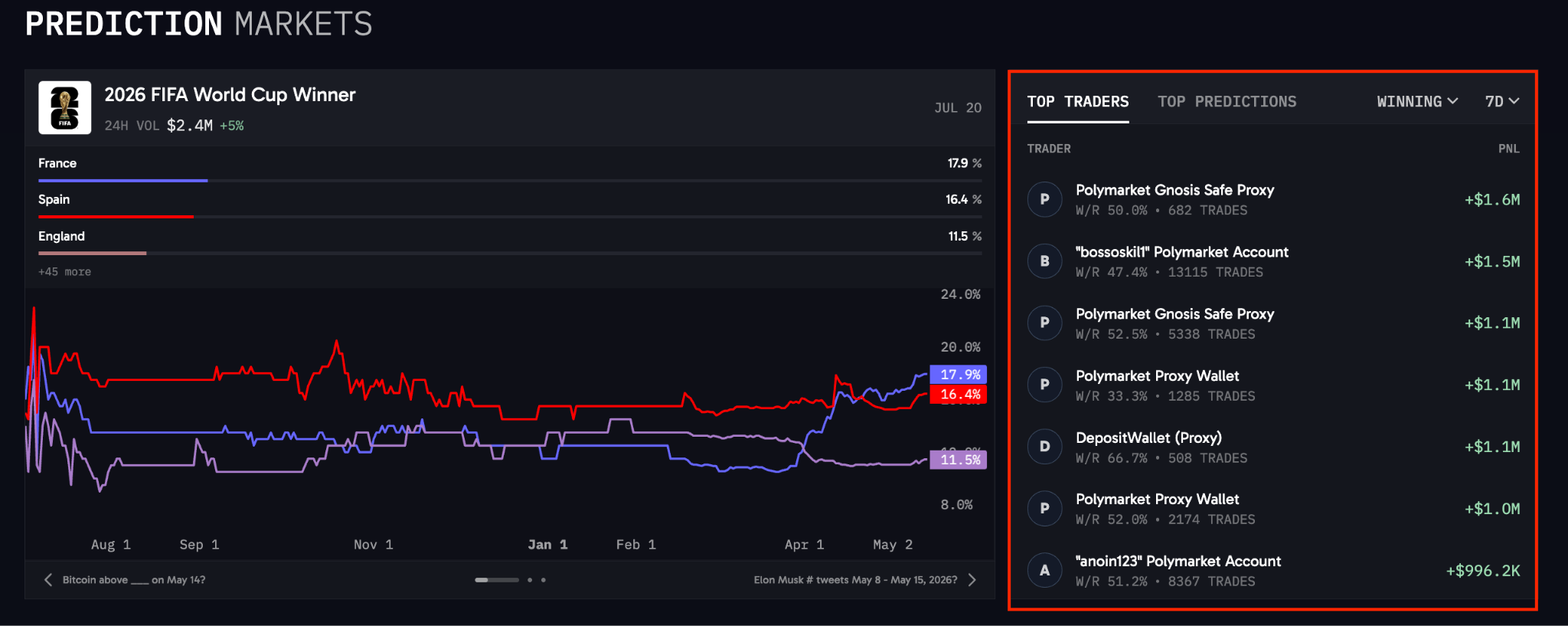
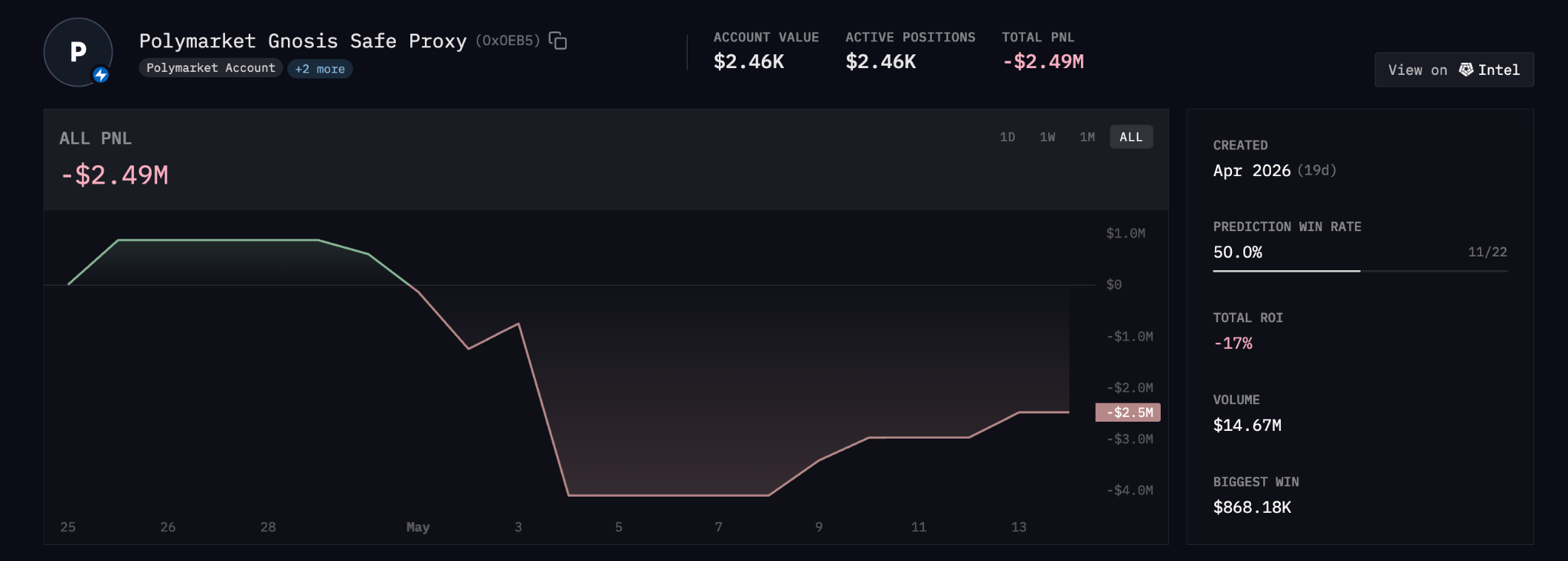
When clicking onto a trader, the platform shows you a range of different useful metrics such as:
- Account Value: The total USDC balance plus the current value of their unresolved shares. This tells you the scale at which they are trading and their overall "skin in the game."
- Active Positions: The live prediction markets they are currently holding shares in. This reveals their real-time convictions, allowing you to track, copy, or fade their current strategies.
- Total PNL (Profit and Loss): The absolute dollar amount the trader has made or lost over their lifetime on the platform. This provides a raw, bottom-line indicator of their historical financial success.
- Total ROI (Return on Investment): The percentage return they have generated relative to the capital they have risked. This measures their actual trading efficiency and skill, leveling the playing field between high-net-worth "whales" and smaller accounts.
- Volume: The cumulative dollar amount of all trades they have executed. This shows their activity level, helping you distinguish between highly experienced, frequent traders and casual participants.
- Biggest Win: The single most profitable prediction they have ever closed. This helps you determine if a trader's overall PNL is based on consistent skill or if they are just being carried by one lucky outlier.
- Win Rate: The percentage of their closed positions that resulted in a profit. This is a gauge on their consistency and accuracy when forecasting market outcomes.
You can also click a ‘View on Intel’ button which will re-direct you to the trader’s address page on Arkham Intel where you can access even more intelligence features. For a full guide on how to use Arkham Intel, click here.
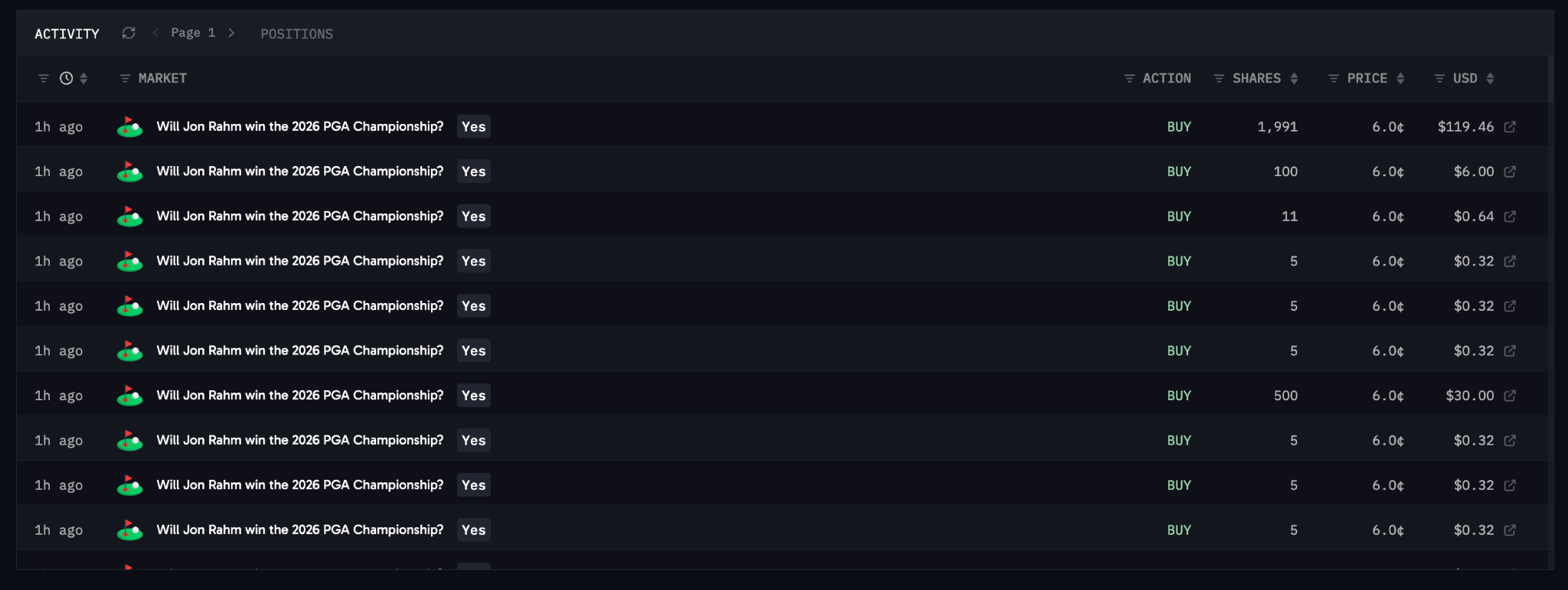
When you are on a specific trader’s page, you can scroll down to see a feed of all their recent activity. This table shows whether they are buying or selling, the number of shares, the price of each share, and the overall USD price.
You can also click on positions to see all their positions sorted by PNL, whether open or closed.
2. Arkham Intel Tags
Arkham also has the most extensive tagging systems in the entire blockchain analytics industry. You can read about Arkham’s tagging system here. There are 200 different types of tag currently on the platform.
Currently, there are 20 different Polymarket tags all providing different insights into hundreds of thousands of different addresses.
Key Polymarket tags include:
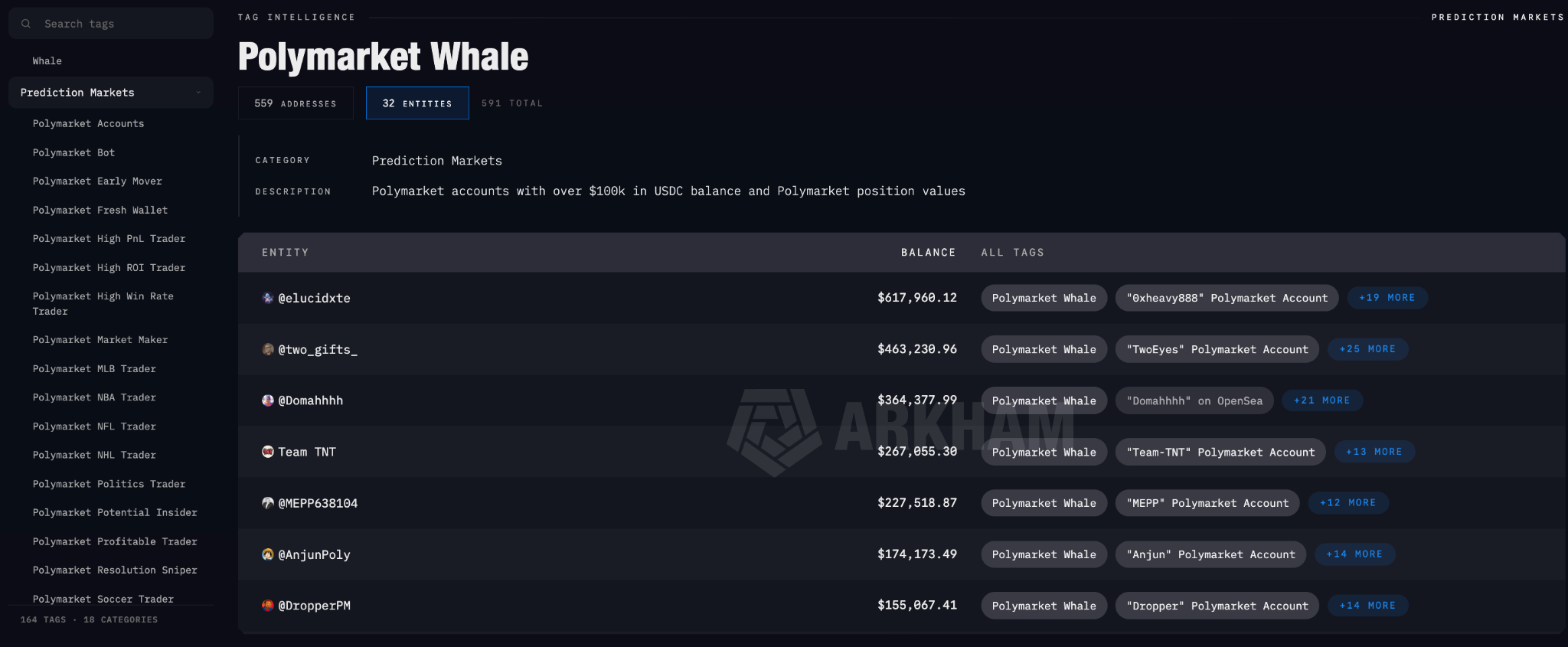
- Polymarket Whale
- Polymarket High PnL Trader
- Polymarket High ROI Trader
- Polymarket High Win Rate Trader
- Polymarket Market Maker
Click on each one of those tags to be taken to Arkham Intel. From there, you can see a list of Polymarket Whale addresses. You can also switch to entity-view to see a list of Polymarket Whale entities. An entity is a collection of different addresses controlled by the same individual or organisation.
3. Use Blockchain Intelligence Tools
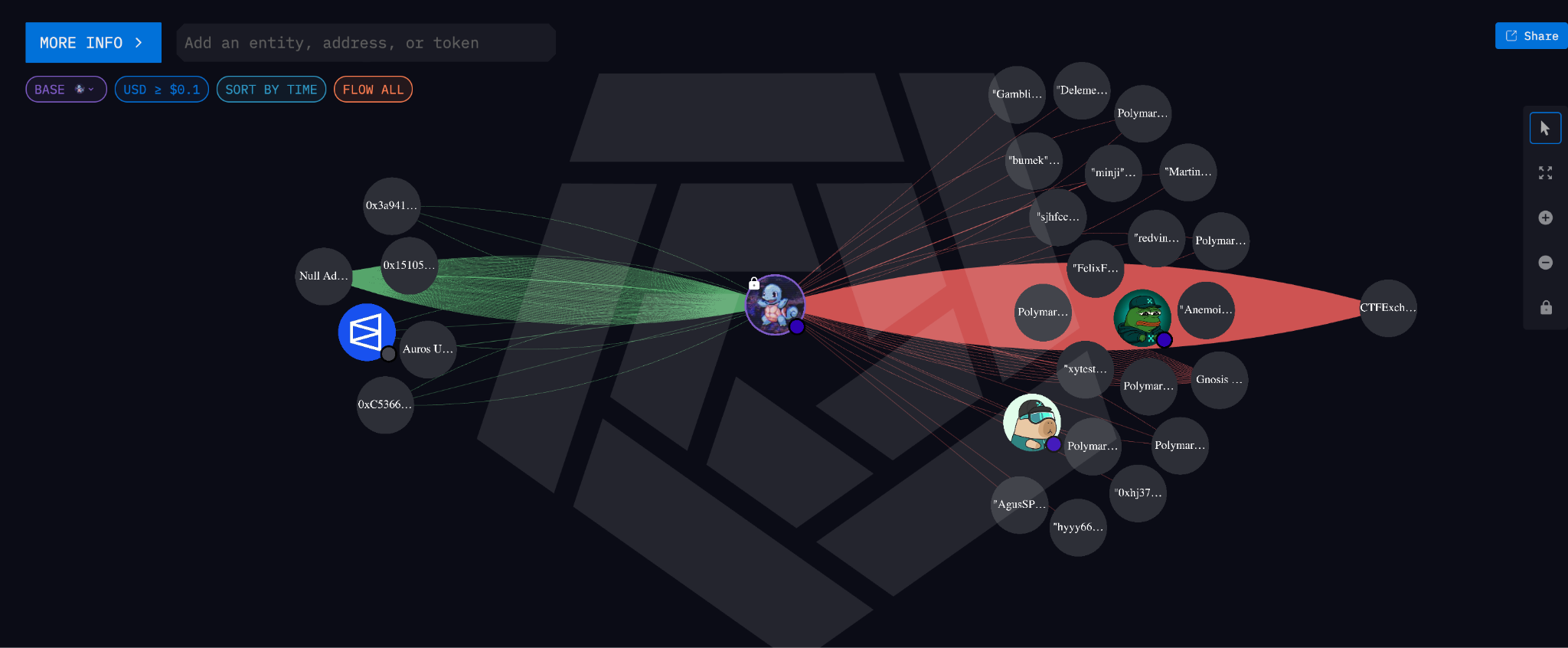
As mentioned above, Arkham Intel has a full suite of blockchain Intelligence tools. Once you have identified a Polymarket Whale address or entity, you can use tools like the Visualizer or Tracer to learn the whale’s transaction patterns, preferred investment styles or any other source of edge/alpha that they possess.
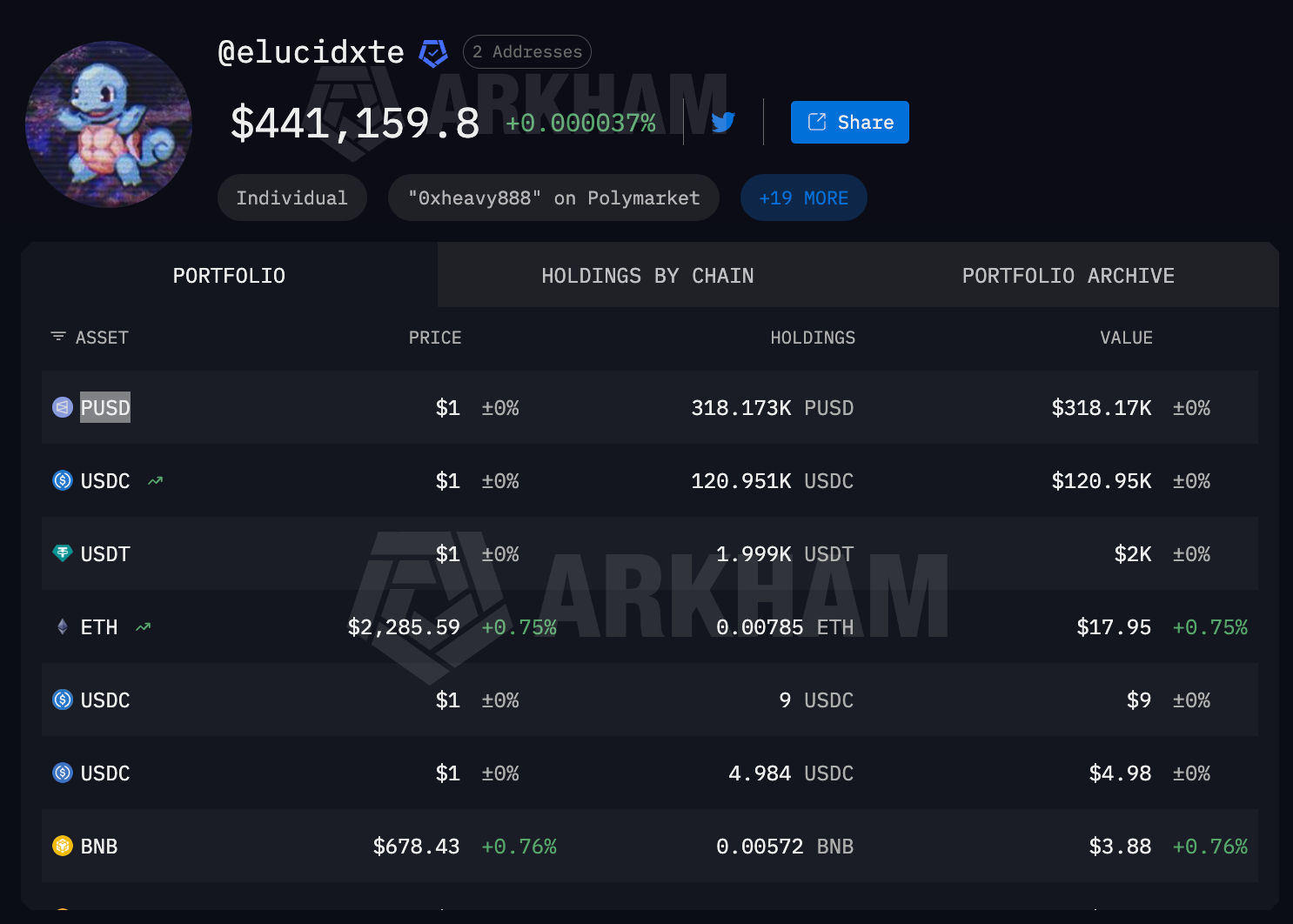
At the time of writing, @elucidxte is the top Polymarket Whale on Arkham Intel in terms of on-chain dollar holdings. Most of this trader’s crypto is PUSD, the settlement stablecoin token used on Polymarket.
When you are on a trader’s entity page, click on the VISUALIZE button on the right to get a visually intuitive view of their trades and counterparties.
Conclusion
Tracking Polymarket Whales is a good way to better understand the markets you are competing in and what/who influences them. By leveraging Arkham Intel’s suite of tools, analysts and traders can reverse-engineer the strategies of the platform’s most profitable participants.
This analytics, which is from publicly available real-time blockchain data on the Polygon network, is another demonstration of the democratizing nature of public blockchains. Using Arkham, traders have increased transparency into what is going on behind the scenes.
Get started with Prediction Market Analytics on Arkham Intel now.

.png)


.jpeg)




.png)







.png)




.jpg)


.png)
.png)


.png)
.png)


.png)
.png)
.png)
.png)




.png)
.png)
.png)

.png)



.png)




.png)