September 4, 2026
at
5:10 am
EST
MIN READ
Crypto Copy Trading: What Is It And How To Do It
Summary
- Copy trading automatically replicates another trader's positions into a follower's account, sized to the follower's capital.
- Research suggests that copying experienced traders, paired with disciplined risk management, was linked to strong outcomes, although the availability of copy trading itself tends to push risk-taking beyond what's rational for the follower.
- Crypto copy trading runs on exchange-native copy trading features or via on-chain wallet following through Telegram-based bots like Trojan, Maestro, BonkBot, and GMGN, which let anyone mirror an on-chain wallet’s movements.
- Beyond ordinary trading and execution risk, crypto copy trading has its own scam vector: bad actors orchestrate pump-and-dumps knowing that copy traders are tracking their trades.
- Arkham allows you to monitor other traders' wallets and mirror their trades if you wish, with the largest catalogue of deanonymized entities on Earth.
What is Copy Trading?
Copy trading is a trading strategy in which a trader tracks and copies another trader’s trades in real-time, usually via an automated system. The system automatically opens, adjusts, and closes positions in step with a chosen trader, sized in proportion to whatever capital the follower has allocated. For example, if the leader risks 2% of their account on a position, the system opens a position worth 2% of the follower's account too, thereby taking on the same risks.
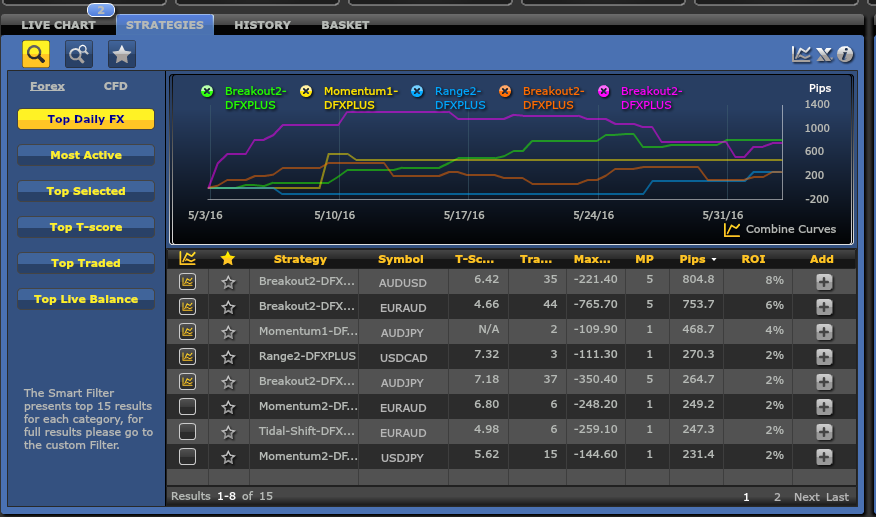
The strategy was first pioneered around 2005 by Tradency’s Mirror Trader, which allowed users to replicate popular algorithmic or expert strategies in the forex markets. It was popularized by eToro's CopyTrader feature launched in 2010, later winning Best of Show at Finovate Europe the following year. The format has since spread across all asset classes including forex, stocks, and crypto, managed by their respective exchanges and broker platforms.
Does Copy Trading Work?
Whether copy trading works or not depends on the key metric being evaluated.
For pure trading performance, a study published in the Journal of Business Research examined 16,964 investment observations on eToro. Using qualitative comparative analysis, the authors found that copying an experienced trader could produce positive results similar to that of the trade leader, but only if the follower also manages their own risk exposure appropriately.
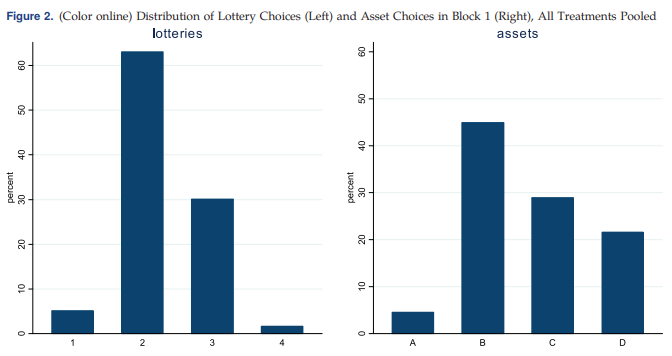
When it comes to trading behavior however, the picture is less flattering. A 2020 study published in Management Science ran a controlled experiment isolating what copy trading does to investor behaviour, separate from any real trading skill. Simply showing subjects information about other traders' success significantly increased how much risk they took on, and offering the option to directly copy pushed risk-taking even higher. Copy trading tends to encourage excessive risk-taking, beyond their own rational risk appetites.
How to Build a Copy Trading System
Every copy trading system, whether a retail brokerage app or a custom crypto bot, consists of four core components.
A signal source: This refers to the account, wallet, or data feed being copied, ideally with performance history that is independently verifiable rather than self-reported. Independently verified performance data can be verified by the exchange or broker, or in the case of on-chain wallets, by on-chain transactions.
An execution engine: The software that receives each new position and translates it into a proportional order, based on the copy trader’s capital and risk parameters. With the increasing popularity of copy trading, most platforms have begun to offer such execution services natively.
Risk controls: Well-designed copy trading systems allow followers to limit exposure to any one leader, set an independent stop loss, and stop copying once a drawdown crosses a set threshold, so that the account is not completely wiped out by one or a series of bad trades.
Monitoring: A dashboard or alert system showing what has been copied, at what price, and how it is performing, so a follower is always aware of new positions taken and how much is being risked at all times.
Retail platforms that offer copy trading services usually just bundle all four elements into one interface. A custom version, which has become increasingly common in crypto, requires users to link these pieces together using an exchange's trading API or, for on-chain systems, a blockchain data provider.
How Is Crypto Copy Trading Different?
Crypto copy trading takes two very different forms with no direct equivalent in traditional markets.
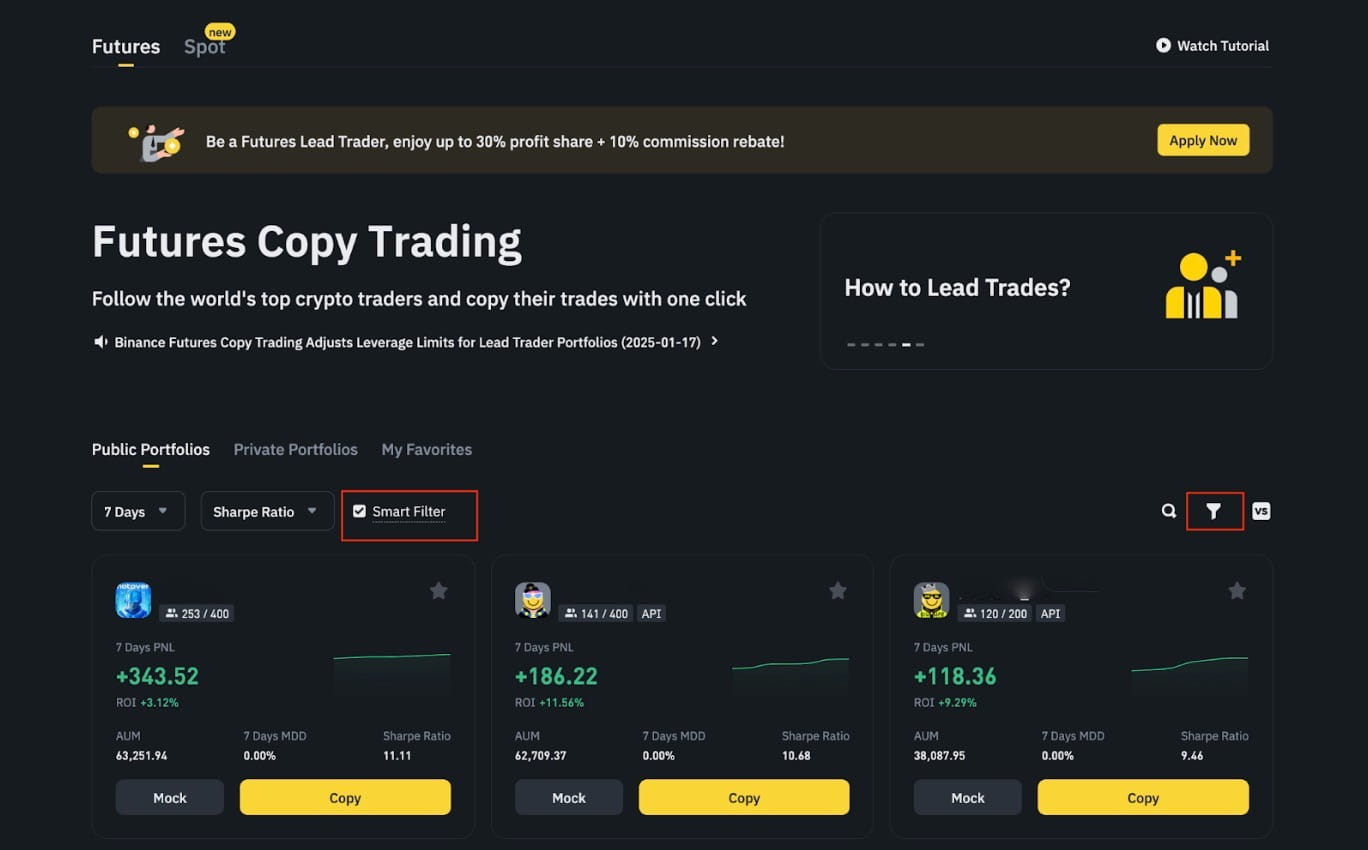
The first is exchange-native copy trading, which resembles eToro's CopyTrader model. Most major exchanges run their own copy-trading product where a lead trader opts into a public leaderboard and followers allocate capital that gets mirrored automatically. Binance launched futures copy trading in October 2023 and added spot copy trading the following year, while OKX lets followers filter leaders by assets under management, holding time, and risk score. These systems run inside a single exchange's order book, so execution is fast, but copied trades stay confined to that exchange.
Since every blockchain transaction is visible by design, traders can also copy trade an on-chain wallet without the need for the wallet owner’s cooperation or consent. Several on-chain tools, usually centered around Telegram-powered trading bots, have inbuilt copy trading features to track and follow top on-chain traders. The trade-off is that on-chain copying incurs costs that exchange copy trading avoids: gas fees, slippage, and the lag between a leader's transaction confirming and a follower's execution.
Risks Of Copy Trading
Copy trading, naturally, carries the risk of regular trading, in that if the leader makes a bad trade, all of their followers will lose money as well. This is especially so if the trader uses a small account on high leverage to achieve their attractive returns on the leaderboard, which makes the sustainability of their strategy unrealistic.
Execution risk is also a very real risk in copy trading. Regardless of whether a follower copy trades on-chain or via an exchange, the lead trader is always filled first, before their followers. For volatile assets or low liquidity assets, that difference can impact entry and exit prices and hence, returns. This impact is exacerbated when a single leader has multiple followers, creating a race for which followers can execute the fastest. Certain exchanges also enable a profit-sharing model for trade leaders, which can eat into the returns of followers. In fact, a YieldFund study in 2025 showed that while 97% of leaders were profitable across the 90-day period of the study, only about 43% of their followers ended the study profitable. This is further compounded by any latency in the exchange’s own execution, which could result in further deviation in the entry and exit prices of followers from the leader.
On-chain trading also introduces the risk of MEV attacks, in which the followers, or even the trade leader themselves, get caught in a sandwich attack, resulting in unexpected losses. Finally, on-chain copy trading also brings in additional costs such as gas fees and slippage, as well as increased latency due from transaction confirmation.
Beyond the technical risks, copy trading also introduces a new risk vector in pump-and-dump schemes. The scammer first builds up an on-chain trading track record, which can be assisted using overly high risk or wash trades. They then accumulate the target token on a side wallet, unlinked from their main address. Subsequently, the scammer uses their main wallet to purchase the target token. The purchase on their main wallet triggers the inflows from copy traders, resulting in a pump where the side wallets can sell into, hence profiting from the scheme while copy traders are left holding the bag.
Finally, with all copy trading services, there lies a platform risk. This is especially prevalent in crypto exchanges where an exploit or collapse of an exchange is not unheard of. If the platform collapses or is exploited, users will incur losses regardless of their copy trading strategy.
Arkham API & Copy Trading
The Arkham API provides real-time access to blockchain data across major chains, layered with Arkham's database of de-anonymized wallet labels, entity tags, and risk scores. A basic wallet-copying tool built on it needs three pieces: a watchlist of addresses worth following, pulled from Arkham's Tags Leaderboard to surface well-performing, labelled entities rather than anonymous addresses with no verifiable history; a listener that checks the watchlist for new transactions and converts them into proportional trades on the follower's account; and a screening step that checks the counterparty contract against Arkham's Risk Score system before the copy fires, holding a trade for manual review if the leader is touching an address flagged as connected to a scam.
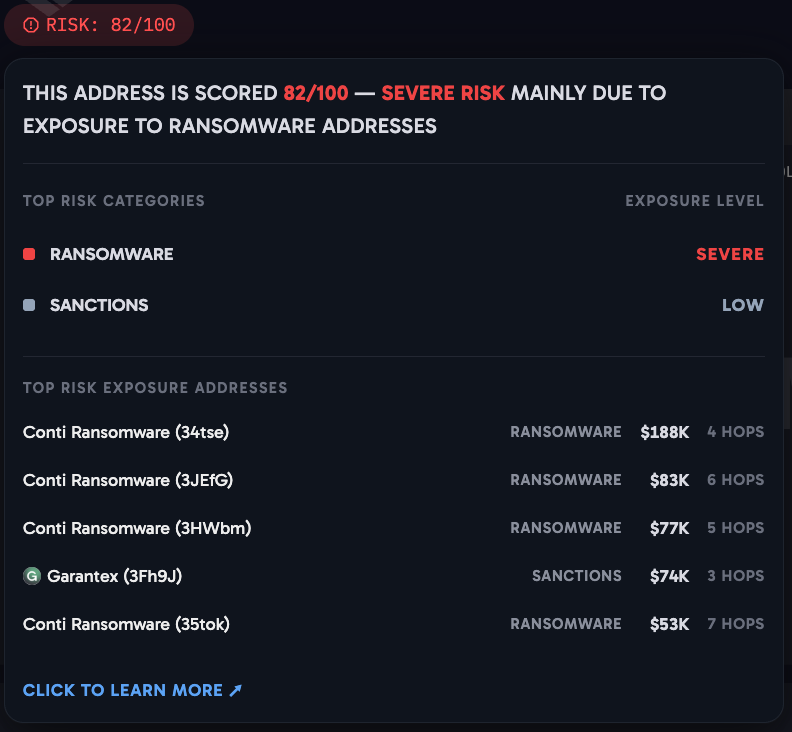
None of this requires a software engineering background anymore. As covered in Arkham's guide to using a blockchain API, an AI coding assistant can generate the connecting code, with a builder only needing to install a couple of dependencies and paste in an API key. The result is a system that does something even exchange-native copy trading cannot: check whether a trade is worth copying before copying it, rather than copying it because the leader happens to be popular.
Conclusion
Ultimately, copy trading is not a passive money machine, but a tool whose success hinges on execution and risk control. While modern platforms and APIs make following top traders easier than ever, they cannot shield followers from slippage, market volatility, or bad actors exploiting the system. Blindly copying popular leaders often leads to uncalculated risk, turning a potential edge into a gamble.
The key to making copy trading work lies in active oversight: combining automated execution with strict risk parameters and independent data verification. Success isn't just about finding a good trader to follow; it's about managing your own downside when they get it wrong.

.png)

.jpeg)









.png)











.png)





.jpg)





.png)
.png)




.png)

.png)


.png)
.png)


.png)
.png)








.png)
.png)
.png)
.png)




.png)





.png)