July 1, 2026
at
10:35 am
EST
MIN READ
Dark Web Markets: What Are They and What Role Does Crypto Play
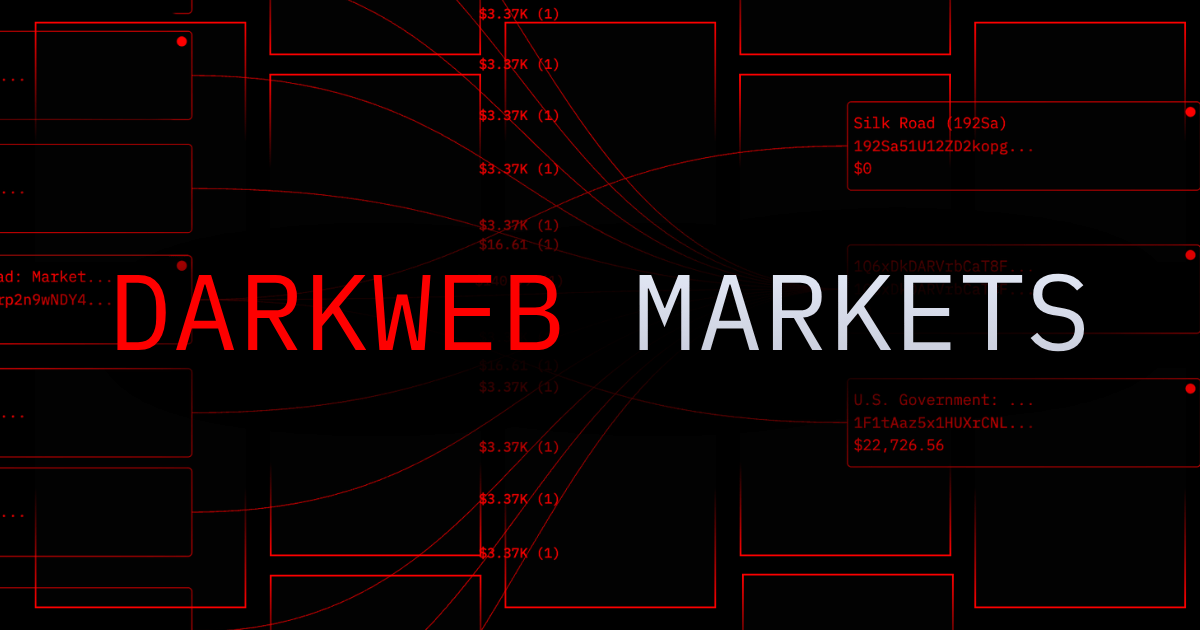
Dark web markets have existed for over a decade, operating in the shadows of the internet where anonymity is the product and cryptocurrency is the preferred currency. From Silk Road's early days to today's fragmented ecosystem of successor markets, the relationship between darknet commerce and crypto has shaped both the public perception of digital assets and the way law enforcement approaches financial crime. Here's what you need to know.
Summary
- The dark web is a hidden layer of the internet requiring specialized software like Tor to access, invisible to standard search engines.
- Dark web markets mirror legitimate e-commerce platforms with listings, reviews, and escrow, but deal overwhelmingly in illegal goods and services.
- Crypto became the default payment method on dark web markets by removing the need for banks or identity-linked payment processors.
- Tools like Arkham Intelligence's dark web tag database lets investigators and compliance teams identify and screen wallets linked to darknet market activity.
What Is the Dark Web?
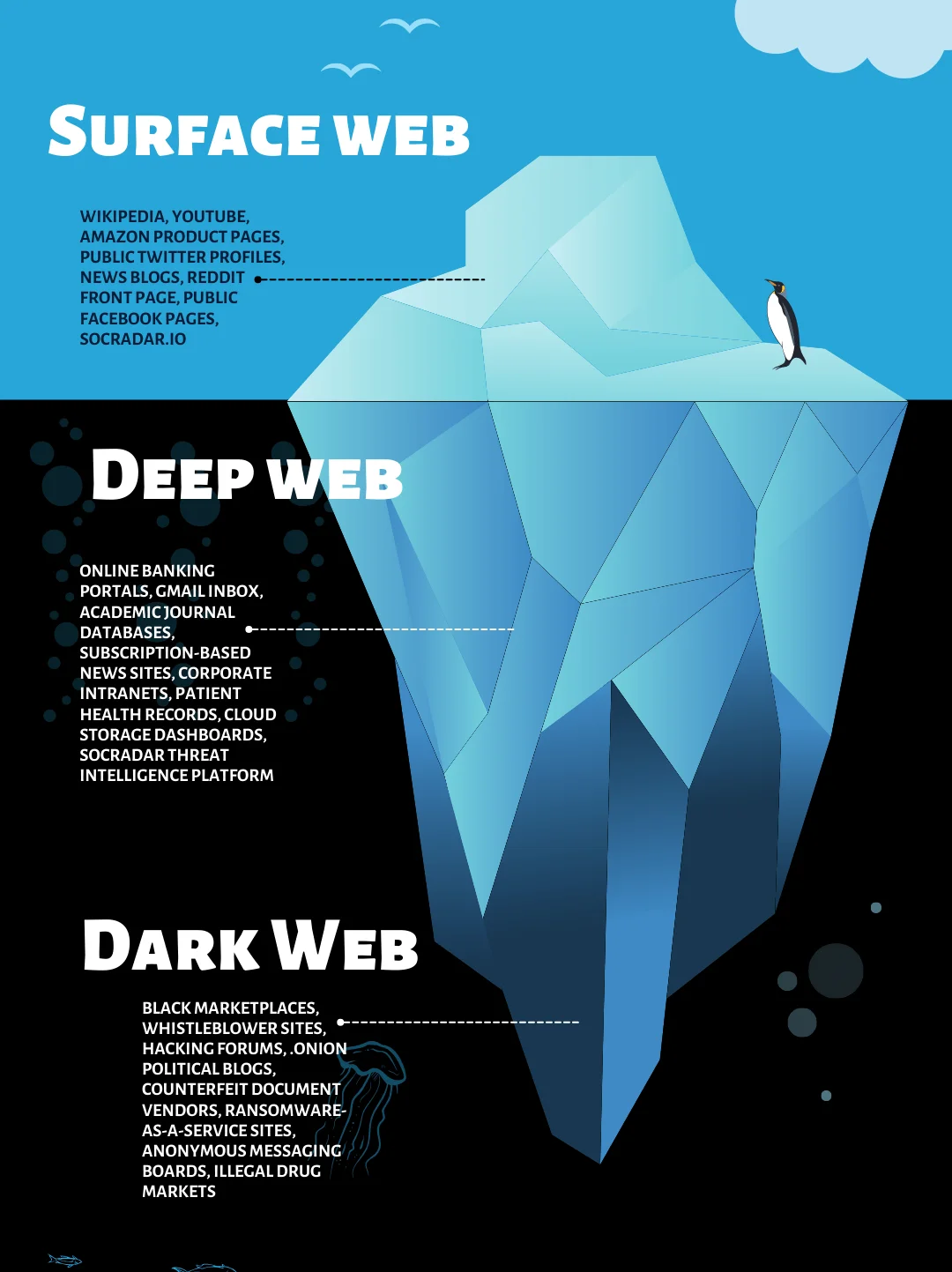
The majority of internet activity that we are familiar with takes place on what is called the surface web, the pages and sites that search engines index and browsers access by default. Below that sits the deep web, which includes password-protected content like email inboxes or banking portals that aren't indexed but aren't hidden either. The dark web sits deeper still: a layer of the internet that requires specific routing software to reach and where websites use non-standard .onion addresses rather than conventional DNS domains. Think of it less like a hidden floor in a building and more like a parallel building that only exists if you know which door to use.
The most common way to reach it is through Tor, short for "The Onion Router," a tool originally developed by the U.S. Naval Research Laboratory. Tor routes internet traffic through a chain of volunteer-operated servers, encrypting traffic in layers and preventing any single relay from knowing both the origin and destination. The result is that neither the user's location nor the website's server location is easily visible to outside observers. Websites on the Tor network use .onion addresses that cannot be visited from a standard browser.
The dark web is not exclusively a criminal space. Journalists, activists in repressive regimes, and whistleblowers use it for secure communication. But it is also the environment where dark web markets have thrived, precisely because the same anonymity protections that help dissidents also help people avoid law enforcement.
How Do Dark Web Markets Work?
Dark web markets are built along the same skeleton as any e-commerce site: product listings, seller profiles, buyer reviews, and a checkout process. The difference is that the goods being sold are typically illegal, the operators are pseudonymous, and the payment infrastructure bypasses the traditional banking system entirely.
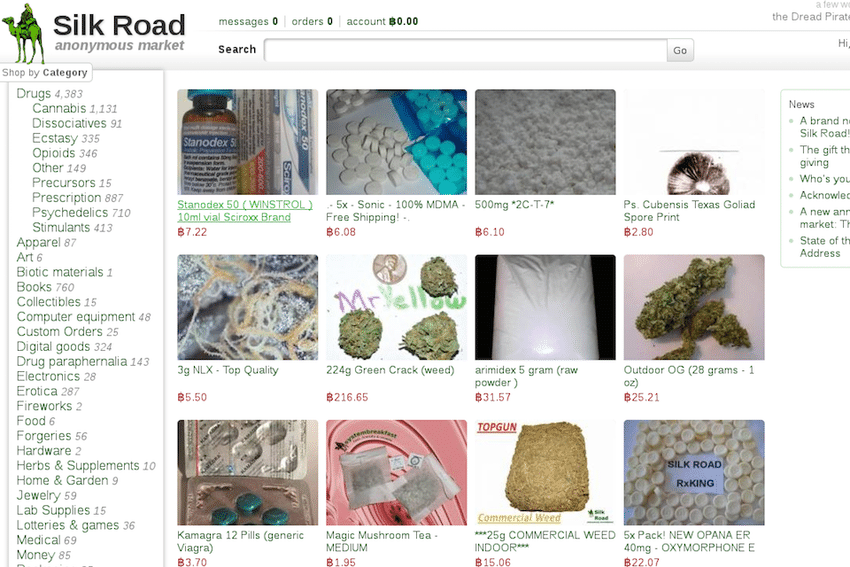
When a buyer wants to purchase something, they first deposit cryptocurrency into a wallet controlled by the market. The market then holds those funds in escrow while the transaction completes, only releasing payment to the seller once the buyer confirms receipt. The Silk Road marketplace popularized this escrow model, which became an industry standard across many successor markets. Many markets also implement a PGP-encrypted messaging system so buyers and sellers can communicate without the market operator being able to read their conversations, and reputation systems where vendors accumulate ratings over time.
Vendors on these markets typically ship physical goods through standard postal services, often using decoy packaging or drop addresses to avoid detection. For digital goods like credentials, malware, or forged documents, delivery happens directly over the platform.
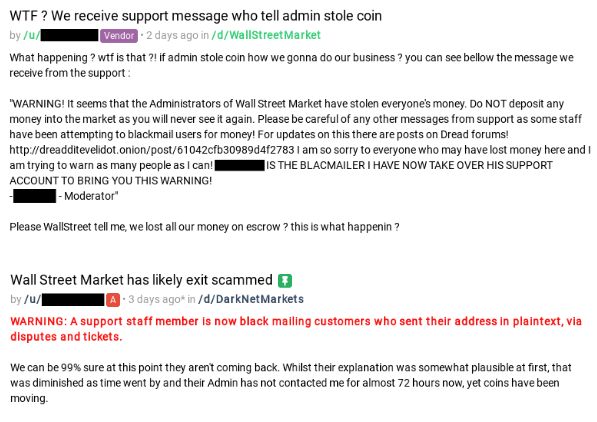
One feature specific to dark web markets is the phenomenon of "exit scams," where a market's administrators collect user funds and disappear without warning, shutting the site down and keeping the deposited cryptocurrency. This has happened repeatedly across the ecosystem and is one of the main risks in using the services of a dark web marketplace.
How Do People Access the Dark Web?
Accessing the dark web requires downloading the Tor Browser, which is publicly available and legal in most countries. Once installed, users paste a known .onion address into the browser to reach a dark web site. Since .onion addresses are not indexed by search engines, they circulate through forums, community boards, and directories that themselves exist on the dark web or on privacy-focused surface web communities.
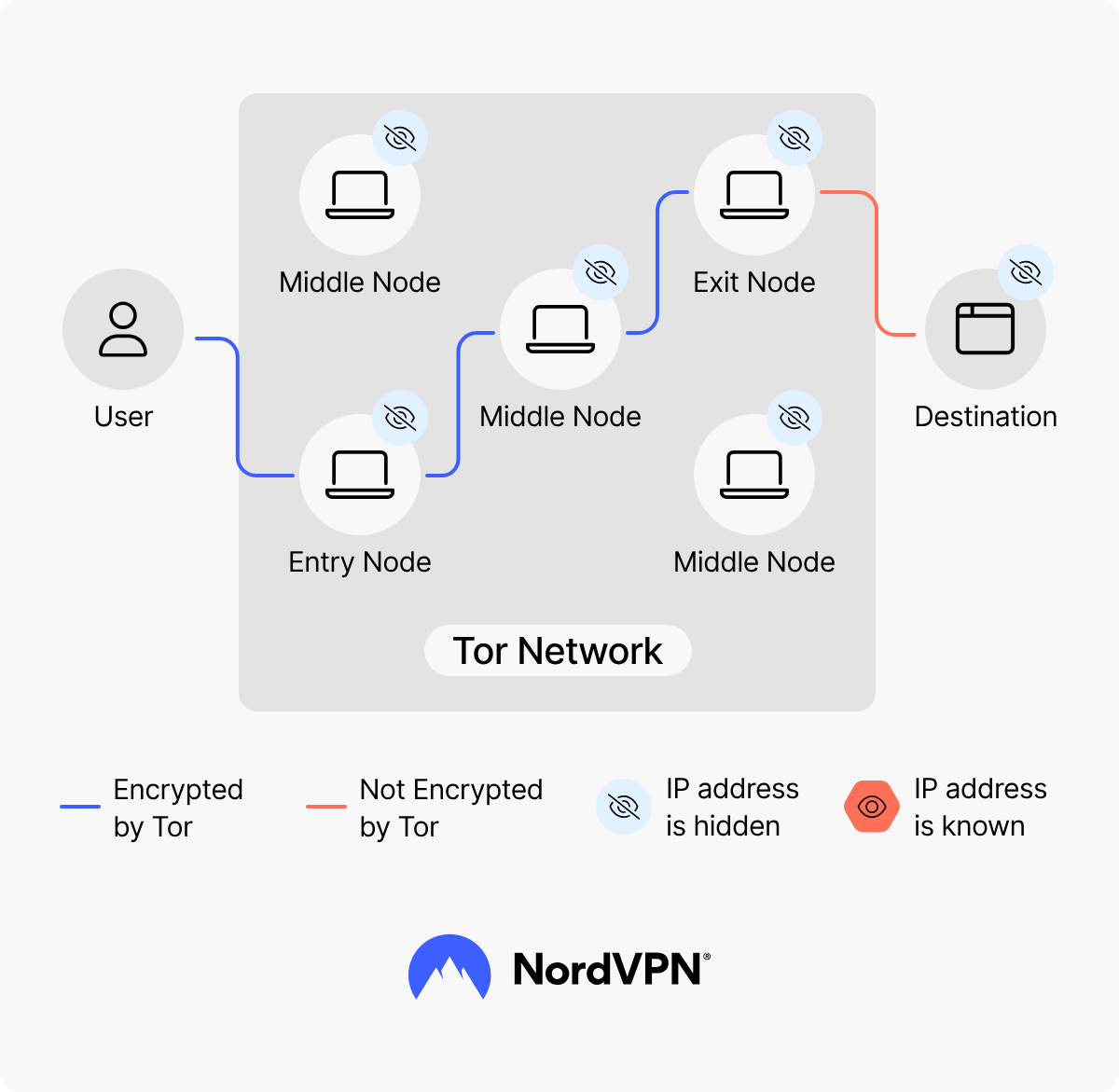
Some users add an extra layer of protection by routing their Tor connection through a VPN, which hides the fact that they are using Tor from their internet service provider. More technically proficient users sometimes run Tor through an operating system called Tails, which runs from a USB drive and is designed to minimize traces on the host computer.
It is worth noting that simply accessing the dark web using Tor is not illegal in most jurisdictions. What becomes illegal is what users do once there, including purchasing controlled substances, stolen data, or weapons, as well as operating or administering a market.
How Does Law Enforcement Shut Down Dark Web Markets?
Law enforcement action against dark web markets has increased over the years, with takedowns typically relying on a combination of operational security failures by market administrators, undercover infiltration, and blockchain analysis.
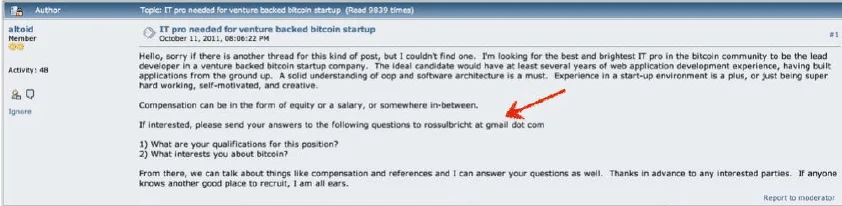
Silk Road, the first major dark web market, was shut down by the FBI in October 2013, with its founder Ross Ulbricht (known online as Dread Pirate Roberts) arrested simultaneously. The FBI later stated that it located the market's server through data leaked directly from the site's CAPTCHA system. His identity was uncovered from old posts on Stack Overflow and forums, in which Ross Ulbricht tied his online identities to an email address exposing his real name.
The most technically sophisticated enforcement operation to date was Operation Bayonet in 2017. Prior to shutting down the then leading dark web market, AlphaBay, on July 4, 2017, law enforcement in the Netherlands had already seized another prominent dark web market, Hansa. After taking control of the site, they modified its code to capture user passwords, decrypt private messages, and strip geolocation data from vendor photos before delivering them.
As they shut down AlphaBay, users moved en masse to the Hansa marketplace, as expected by law enforcement agencies involved. During this time, law enforcement allowed the Hansa user base to make 27,000 illegal transactions to collect evidence for future prosecution of users. Dutch prosecutors claimed to have obtained around 10,000 addresses of Hansa buyers outside the Netherlands.
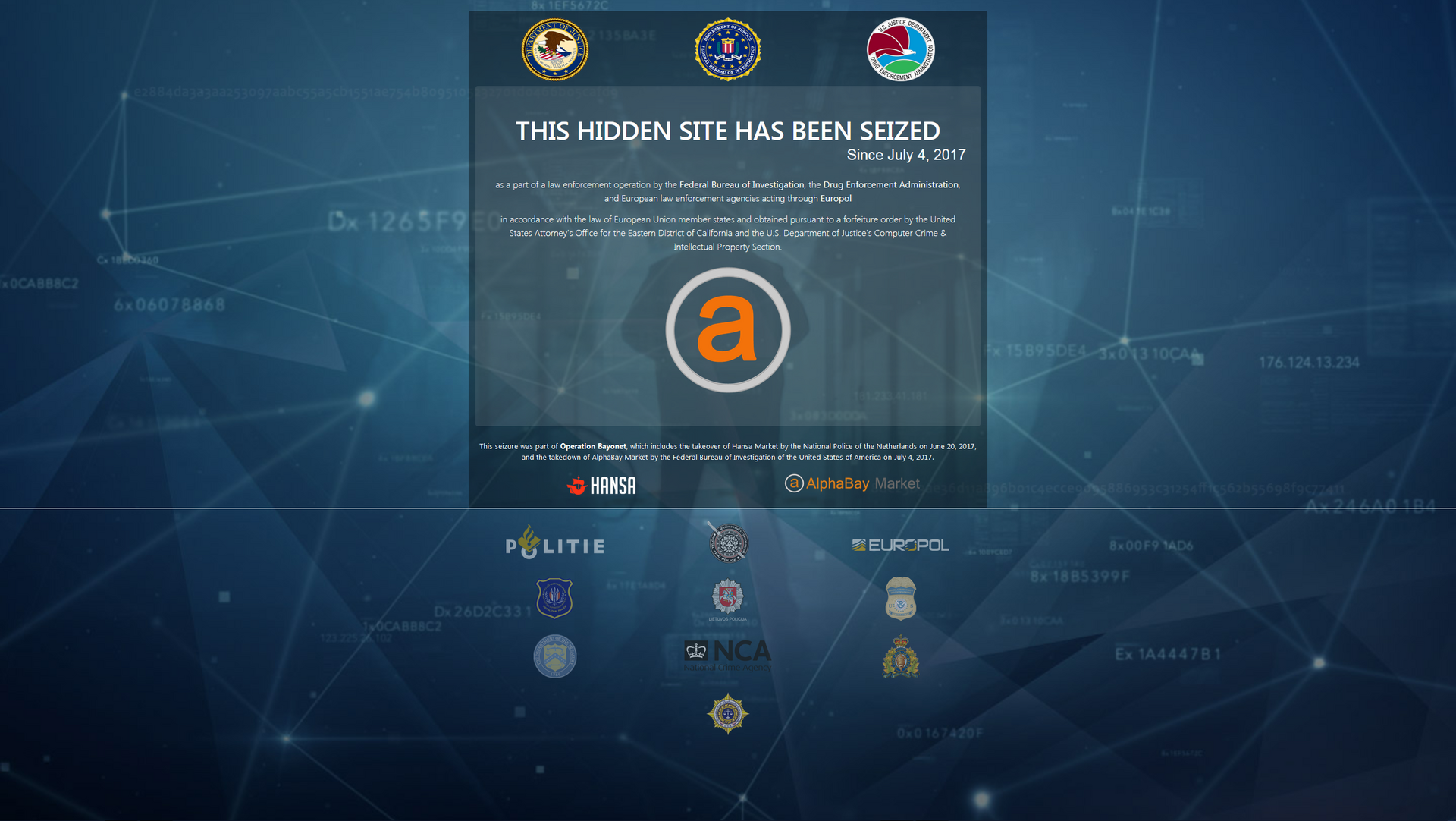
AlphaBay's founder Alexandre Cazes was identified through a series of operational security errors, including using a personal Hotmail address in system-generated welcome emails. His arrest in Thailand and the coordinated Hansa operation resulted in what the U.S. Department of Justice described as the largest darknet takedown in history at the time.
The pattern across successful operations has been consistent: market operators make small but traceable mistakes, law enforcement moves slowly and methodically to build legal cases, with blockchain data increasingly used to trace financial flows both before and after a seizure.
What Do People Sell/Buy on the Dark Web?
In the early days of dark web markets, drugs made up the majority of darknet market activity by volume. In March 2013, Silk Road had 10,000 products for sale, of which 70% were drugs. The range includes prescription medications, stimulants, opioids, psychedelics, and cannabis products sourced from vendors distributed globally. However, in recent years, the focus has shifted to stolen data, including credentials, user data, credit card numbers, and identity theft related listings, with such products making up 65% of listings in 2022. These feed downstream fraud operations, including account takeovers, phishing campaigns, and synthetic identity fraud.
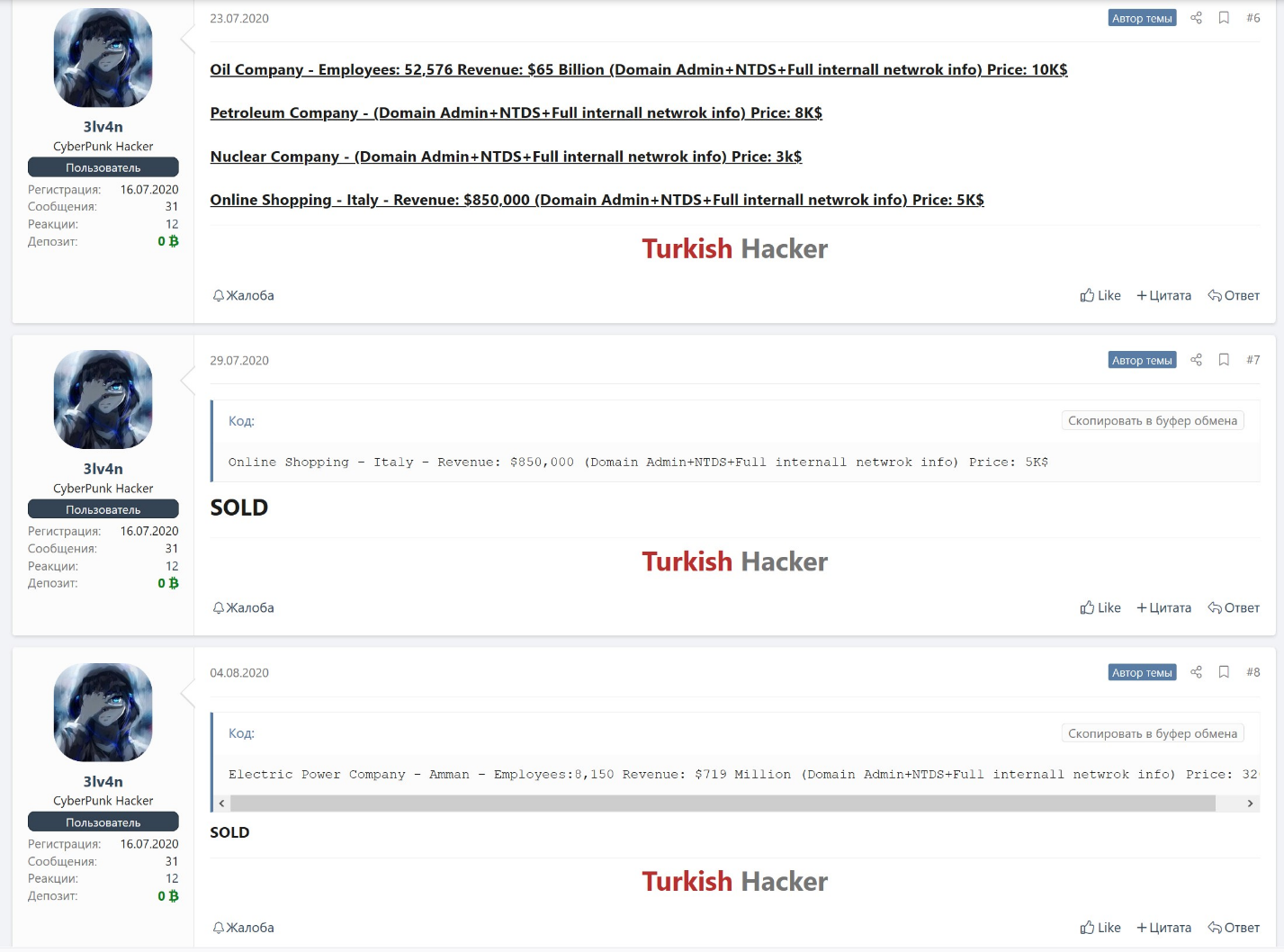
Dark web markets also regularly have hosted listings for forged identity documents, hacking tools and malware, counterfeit goods, and, on some platforms, weapons. Markets vary considerably in what they allow, with some explicitly prohibiting certain categories like weapons or content involving minors, while others place no restrictions at all.
Crypto and the Dark Web
Bitcoin and the dark web grew up together in ways that permanently shaped both. When Silk Road launched in 2011, cryptocurrency was barely two years old and had no obvious commercial use case. Central to Silk Road was the concept of buyers and sellers hiding their identities, and two technologies served as the marketplace's agents of anonymity: the Tor network and Bitcoin. Prior attempts at building dark web markets had failed partly because there was no censorship-resistant payment method. Banks could easily freeze any accounts used in illicit transactions, while credit card processors could flag suspicious merchants. Bitcoin required neither a bank account nor an identity to use, which made it the natural fit.
During its two and a half years of operation, Silk Road facilitated sales totalling approximately 9.5 million Bitcoin. At the time, this represented a significant share of Bitcoin’s total transaction activity. The market's success demonstrated that Bitcoin functioned as a real currency for peer-to-peer commerce, even if the context was illicit.
After Silk Road was shut down, successor markets inherited its model. AlphaBay, Hansa, Dream Market, and others continued to use Bitcoin as the primary payment rail through the mid-2010s. But as blockchain analytics matured and investigators began tracing Bitcoin transactions with increasing accuracy, user behavior shifted. Privacy coins, particularly Monero, gained traction on dark web markets because their transaction graph is not publicly visible in the way Bitcoin's is. Some markets began requiring Monero for certain listings or offering discounts to buyers who paid in it.
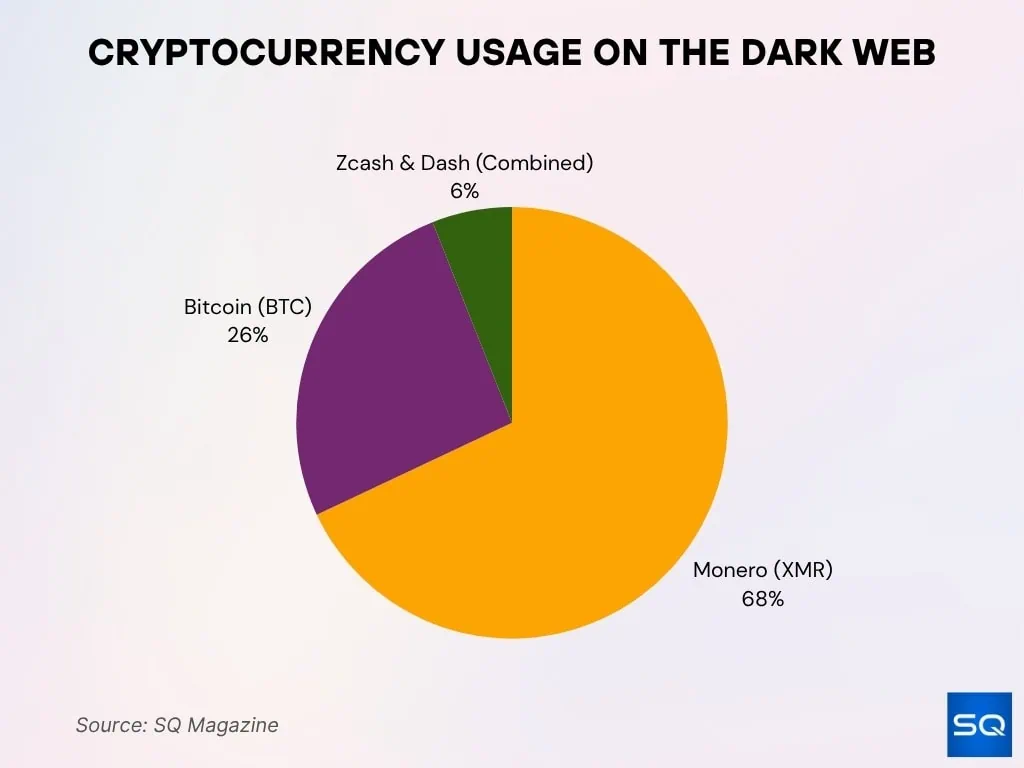
Today, the relationship between crypto and dark web markets is more complicated. Bitcoin is still used widely, but its traceability is a known liability. Monero has become the preferred currency on many darknet markets because of its stronger privacy features.
Tracking the Dark Web on Arkham
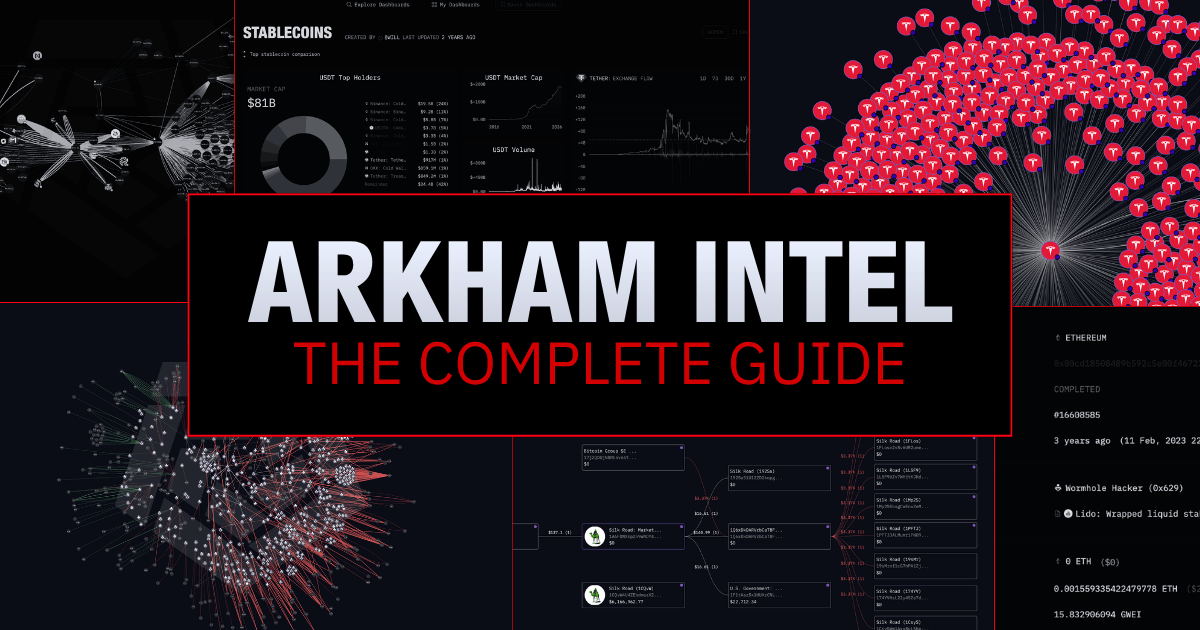
Arkham Intel maintains a database of entities and wallets tagged by category, including addresses associated with known dark web markets and actors. This tag system aggregates on-chain data across chains and links wallet addresses to known entities where attribution has been established.
For investigators and compliance professionals, this is practically useful. Rather than starting a trace from scratch, Arkham's tagging infrastructure lets a user search for wallets flagged as dark web-related and examine their transaction histories, counterparties, and fund flows in a single interface. Arkham uses a combination of AI-assisted pattern recognition, public data, and community intelligence to build and refine these tags over time.
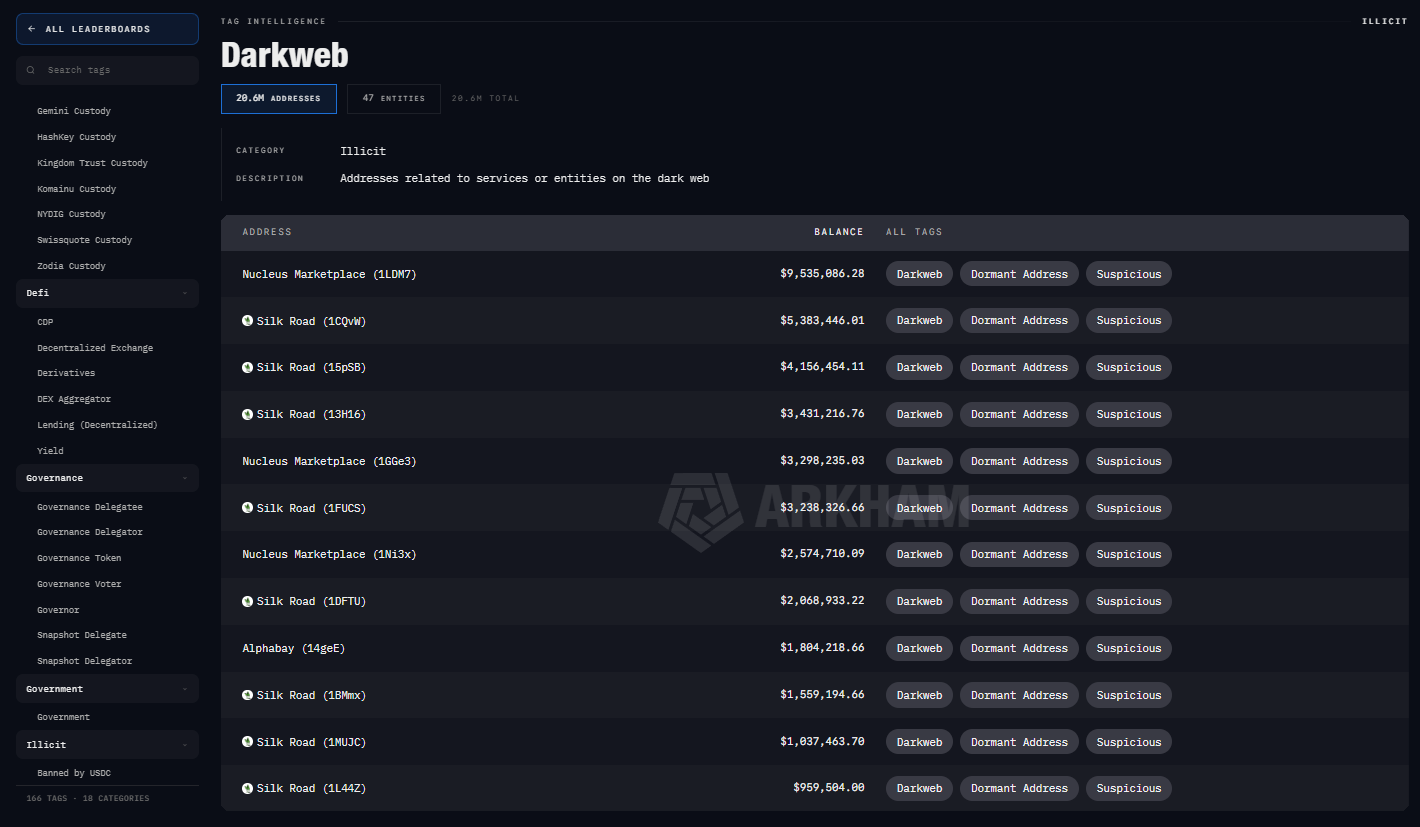
When law enforcement seizes a dark web market's wallets, those addresses often appear in court documents and press releases. Arkham incorporates this data into its entity database, so post-seizure fund movements are traceable when seized assets are later auctioned or moved by government agencies, as has happened with both Silk Road and AlphaBay proceeds.
For anyone conducting due diligence on crypto transactions, searching Arkham's dark web tag set offers a starting point for identifying whether counterparty wallets have any known connections to darknet market infrastructure.
How Businesses Ensure They Aren’t Dealing With Dark Web Crypto Funds
For exchanges, financial institutions, and businesses that accept crypto payments, the risk of inadvertently receiving funds that passed through a dark web market is a genuine compliance concern. The standard toolkit for managing this risk involves a combination of on-chain tracing, entity screening, and transaction monitoring.
On-chain tracing tools, including platforms like Arkham, allow compliance teams to examine the history of incoming funds before they are credited. A payment that arrived from a wallet with a direct prior transaction to a known dark web market address is a materially different risk than a payment from a wallet with no flagged counterparties. The depth of tracing required depends on the institution's risk tolerance: some apply a one-hop analysis, looking only at direct senders, while others trace back multiple hops to identify more indirect exposure.
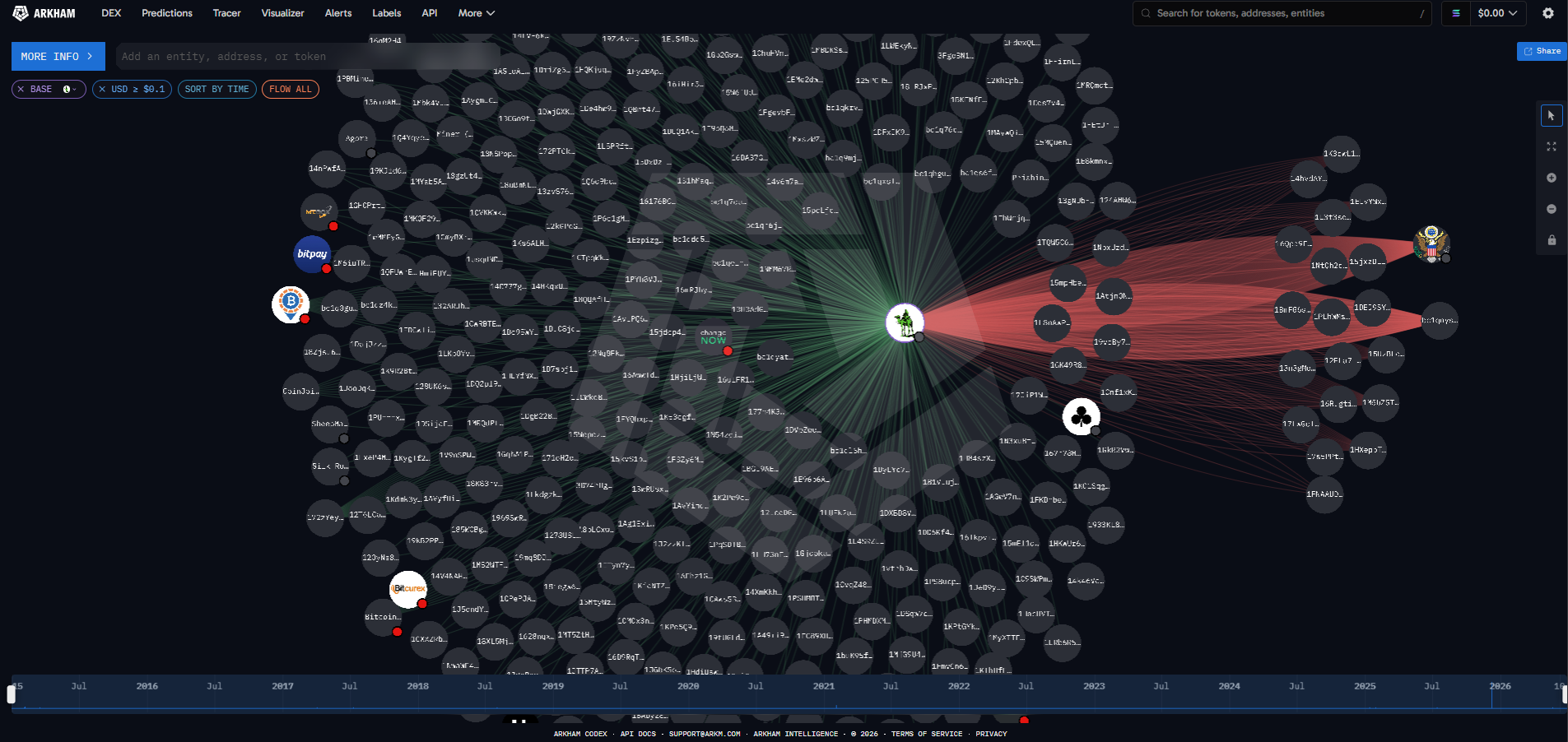
Entity screening involves checking wallet addresses against databases of known sanctioned addresses, seized market wallets, and flagged entities maintained by regulators including the U.S. Office of Foreign Assets Control, which has issued designations against specific dark web market addresses and their operators. OFAC's Specially Designated Nationals list includes cryptocurrency wallet addresses, and transacting with a designated address is a sanctions violation regardless of whether the counterparty was identified at the time.
Transaction monitoring involves flagging unusual patterns in real time, including large rapid movements through multiple wallets, mixing activity, or conversions through privacy coin bridges, all of which are consistent with laundering behavior observed in darknet market cases.
Most regulated crypto businesses are required to implement some version of these controls as part of their anti-money laundering obligations. The practical challenge is that the tools and the threat are both evolving: as blockchain analytics improve, so do the obfuscation techniques used by those trying to move tainted funds through the legitimate financial system.
Conclusion
Despite high-profile law enforcement takedowns, dark web markets continue to spring up to fill the void left by their predecessors. The crypto infrastructure that made these markets possible, permissionless transactions without identity-linked payment processors, remains intact, even as the tools for tracing those transactions have matured significantly.
For investors and businesses, the practical implications are manageable but require active attention: tainted crypto funds do circulate in legitimate markets, and screening for dark web exposure has become a standard part of crypto compliance. The dark web is not going away, but leveraging the right tools, it is becoming more visible than its architects had ever intended.

.png)


.jpg)



.jpeg)



.png)






.png)

.jpg)




.png)
.png)



.png)

.png)

.png)
.png)

.png)
.png)






.png)
.png)
.png)
.png)



.png)