June 24, 2026
at
10:20 am
EST
MIN READ
Privacy Coins 101: What Are They, How Do They Work
Financial privacy has always been a sensitive topic. In crypto, it has become a technical arms race. As blockchain analytics tools have grown more sophisticated, a corner of the market has pushed back with increasingly powerful cryptography.
Privacy coins, which use techniques like zero-knowledge proofs, ring signatures and shielded addresses to conceal transaction details, have existed since 2012 but rarely attracted as much attention as they do today. Regulatory pressure, growing surveillance concerns, and renewed market interest have combined to make 2026 one of the most active years the category has seen.
Summary
- Privacy coins protect transaction data using cryptographic tools, with the two largest in 2026 being Zcash and Monero
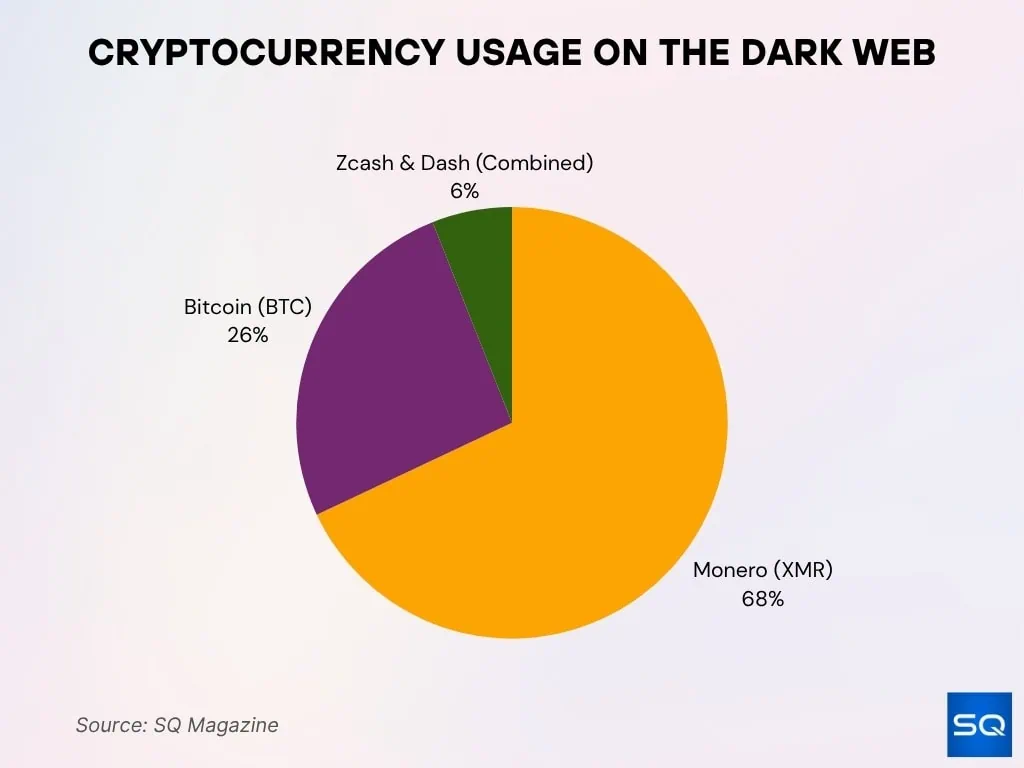
- Monero accounts for approximately 68% of dark web transactions, having largely displaced Bitcoin as blockchain analytics made transparent chains increasingly traceable
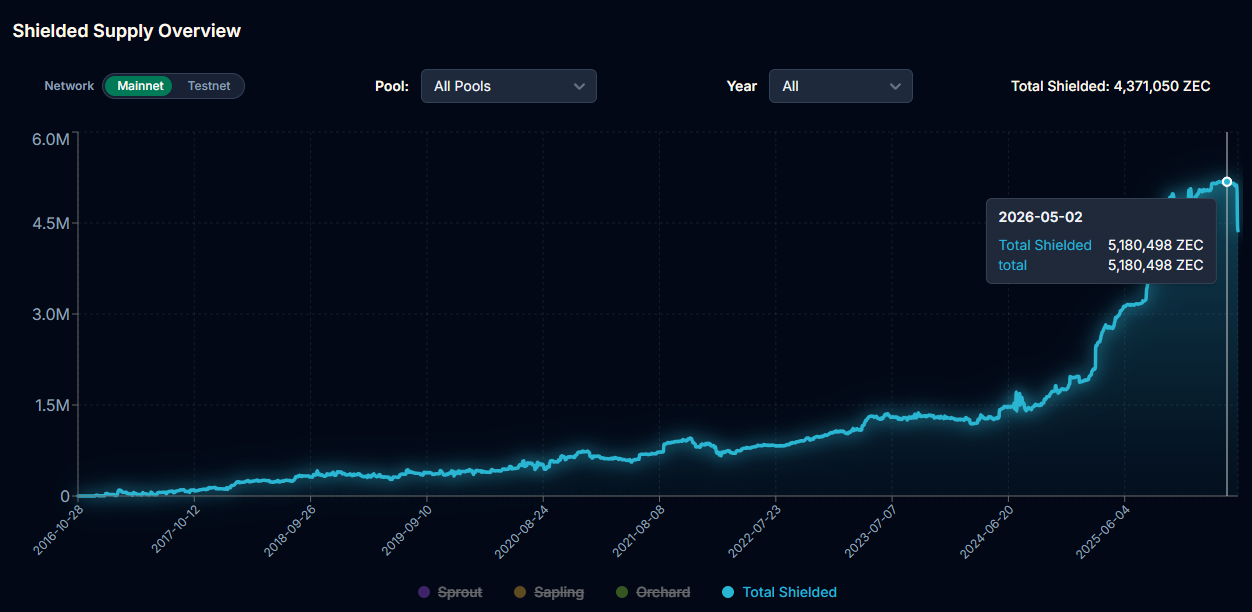
- Despite being marketed as a privacy coin, around 74% of Zcash's supply sits outside the shielded layer, allowing them to be traced by analytics tools like Arkham
- Monero’s mandatory privacy makes it much more useful as a privacy coin, but puts it under immense regulatory pressure, resulting in lowered institutional interest and delistings across major exchanges
What Are Privacy Coins?
Most blockchains work like a live, public database displayed on a billboard. Anyone with a browser can watch funds move from one address to another, trace the path of a transaction across dozens of wallets, and, with enough effort and resources, tie it back to a real person. (To learn how to do this, read our “How To Use Arkham Intel” guide). Privacy coins are built on the premise that this level of transparency is a design flaw, not a feature.
Rather than hiding the ledger entirely, privacy coins use cryptographic tools to selectively obscure the information recorded on it. The sender, the recipient, the amount transferred, sometimes all three are hidden from outside observers while the network still verifies that the transaction is valid and no coins are being created out of thin air. The result is a system that can confirm a payment happened without telling anyone who paid whom, or how much.
This concept traces back to 2012, when Bytecoin first implemented ring signatures to blend transaction inputs and make sender identification difficult. That work became the technical foundation for Monero, launched in 2014, which remains one of the largest fully private networks by market cap today.
Top Privacy Coins
The two names that dominate the privacy coin conversation in 2026 are Monero (XMR) and Zcash (ZEC). While Monero used to hold the top position by market cap, Zcash has recently dethroned it, overtaking it to claim top spot at a market cap of ~$6.95 billion. However, Monero is not far behind at $6.45 billion. The pair have traded positions through 2025 and 2026 as institutional interest in Zcash climbed.
Beyond the top two, Dash (DASH) offers optional privacy mixing, with a focus on payments, shuffling transactions in its masternode network to obfuscate transaction origins and destinations. Secret Network (SCRT) goes beyond anonymous transactions, enabling Secret Contracts, which encrypt smart contract inputs, outputs and state. Firo (formerly ZCoin) allows users to burn their visible coins and redeem fresh ones with no transaction trail.
Historically, the category also includes Bytecoin, the original ring-signature coin; Dash's predecessor Darkcoin, which launched 2014 and pioneered the Dash PrivateSend mechanism; and Grin, which uses the MimbleWimble protocol to compress transaction data entirely, targeting Monero’s biggest flaws: huge transaction sizes and blockchain bloat.
How Do Privacy Coins Work?
The specific mechanisms differ by coin, but they generally fall into a few families.
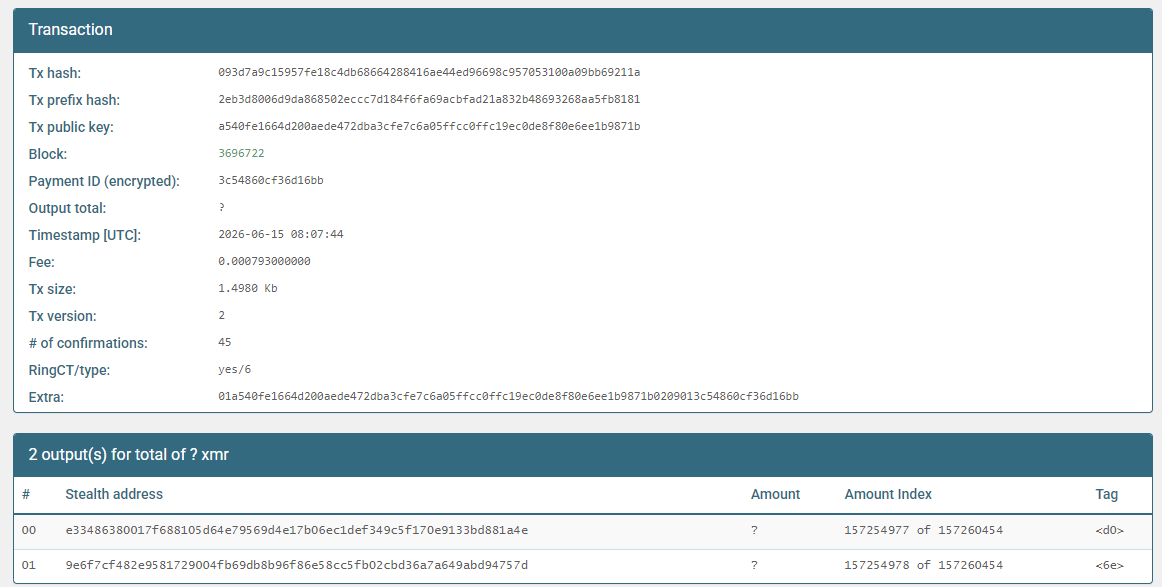
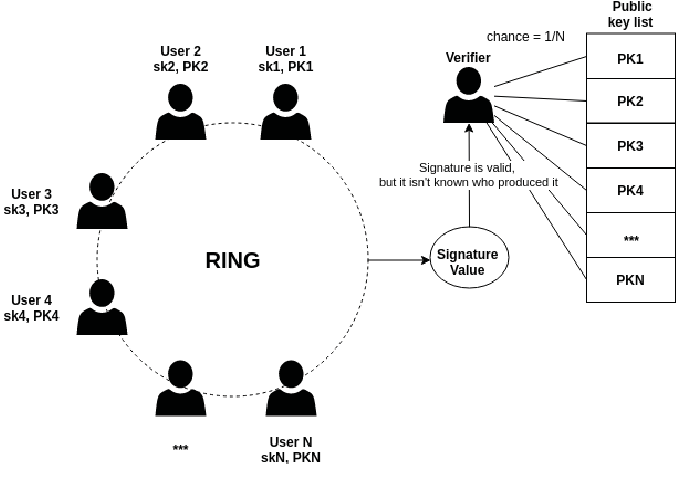
Monero combines three tools. Ring signatures bundle a real transaction input with several decoy inputs, making it statistically difficult to identify which one is genuine. Stealth addresses generate a unique, one-time destination for every payment so that the recipient's address never repeats on the public chain. Finally, Ring CT (Ring Confidential Transactions) hides the amounts transferred. Taken together, these three layers are applied to every Monero transaction by default with no opt-out.
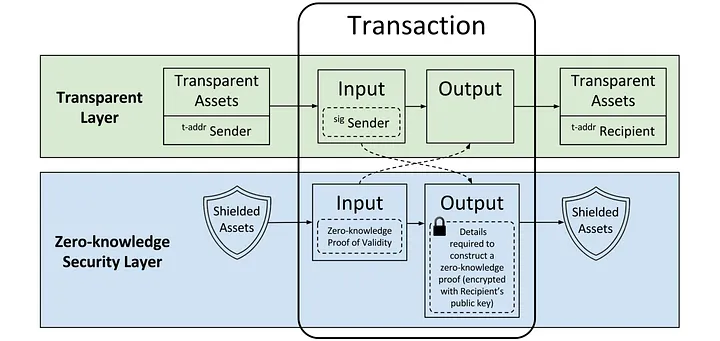
Zcash takes a different approach with zero-knowledge proofs, specifically a variant called zk-SNARKs. A zero-knowledge proof lets one party convince another that something is true without revealing the underlying information. In Zcash's case, the network can verify a transaction is valid without knowing the sender, receiver, or amount. The important distinction from Monero is that Zcash privacy is optional. Transactions can be sent through transparent addresses, which look identical to Bitcoin on-chain, or through shielded addresses inside an encrypted pool.
Privacy Coins vs Privacy Chains
Privacy coins and privacy-focused blockchains are often grouped together but serve different purposes.
A privacy coin is a standalone currency whose primary function is to be used as money, with transaction details hidden. Monero is the clearest example: there is no smart contract platform, no token ecosystem, just a ledger of private payments.
A privacy chain, by contrast, is a general-purpose blockchain that incorporates privacy as a feature of its execution environment. Aztec Network and Secret Network allow developers to build applications where inputs and states are encrypted. Users interact with DeFi protocols, lend assets, or execute swaps without the transaction details being visible on-chain. Privacy is embedded in the infrastructure, not limited to a single coin.
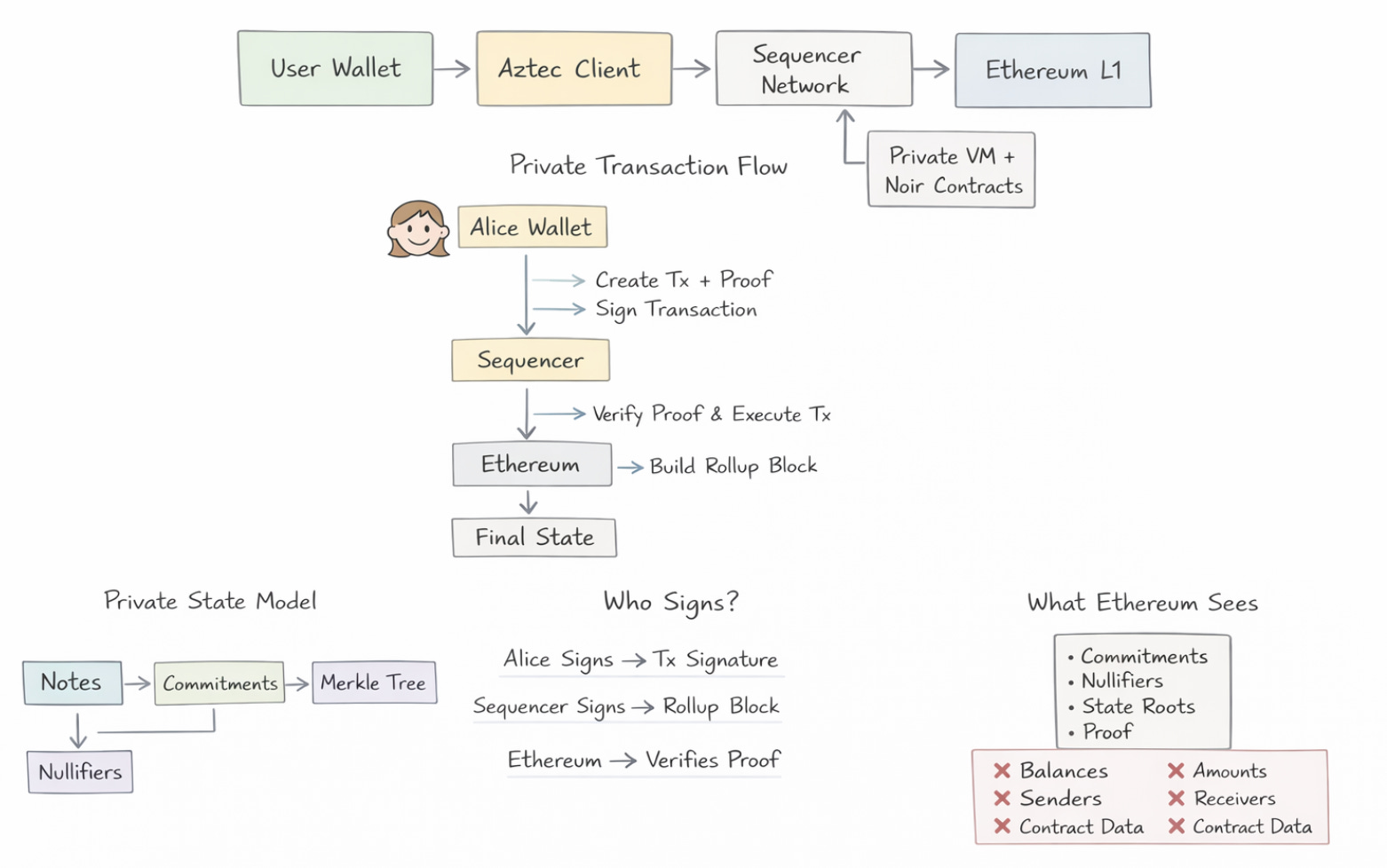
The distinction matters for use cases. If someone wants to send value privately, a privacy coin is direct and purpose-built. If someone wants to use a private DeFi protocol or build a confidential smart contract, they need a privacy chain.
Zcash’s Orchard Shielded Pool Exploit Explained
In late May 2026, security researcher Taylor Hornby, working for Shielded Labs, discovered a critical vulnerability in the Orchard shielded pool, Zcash's newest and most advanced privacy layer. The bug had been present since Orchard's activation in May 2022, sitting undetected through four years of code audits and expert reviews.
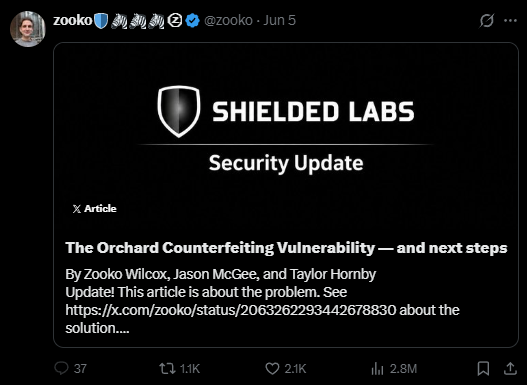
The flaw stemmed from an under-constrained element in the Orchard circuit, the set of rules governing how transactions are constructed and verified. An attacker could have entered false inputs into an elliptic curve multiplication calculation and still had it pass verification. In practice, this meant someone could forge transactions within the Orchard pool, potentially double-spending funds, without the network flagging it as invalid.
Hornby wrote a working exploit with the assistance of Anthropic's Claude Opus 4.8 model, demonstrating that unlimited, undetectable counterfeit ZEC could be generated inside the pool in a local testing environment. The Zcash Foundation confirmed that no unauthorized value creation was detected on the live network, and judged prior exploitation unlikely given the difficulty of independently discovering the bug. However, due to Orchard's privacy properties, there is no cryptographic way to prove definitively whether or not the vulnerability was ever used.
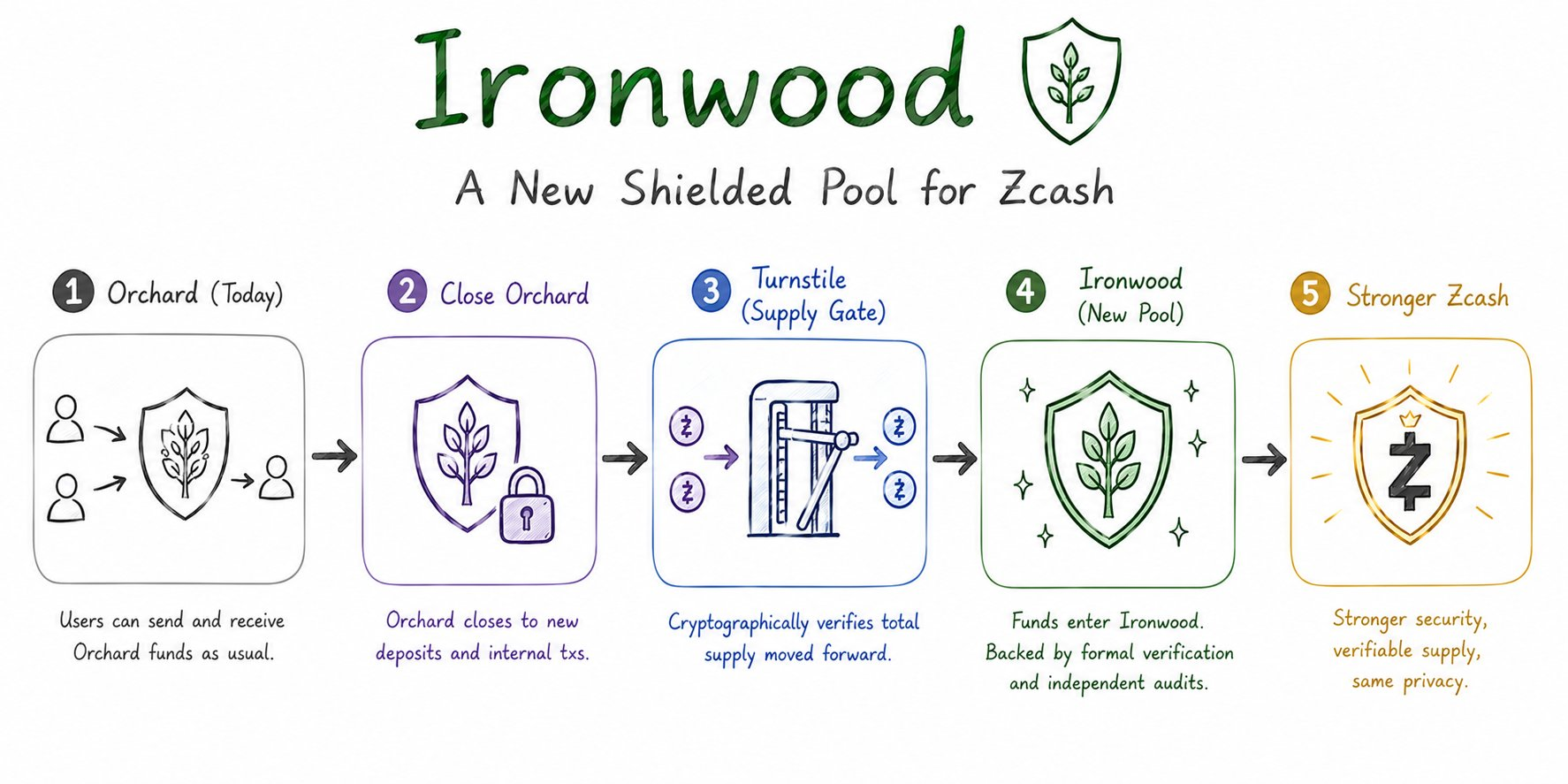
Zcash developers responded with an emergency network upgrade between May 29 and June 3, temporarily suspending Orchard transactions before restoring functionality with the flaw patched. ZEC fell over 30% on the day of public disclosure, before recovering roughly 70% from the bottom in the days that followed. Shielded Labs subsequently proposed deploying a new shielded pool with turnstile accounting, as part of the Ironwood upgrade, to allow anyone to independently verify the integrity of Zcash's supply going forward.
Privacy Coin Use Cases
The most direct use case is financial privacy for individuals. In the context of public blockchains, where personal finances are exposed openly, whether to employers, governments, or commercial data brokers, private transactions offer a practical alternative.
For businesses, this could be even more crucial, with the handling of sensitive commercial transactions, which should be kept out of public view. A company settling a supplier contract on a public chain broadcasts its commercial relationships to anyone watching.
Privacy coins are also relevant in high-surveillance or authoritarian environments where citizens face risks from visible financial activity. Journalists, activists, and opposition figures operating under repressive regimes have cited Monero specifically as a tool for moving funds without exposure.
On the other side of that equation, Monero has become the dominant currency on dark web marketplaces. As of early 2026, it accounted for approximately 68% of dark web transactions, having largely displaced Bitcoin as blockchain analytics tools made transparent chains increasingly traceable. Nearly half of all new dark web markets launched in 2025 supported Monero exclusively. Bitcoin, once the default for illicit transactions, now accounts for around 26% of transaction share, primarily among vendors who prioritize liquidity over anonymity.
Is Their Utility Exaggerated?
The gap between the theoretical privacy these coins offer and the actual privacy people use is significant, particularly for Zcash.
For years, the majority of Zcash activity flowed through transparent addresses. Exchanges defaulted to transparent t-addresses for compliance purposes, institutional holders stuck with the visible layer, and shielded adoption remained low. This created a situation where a coin marketed on privacy was functionally not private for most of its users.
That picture has shifted in the past two years. The share of ZEC supply held in shielded addresses grew from roughly 8% in early 2024 to approximately 30% by May 2026, driven partly by wallet improvements that route users into the shielded pool by default. This percentage fell to ~26% following the disclosure of the Orchard Pool exploit. Shielded transactions also reached 59.3% of total Zcash activity by February 2026. Nevertheless, the majority of Zcash’s supply remains on the transparent layer.
Arkham’s coverage of Zcash puts the "untraceable" narrative in further context. Arkham has attributed over $420 billion in Zcash volume to known individuals and institutions, a substantial figure for a network explicitly built to resist that kind of analysis. The reason is straightforward: the entry and exit points for shielded transactions, the exchanges and custodians where coins are bought and sold, use transparent addresses for compliance reasons. That creates visible on-ramps and off-ramps that analytical tools can attribute to real entities, even when the shielded hop in between remains opaque. You can track exactly when money walks through the door and when it walks back out, even if what happens inside the room stays hidden. Fully shielded z-to-z transactions remain cryptographically opaque, but most Zcash users are not exclusively using the shielded layer.
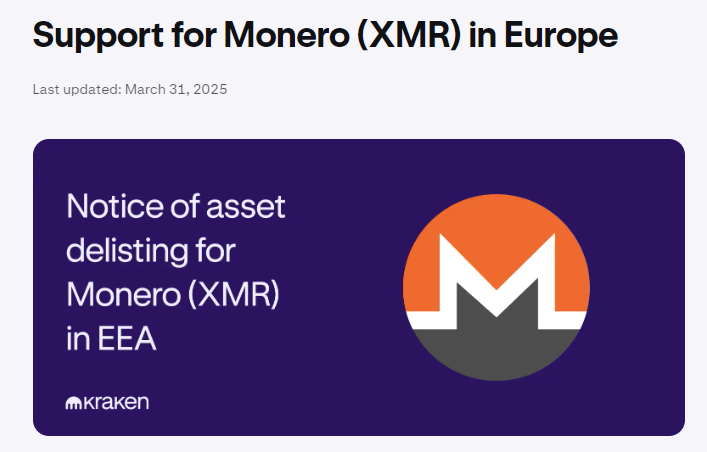
Monero presents a stronger privacy guarantee in practice, since its protections are mandatory and applied to every transaction. But the regulatory cost is higher. Monero has been delisted from most major exchanges, making it harder to access for ordinary users and essentially locking out institutional capital. Zcash's optional transparency is precisely what allows it to remain listed on most leading exchanges and attract its own Grayscale ETF. The tradeoff is that the coin's compliance-friendly design also limits how comprehensively it protects the users who hold it.
For most people buying privacy coins in 2026, the evidence points toward speculation rather than active use of the privacy features. The majority of ZEC holdings are sitting on exchanges or in transparent wallets, not cycling through shielded pools. Monero's dark web adoption is real, but that represents a narrow slice of the overall holder base.
Conclusion
Privacy coins occupy an unusual position in crypto. They carry some of the most technically sophisticated cryptography in the space, and some of the most contested reputations. Monero is functionally private but largely excluded from institutional capital flows and most major exchanges. Zcash is accessible and institutional-friendly but most of its holders do not use its privacy features.
Nevertheless, the category has proven durable. It has survived waves of delistings, regulatory pressure, and market cycles without fading into irrelevance. In 2026, driven by growing surveillance concerns and continued technical development, privacy coins are more prominent than they have been in years. Whether that reflects genuine adoption of privacy tools, or simply a speculative bet that privacy as a theme will attract capital, depends entirely on the holder asking the question.

.png)


.png)






.png)




.jpg)





.png)
.png)

.png)

.png)

.png)
.png)

.png)
.png)





.png)
.png)
.png)
.png)




.png)




.png)