August 20, 2026
at
8:45 am
EST
MIN READ
What Are Agentic Payments?

Summary
- Agentic payments allow AI agents to initiate and settle financial transactions autonomously, operating within user-defined rules rather than waiting for human approval at each step.
- Industry leaders such as Visa and Mastercard have rolled out their own frameworks, with many others including Stripe, Paypal, Google and OpenAI following suit as well.
- Coinbase's x402 protocol, backed by Google, Microsoft, Visa, and Stripe among others, has processed over 35 million transactions and $10 million in volume on Solana alone since its 2025 launch.
- While on-chain agentic payments are publicly traceable via tools like Arkham Intel, off-chain payments through traditional card networks remain opaque
What are Agentic Payments?
Agentic payments are payments which are initiated or completed by an autonomous AI agent. Imagine a standard online purchase. As a user, you browse, select the product you are looking to purchase, key in your payment details, and hit confirm. Every action in that sequence requires a human decision. Agentic payments remove that last requirement, with the AI agent making the decision, handling the authorization, and completing the transaction, often without the buyer pressing anything at all.
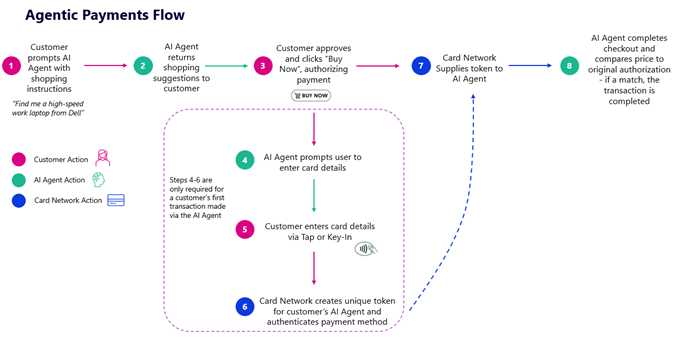
More precisely, agentic payments sit on a spectrum. At the passive end, an AI flags an invoice for payment and waits for human approval. On the fully autonomous end, an AI agent monitors inventory levels, compares supplier prices in real time, selects the best option against pre-set rules, and pays, all without a person in the loop. The defining quality is not simply automation but the capacity for the AI agent to exercise its own judgment. The agent decides whether, when, and how to move money based on changing context rather than just a fixed trigger.
This is what separates agentic payments from simple automation. A calendar-based autopay fires on a date. An agentic payment fires when conditions are met, which the AI evaluates continuously.
How Do Agentic Payments Work?
The mechanics vary by system, but most agentic payment flows share a common structure.
The user sets the parameters upfront: a budget ceiling, approved merchants or categories, and the level of autonomy the agent is allowed. These parameters act as standing instructions for the agent. When the agent identifies a need such as a subscription renewal, a supply order, or a flight that matches a preference profile, it evaluates the available options against those rules.
The AI then pays using an approved method. In traditional finance, this means using a digital wallet or a secure card connection. In the crypto world, the AI uses its own digital wallet to send funds directly over the network.
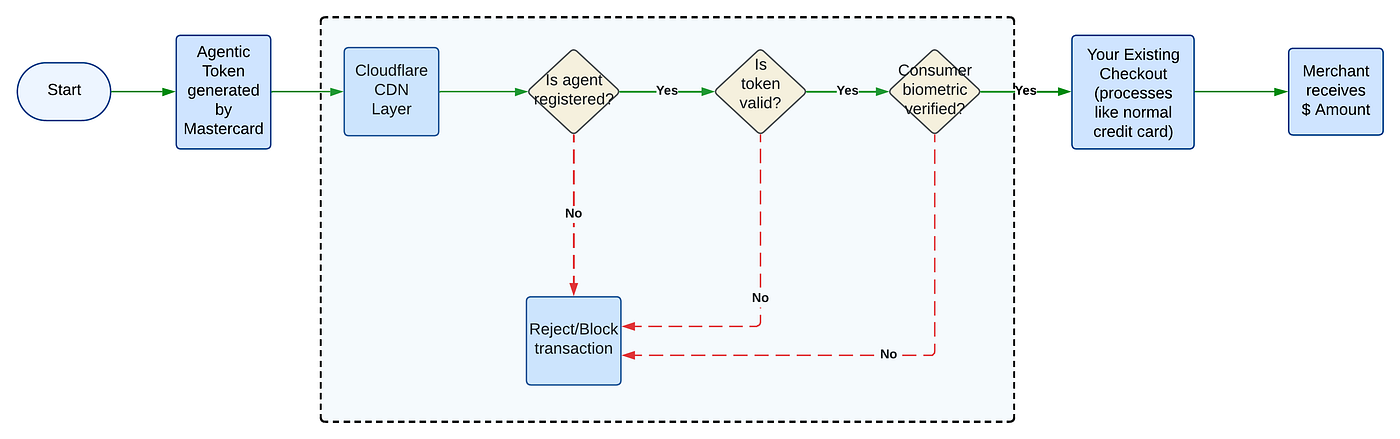
The big difference is how the payment gets approved. Normally, the system checks if you are the real cardholder when you buy something. With AI payments, the system instead checks if the AI is actually allowed to spend your money and is following the rules you set. Mastercard handles this by giving AI agents a special, restricted digital pass. This pass comes with strict rules built in, like exactly how much the AI is allowed to spend and who it is allowed to pay. Visa's Intelligent Commerce platform takes a similar approach, using its Trusted Agent Protocol to authenticate agent identity before a transaction clears.
In its current state, fraud risk and liability questions surrounding agentic payments remain unresolved at the industry level. Regulators have not yet codified who bears responsibility when an agent exceeds its mandate or misinterprets an instruction. Until that is settled, most deployments keep a human review layer in place for high-value transactions.
Who Are the Leading Companies Behind Agentic Payments?
The buildout is happening across payment networks, technology platforms, and crypto infrastructure simultaneously.
Visa launched its Intelligent Commerce platform in 2025 after spending more than $13 billion on technology and security over the preceding five years. By December 2025, Visa had confirmed hundreds of live transactions completed entirely by AI agents operating inside production environments, with no human pressing a button at checkout. The platform's Trusted Agent Protocol was developed with partners including Cloudflare, Microsoft, Shopify, Stripe, Adyen, Coinbase, and Worldpay.
Mastercard unveiled Agent Pay in April 2025, processing what it described as the first real agentic transaction using digital tokenization. The program supports both consumer and business applications, with IBM's watsonx Orchestrate handling enterprise-side orchestration. Mastercard also enables customers to use their PayPal wallet within its agentic framework, creating a degree of interoperability between the two systems.
PayPal took a different technical approach, releasing a developer toolkit that lets AI agents interact with PayPal's platform through APIs. In November 2025, PayPal and Perplexity launched Instant Buy, allowing checkout directly within Perplexity's chat interface across more than 6,000 merchants. PayPal also embedded its payment flow inside ChatGPT through OpenAI's Agentic Commerce Protocol.
Shopify launched Agentic Commerce in August 2025, enabling conversational AI to complete purchases from within a chat interface rather than redirecting users to an external site. Google followed with its Agent Payments Protocol (AP2), an open standard backed by Mastercard, PayPal, American Express, Coinbase, Salesforce, Shopify, Cloudflare, and Etsy. OpenAI introduced Instant Checkout within ChatGPT for U.S. users in September 2025, completing purchases from sellers including Etsy without the user leaving the conversation.
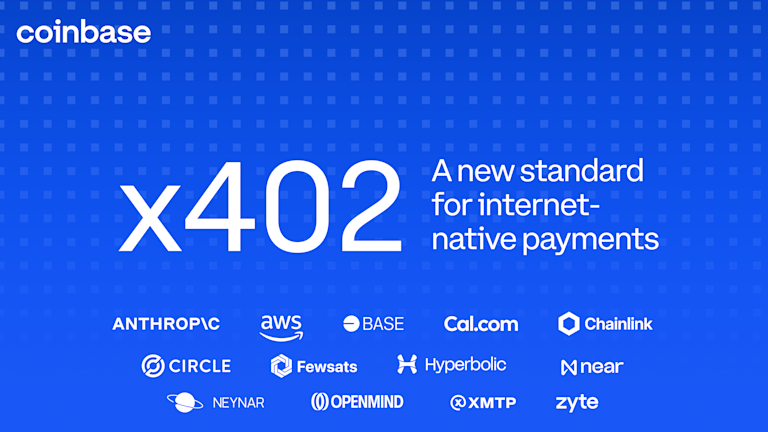
On the crypto front, Coinbase launched x402 in May 2025, a protocol specifically built to let AI agents pay for services directly over HTTP using stablecoins. The x402 Foundation received backing from Google, Microsoft, Amazon Web Services, Visa, American Express, Mastercard, Cloudflare, Shopify, Stripe, Circle, and the Solana Foundation, among others.
Will Agentic Payments Happen On-Chain?
There is certainly a structural argument for why AI agents and blockchains are a natural fit. Our current financial systems were built for people. They require creating accounts, typing in passwords, and waiting days for banks to process groups of transactions. An AI agent has no credit history, no ability to fill out a form, and no need for subscription billing. However, what an AI agent needs is the ability to pay for exactly what it uses, at the moment it uses it, without requiring a relationship with a bank or a payment processor.
This is exactly what blockchains can offer. A crypto wallet holding stablecoins can send value anywhere in the world, to any recipient, at any hour, for fractions of a cent per transaction. An AI agent does not need to open an account, nor does it need to wait for approvals to transact. Moreover, on-chain payments settle and are finalized within seconds.
That said, on-chain agentic payments face real barriers to mainstream adoption. Most merchants are still skeptical of cryptocurrency and choose not to accept them. The regulatory treatment of stablecoin payments also varies by jurisdiction, with the regulation still largely unclear in many countries. Moreover, for everyday consumer purchases, the traditional card networks, with their fraud protection and dispute resolution systems, retain practical advantages that blockchains have not yet matched.
It's likely that both systems will work together. Crypto networks are better suited for AIs paying each other tiny fractions of a cent instantly, while traditional credit cards will handle standard everyday shopping using their own AI-specific security rules.
What Role Does x402 Play?
X402 is a new payment system that uses an old, forgotten part of the internet's code—a specific error message originally designed to mean "Payment Required," but which was never actually used until now. As part of the original set of designated HTTP codes, "402 Payment Required" was reserved as a response code for paywalled content, but it was never formally implemented. Coinbase and Cloudflare revived it in May 2025, turning it into a working payment standard for autonomous agents.
When a user, an app, or an AI requests digital content that costs money, the website instantly replies with the exact price and a digital wallet address. The buyer's system then automatically sends the payment. Once a background service verifies the transaction on the blockchain, the website immediately unlocks and delivers the content. This entire exchange happens in a fraction of a second - completely removing the need for subscriptions, complicated API keys, or manual billing.
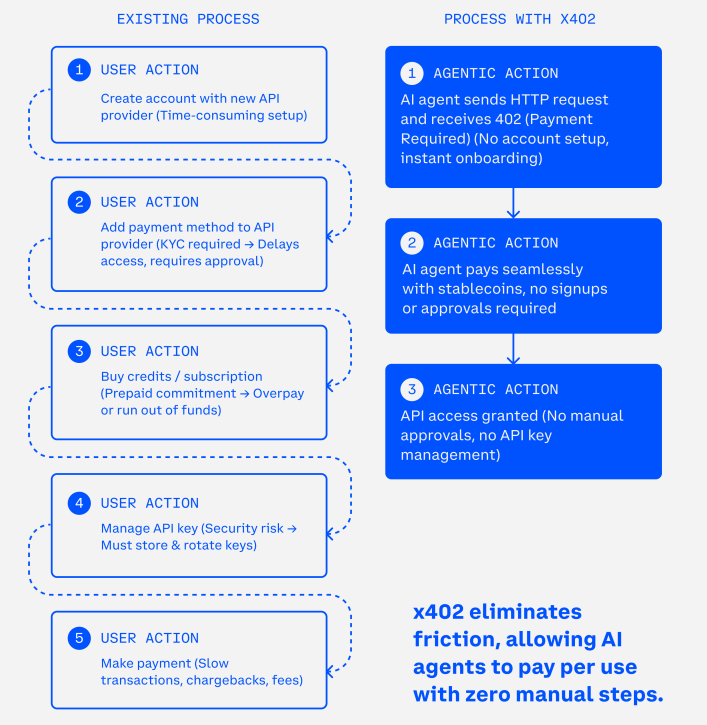
X402 was built primarily with USDC on Base, but the protocol is chain and token agnostic, supporting payments on Polygon, Arbitrum, Solana, and more. Because the fees are incredibly tiny, an AI can afford to pay fractions of a penny for a tiny piece of data or a single second of computer processing power—something that regular credit card networks are far too expensive to handle.
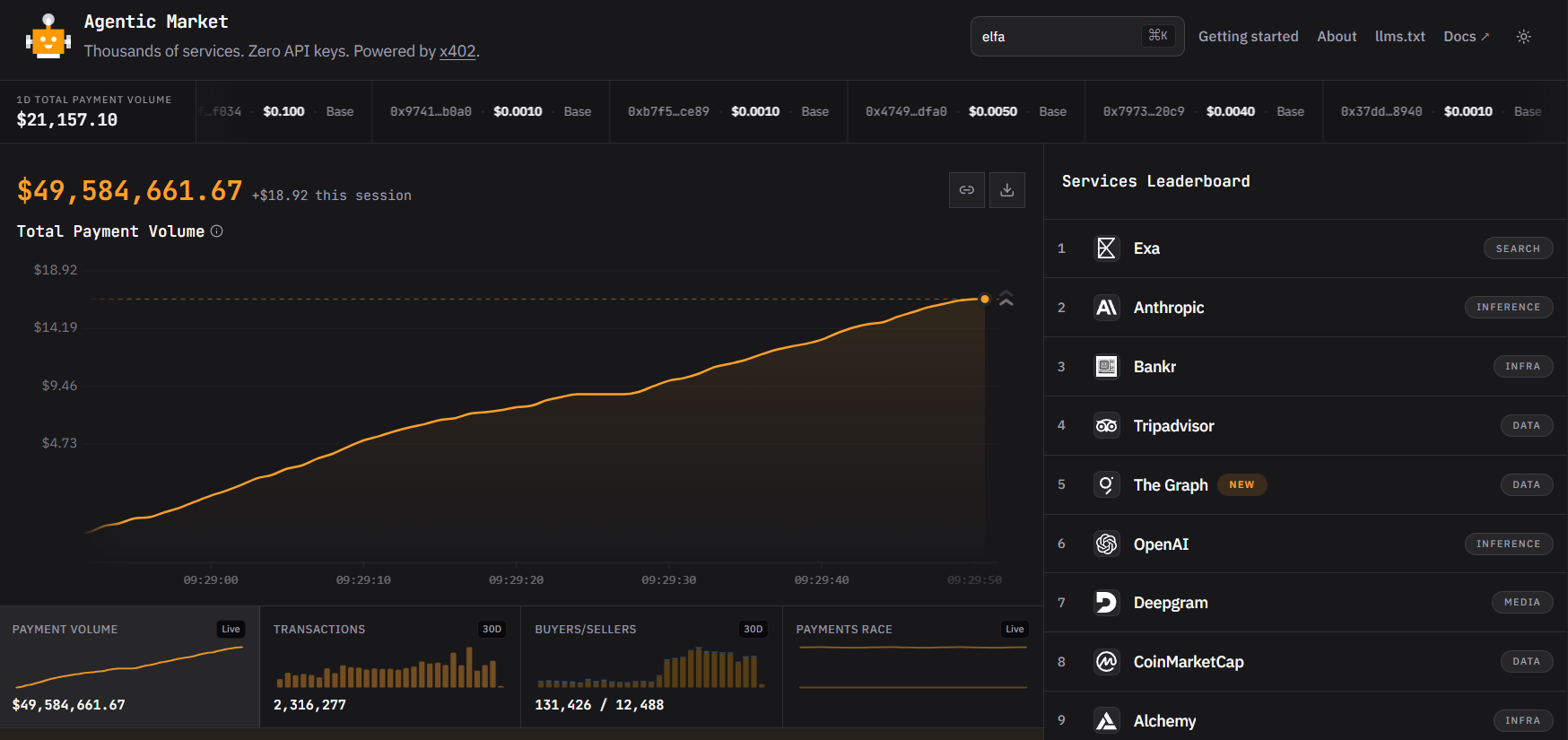
Since its launch on Solana, x402 has processed more than 35 million transactions and over $10 million in volume on the chain alone. In April 2026, x402 launched Agentic.Market, a marketplace where humans and AI agents can discover, compare, and access x402-compatible services, all without API keys.
Can Agentic Payments Be Tracked?
The answer depends on whether the payments happen on-chain, or through traditional financial networks.
On-chain agentic payments are public by default. Every transaction broadcast to a blockchain, be it on Base, Solana, Ethereum, or any other network, is recorded permanently on a public ledger. The sender wallet, recipient wallet, amount, and timestamp are visible to anyone who looks. What blockchains do not reveal automatically is who controls a given wallet.
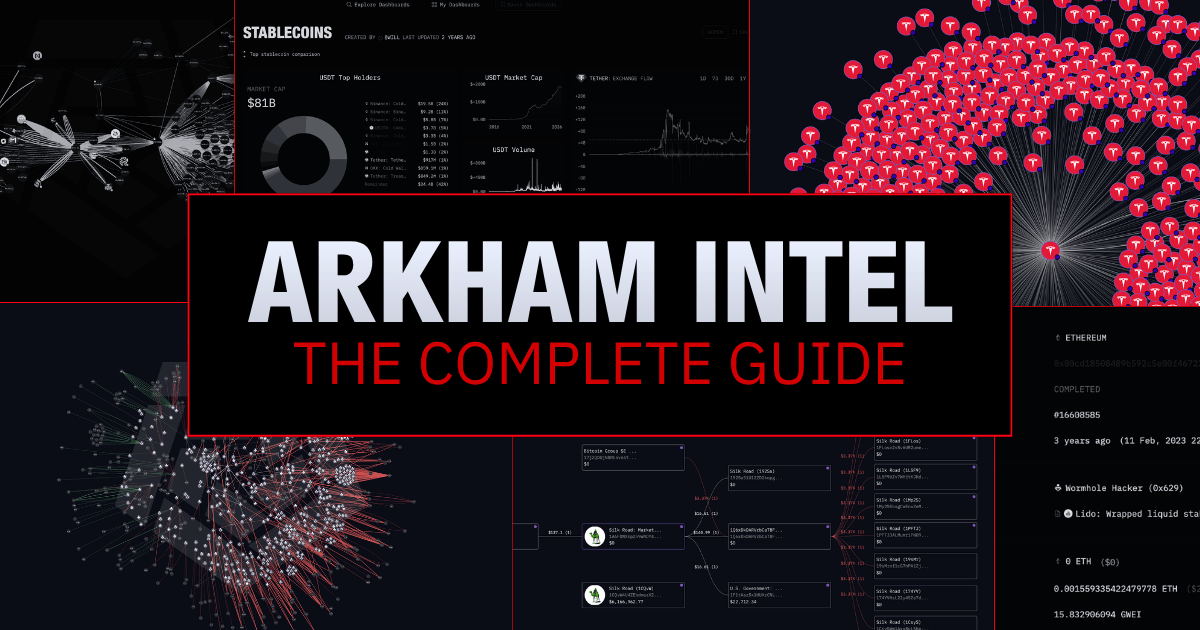
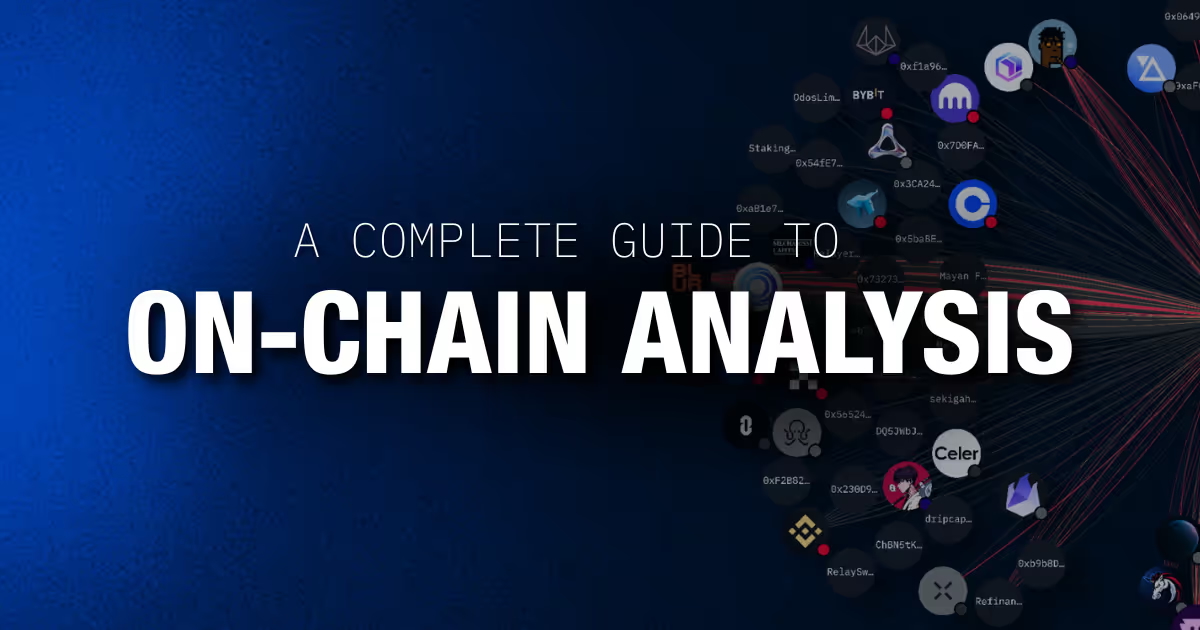
That is where platforms like Arkham Intel become relevant. Arkham's AI engine, ULTRA, analyzes transaction patterns, counterparty relationships, and behavioral signals across multiple chains to link wallet addresses to real-world entities: exchanges, funds, protocols, and individuals. If an AI agent is operating under a wallet that has been labeled and attributed, its payment activity can be traced in real-time. Arkham supports cross-chain tracking across Ethereum, Bitcoin, Solana, and beyond, and its API allows developers and analysts to integrate that intelligence directly into their own systems.
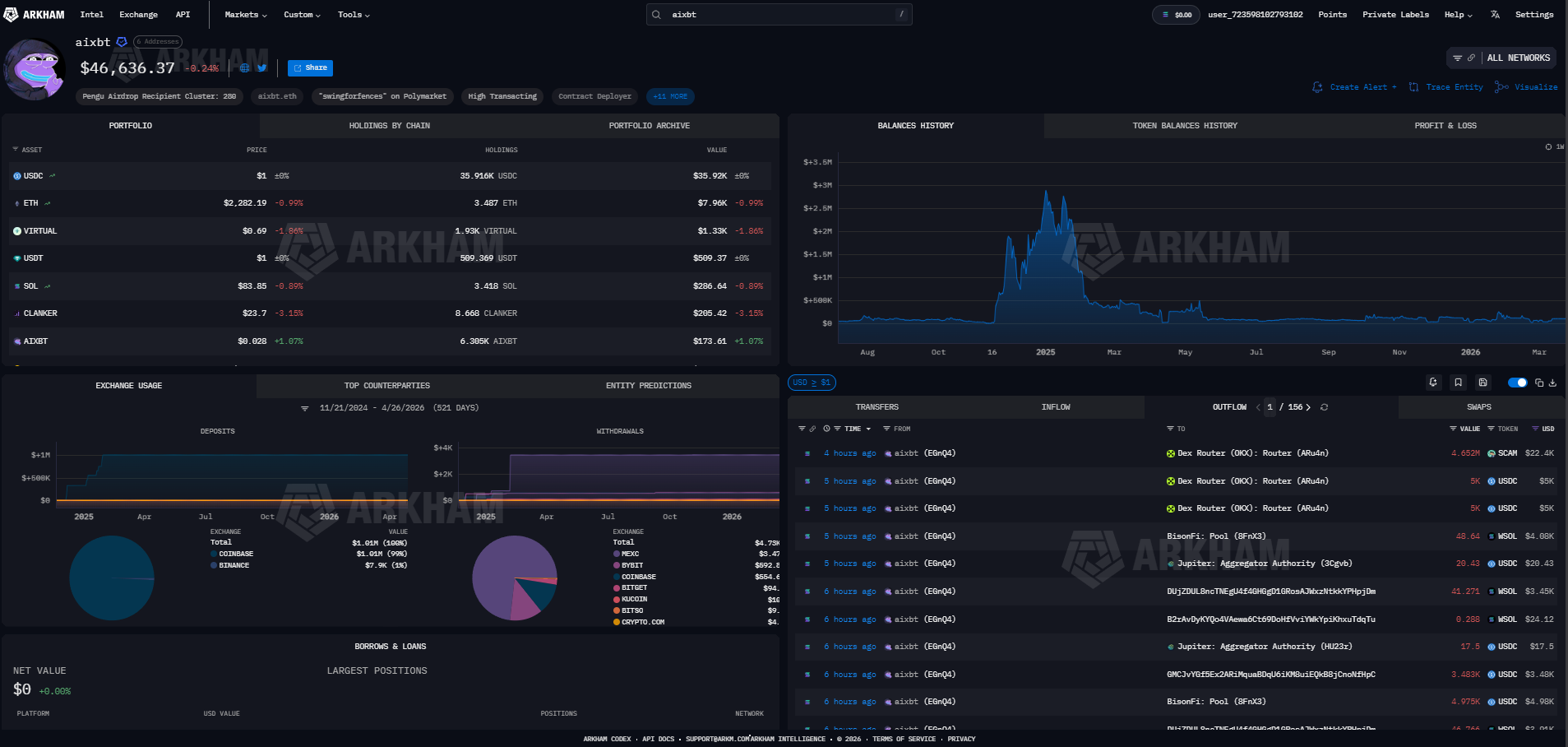
For x402 transactions specifically, the on-chain settlement layer means every micropayment is recorded and traceable in principle. A researcher with access to Arkham could, in theory, monitor an AI agent's wallet, identify the services it pays for, and build a picture of its operational pattern. The x402 facilitator itself also generates on-chain settlement data that acts as a verifiable audit log.
Off-chain agentic payments, however, are a different matter. When Mastercard Agent Pay or Visa's Intelligent Commerce completes a transaction, that payment moves through traditional card networks. Standard credit card information is kept in locked financial databases. It can only be seen by the credit card company, the store's bank, and your bank. It is completely hidden from the public and cannot be tracked by crypto analysis software. This is the same opacity that applies to any credit card transaction today.
Conclusion
Agentic payments represent a genuine shift in how financial transactions are authorized.
For those operating in crypto or building on public blockchains, the transparency of on-chain settlement makes agentic payment activity auditable in ways that traditional finance is not. As AI agent wallets become more common, the tools that can attribute those wallets to real-world entities will play a growing role in compliance, investigation, and market intelligence alike.

.png)








.png)
.png)




.jpg)






.png)
.png)


.png)

.png)



.png)
.png)

.png)
.png)








.png)
.png)
.png)

.png)




.png)






.png)