March 17, 2026
at
5:30 am
EST
MIN READ
A Guide To Arkham Intel's Industry-Leading Tagging System

Although blockchain data is public, the vast amount of unprocessed raw data that exists on-chain means it is hard for users to understand the information in its natural state. Millions of daily transactions occur across dozens of blockchain networks, marked only by wallets with alphanumeric strings for addresses. Without additional context, blockchain data is not useful to most users.
The Arkham Intel platform was created to help tackle this problem. Arkham uses AI to connect wallet addresses to real-world entities so users can understand who is behind on-chain activity. An important component of this is Arkham’s tagging system, which helps users understand what an entity is, how it behaves on-chain and what category of entity it falls under.
Summary
- Arkham assigns structured metadata (entities, labels, and tags) to on-chain addresses.
- Tags are the most granular layer of metadata. They are concise descriptors that explain the activities of a wallet or entity.
- Arkham’s tagging system is the most extensive in the blockchain analytics industry, identifying hackers, scammers, memecoin traders, prediction market participants, and whales on-chain.
What is a Tag?
A tag is a brief description that explains what a wallet address or entity has done on-chain. Tags appear on an addresses’s profile page beneath the entity name and label. A single address can carry an unlimited number of tags.
Tags operate at both the address and entity level. They are assigned by the Arkham team and AI systems based on verifiable on-chain behavior, making them objective records of events that have happened on-chain.
Why Are Tags So Important?
Modern financial crime is, unfortunately, deeply intertwined with the cryptocurrency industry. Money laundering, terrorist financing, sanctions evasions, Ponzi schemes, ransomware, and dark web markets are all examples of illicit activity that relies on the pseudonymous nature of cryptocurrency to move and conceal money illegally.
Tags condense complex on-chain histories into a single, readable snapshot. A wallet that is tagged as a hacker or scam instantly signals risky history to anyone investigating or interacting with that address. Tags are useful outside of crime contexts too. Traders and researchers understanding which users are whales or which users are successful prediction market traders allows them to make better-informed decisions regarding market dynamics.
Tags also make the Arkham platform searchable at scale. Arkham users can browse all entities with a specific tag attached to it, further cementing the Arkham platform as a powerful investigative tool.
The Difference Between Entities, Labels, and Tags
Arkham uses these three different types of metadata to help describe on-chain addresses. Understanding the difference between these three types is essential to getting the most out of the platform.
Entities are a group of wallet addresses belonging to one individual, organization, or institution. A single entity can contain hundreds of addresses across multiple blockchains. The Binance entity, for example, covers all known Binance hot wallets, cold wallets, and deposit addresses across the wide number of blockchain networks that the exchange supports.
Labels are an individual designation for a specific wallet address. One address can belong to one entity and carry one label, which identifies the specific wallet address (ex. Binance Hot Wallet #3) while the entity identifies it within a broader organizational context. Users can also create custom private labels for their own use that only they can see.
Tags describe what an address has done or the type of actor it represents. A single address can carry an unlimited number of tags, each reflecting a distinct aspect of the address’s on-chain behavior and history.
To sum it all up, entities tell you who, labels give you a name for a specific address, and tags explain what the wallet has done in the past.
Examples of Tags
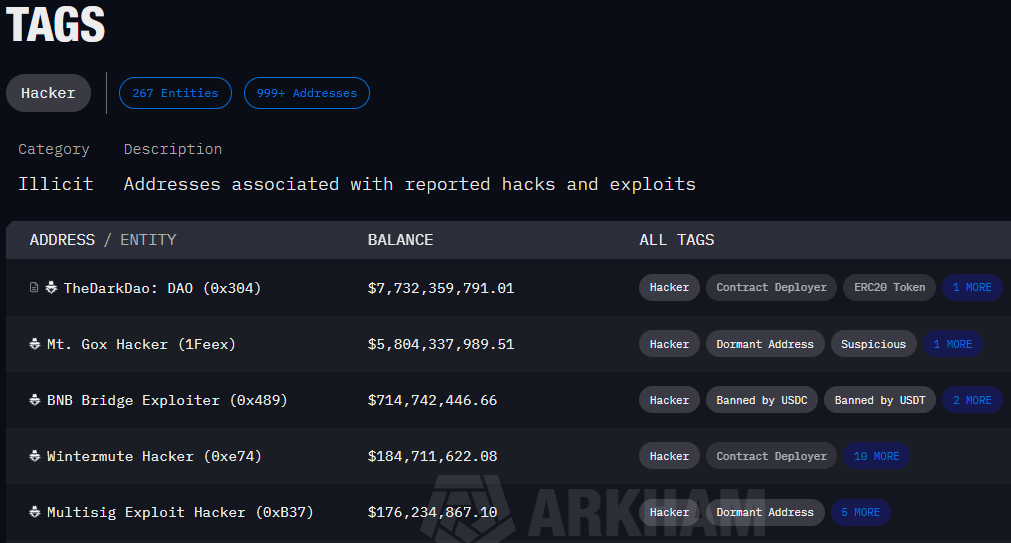
Many of the most important tags on the Arkham platform are those that associate wallets with illegal activity. Arkham maintains a dedicated category of tags for those wallets implicated in criminal behavior.
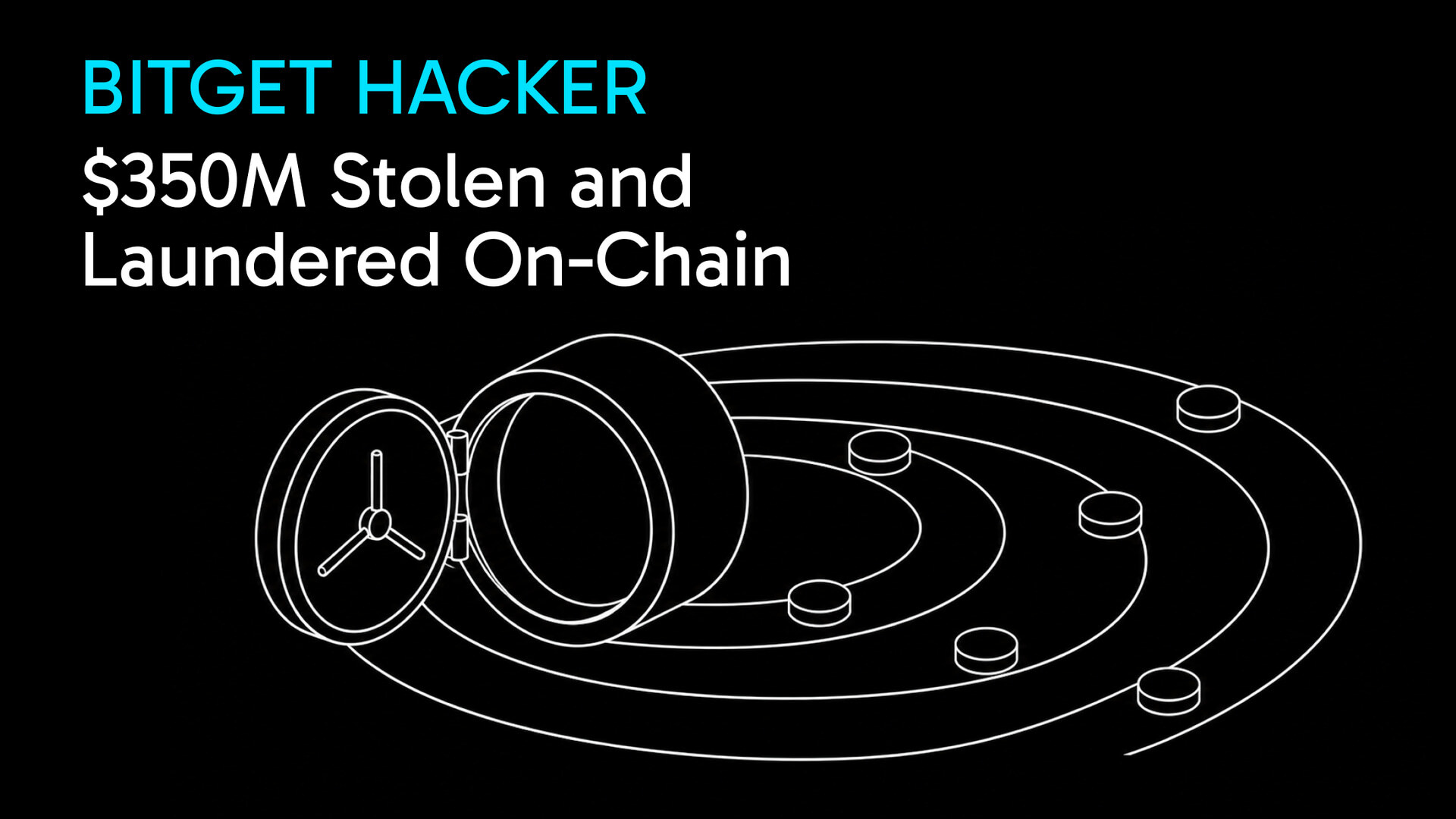
- Hacker: Assigned to wallets associated with protocol exploits, exchange breaches, or other similar theft events. Arkham has used on-chain data to track fund transfers associated with these types of exploits.
- Scam: Wallets associated with fraudulent projects, exit scams, or deceptive schemes designed to steal user funds.
- Ponzi: Addresses linked to schemes where early investors were paid using later investor’s funds.
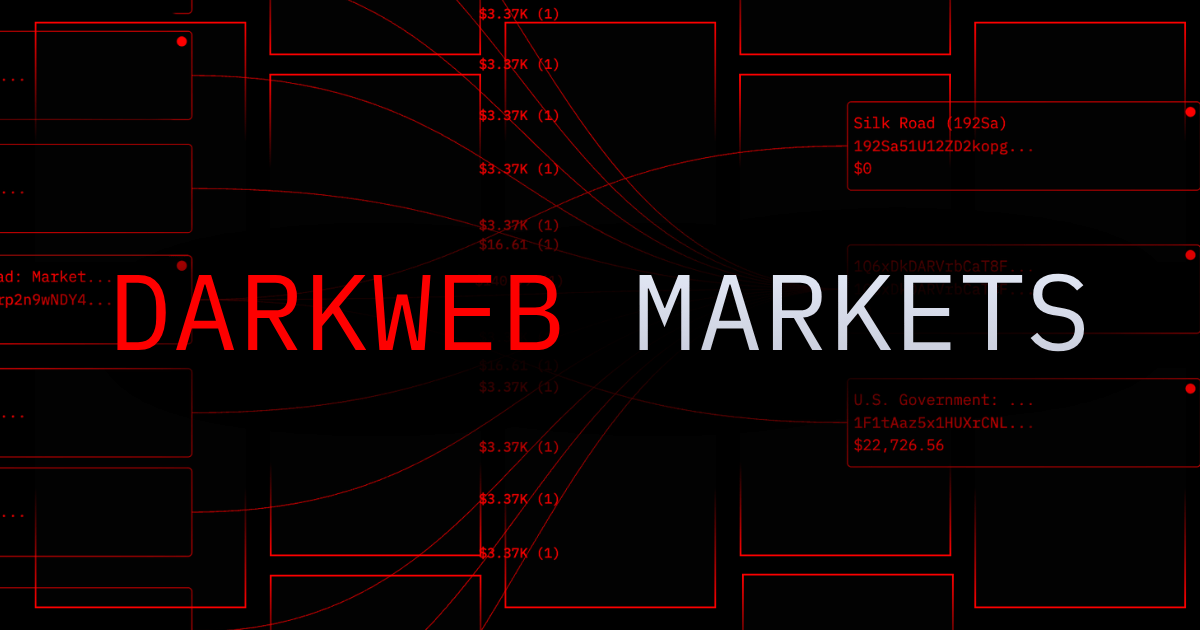
- Dark Web: Wallets that have transacted with dark web markets or illicit services operating beyond the reach of conventional law enforcement.
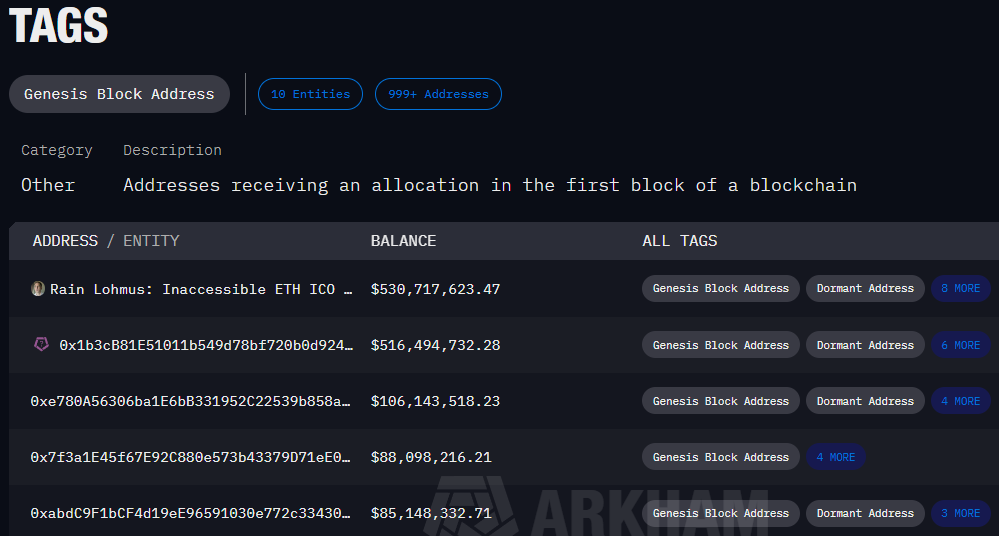
Arkham also maintains a wide list of non-criminal tags. Below are some of the popular non-criminal tags that Arkham offers.
- Genesis Block Address: This tag is for addresses associated with Bitcoin’s genesis block, the very first Bitcoin block ever mined by Satoshi Nakamoto on 1/3/2009. The reward from that block has never been moved.
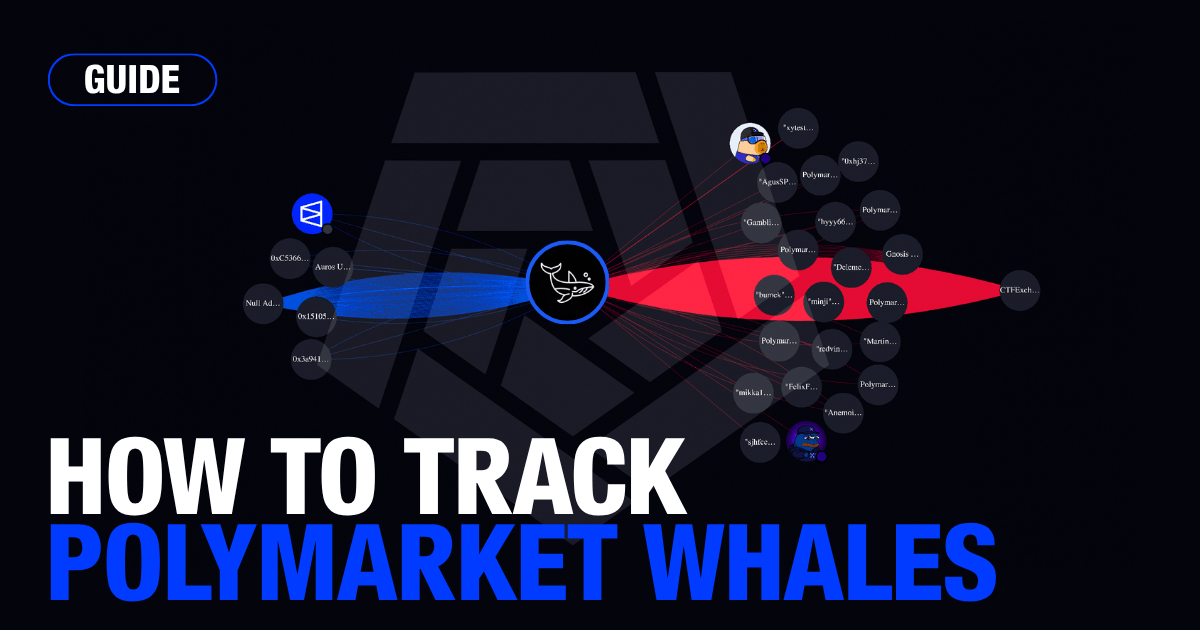
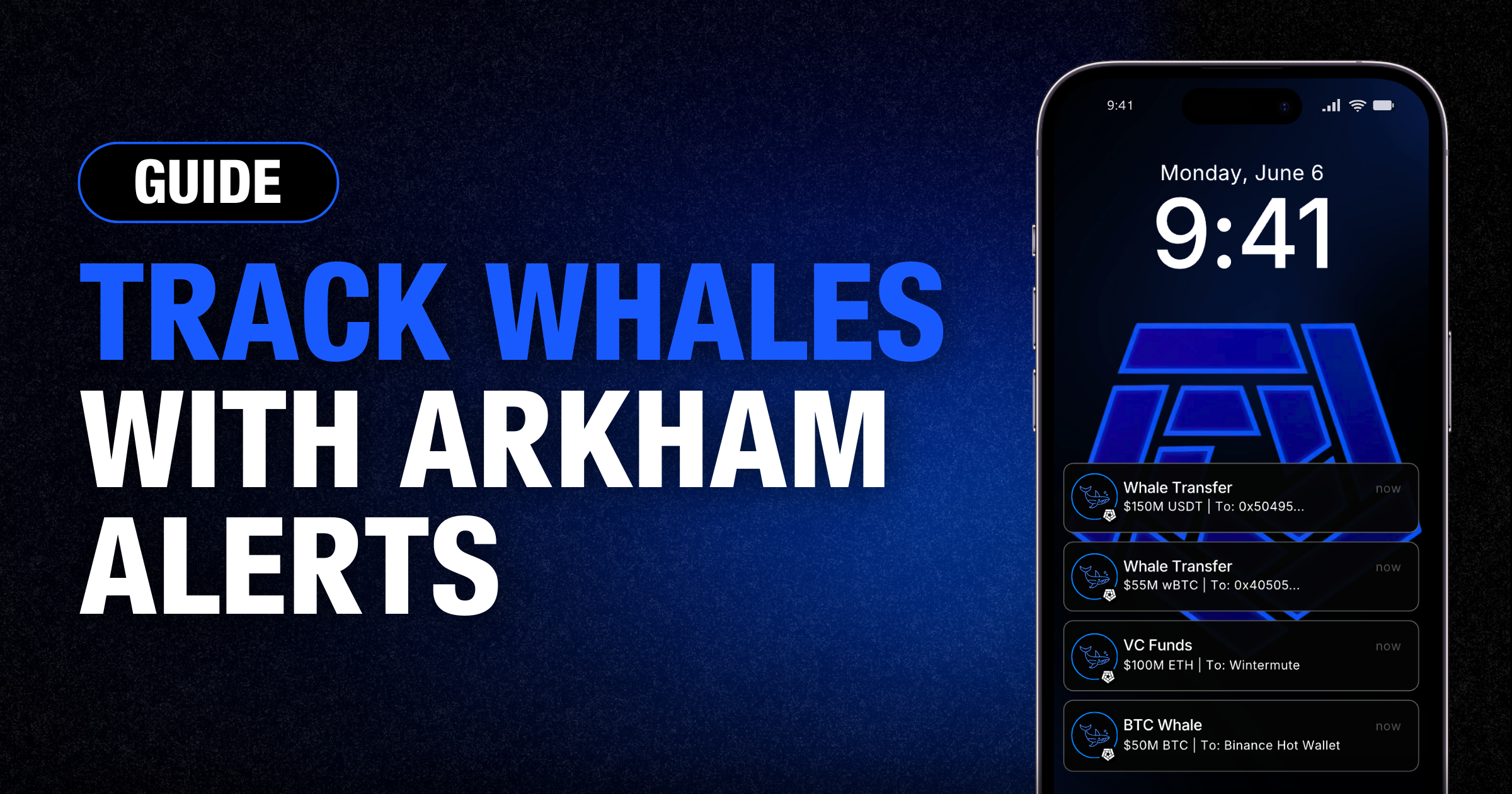
- Whale: The whale tag is applied to wallets that either hold or transact with large amounts of cryptocurrency. These wallet movements can meaningfully impact market prices. Whale tracking is one of the most popular use cases on Arkham, as whale movements typically precede or coincide with major market events. Traders often monitor whale wallets to help determine accumulation phases, potential sell pressure, or shifts in liquidity.
- Prediction Market: This tag is associated with wallets that have participated in on-chain prediction markets such as Polymarket or Kalshi. These wallets are of interest during major political or macro events, as their collective positions can help reveal market-implied probabilities on various outcomes.
- FOMO User: The FOMO (Fear Of Missing Out) tag is applied to wallets that have previous on-chain behavior consistent with emotionally driven trading. These users have a tendency to chase rising prices, typically buying at peak prices during periods of extreme market excitement. This tag turns on-chain behavior into a readable psychological profile, helping users better understand the trader behind these wallets.
Use Cases For Tags
Arkham’s tagging system has a range of meaningful applications across a wide variety of users and industries.
Criminal investigators and law enforcement can use Arkham’s illicit activity tags to quickly identify wallets associated with bad actors, trace stolen funds, and build evidence to prosecute criminals with. Arkham’s on-chain tracking data contributed to the prosecution of FTX’s Sam Bankman-Fried, helped trace Bitzlato money laundering, and enabled real-time monitoring of government-seized Bitcoin holdings. Journalists investigating on-chain criminal activity can also use tags to identify wallets of interest and help build evidence-backed narratives.
Compliance and Risk Management teams can use Arkham to screen counterparties before processing transactions. An address tagged as a scam, hacker, or dark web user represents a clear AML/KYC risk that these teams can immediately review.
Traders often use the whale tags to monitor large holders and anticipate market-moving transactions. Tracking prediction market participants can also offer quality insights regarding real-time crowd sentiment on outcomes.
How Does Arkham Create Tags?
Tags are created through a combination of Arkham’s in-house proprietary AI system, its in-house analyst team, and contributions from the broad Arkham community through the Intel Marketplace.
The Arkham AI system uses machine learning and pattern recognition to analyze on-chain behavior at scale. It aggregates data from both on-chain and off-chain sources (social media, public records, news) to help identify wallet owners. The Arkham Intel Marketplace allows community members to contribute intelligence and receive the platform’s native ARKM token as payment for the information. Contributions can include new address labels, entity attributions, and data supporting the assignment of these tags. Submissions are reviewed by the Arkham Foundation before being incorporated into the official dataset.
For higher-profile cases, Arkham’s in-house research teams conducts dedicated investigations. Some notable investigations done by the team include tagging all US Bitcoin and Ethereum ETF wallets, identifying Satoshi Nakamoto's probable holdings, and tracking the German government’s Bitcoin sell-off during 2024.
Conclusion
Arkham’s tagging system is a significant step towards making blockchain data legible and actionable for all. By layering tags on top of raw on-chain data, Arkham is able to transform pseudonymous wallet addresses into recognizable actors. Arkham’s extensive tag library covers a wide range of entities, behavioral patterns, historical milestones, and illicit activity on-chain. This comprehensive tagging of on-chain data helps solidify Arkham as a leader in the blockchain analytics space. For users looking to understand on-chain activity thoroughly, Arkham’s tags are an incredibly powerful tool that anyone can use to do so.

.png)





.jpeg)

.png)












.png)










.jpg)

.jpeg)










.png)
.jpg)

.png)
.png)



.png)


.png)
.png)
.png)


.png)
.png)




.png)
.png)
.png)