June 15, 2026
at
8:50 am
EST
MIN READ
Hyperliquid’s Brent Oil Perp Hits Lowest Price Since March
.png)
Hyperliquid’s Brent Oil perpetual contract - deployed by TradeXYZ - dipped below $81 late on Sunday night after Trump announced the memorandum of understanding with Iran.
This is the lowest price of the contract since 10th March. The Iran war was just two weeks old then.
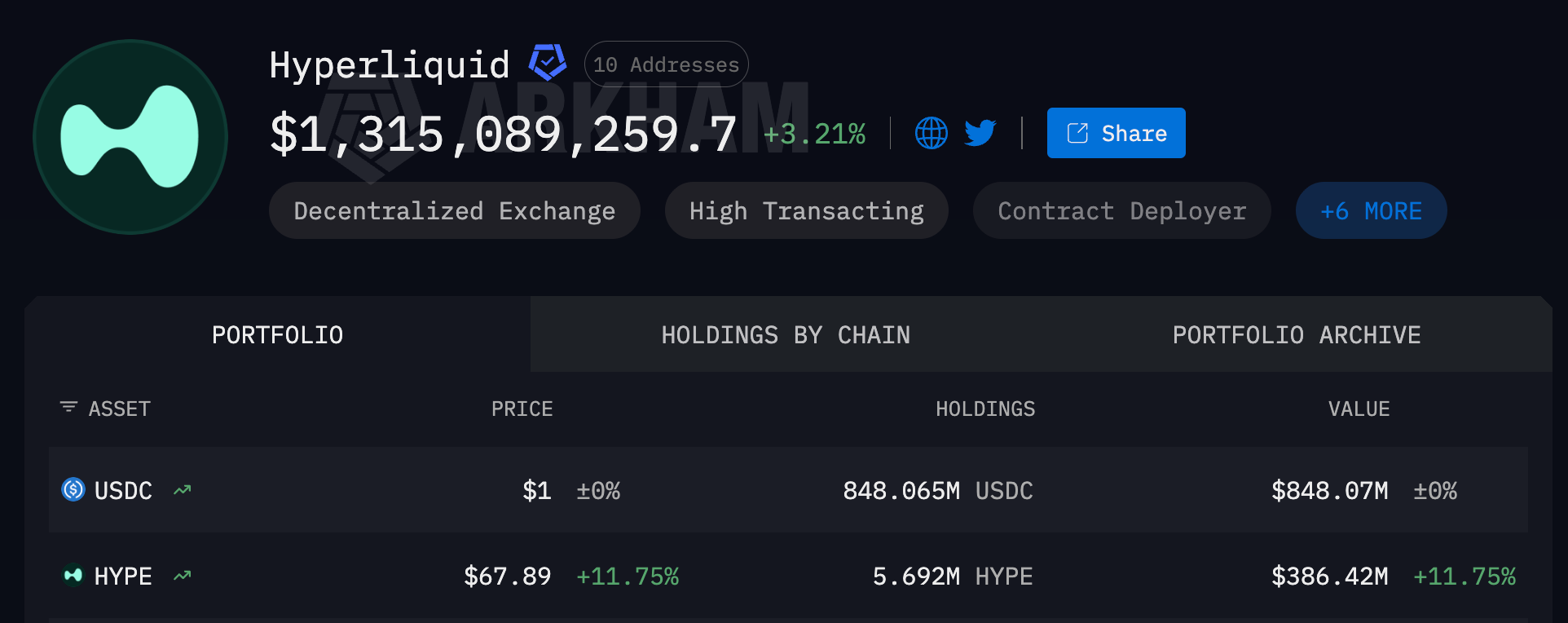
The BRENTOIL-USDC trading pair is a perpetual futures contract which allows blockchain-native traders to speculate on the future price of Brent crude oil. It takes advantage of the Hyperliquid network’s HIP-3 upgrade, whereby approved entities (like TradeXYZ) that have staked 500K HYPE ($34M) can deploy markets on basically anything, but most commonly stocks, commodities and pre-IPO companies.
The BRENTOIL-USDC on-chain trading pair tracks the price of the same off-chain derivative products closely. The dip below $81 has come amidst renewed hope that the Strait of Hormuz will be fully opened.
The memorandum of agreement between the two nations is expected to be signed on Friday in Switzerland. Any event that could scupper the peace deal would likely send the Brent Oil perp price back towards $90.
However, signing the agreement is only the first step. There are several major logistical hurdles remaining before the flow of oil can fully normalize. The outcomes of these hurdles will determine the price of oil in the medium to long-term.
Firstly, the Strait of Hormuz needs to be de-mined. Secondly, Middle East oil production needs to return to pre-conflict levels. This means damaged facilities across the region must be repaired before operations can scale back up.
Additionally, heavily depleted global reserves will need to be filled. This will significantly increase demand for oil and potentially lead to higher prices for consumers for longer. Maritime insurance premiums will also need to come down before shipping companies fully resume their traditional routes.
For traders of the BRENTOIL-USDC on-chain market, the most critical indicator to watch out for is actual ship traffic in the Strait of Hormuz. Traffic is way below average and the success of the peace agreement will be correlated with the return of meaningful traffic to the strait in the coming weeks.
HyperEVM - which is Hyperliquid’s smart contract layer - is now a supported chain on Arkham Intel. This means you can track HYPE whales and top holders, and use all of Arkham Intel’s features with HyperEVM data.

.png)








.png)
.png)





.jpg)



.png)
.png)


.png)
.png)


.png)
.png)

.png)
.png)




.png)
.png)
.png)



.png)




.png)