July 22, 2026
at
7:15 am
EST
MIN READ
Private Blockchains: A Guide To Enterprise Blockchain Projects
Banks, shipping companies, hospitals, and retailers are building blockchain networks that are closed off by design, where only vetted organizations get to hold a copy of the ledger or add to it. These private blockchains trade the openness of public blockchains for full control, faster transaction speeds, and the ability to meet legal and regulatory requirements. A large share of the actual enterprise adoption happening today takes the form of private blockchains - despite most of the attention blockchain technology receives coming from public networks like Bitcoin and Ethereum, where anyone can participate in the network.
Although sometimes confused for each other, a private blockchain is not a privacy chain. A privacy chain, such as Monero or Zcash, tends to be a public network that anyone can join, with cryptographic tools layered on top to obscure details like sender, receiver, or transaction amount. On the flip side, a private blockchain may record every detail in full view, but only allow a pre-approved list of members to access or edit it.
Summary
- A private blockchain restricts read and write access to a vetted group of participants, usually organized around a single company or a small consortium of partners.
- Enterprises put private chains to work on tasks like interbank settlement, supply chain tracking, and patient record sharing, where speed, cost control, and confidentiality are the priorities.
- Private blockchains trade away the trustless, censorship-resistant qualities of public networks like Bitcoin or Ethereum in exchange for governance, throughput, and legal accountability.
- Frameworks such as Hyperledger Fabric and R3 Corda dominate most production deployments today, powering platforms like IBM's Food Trust, and the SIX Digital Exchange, alongside bank-built networks like JPMorgan's Kinexys
What Is a Private Blockchain?
Picture a company that keeps its accounting ledger in a locked filing cabinet inside a single office. Only staff with a key can open the cabinet, add a new page, or read what's already written. Nobody outside the building even knows the cabinet exists unless they're told. A private blockchain is the digital version of that cabinet, with copies of the ledger are held by several trusted branches of the same organization, or by a handful of partner companies, and every copy updates in lockstep whenever an authorized entry is made.
The word "blockchain" still applies because the underlying concept still holds. Data is grouped into blocks, with each block referencing the one before it, and altering old entries breaks the chain for everyone holding a copy.
How Do Private Blockchains Work?
Most private blockchains still rely on the same building blocks as their public counterparts: cryptographic hashing to link blocks together, a consensus mechanism to agree on the current state of the ledger, and some form of digital signature to confirm who authorized a transaction. The difference lies mostly at the access layer.
In a private chain, node status is assigned to known, identified organizations or users. These are known and trusted participants, allowing the network to use lighter, faster consensus methods, things like Practical Byzantine Fault Tolerance (PBFT) or Raft. This is opposed to the energy-intensive mechanisms such as proof-of-work, which also enables private blockchain to process transactions at a much faster rate in general.
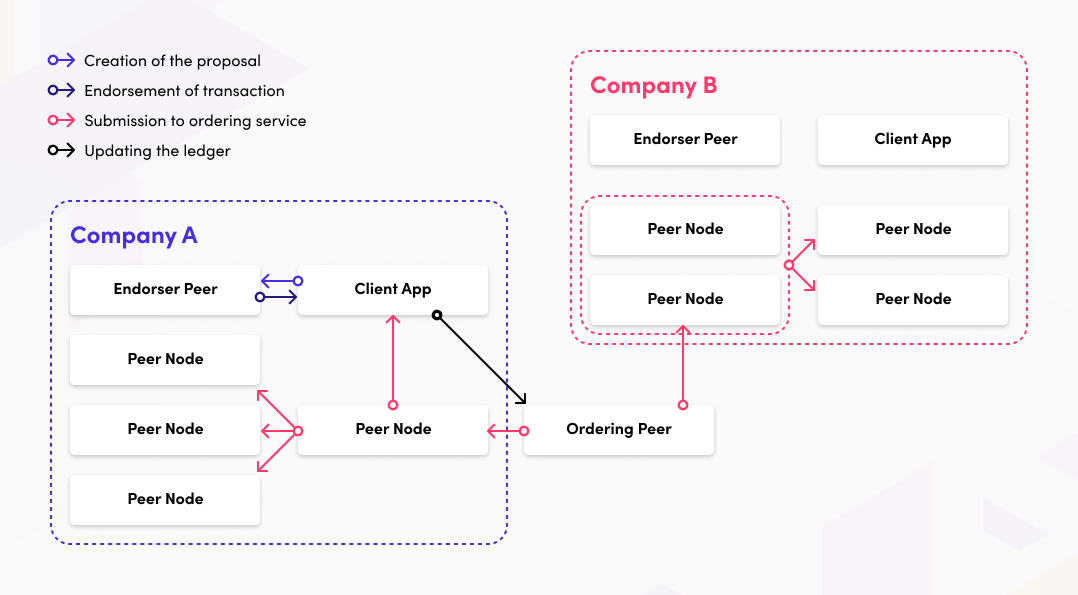
Access is usually layered too as with most traditional systems. A bank running a private settlement network might let its own branches read and write freely, allow regulators to read but not write, and restrict everyone else. Smart contracts, where used, run only among approved parties, and the resulting data rarely leaves the users or organisations authorized within the blockchain.
How to Create a Private Blockchain?
Building a private blockchain from scratch is rare in practice. Instead, most organizations start from an existing framework and configure it for their own business needs.
The first task is settling on the participant list itself: which entities get node status, and whether each one is allowed to write new records, merely read existing ones, or both. From here, most teams choose an existing framework as their base, whether that is Hyperledger Fabric, R3 Corda, or a fork of Ethereum's codebase, which is the approach JPMorgan took when it built Quorum (which has since been acquired by ConsenSys). On top of that framework, the team sets a consensus rule suited to a small, known validator set. Raft and PBFT-style protocols are common choices here, since they favor speed and finality over the anonymity guarantees a public network needs to maintain.
As with any blockchain, the code is useless without governance to manage it. Someone has to decide how disputes get resolved, how new members get admitted down the line, and who holds the authority to change the rules later on, which is usually spelled out in a legal agreement that runs in parallel with the technical build. Only once the participant list, the framework, and the governance terms are settled does deployment begin. Nodes go up on private servers or a cloud environment, any smart contracts get written and audited, and the whole setup is tested under realistic transaction loads before it goes live.
Since the majority of this setup lies in configuration of each framework to their needs, enterprise blockchain projects tend to lean heavily on vendor support, whether that's IBM for Hyperledger deployments or R3 for Corda-based networks.
Public vs Private
The core trade-off between public and private blockchains comes down to who is allowed in and what that costs the network in return.
Public blockchains like Bitcoin and Ethereum are open to anyone. Nobody needs permission to run a node, submit a transaction, or audit the full transaction history. That openness is precisely what allows outside analysts to study these networks in detail, which results in the trust that these networks command. None of that outside scrutiny is possible on a private chain, because the ledger simply isn't exposed to anyone outside the approved list.
Private blockchains give up openness in exchange for control. A bank consortium can process a settlement in under a second because it doesn't need to achieve consensus with thousands of other anonymous nodes. It can also easily reverse an erroneous entry if its governance rules allow it, something that would be likely impossible on a large public network such as Bitcoin or Ethereum. On a private network, its users place their trust in the operator or its governing committee.
What are Permissioned Blockchains?
"Permissioned" and "private" get used almost interchangeably, but they describe slightly different things. A permissioned blockchain is any network where an identity check gates participation, meaning you need approval to join in some capacity. A private blockchain is a specific, narrower version of that idea, where a single entity or a tight group controls the whole network end to end.
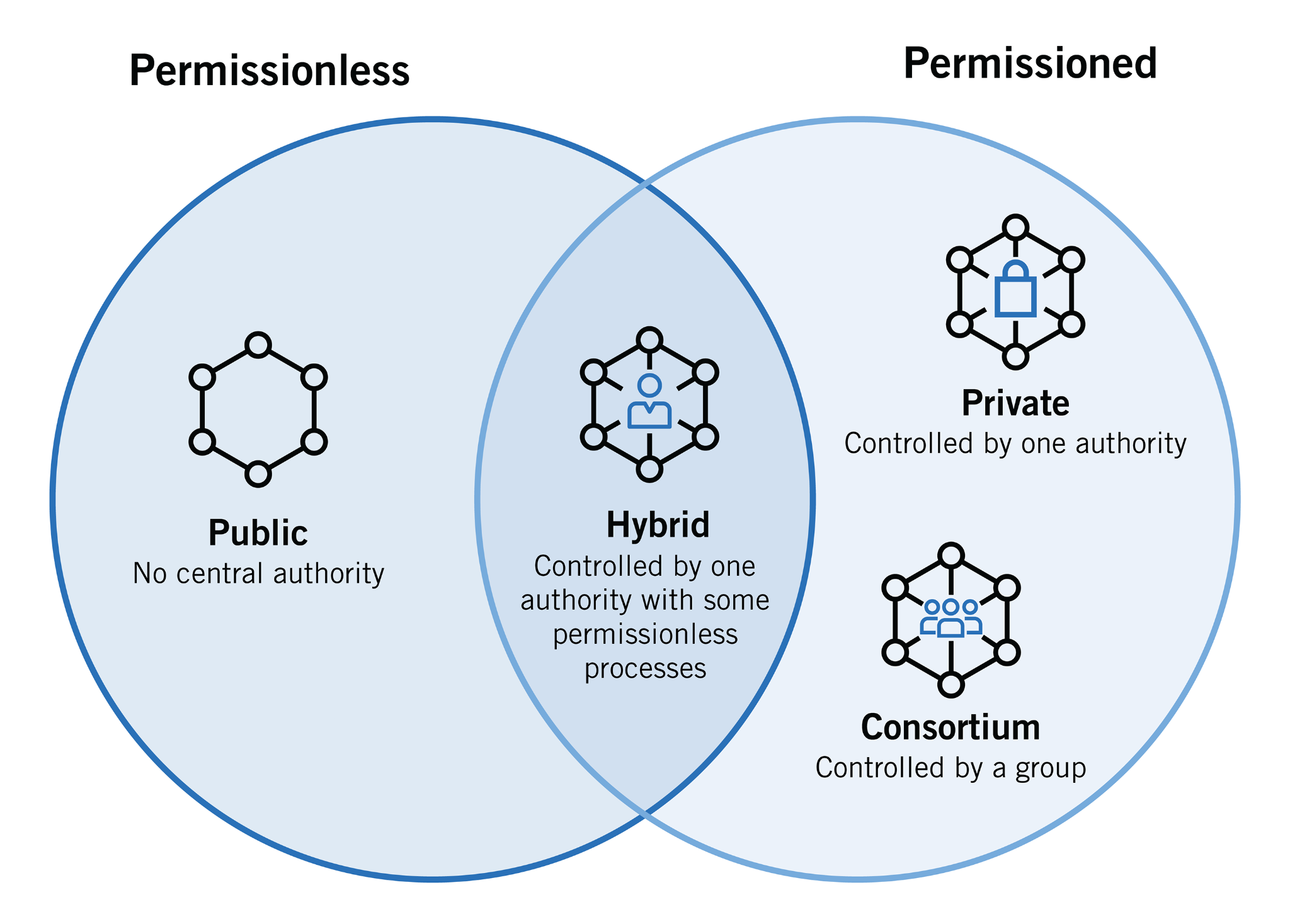
A consortium chain, where ten banks jointly operate the validating nodes but the transaction data is visible to a broader set of regulators or auditors, is permissioned but arguably not fully private, since no single party owns it outright. R3's Corda network, used by groups of financial institutions, belongs to this consortium model. A single retailer running its own internal supply chain ledger, by contrast, is both permissioned and private in the strictest sense, since that one company controls admission, governance, and the infrastructure itself.
Private Blockchain Use Cases
Interbank settlement and payments: Financial institutions use private ledgers to move value between themselves without routing every transaction through slower, legacy correspondent banking rails. JPMorgan's Kinexys, built on infrastructure that started as Quorum, has processed more than $3 trillion in cumulative transactions and now averages daily volumes above $7 billion across eight currencies, according to the bank's own disclosures.
Trade finance and letters of credit. An importer, an exporter, and their respective banks, all need to agree on where a shipment stands and whether its paperwork checks out. A shared but restricted ledger lets them update a single record instead of exchanging faxes and emails.
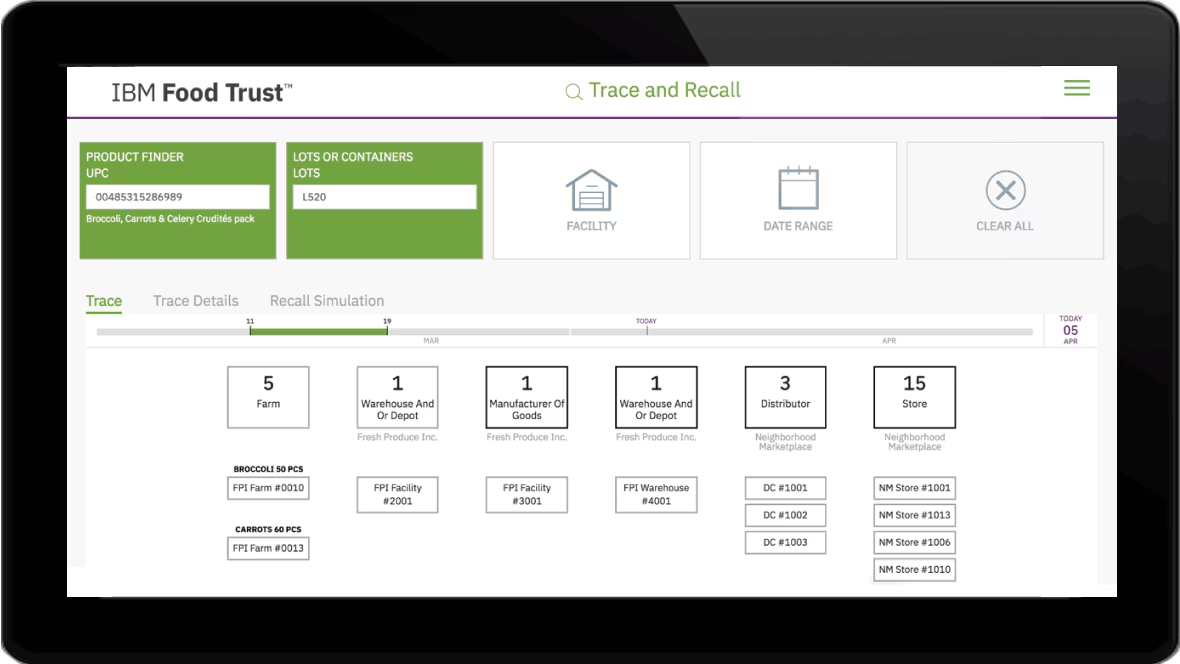
Supply chain tracking. Manufacturers and retailers have experimented with private chains to record where a product has been, from raw material to shelf, giving partners a shared view without publishing sourcing details to competitors. In 2019, Walmart partnered with IBM for such a venture, built on Hyperledger Fabric’s infrastructure.
Healthcare records. Hospitals and insurers have tested private ledgers for sharing patient data between authorized providers, since regulatory requirements around data privacy make a fully public ledger a non-starter. Estonia is one of the countries which have implemented healthcare records on a private blockchain, the KSI blockchain, processing over 2.7M queries from patients monthly.
Internal corporate record-keeping. Some large enterprises use private chains simply to create tamper-evident internal logs, such as audit trails or asset registries, without any intention of ever opening the network to outsiders.
Private Blockchain Examples
Hyperledger Fabric. Hosted by the Linux Foundation, this modular framework is one of the most widely adopted bases for enterprise blockchain deployments, used across banking, logistics, and healthcare pilots. It is what powers IBM’s Food Trust, the system that Walmart uses.
R3 Corda. Built specifically with financial institutions in mind, Corda allows transactions to be visible only to the parties directly involved in them. Corda has been used by several notable financial institutions and banks, including the SIX Digital Exchange, DTCC’s Project Ion, and Euroclear.
JPMorgan's Kinexys (formerly Onyx and Quorum). Originally launched as Quorum, a permissioned fork of Ethereum built for institutional needs, this infrastructure now underpins Kinexys Digital Payments and Kinexys Digital Assets, JPMorgan's platforms for tokenized settlement, collateral movement, and fund administration.
TradeLens. A joint venture between IBM and Maersk built on Hyperledger Fabric, TradeLens aimed to digitize global shipping documentation across a private network of carriers and ports. Despite technical success, the platform failed to gain enough industry-wide buy-in and was discontinued by both companies in 2023.
Conclusion
Private blockchains aren't trying to replace public networks or reinvent trust from scratch. They're a tool a bank, hospital, or shipping consortium can use to get a group of already-trusted partners onto the same record faster and more reliably than spreadsheets, faxes, or phone calls allow. Their goal is narrower than Bitcoin or Ethereum's vision of decentralized, uncensorable money. They just need to serve the specific needs of the company or consortium that built them.

.png)















.png)









.jpeg)





.jpg)

.jpeg)














.png)


.jpg)




.png)

.png)



.png)

.png)
.png)
.png)


.png)
.png)








.png)
.png)
.png)

.png)