August 25, 2026
at
12:40 pm
EST
MIN READ
How To Verify a Crypto Exchange's Proof of Reserves
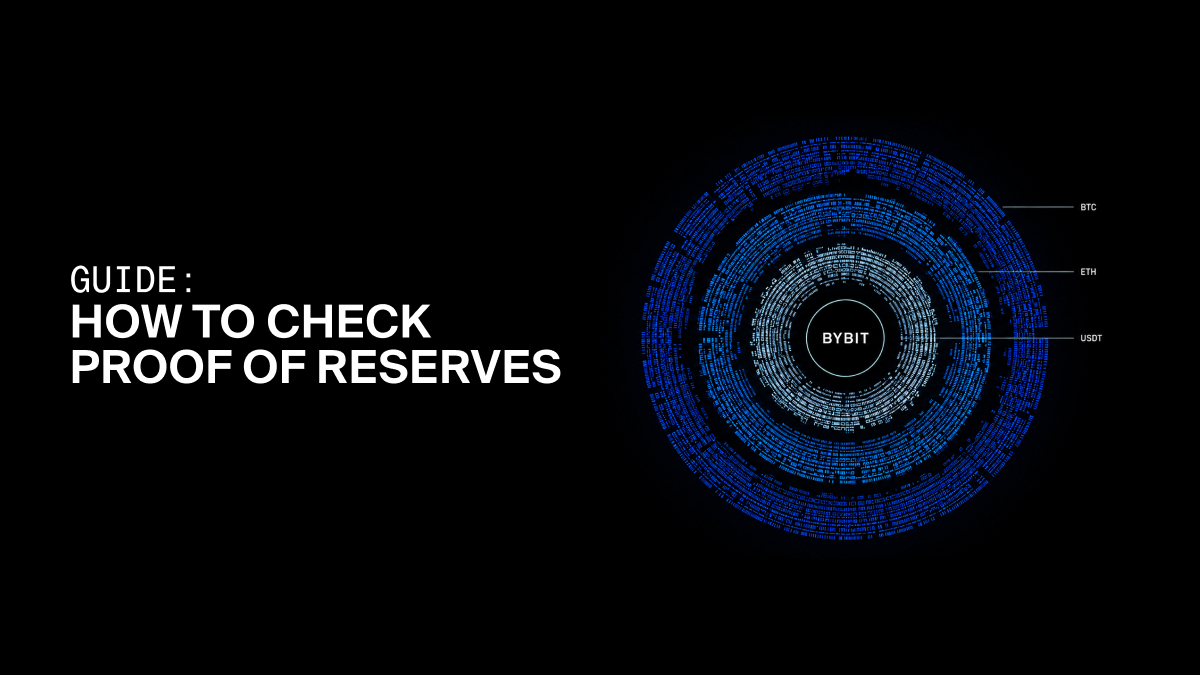
The collapse of major centralized platforms in 2022 changed how many crypto traders and investors view counterparty risk. Trusting a centralized exchange (CEX) with capital now requires verifiable, on-chain evidence that the institution holds the assets it claims to hold.
While many exchanges publish static audit reports or Merkle tree cryptographic proofs, these snapshots can become outdated within hours of publication.
To maintain real-time visibility into an exchange's financial health, traders and institutions turn to blockchain analytics. Intelligence and blockchain data platforms like Arkham provide a live, transparent window into the exact wallet clusters controlled by centralized entities, providing instant verification of reserves.
This guide outlines exactly how anyone can verify a crypto exchange's proof of reserves using Arkham, focusing on the exchange Bybit as our central case study. Arkham’s data and intelligence tools can be used through the website, or via API.
Background Context: Bybit
Founded in 2018, Bybit is one of the largest cryptocurrency exchanges in the world. It is headquartered in Dubai and caters to both retail traders and institutional clients.
Bybit publishes its own Proof of Reserves (PoR) data. However, for those who prefer not to rely solely on exchange-provided data, Arkham offers the ability to independently verify Bybit's on-chain footprint 24 hours a day.
What Are Proof of Reserves in Crypto?
Proof of Reserves refers to the method by which an exchange proves it holds sufficient assets to fully collateralize deposits. If a platform has $5 billion in user liabilities, a Proof of Reserves audit should demonstrate that the platform controls at least $5 billion in assets across its hot and cold wallets.
While traditional audits rely on centralized accounting firms, crypto allows anyone to audit an exchange using block explorers and intelligence platforms. Arkham aggregates the known wallets of an exchange, clusters them into a single entity profile, and tracks the net value of those assets in real time.
According to Arkham data, Bybit has 17.7M addresses and around $15.5 billion in assets. Continue reading to find out how you can check this for yourself.
How To Check An Exchange’s Proof of Reserves on Arkham
To begin your analysis, navigate directly to the Bybit entity page on Arkham: https://arkm.com/explorer/entity/bybit.
This dashboard is the central hub for all on-chain data associated with Bybit.
1. The Entity Page
The entity page provides an immediate, high-level overview of Bybit's financial standing. At the top of the dashboard, you will see the total USD value of all assets held across Bybit's known wallet addresses.
When evaluating proof of reserves, this top-line number is your starting point. It represents the aggregate value of the exchange's hot wallets (used for daily withdrawals) and cold wallets (used for secure, long-term storage). You can cross-reference this figure with Bybit's self-reported liabilities found on their website.
At the time of writing, Bybit’s most recent Proof of Reserves report from July 22, 2026, claims $16.2 billion in reserves, while Arkham data for the same date shows $14 billion. This discrepancy is likely due to a combination of factors, including portfolio value fluctuations, changes in asset holdings, off-chain cash reserves, exchange wallets that Arkham has yet to attribute, or other unidentified variables.
You can interact directly with Bybit’s Arkham entity in the window below:
2. Portfolio Breakdown by Chain and Asset
A healthy reserve is not just about the total dollar amount; the composition of the assets matters significantly. If an exchange's reserves consist primarily of highly illiquid altcoins or its own native exchange token, its solvency could be at risk during a market downturn.
On the Arkham dashboard, the Portfolio tab allows you to explore Bybit's different token holdings:
- Holdings by Asset: The default view ranks the specific tokens held by the exchange. For a major exchange like Bybit, you should expect to see large concentrations of collateral, specifically Bitcoin (BTC), Ethereum (ETH), and stablecoins like USDT and USDC.
- Holdings by Chain: This section illustrates how capital is distributed across different blockchain networks, such as Ethereum, Bitcoin, Tron, and Solana.
- NEW FEATURE: Now, you can also see any open positions Bybit has on Hyperliquid.
By analyzing this breakdown, institutional readers can verify that the exchange is holding the exact assets that clients have deposited, rather than taking directional risks with user funds.
3. Analysing Historical Balances
A single snapshot in time does not tell the full story of an exchange's solvency. To understand how Bybit manages its liquidity over time, you can use the Balance History graph located on the entity page.
This interactive chart displays the USD value of Bybit's reserves over customisable timeframes (e.g., 1 month, 3 months, 1 year).
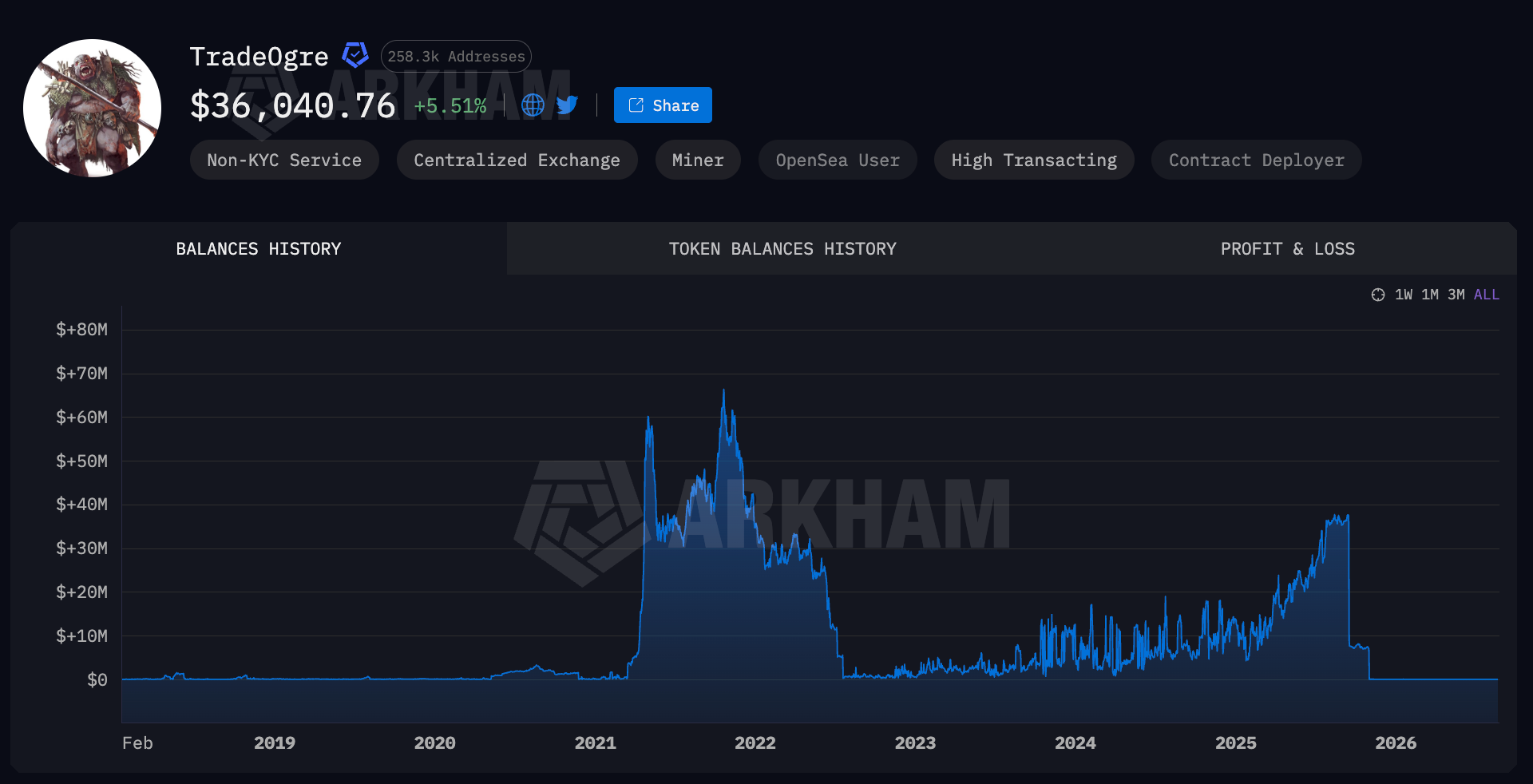
- Stable base lines: A healthy exchange will show a relatively stable or steadily growing reserve balance, fluctuating naturally with the broader crypto market cap.
- Sudden drop-offs: If you notice a sheer, unexplained cliff in the historical balance graph, it may indicate a withdrawal event, a security breach, or the exchange moving funds to untagged wallets. TradeOgre’s Balance History graph is a good example of what you don't want to see with your crypto exchange. TradeOgre was seized by the Canadian police in September 2025 due to it being a hub for illicit finance.
4. Tracking Exchange Inflows and Outflows
Capital is constantly flowing in and out of exchanges as users deposit collateral and withdraw profits. The transfers panel is where you can track this movement.
The transaction feed shows every single transfer involving a Bybit address. If rumors of a bank run or liquidity crisis emerge, you can check this feed to see if withdrawals are still being processed normally or if outbound transfers have halted.
You can toggle between inflows, outflows, and swaps. You can also apply a range of filters to the transfers panel: chain, value, token, USD value, etc.
5. Setting Custom Reserve Alerts
For professional traders and risk managers, manually checking an entity page every day is inefficient. Arkham allows you to automate parts of your auditing process by setting alerts on the Bybit entity, or on specific ByBit wallets.
You can configure Arkham to send you a push notification, email, or Telegram message based on specific parameters:
- Large Outflows: Set an alert to trigger if a single transaction leaving Bybit exceeds $50 million.
- Specific Tokens: Monitor whether Bybit is rapidly draining its stablecoin reserves, for example.
- Counterparty Alerts: Receive a notification if Bybit begins transferring funds to a known risky entity or an exploitation contract.
Arkham vs Traditional Audits
To understand why on-chain verification is essential, compare Arkham's intelligence tools against traditional exchange reporting:
Note: While Arkham provides visibility into an exchange's assets, on-chain data cannot reveal off-chain liabilities. An exchange may hold $5 billion on-chain, but if they owe creditors $6 billion off-chain, they are still insolvent. Arkham should be used to verify the asset side of the equation alongside public liability attestations.
By using the Bybit entity page on Arkham, market participants can move past trusting centralized promises and start independently verifying exchange solvency through raw, on-chain data.

.png)












.jpeg)




.jpg)


.jpeg)





.png)










.png)
.jpg)


.png)

.png)



.png)

.png)
.png)
.png)


.png)
.png)







.png)
.png)
.png)

.png)





.png)