August 19, 2026
at
12:15 pm
EST
MIN READ
Bitcoin Hits $69K, Ethereum Hits $2K After Treasury Announcement
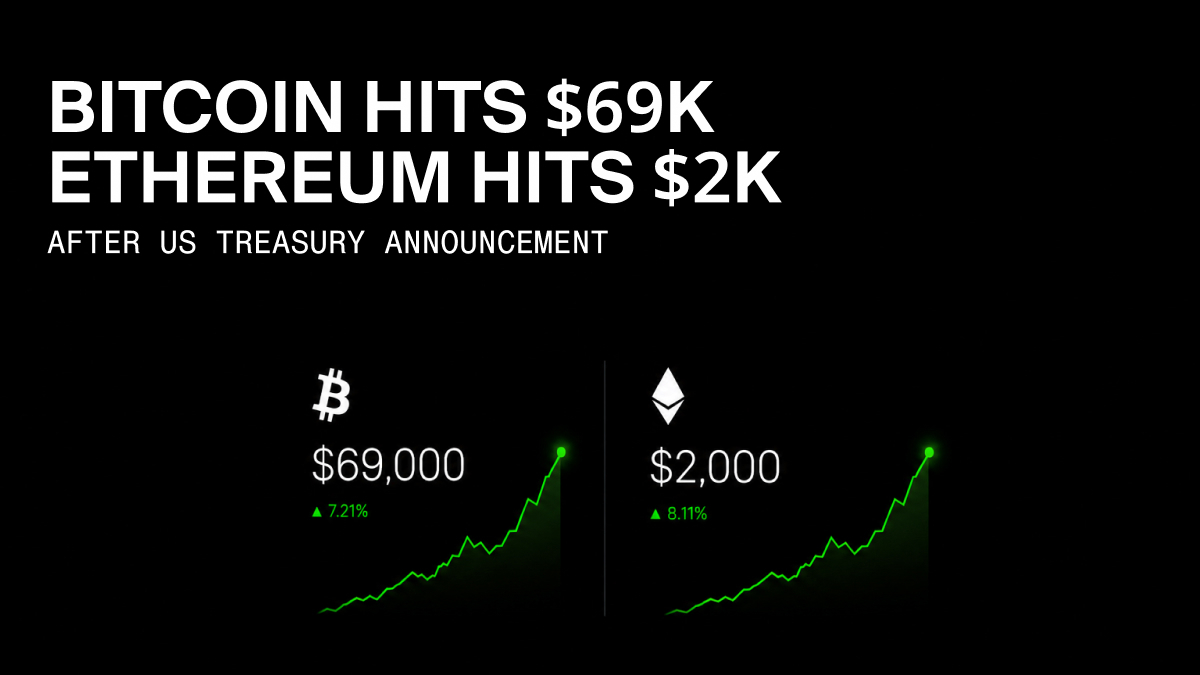
Cryptocurrency markets surged today, with Bitcoin breaking back above $69,000 and Ethereum reclaiming the $2,000 level. The broad-market rally followed a major policy update from the U.S. Department of the Treasury regarding its debt management operations.
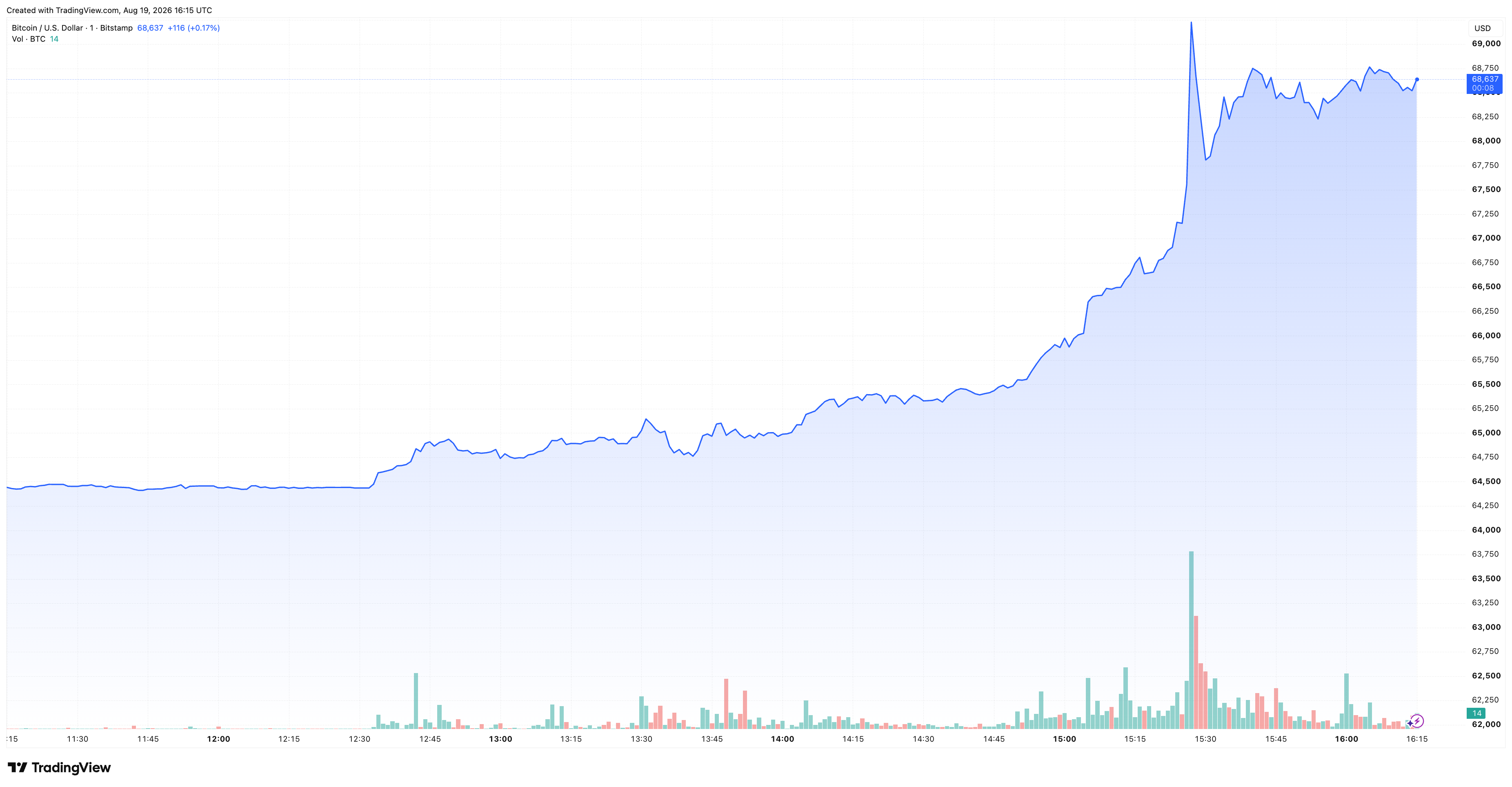
Treasury Doubles Bond Buybacks
In an official statement, the U.S. Treasury announced that it is increasing, by at least double, the size of its liquidity support buyback operations for longer-dated nominal coupon securities. The policy specifically targets the 10-year to 20-year sector and the 20-year to 30-year sector.
The Treasury is essentially stepping into the market to buy back its own older, less-liquid debt securities from investors and primary dealers.
Under the new mandate, the maximum purchase cap will increase from $2 billion per operation to at least $4 billion per operation. By purchasing these long-dated bonds, the Treasury injects cash back into the financial system and removes supply from the market.
The change takes effect on September 9, 2026, and will remain in place through November 4, 2026, covering the remainder of the current refunding quarter. The Treasury confirmed that an updated tentative buyback schedule will follow, with further guidance on future buyback sizing.
Expanding Macro Liquidity
The Treasury stated that the increased operation size reflects a clear objective to improve liquidity in longer-dated bonds. Long-term yields recently spiked to multi-year highs (increasing the costs of government borrowing). This intervention is designed to calm the plumbing of the long end of the Treasury market (20 and 30 year bonds).
For crypto market participants, bond buybacks represent a direct easing of liquidity conditions by the U.S. Government. Doubling buybacks means billions of dollars flow back into the financial ecosystem, increasing overall market liquidity.
The Treasury will effectively free up balance sheet capacity and inject liquidity into the broader financial system.
Digital assets are sensitive to global liquidity changes, prompting a risk-on reaction across spot markets as Bitcoin crossed $69,000 and Ethereum climbed above $2,000.

.png)

.jpeg)







.jpg)




.jpeg)







.png)














.png)


.jpg)









.png)

.png)





.png)


.png)

.png)

.png)


.png)
.png)










.png)
.png)
.png)
.png)





.png)