September 4, 2026
at
5:05 am
EST
MIN READ
How To Use AI For Crypto Trading
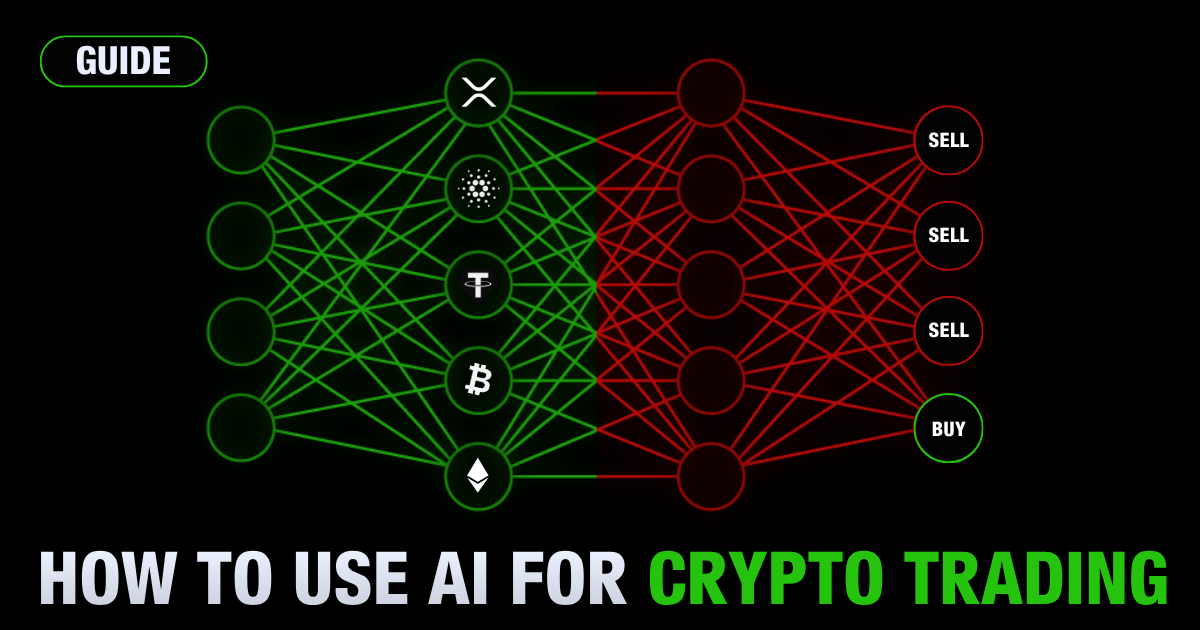
Artificial intelligence has completely transformed how modern market participants interact with crypto markets. Today, deploying AI in this space can take many distinct forms, ranging from blockchain data research to automated execution. Some advanced traders even attempt to leverage AI to hunt for competitive Maximal Extractable Value (MEV) opportunities across public networks.
However, diving into AI-driven trading without a proper system carries financial and operational risks. To navigate this landscape, you need to understand what AI is good at/better than a human at, and where it is worse than a human, and might be outcompeted by humans. This guide explores how to build an AI crypto trading tool while avoiding the pitfalls of giving AI full control.
Autonomous Trading Bots
Autonomous trading bots are programs or algorithms that automatically execute transactions on exchanges without direct human intervention. In practice, these bots are frequently deployed for specific high-frequency use cases, such as capitalizing on cross-exchange arbitrage opportunities, managing automated portfolio rebalancing, or executing trend-following strategies. While they can improve efficiency and operate 24/7, they come with risk to your capital, usually when they overfit historical data (when the analysis corresponds too closely to past data and therefore misses future trends) or face predatory smart contracts (like honeypot tokens designed to be unsellable once bought) in live environments.
Intelligence via Arkham Ultra
One of the methods of using AI for crypto trading is to simply leverage a blockchain intelligence tool that has already built the AI systems into its tools, like Arkham.
Arkham’s proprietary AI engine, ULTRA, has helped us de-anonymise over 800,000 crypto entities. All of these are tagged and labelled, giving users an instant insight into an address that was previously just an anonymous alphanumeric string.
Here are the key ways people use Arkham’s AI systems for crypto trading:
- Track Entities, Not Addresses
When you are manually hunting for data on a standard block explorer, you are forced to track individual wallet addresses. But market participants - whales, hedge funds, and exploiters - distribute their capital across hundreds of shifting addresses. If you only watch a single address, you miss the broaderw picture.
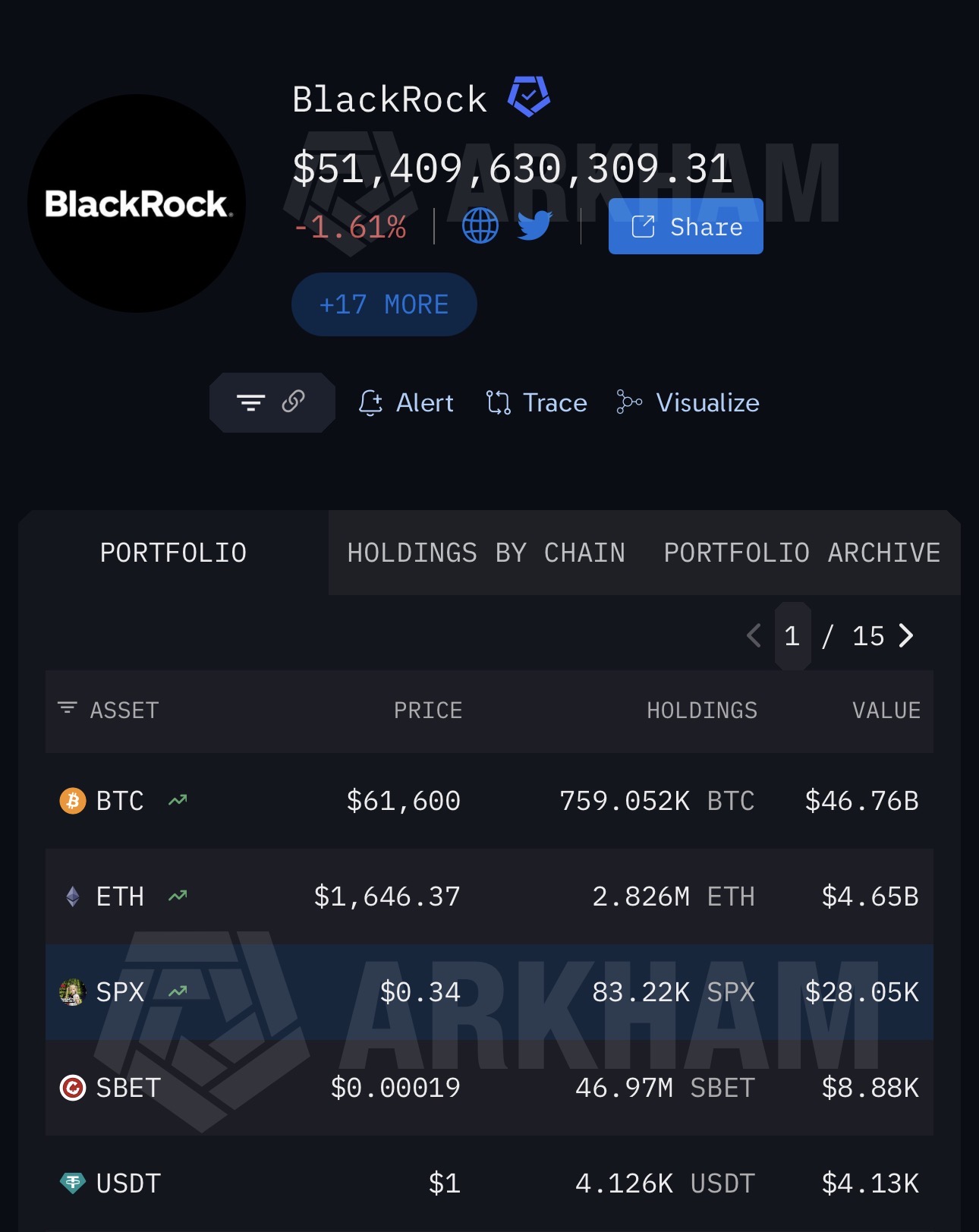
Arkham ULTRA solves this by clustering these wallets into a single entity profile (e.g. BlackRock). From here, users can set alerts, track every transfer, and use intelligence features like Tracer and Visualizer to find even more alpha.
- Audit Token Distribution
Before you ever allocate capital to a newly launched token you should audit its actual distribution. The crypto industry has some of the best marketers in the world, and the reality of a project or token can often be very different from its slick presentation.
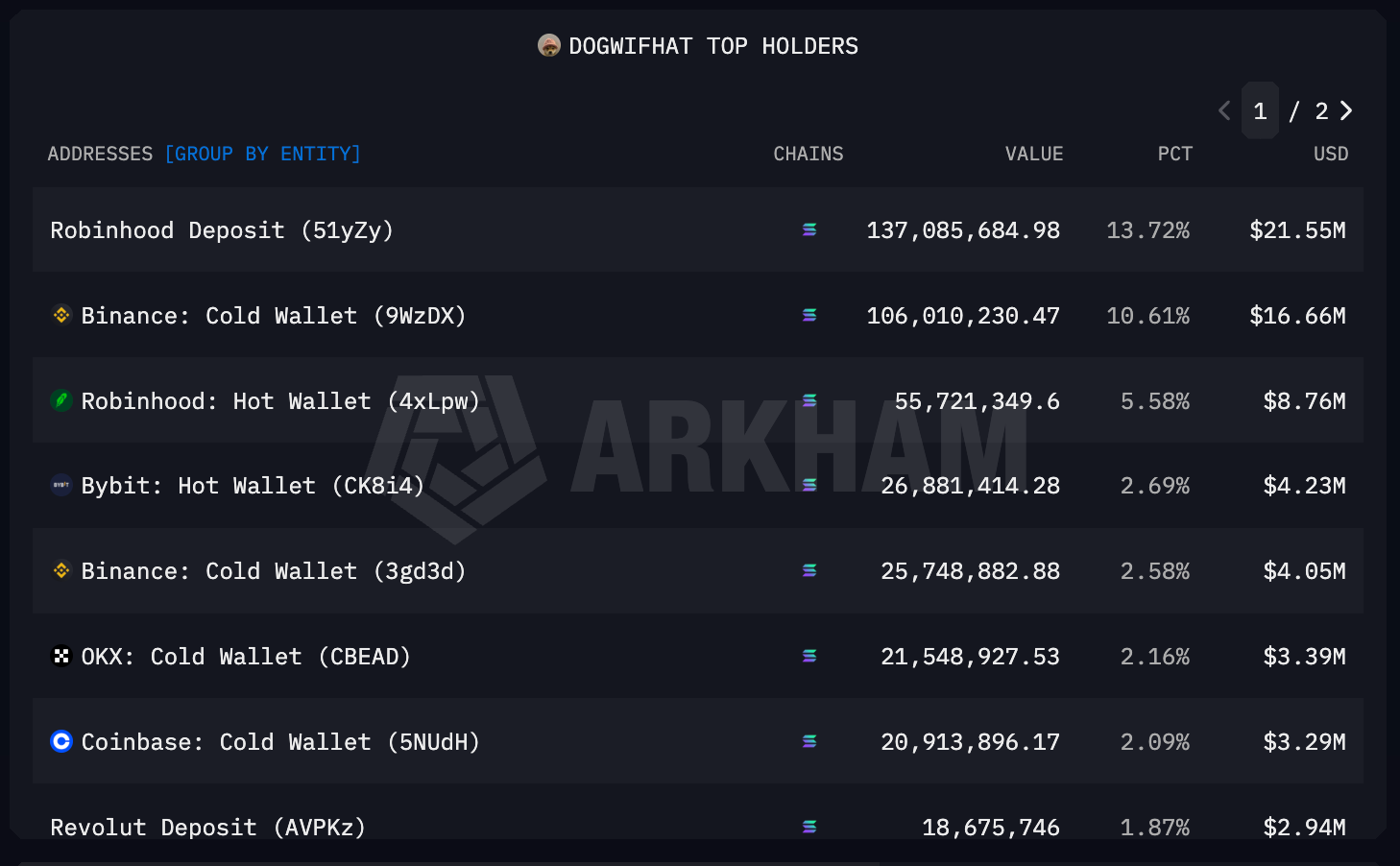
By using Arkham's Token Pages, you can inspect the "Top Holders" tab to see who controls the circulating supply. How is this helpful? If you notice that a tiny, anonymous cluster of insider wallets controls 80% of the token's total supply, you know you are likely looking at a rug pull waiting to happen. Using AI to surface these concentrations of risk allows you to disqualify toxic assets before risking any money.
- Instant TXID Analysis
Raw transaction hashes (TXIDs) are long strings of numbers and letters that are useless to all but a few people in the world. Especially, when they involve complex smart contract interactions, bridge swaps, or decentralized liquidations. Trying to decipher what happened during an exploit or a whale move can take hours of highly technical work.
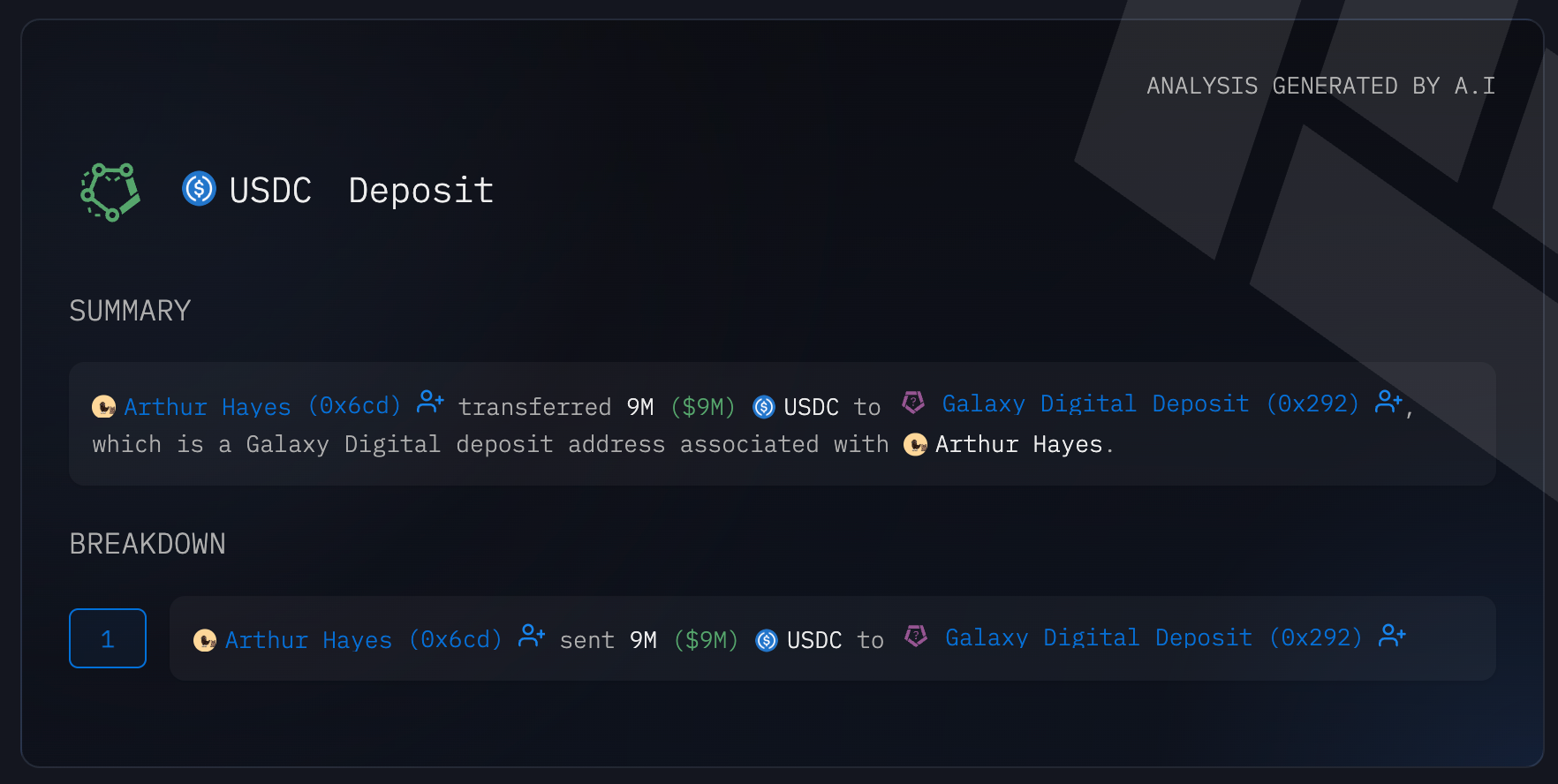
The Arkham AI engine is directly beneath the raw transaction data. The platform translates the code logs into a simple, plain-English summary of what happened, who sent the assets, and what tokens changed hands. This turns raw blockchain noise into actionable intelligence, even for people who are not that technical. Use the Arkham-powered TXID Check tool here.
Build Custom Tools with Blockchain Data APIs
If you want to scale your operations past a manual dashboard, the next step is building your own intelligence pipeline. By connecting to a model like Claude with the Arkham Developer API, you can create your own automated research assistant that monitors real time blockchain data on your own terms.
Here is our step-by-step implementation guide to setting up your custom tool:
- Start a trial with the Arkham API: https://intel.arkm.com/api
Navigate to the page above, scroll to the bottom, fill out the form and then we will take care of the rest. You will hear back from us soon and we can issue you with trial access to the API, or full access.
Before you move to the next stage, you can read the full API documentation here: https://intel.arkm.com/api/docs. This will help you get an understanding of what the API is and how it is designed to work.
Remember to save your API key in a safe space, and do not share it online with anyone.
- Connect the API to Claude (or whatever tool you use)
The first thing to do is open Claude, explain your experience level, paste some of the Arkham API documentation into the chat, and start discussing what you want to do.
Some people will paste their API keys directly into the chatbot interface, and this will certainly save you some time. However, we do not recommend this as it is not a safe way to use an API (anyone who gains access to your API key can drive up a huge bill for you).
The next step is to set up the Model Context Protocol (MCP) server to connect the two tools. Open Claude Desktop and paste the setup prompt directly from the Arkham documentation; Claude will autonomously generate a Python file for you and specify exactly where it needs to be saved.
Once the file is saved, open your Terminal and run the command “pip install mcp requests” to install the required dependencies.
To finalize the connection, add a short JSON configuration snippet pointing to your newly created server file and your Arkham API key, then save, quit, and reopen Claude Desktop.
- Create a dedicated environment
Inside Claude, create a new Project and name it "Arkham API Assistant." Add “https://arkm.com/llms.txt” as project knowledge. This URL provides Claude with a full, always-current reference for the API.
With the setup complete, you can begin asking live analytical questions directly in the chat, such as pulling the top 10 counterparties for a specific exchange wallet over the last 7 days. Claude will identify the correct endpoint, execute the live API call, and return the data directly in your chat window.
The MEV Illusion
While building an AI-powered analyst can provide an edge, many traders will be tempted to try and build fully autonomous Maximal Extractable Value (MEV) execution bots. They will assume that if an AI model is smart, it can outrun the market. In reality, deploying autonomous bots to execute live trades in public blockchain environments exposes your capital to high risk.
Here are 3 things to avoid:
Gas Waste
Blockchains operate on highly competitive, public auction models for block space. When an autonomous bot identifies an arbitrage opportunity, it is competing against hundreds of other low-level proprietary bots looking at the same opportunity. If your AI bot is bottlenecked by latency or miscalculates the required priority fees, your transaction will fail, but you will still be charged the gas costs. If you are not careful, this can drain thousands of dollars from your balance in failed transactions within a matter of hours.
Logic Exploits
LLMs excel at synthesizing pattern data, but they don’t actually understand volatile smart contract states. Malicious actors can engineer transaction sequences designed to influence oracles or flash loan balances temporarily. This tricks trading bots into executing what looks like a highly profitable trade, but is actually a back-run (MEV strategy of placing an order after a large trade in the mempool to capitalize on price gain) that drains the bot's wallet via an underlying structural loophole.
A prominent example of bots being targeted in this way involves the infamous MEV bot "jaredfromsubway.eth." The bot extracted immense wealth (with its balance at a peak of $31M) through sandwich attacks on regular traders.
Recently however, a group of developers engineered a bespoke trap contract which made jaredfromsubway.eth approve helper contracts, allowing the attacker to drain all of its funds. These developers took advantage of a highly rigid automated logic - showing that even the most successful of bots is prone to being exploited.
The crypto world is filled with predatory honeypot tokens specifically deployed to trap automated searchers. These tokens are engineered to show large, fake price discrepancies on decentralized exchanges. When a bot interacts with them to capture the "profit," the contract's code blocks the sell function or applies an existential 99% transfer tax, instantly and permanently seizing the bot's capital.
Conclusion
Crypto and blockchains are highly adversarial ecosystems. If you are not careful, you can get scammed by both humans and bots before you even know what is happening.
AIs have unmatched data processing capabilities, but they occasionally lack the human judgement required in certain situations, and they can be easily tricked. Bear this in mind before you let an AI run your full trading strategy.

.png)







.png)











.png)





.jpg)








.png)

.png)




.png)


.png)


.png)
.png)

.png)
.png)









.png)
.png)
.png)

.png)




.png)






.png)