October 27, 2026
at
6:40 am
EST
MIN READ
What is the Best Blockchain Intelligence Tool?

SUMMARY
- There is no single best blockchain intelligence tool. The best tool depends on the task required, from block explorers for quick lookups to APIs for building products.
- Blockchain intelligence connects anonymous wallet addresses to the people and entities behind them, turning nameless transactions into readable stories.
- Block explorers are great for quick lookups. APIs are useful for products and finding information at scale. De-anonymisation and OSINT help identify who’s behind a wallet. Tracers and visualizers follow and map funds on-chain. Risk scoring and transaction monitoring help support compliance. MCP allows AI assistants to run queries on their own.
- All tools mentioned in this article exist within the Arkham platform, allowing users to satisfy all their blockchain intelligence needs in one place.
WHAT IS BLOCKCHAIN INTELLIGENCE?
Blockchain intelligence is the practice of connecting anonymous blockchain addresses to the people and organizations behind said addresses.
While the blockchain is a public ledger that anyone can view, without the knowledge of who is behind the transactions, the ledger just shows funds being moved around. Blockchain intelligence helps close the knowledge gap by adding labels, ownership, history, and context to the ledger. This helps transform the transactions into a story, such as an exchange processing a withdrawal, a hacker mixing funds, or a fund acquiring assets.
Blockchain intelligence is useful to a wide variety of users. Traders might be interested in what whale wallets are doing, journalists might be seeking a scoop buried in transfers, and investigators might be figuring out where stolen funds got moved to. Different users have different needs and blockchain intelligence can help provide what these users are looking for.

IS THERE A SINGLE BEST BLOCKCHAIN INTELLIGENCE TOOL?
There is no single “best” blockchain intelligence tool out there, because different scenarios require different solutions.
Let’s use a toolbox as an example. When looking to measure something, a tape measure is the tool you need. However, that same tape measure wouldn’t be very useful for tightening some screws. Blockchain intelligence functions very similarly. Quick on-chain lookups, intense week-long investigations, and screening thousands of deposits for compliance every day are all unique jobs, and no blockchain intelligence tool can do all of these well. Each of these unique jobs has a different type of tool best suited to it.
BLOCK EXPLORERS
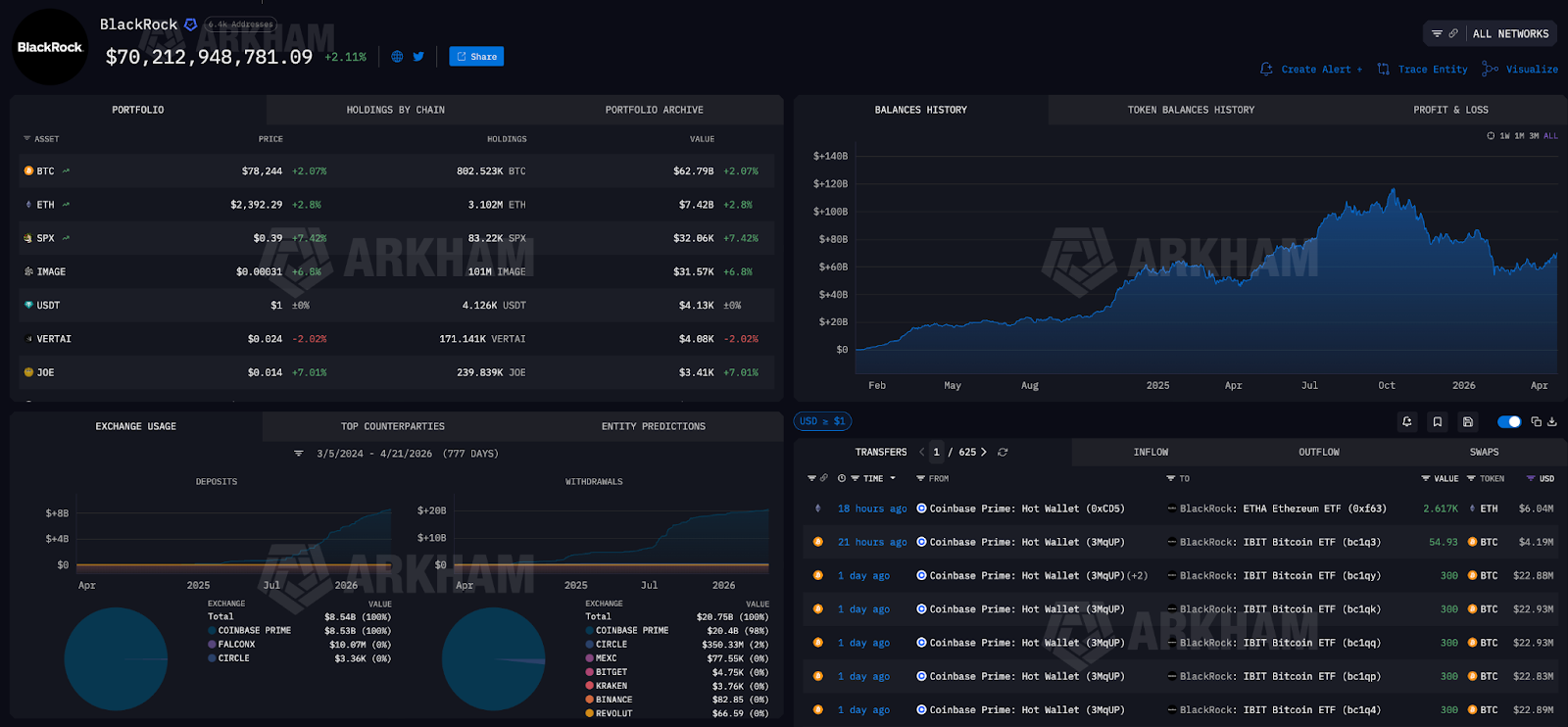
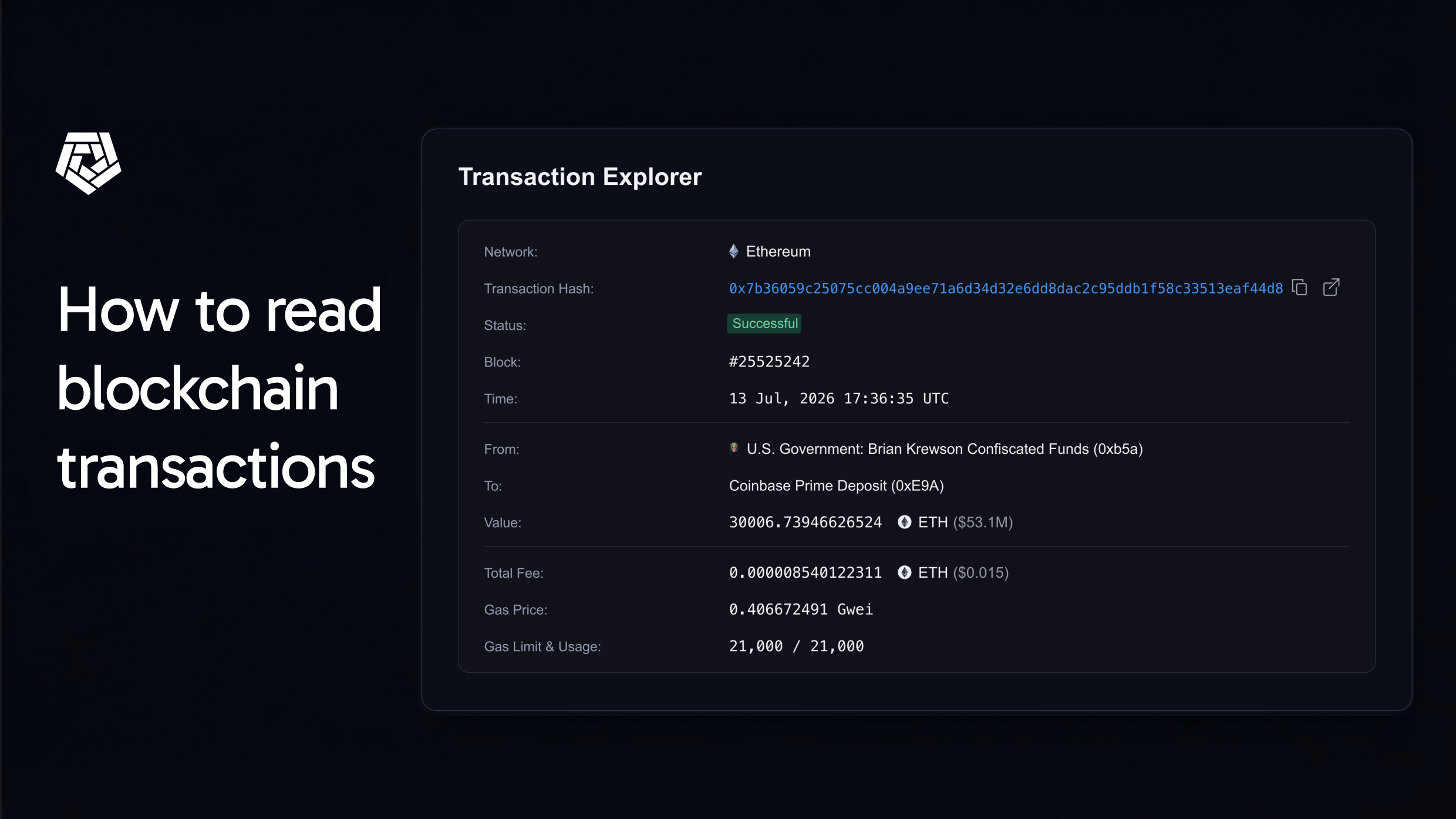
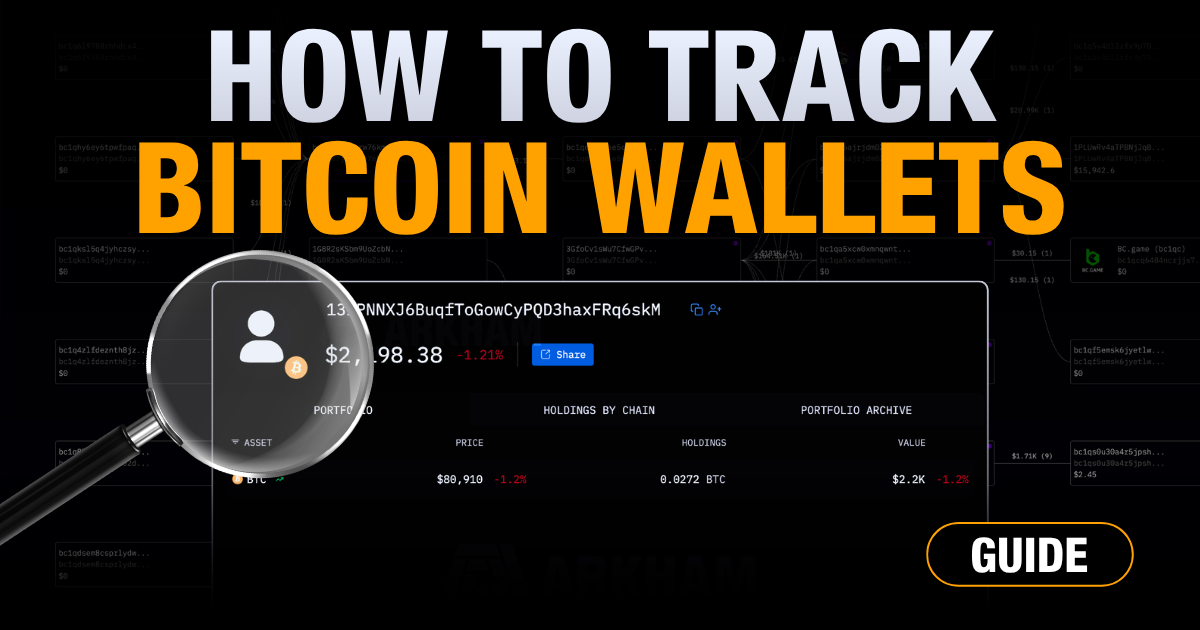
A blockchain explorer allows users to look up information on the blockchain. Users can look up addresses, transaction IDs, block numbers, or tokens and the explorer hands back all relevant information it has. Explorers are a straightforward tool for users and a good place to start when trying to find information on the blockchain. They’re fast, free to use, and help users interpret the raw data that exists on-chain.
There are a couple of limitations that come with (most) blockchain explorers. The data on blockchains is pseudonymous, which means that there are no names associated with it, only wallet addresses. Because of this, explorers can not tell you if an address belongs to an exchange, fund, or hacker. Explorers also only allow you to look up one wallet address at a time, so following the flow of funds across wallets quickly leads to tab after tab being opened.
Arkham’s blockchain explorer covers multiple chains at once in a single search bar. Pasting an address will return its balances, transactions, and any labels Arkham has assigned to it. Pasting a transaction ID will return the transfer, wallet addresses involved, and the USD value of the transaction when it occurred.
Blockchain explorers are the best tool for quick on-chain lookups and verifying whether or not a transaction occurred.
DE-ANONYMISATION TOOLS
De-anonymisation tools help users figure out who is behind a wallet address. De-anonymisation tools attach labels and tags to addresses. Labels mark a single address (ex. “Silk Road Hacker Individual X”), whereas tags describe types of activity or categories that a wallet address might fall under (e.g. Hacker). Entity pages combine all of the associated wallets linked to an individual or organization into one profile, allowing users to view an entire on-chain summary instead of just one wallet.
De-anonymisation tools are an important part of blockchain intelligence. By itself, the blockchain ledger is just a list of transactions between nameless wallet addresses. Once names can be linked to addresses, these transactions can become useful insights attributed to real people and organizations.
At a high level, attribution is done by layering together several different methods. Heuristics are rules of thumb regarding wallet behavior. For example, Bitcoin wallets that spend together in a single transaction likely belong together. Clustering builds upon these behaviors by grouping the linked addresses into a single owner, so hundreds of wallets can be condensed into a single profile. AI builds upon the foundation that heuristics and clustering create, as models can spot on-chain behavior that looks like exchanges, market makers, or hackers. These models can gather large amounts of data and make predictions on who a wallet belongs to, even when no conclusive linking evidence exists. Human analysts can then review these AI labels and predictions, proofreading AI’s attribution work.
Arkham’s version of this revolves around Ultra, Arkham’s proprietary AI engine. Ultra has labeled 3.9 billion addresses and identified over 878,000 entities with 93% of total on-chain value attributed. The engine uses confidence percentages when labelling addresses. For example, Ultra’s verified labels require at least 98% confidence, whereas prediction labels require at least 80% and are marked as lower confidence. Additionally, high-profile labels are manually reviewed by an Arkham analyst on a case by case basis.
De-anonymisation tools are the best for figuring out who is behind a wallet address.
OSINT TOOLS
OSINT stands for open-source intelligence. In cryptocurrency, this means using publicly available information such as social media posts, court filings, project announcements, and community labels to build a case. OSINT and de-anonymisation go hand in hand. Many address labels are created using OSINT. Someone has to assemble the different pieces of public information, verify it, and attach a label to the correct address. This process is what turns a couple of clues into a wallet label.
Let’s use a hack as an example. Stolen funds are split across a dozen wallets, but the chain reveals nothing about who is behind the attack. A post-mortem might reveal the attack method, and a security researcher could recognize the same wallet pattern from an older exploit. A court filing months later might then link one wallet to a named defendant. Each clue on its own is not very helpful, but combining them can point to a real person or group with much higher confidence.
OSINT tools are best for investigations where on-chain data is not enough on its own. For a deeper look into OSINT, check out our previous article on the topic.

TRACERS
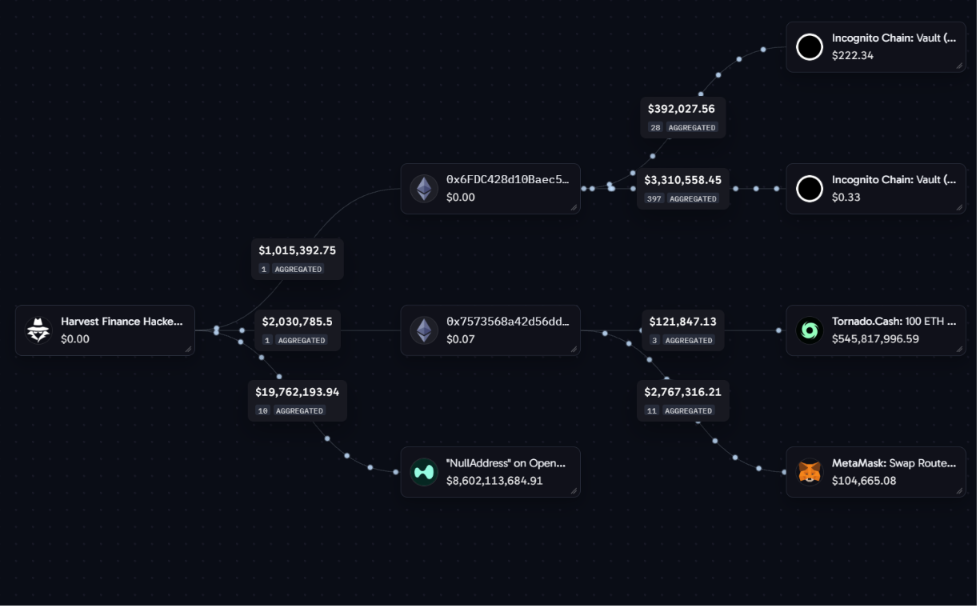
Tracers follow the movement of funds on-chain by checking where money gets sent across transactions. Tracers are most helpful when money keeps moving across addresses. For example, hackers rarely leave stolen funds idle and instead split them across many wallets, rinse them through mixers, and bridge them to different chains.
Each step along the transaction trail where money transfers from one address to another is called a hop. Hops add up fast, especially once a trail forks. One wallet could send funds to three others, and each of these three could do the same. Most of these transfers are irrelevant or of little value, so filtering out these transactions is important for figuring out where the real money went.
In Arkham's Tracer:
- Enter a starting address. Usually the wallet that received the stolen funds.
- Fetch the flows. Tracer pulls in where the address sent and received funds.
- Expand the counterparties. Click any address on the trail to follow it one hop further.
- Filter by token and USD value. Keep the large transfers and drop the dust.
Once the trail has been mapped, use a visualizer to see the flows as a graph.
Tracers are best for investigations and following the flow of money.
VISUALIZERS

Where a tracer gives you step-by-step directions on where money hopped around to, a visualizer puts these hops onto a map for you to view. Activity is drawn as a network graph, with nodes representing wallets and lines between nodes representing transactions between wallets. On a graph, it’s much easier to view on-chain activity such as how a cluster of wallets is funneling funds into a single address or the middleman wallet sitting between two entities.
In Arkham's Visualizer:
- Search for an entity. Start with a name or an address.
- Read the colours. Inflows and outflows are coloured differently, so direction is clear at a glance.
- Apply filters. Narrow by token, time, or transfer size.
- Break an entity into wallets. Expand it to see which individual wallet is doing what.
Visualizers are best for understanding on-chain relationships at a glance, and presenting these findings to others.
RISK SCORING TOOLS
Risk scoring tools grade wallet addresses based on the amount of illicit activity they have been exposed to.
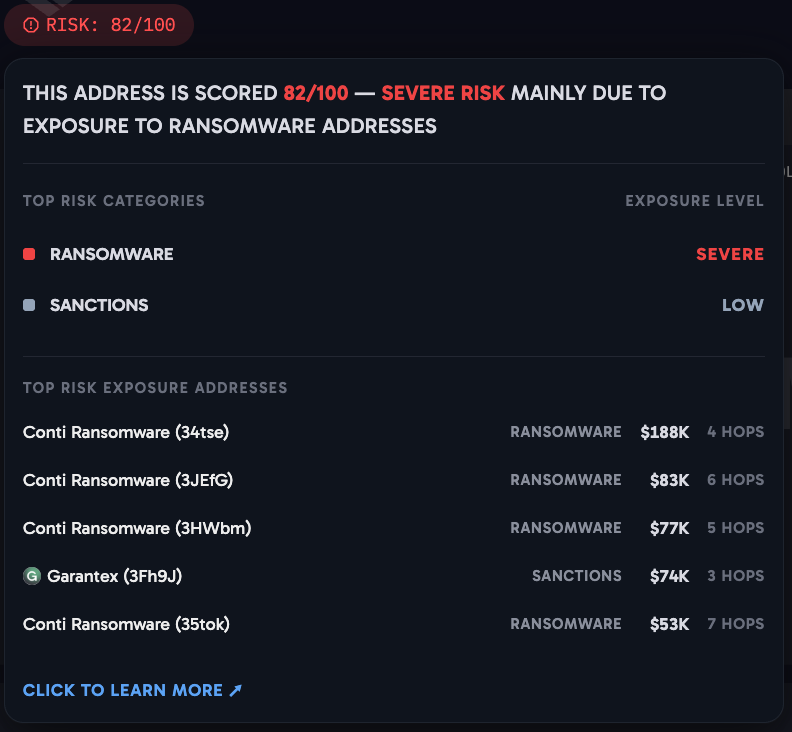
Arkham’s Risk Scores range from 0 to 100, and assess a wallet based on several categories such as hacks, sanctions, mixers, scams, and dark web markets. The highest score in an individual category becomes the overall risk score. Arkham’s risk score takes into account both funds sent to and funds received from riskier wallets. Useful risk briefings don’t just state the score, but also go into depth on which category is responsible for the score, how many hops away the exposure lies, and whether the risk comes from incoming or outgoing funds.
Exchanges, payment processors, and compliance teams all rely on risk scores as part of their screening process. Manually reviewing every single address that interacts with a business is virtually impossible to do, but automated risk scores as a screening tool allows these businesses to quickly determine if a wallet would pose a compliance risk.
Risk scores are best for fast, repeatable compliance decisions at a large scale.
TRANSACTION MONITORING TOOLS
Transaction monitoring tools continuously monitor selected wallet addresses and on-chain entities for new activity over time. This differs from screening, which is just a single check during one point in time. Transaction monitoring is important for compliance teams, as wallets that passed an initial screening can receive tainted funds in the future. As a result, ongoing monitoring of wallets is needed to fulfill anti-money laundering obligations.
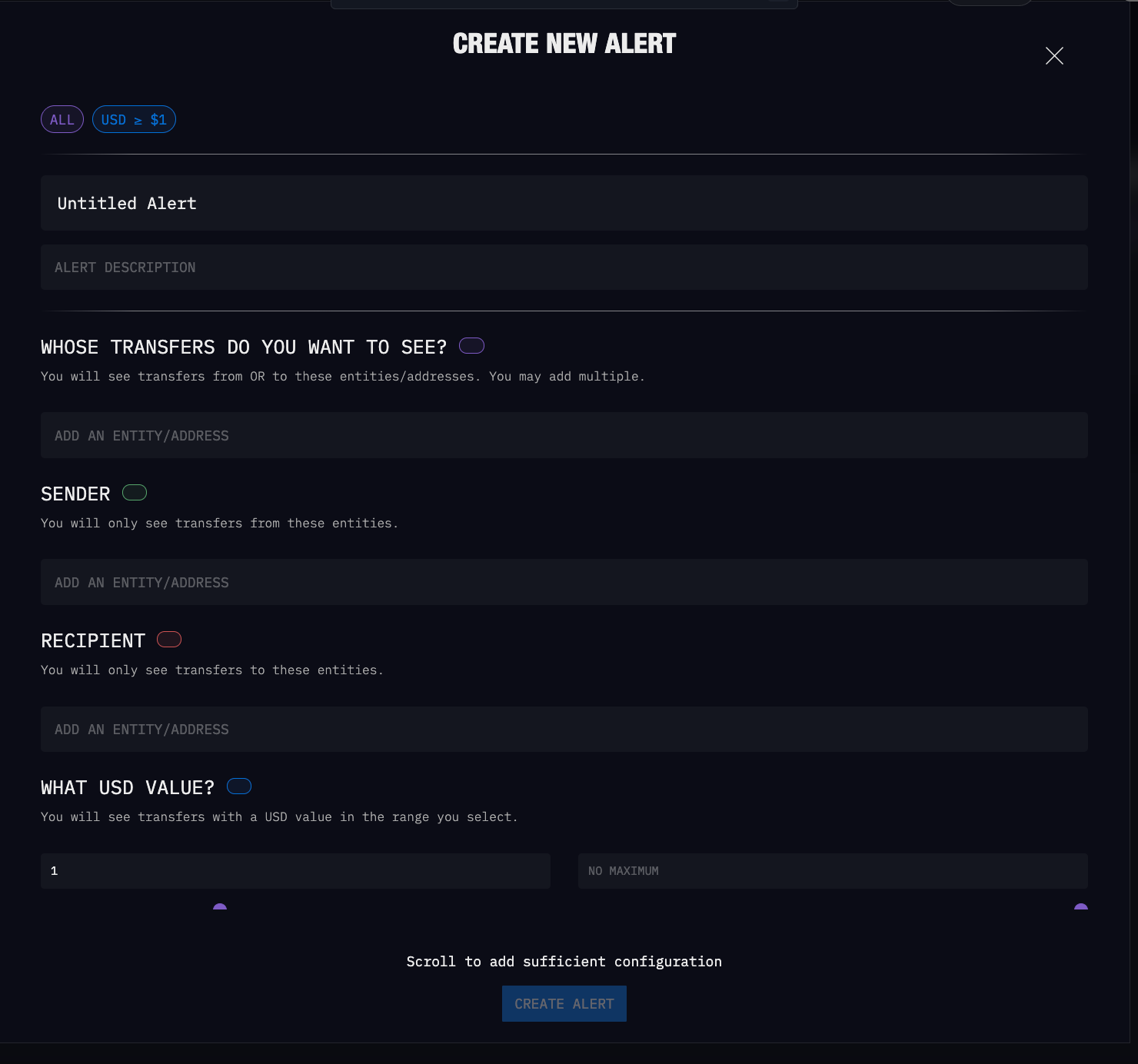
In Arkham, select an entity or address and set up an alert. Whenever your selected entity or address moves funds, you will receive a notification.
This process can also be automated through the Arkham API, which supports creating and managing alerts programmatically. Compliance teams can also use WebSocket streams for live transfers, allowing them to build monitoring into their own systems.
Transaction monitoring tools are best for keeping track of entities over time and meeting AML requirements.
For more information on how transaction monitoring tools are used, check out our previous Transaction Monitoring and Wallet Screening articles.
APIS
APIs (Application Programming Interfaces) allow different pieces of software to interact with each other. They work a bit like a drive-through window. There’s a fixed menu and a set way to order. Customers don’t walk into the kitchen to get what they need, and the window can serve thousands of customers an hour. APIs are the right tool when jobs reach a larger scale, as checking millions of wallets at a time is something that can’t be done manually and requires automation. By using APIs, users don’t need to dig for the data themselves. They just submit a request to the API to quickly get what they need.
The Arkham API gives direct access to Arkham’s entity labels, transaction logs, wallet balances, and flows across 20+ supported blockchains. Users can create custom queries and can also access private labels and custom entities as well.
APIs are best for builders, institutions, and large businesses that need to directly integrate on-chain intelligence into their own systems.
Try the Arkham API here.
MCP AND AI TOOLING
MCP stands for Model Context Protocol. AI assistants such as Claude or Codex can answer questions and write text, but can only refer to the data that they were trained on. MCP is a standard way for AI assistants to connect to outside services to look up live data and call external tools. It’s a bit like handing the assistant a keycard to one specific room. The assistant can go into the room, look around and investigate, and then report back to you.
MCP is the newest category of blockchain intelligence tool. Users can ask questions to an AI assistant in plain English, the AI assistant will decide what data is needed to answer a question, queries the relevant API for the needed information, and then replies with an answer.
Arkham hosts its own MCP server, so there is nothing to install:
- Generate an Arkham API key. You need an API plan or trial first, then create a key from the API Dashboard.
- Connect your AI assistant. The server works with Claude, Claude Code, and Codex. In Claude, add Arkham as a custom connector with the server address and your key.
- Point the assistant at Arkham's docs. Arkham publishes an llms.txt file, a clean map of every endpoint and guide, so agents will find the right call instead of guessing.
For more information check out Arkham’s API documentation.
MCP is best for analysts and developers who want natural-language, agent-driven intelligence.
HOW TO CHOOSE THE RIGHT TOOL
Picking the right blockchain intelligence tool comes down to the job that needs to be done.
Most real blockchain work will use more than one tool. For example, a hack investigation might start with a block explorer, use de-anonymisation tools to try to figure out who owns the attacker wallets, then switch to a tracer to follow and map the movement of stolen funds on-chain.
CONCLUSION
Blockchain intelligence helps assign names, context, and history to anonymous wallets on-chain. Explorers handle quick lookups, de-anonymisation tools and OSINT help answer who owns an address, tracers and visualizers follow and map on-chain funds, risk scoring and monitoring support compliance, and APIs and MCP help pipe data into your own products, workflows, and AI agents.
The best blockchain intelligence tool is the one that fits the job currently at hand. There is no single blockchain tool that is perfectly suited to every job. All blockchain intelligence tools covered in this article exist inside Arkham.