February 21, 2025
at
12:00 am
EST
MIN READ
KAITO Airdrop Top Recipients
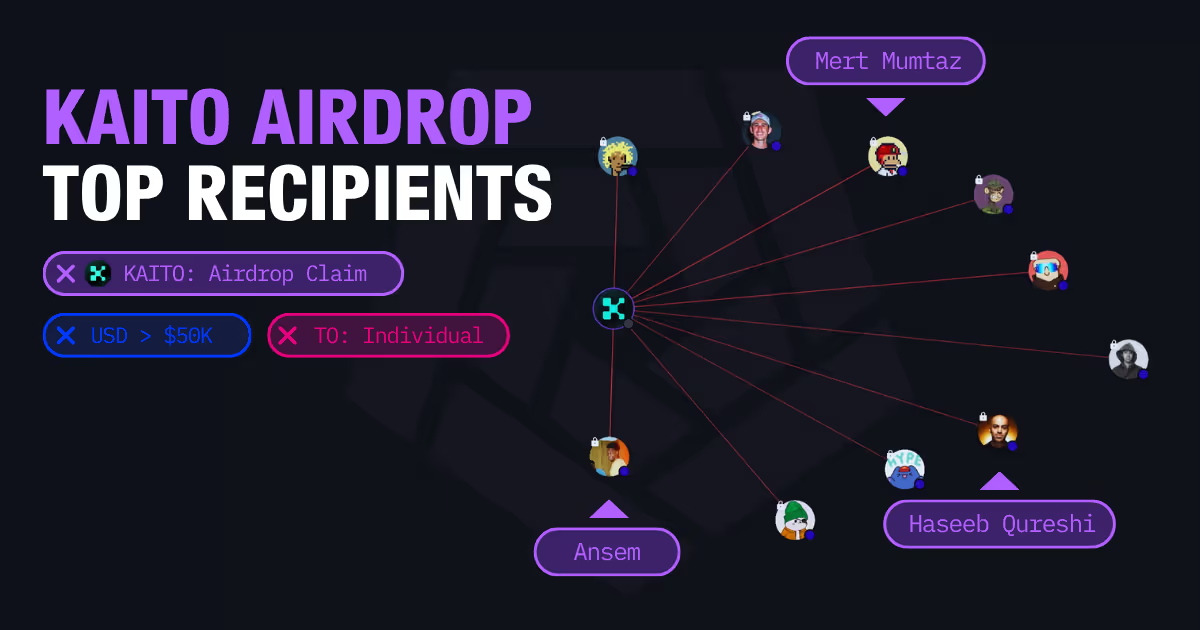
Just last night, data analytics and InfoFi platform, Kaito AI, opened claims for the KAITO token, which distributed 10% of their token supply to eligible recipients. This includes accounts that have accumulated Yaps, which were points distributed based on tweet engagement and reach on the social media platform, X.
This distribution model is a prime example of "InfoFi" (Information Finance), a sector that attempts to monetize and organize the chaotic flow of information in crypto. By quantifying social media engagement into "Yaps," protocols effectively turn attention—a scarce resource in the digital economy—into a tradable asset. This gamification incentivizes users to curate high-quality content, theoretically filtering out noise while rewarding those who provide value to the network with actual financial equity.
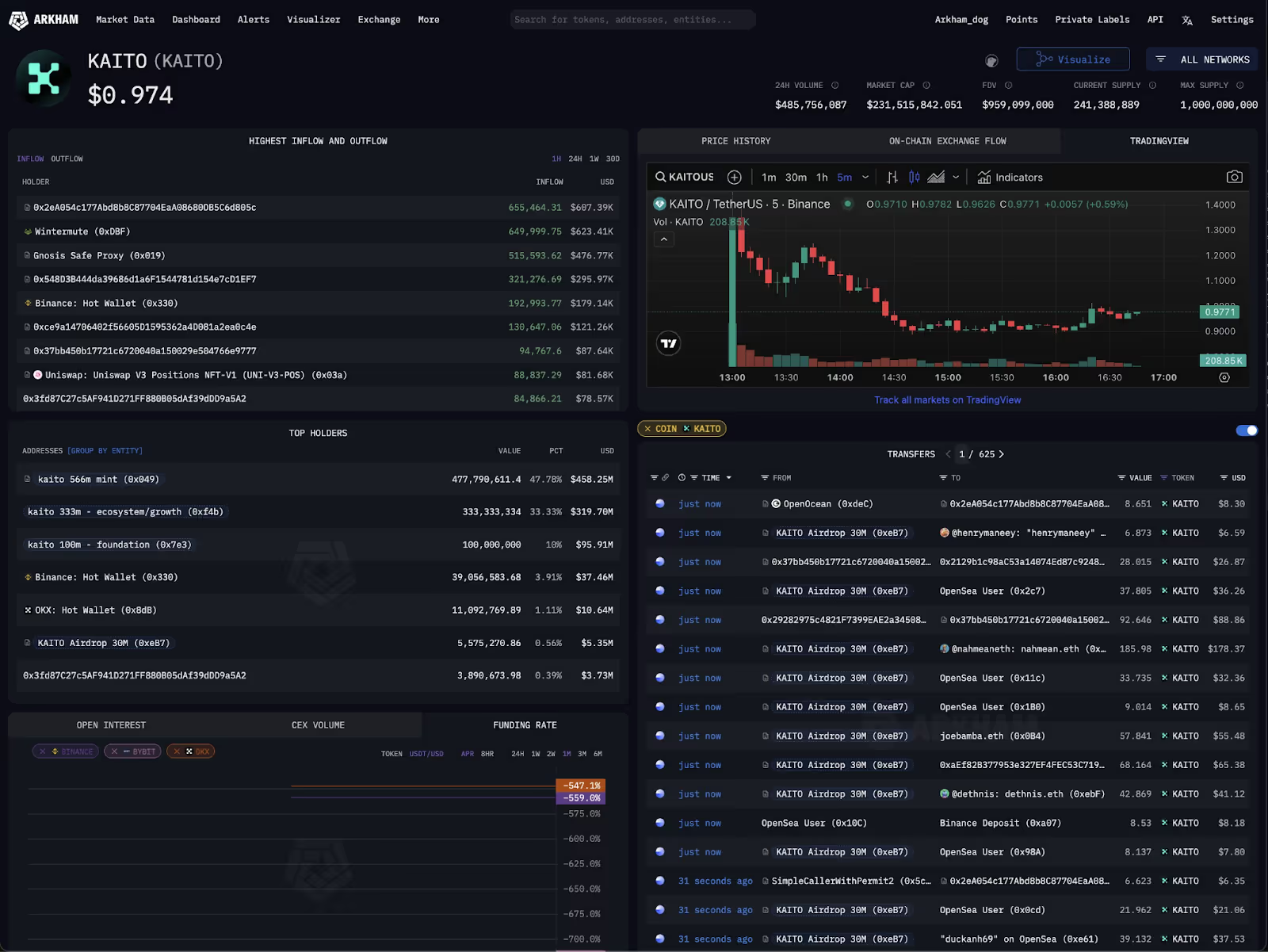
Popular accounts such as OG Solana bull, Ansem, and Ethereum maximalist, Anthony Sassano, have already sold 100% of their KAITO token holdings, for $230K and $185K respectively, while Helius CEO, Mert Mumtaz, has also sold 80% of his holdings for $340K.
While many others did not use their publicly tagged addresses to claim the airdrop, the airdrop event still provides a relatively large database of addresses belonging to active participants on Crypto Twitter (CT), possibly revealing addresses which were previously unknown.

The privacy trade-off here is significant and often overlooked by casual users. When a user claims an airdrop allocated to a specific social media handle, they must sign a transaction with their wallet. This on-chain action creates an irrevocable link between their public digital identity (like a Twitter profile) and their private financial history. For researchers and forensic analysts, these "doxing events" allow for the mapping of wallet clusters, stripping away the pseudonymity that many crypto natives rely on.

.png)

.jpeg)




.jpg)


.jpeg)






.png)









.png)


.jpg)




.png)

.png)


.png)

.png)

.png)
.png)


.png)
.png)








.png)
.png)
.png)
.png)




.png)