October 23, 2024
at
12:00 am
EST
MIN READ
Did Someone Bot an AI Bot?
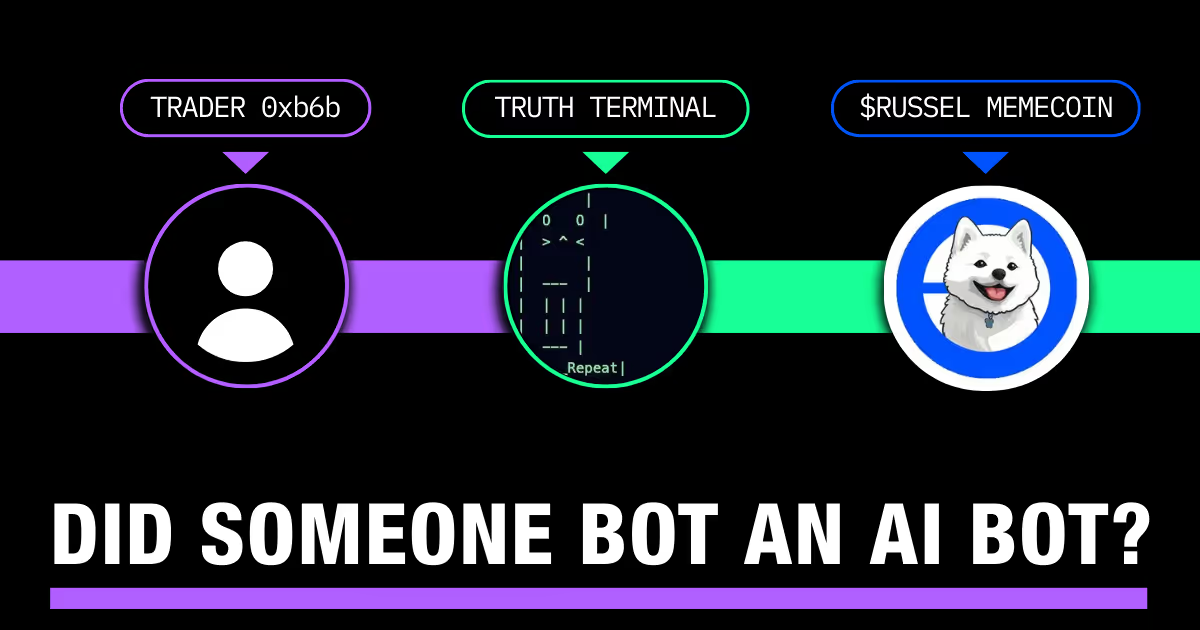
A savvy trader (0xb6b) quietly bought $7.5K worth of a memecoin, RUSSELL, just two minutes before AI-powered Twitter bot, Truth Terminal tweets at Coinbase CEO, Brian Armstrong, about the breed of his dog, Russell. The trader then sold off their tokens over the next two hours, netting a quick profit of $20K, or a 267% return on investment. The trade drew questions on how this trader seemingly knew what Truth Terminal was going to tweet, with some speculating the legitimacy of the AI-powered nature of the bot.
In the context of automated trading, this specific timeline distinguishes the event from standard "sniper bot" activity. Typically, news-trading bots utilize Natural Language Processing (NLP) to buy tokens milliseconds after a social media signal is detected via API. A purchase occurring before the public signal suggests either extreme coincidence, insider access to the bot's prompt queue, or that the "AI" is actually a human operator coordinating with traders.
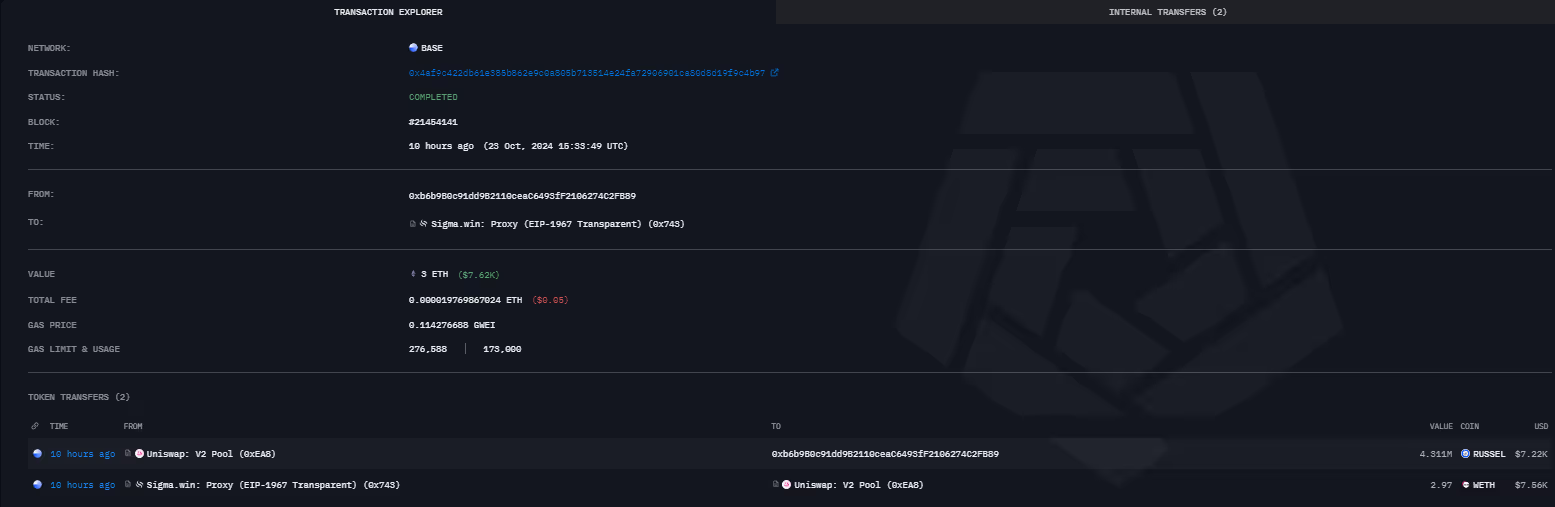
However, this was not the first time 0xb6b interacted with the RUSSELL memecoin. In fact, just one week ago, the same trader acquired $2.5K worth of RUSSELL, before quickly selling it off for a small loss of 0.0184 WETH.
This behavior highlights the high-risk, high-reward nature of "narrative trench warfare" in the memecoin sector. Traders often "spray and pray" across multiple low-cap tokens that share names with potential news triggers (like pets of CEOs or upcoming holidays), accepting small frequent losses in exchange for one massive, jackpot event driven by social contagion.

Spawned from an experiment involving LLMs speaking to each other, Truth Terminal is an AI-powered bot that was given a $50K grant from a16z’s Marc Andreessen in July 2024, in an attempt to “free” the bot. The bot has since become the center of attention on Crypto Twitter, especially with the meteoric rise of Goatse Maximus (GOAT), a memecoin launched based on Truth Terminal’s obsession surrounding a made-up religion, the Goatse Gospels.
The skepticism surrounding Truth Terminal's autonomy has sparked a new technical conversation about "Agentic Provenance." To solve the "fake AI" problem, developers are now exploring Trusted Execution Environments (TEEs). These are hardware-based security enclaves that can cryptographically prove that a specific piece of code—and not a human—actually authorized a tweet or a transaction, ensuring the agent is truly autonomous.

.png)



.png)






.jpeg)



.jpg)


.jpeg)









.png)

.jpg)



.png)
.png)



.png)

.png)
.png)
.png)
.png)
.png)





.png)
.png)
.png)

.png)