January 30, 2025
at
12:00 am
EST
MIN READ
Ross Ulbricht Loses $12M on Pump Fun
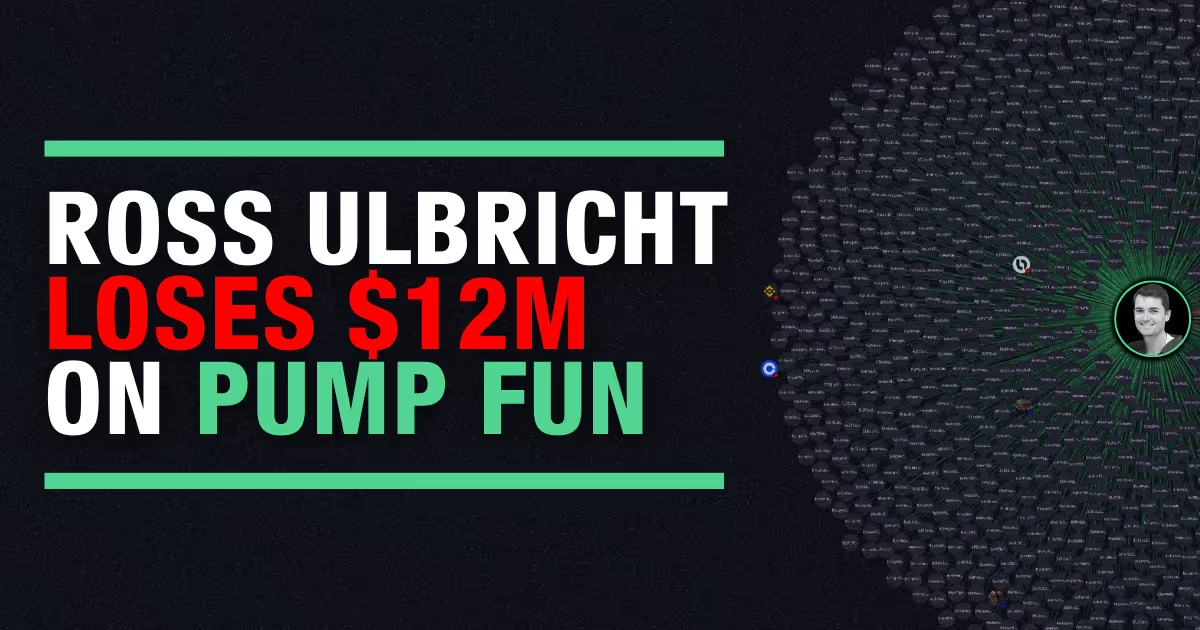
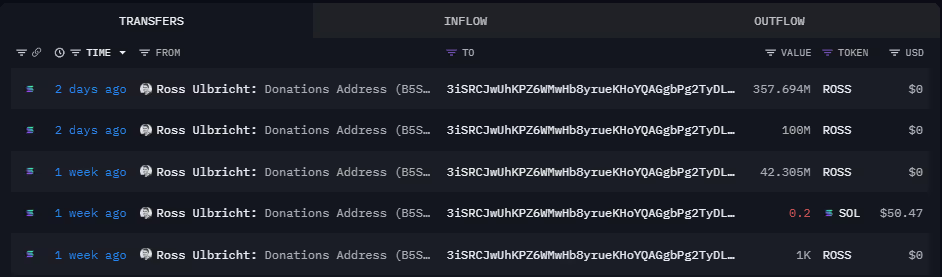
A Ross Ulbricht-linked address just made a $12M blunder after trying to provide liquidity for the Ross Ulbricht Fund token (ROSS), which was set up as a donation fund for the former Silk Road marketplace founder.The ROSS token developer had launched the coin on 22nd January and sent 50% of the token supply to Ross Ulbricht’s address, 3iSRC, as the donation.
The concept of "donating" tokens to a high-profile wallet is a common marketing strategy in the memecoin space, known as an "airdrop." Developers often send large percentages of supply to figures like Vitalik Buterin or Ross Ulbricht, hoping the recipient will either burn the tokens (reducing supply) or hold them (creating a sense of legitimacy). However, when these recipients actually attempt to move or sell the funds, it can create panic or, as seen here, lead to technical execution errors.
On 28th January, he attempted to provide single-sided liquidity with 5% of the token supply to gradually sell off his tokens without negatively impacting the price. However, due to incorrectly initializing the pool, the liquidity provided was bought up by an MEV bot at an extremely low price and immediately sold into the pool, resulting in an instant price dump.
In Decentralized Finance (DeFi), "single-sided liquidity" involves depositing only one token into a pool rather than the standard 50/50 value split of two assets. When initializing a pool this way, the depositor implicitly sets the starting price based on the ratio of assets added. If this starting price is set significantly lower than the current market rate, the Automated Market Maker (AMM) algorithm instantly opens the door for arbitrageurs to buy the "undervalued" tokens until the price matches the global market.
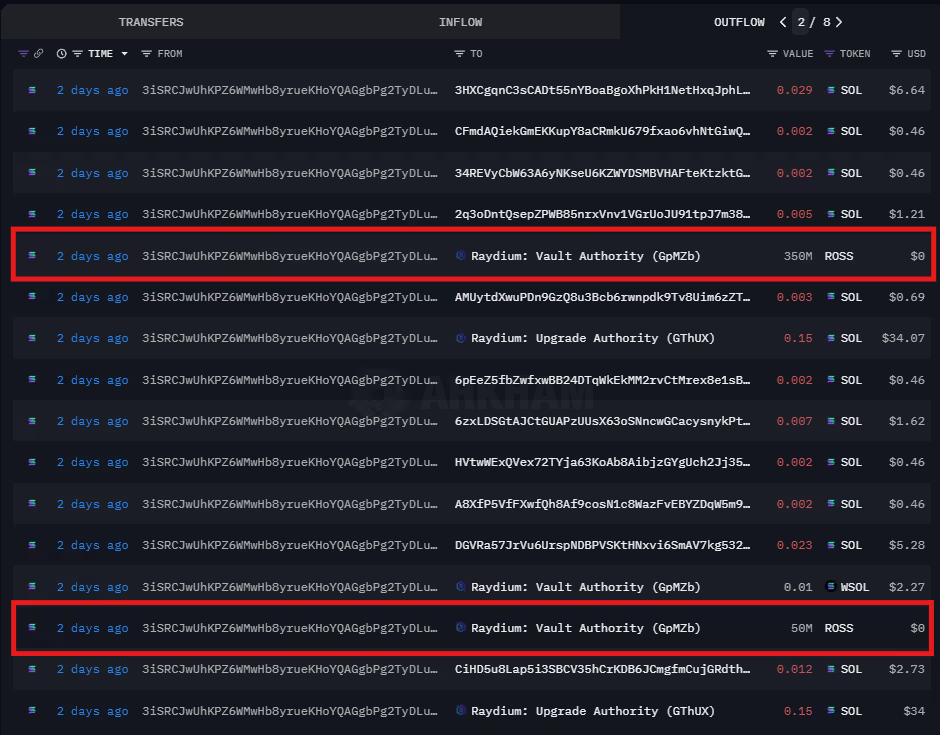
Less than an hour later, he attempted to provide liquidity again, but failed to do it correctly again, this time with 35% of the supply. Another MEV bot acquired the provided liquidity and dumped the token once again.
The speed at which these mistakes were exploited is due to "Maximal Extractable Value" (MEV) bots. These are automated programs that scan the blockchain's "mempool" (waiting area for transactions) for profitable opportunities. An MEV bot can detect a mispriced liquidity pool initialization and execute a buy order in the exact same block—often milliseconds after the liquidity is added—securing the profit before a human user can even refresh their screen to correct the mistake.
As a result of the mistake, Ross Ulbricht, himself, lost a total of $12M, while the token lost more than 85% of its value following the sell-off.

.png)





.jpeg)




.jpg)


.jpeg)




.png)







.png)

.jpg)




.png)

.png)



.png)


.png)

.png)
.png)
.png)
.png)







.png)
.png)
.png)

.png)




.png)