January 24, 2025
at
12:00 am
EST
MIN READ
WLF Stakes $30M ETH
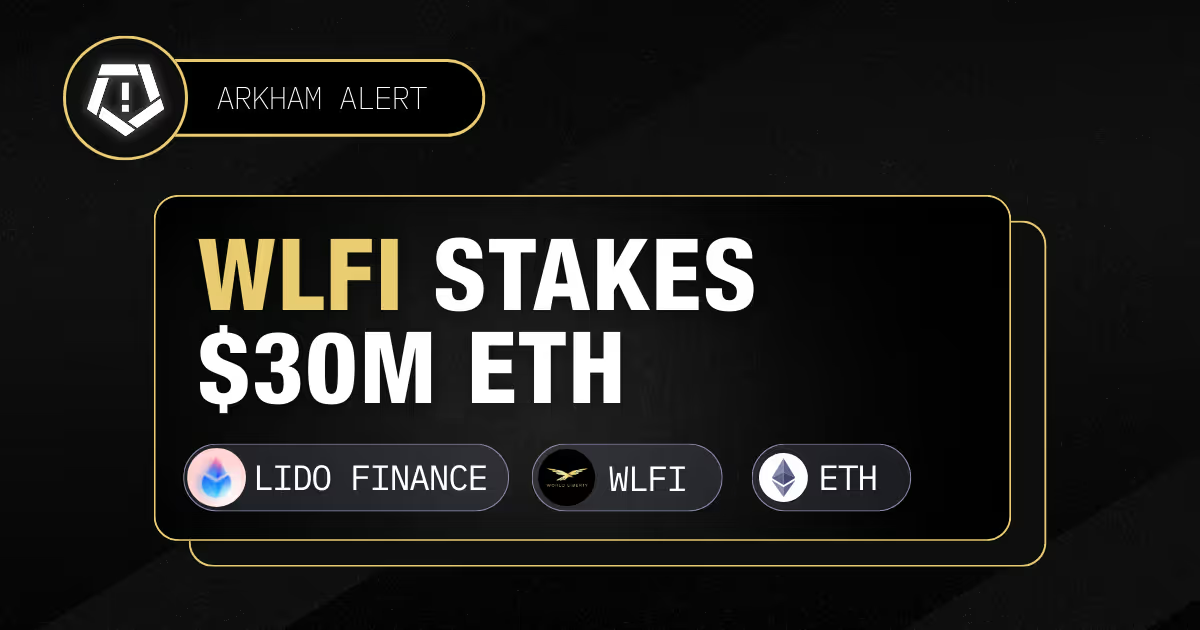
Newly inaugurated US president Donald Trump’s DeFi project, World Liberty Finance, stakes another 9,400 ETH tokens, or ~$31M worth, with Lido Finance, making them the 24th largest holder of Lido Staked ETH (stETH). The move follows a stake of 10,000 ETH, or $33M worth, just 2 days earlier, which places approximately 26% of the entity’s ETH holdings in Lido Finance.
This aggressive accumulation of stETH signals a shift toward active treasury management. By choosing liquid staking over traditional staking, the project retains the flexibility to deploy capital quickly if needed. Unlike standard Ethereum staking, which locks assets for an indefinite period, stETH can be traded on secondary markets or used as collateral in DeFi protocols immediately. This allows the treasury to earn a roughly 3-4% annualized yield on their idle assets without sacrificing the liquidity required for operational expenses or strategic pivots.
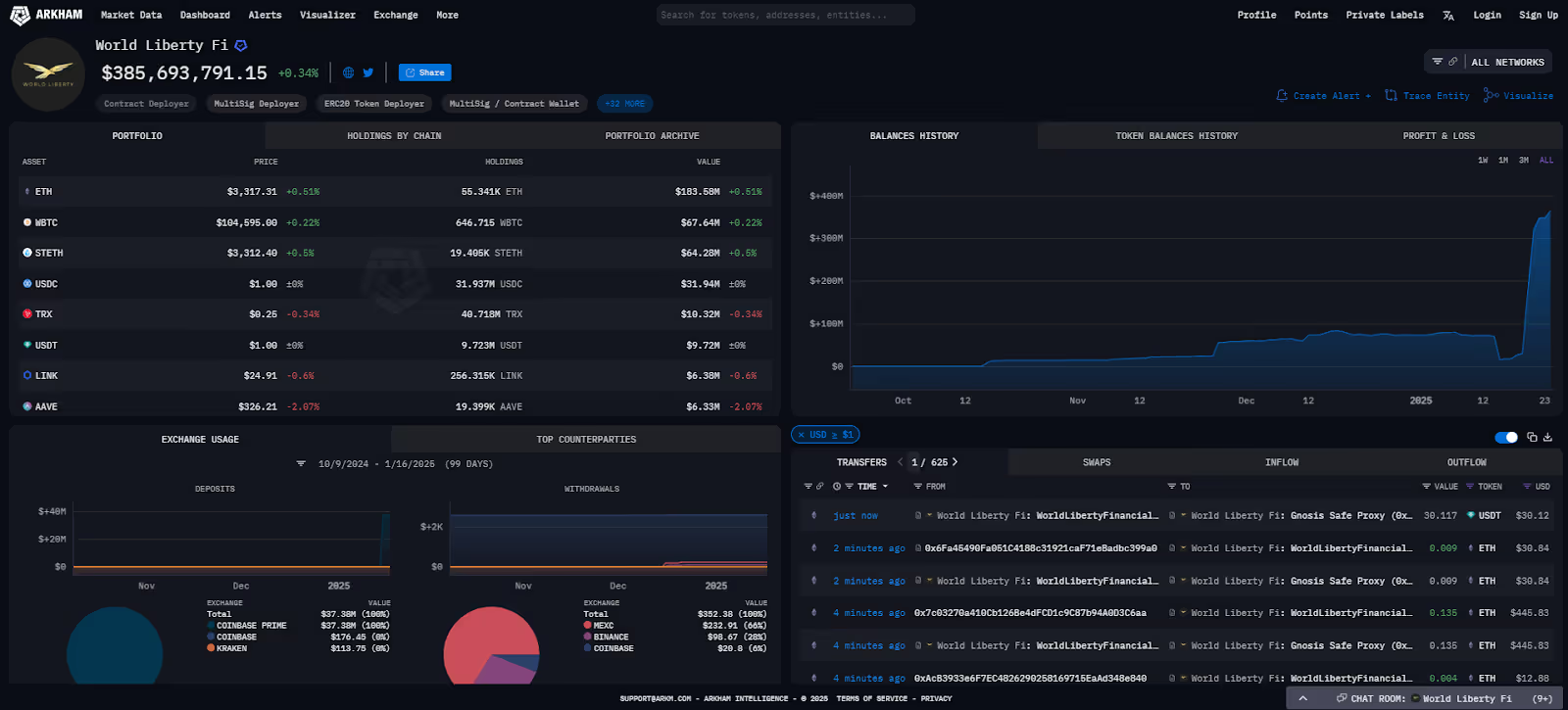
World Liberty Finance still holds another 55,341 ETH tokens in their multisig, with the majority of tokens acquired via the token sale of the World Liberty Finance token (WLFI). Although the presale for the token opened up in October 2024, the presale only completed the sale of 20% of the WLFI token after the success of the official TRUMP memecoin, which drew attention back to the World Liberty Finance project. To meet the overwhelming demand, the World Liberty Finance project has opted to open another 5% of their token supply for sale, this time at a token price of $0.05 per token, or 3.33x higher than the initial presale.

The decision to increase the token price despite a surplus of unsold inventory is an unconventional economic strategy. typically, projects might lower prices or burn unsold tokens to match supply with demand. However, raising the valuation for the new tranche attempts to create a "Veblen effect," where higher prices signal increased prestige and exclusivity. This move banks heavily on the renewed hype from the memecoin sector to override traditional valuation models, effectively betting that market sentiment will value the project's brand association higher than its fundamental token metrics.

.png)

.jpeg)



.jpg)


.jpeg)



.png)




.png)

.jpg)


.png)
.png)


.png)
.png)

.png)
.png)
.png)
.png)



.png)
.png)
.png)
.png)



.png)